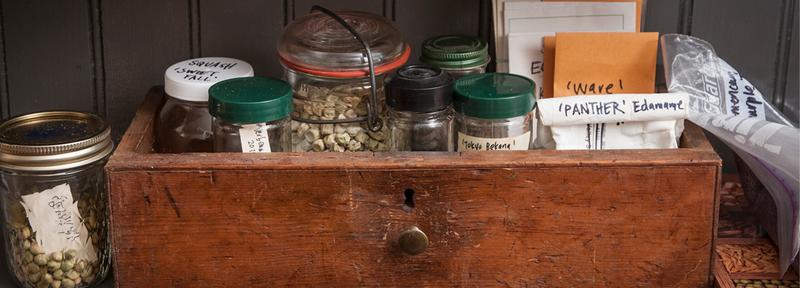
Seed Protocol - from the #NashvillePublicLibrary !

"We ask that, when you bring seed to the Nashville Public Library Seed Exchange, you follow certain protocol. We want people who take seeds to get what is on the label, and we want to protect against passing on disease.

Basic Protocol

Adapted from the Seed Protocol from the West County Community Seed Exchange, Sonoma Co., California.

- Save seeds from healthy plants. Even if a disease does not get passed on through the seed, we do like to have some selection for disease resistance by only saving from healthy, strong plants.
- Save seeds from multiple plants so that the seed has some genetic diversity in it. The quantity of plants that is optimum depends on the type of plant. For self-pollinating plants a minimum of 6 plants is necessary. For cross-pollinating plants, you’ll want to save from a much larger population.
- If the plant cross-pollinates, you’ll want to make sure to keep it isolated so it stays 'true to type.' Check with a seed saving chart or book to get proper isolation distances.
- When you give seeds to the Seed Exchange, please label with as much information as you can.
- Many people like to save seeds from a favorite plant that might not be harvested from multiple plants or from a plant that isn’t super healthy. Some people like to save seeds from interesting crosses. You are welcome to bring those seeds. Just make sure you write that down on the label so others know they are participating in your experiment.

Guidelines for Returning Seeds

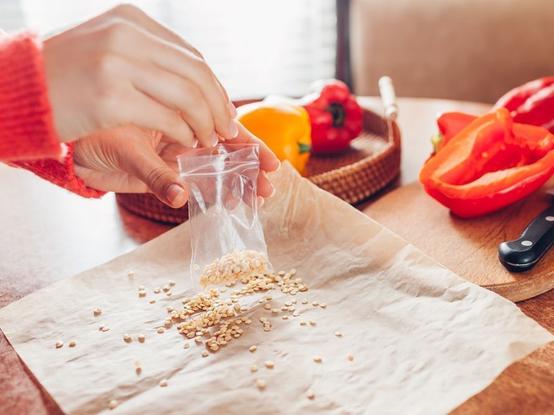
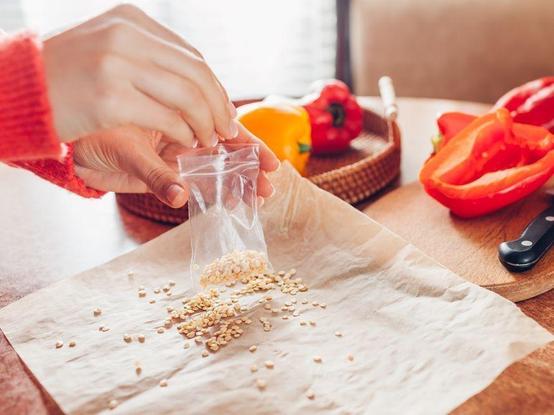
- Dry: Make sure seeds are dry.
- Clean: Return reasonably clean seeds by removing as much of the chaff as possible.
- Properly saved: Only return seeds from plants that you know how to save properly.
~ Some seeds can be fairly reliably saved without cross-pollination (and unintentional hybridization). These include tomatoes, beans, peas, and lettuce.
~ Only return seeds from the brassica (ex. broccoli, cauliflower, kale, brussels sprouts, cabbage) or cucurbit (ex. cucumbers, squash, melons) families if you have taken appropriate steps to prevent cross-pollination, such as hand-pollinating.
- Label! Label! Label! Give us as much information as possible (variety, location, year saved, helpful hints, etc.). Remember that people only have as much information about a seed as what you have written on the package in order to decide if it is a plant that they would like to grow. More information is better.
- Share the abundance: If you have lots of seeds, consider donating lots! We share with Seed Exchange locations across Davidson County.

Thank you for saving seeds!"

Source:
https://library.nashville.gov/about/policies/seed-protocol

#SolarPunkSunday #SeedSaving #SeedSwaps #LibrariesRule #GrowYourOwn #Gardening

Seed Protocol

Nashville Public Library

@tickfoot I don’t know if it’s the same in the US but in the UK hybrid seeds are sold and labelled as F1 varieties.

F1 packet seeds are more expensive to buy than heirloom/open pollinated seed. Obviously any saved seed from these F1 plants will not grow true to type so more seeds will have to be bought in future.

#SeedSaving #Seeds

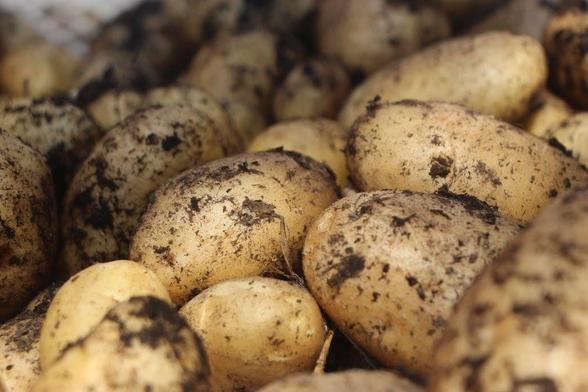
The seed potatoes I saved this year aren’t waiting for Spring. I discovered them in my dark closet fully sprouted
#gardening #seedsaving #seedpotatoes
Going to Seed

Going to Seed inspires a shift in agriculture towards adaptation, community, and diversity. Adaptation Agriculture or Adaptation Gardening allows the ecosystem to select the best plants, rather than relying on the farmer or gardener to supply inputs such as fertilizers, pesticides, and plastics.

Going to Seed

TY, @TheOneSwit ! Tagging for #SolarPunkSunday! @urbanmicrofarmer

Granulum -- Saaten für den Garten

"Die Förderung eines dezentralen und informellen Saatgutsystems in der Region ist dabei das Hauptziel von GRANULUM. Dazu benötigt es viele Menschen die an vielen Orten viele Körnchen vermehren. "

https://www.granulum.at/granulum.html

#Austria #SeedSaving #Decentralized #Gardening #Gardens

GRANULUM - Saaten für den Garten

#India - Seeds of #Resistance for #FoodSovereignty

April 2017

Excerpt: "Community action-reflection-action processes to identify and analyse the forces that obstruct food sovereignty, and evolve collective transformative actions for food sovereignty is a core practice of our movement. Community food sovereignty plans have emerged as a critical expression of political action.

"Life cycles amongst #adivasi communities, and agriculture cycles in small #farmer peasant and pastoralist communities, along with communities’ indigenous knowledge, provide a framework for the plans. The plans include: democratic governance of resources-land, water, forests, territories, biodiversity, seeds, breeds and knowledge; nurturing life in our soils and growing, consuming and sharing healthy diverse and culturally appropriate food agro-ecologically, asserting seed and animal breed sovereignty through saving and exchange of local seeds and breeds between food farmers; reciprocal systems of sharing labour, knowledge and produce; strengthening local food markets that connect producers and consumers, leading to the diversification and revival of food crops. The alliance enables members to share and exchange seeds across regions, particularly accessing seeds that have disappeared from their region, which they wish to revive. Social justice is central to the idea of food sovereignty, and hence breaking the unjust structures of caste, class and patriarchy are core elements of the movement.

"Intergenerational learning and sharing of knowledge between community elders and youth is an essential strategy. Youth learn from community elders, particularly women, accompanying them as they collect diverse tubers, herbs, fruits and seeds, learning about how to process and store produce, save seeds, establish community seed banks and learn to craft and use local agriculture implements.

"Celebrating the diversity of food, through local festivals, song, dance, theatre, community cooking and other cultural actions, linked to the life cycles and seasonal agricultural calendars, enhance our practice. Campaigns, jatras and food sovereignty summits, community action research on specific questions, sharing our experiences and concerns through mainstream media, popular and academic journals, are other critical strategies to nurture solidarity and collective actions for food sovereignty."

Read more:
https://www.leisaindia.org/seeds-of-resistance-for-food-sovereignty/

#SolarPunkSunday #SeedsOfResistance #FoodSovereignty #GenerationalKnowledge #KnowledgeSharing #TraditionalAgriculture #CollectiveAction #CollectiveLearning #SeedBanks #SeedSaving #BioDiversity #FoodIsLife #Agroecology

Seeds of resistance for food sovereignty – LEISA India

Seeds of resistance for food sovereignty

LEISA India

#Zuni Youth Enrichment Project

#FoodSovereignty Team Shares Knowledge, Nourishes Community This Fall

#CommunityGardening and #SeedSaving remain central to the team’s efforts, despite the challenges this year due to excessive summer heat, pervasive drought and a dwindling water supply. Fortunately, the garden at Ho’n A:wan Park is now thriving with the arrival of cooler fall temperatures and some rain.

Tue, October 7, 2025

Excerpt: "The food sovereignty team also recently hosted two workshops for the Zuni community. One was a virtual workshop on pickling, which #ZYEP recorded and uploaded to social media so it would always be accessible.

" 'Khass pickled cucumbers, chili peppers, onions and purslane, which grows abundantly here,' Seowtewa said, noting that purslane, a fleshy-leafed succulent plant, tastes a lot like artichoke hearts.

"ZYEP also hosted an in-person workshop in partnership with James and Joyce Skeets, owners of Vanderwagen, New Mexico-based Spirit Farm. Fifteen community members attended the workshop, which gave them opportunities to learn about—and taste—some of the plants grown at the farm, including basil, hyssop, chili peppers, mint, nasturtiums and Stevia leaf."

https://www.yahoo.com/news/articles/zuni-youth-enrichment-project-food-173445353.html

#SolarPunkSunday #FoodSecurity #NewMexico #GrowYourOwn #PWNA #IndigenousFoodSovereignty #ClimateChange #ClimateResilience #ClimateChangeGardening

Zuni Youth Enrichment Project Food Sovereignty Team Shares Knowledge, Nourishes Community This Fall

This fall, the Zuni Youth Enrichment Project’s food sovereignty team is combining national knowledge-sharing with local, hands-on programming to strengthen...

Yahoo News

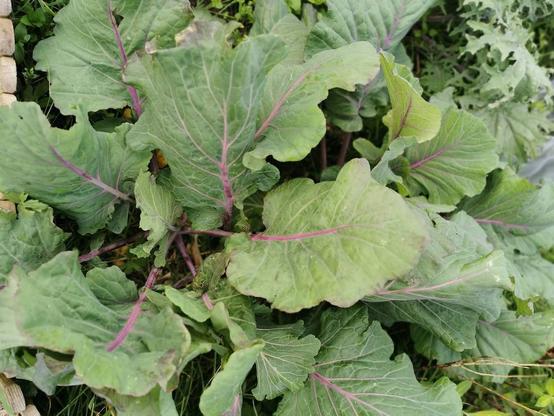
@growfediverse Here’s a cultivar of Cynara Cardunculus (Cardoon).

#SeedSaving #Cardoon

🌱🌍 Kuatro Marias Agroecology Farm in Oriental Mindoro, Philippines, is a living example of integrated, chemical-free farming. Since 1998, it has combined crops, livestock, aquaculture, seed saving, and farmer education to build soil health, biodiversity, and climate resilience—while empowering local communities 💚🐓🐟

👉 Find out more: https://agroecologymap.org/l/399

#Agroecology #OrganicFarming #IntegratedFarming #FoodForest #SeedSaving #ClimateResilience #CommunityFarming #RegenerativeAgriculture

@greenpeace Gideon Muya, Programs Officer, Biodiversity and Biosafety Association of Kenya, said:

“This judgment is a shield for our biodiversity. Indigenous seeds are the library of life – they hold the genetic diversity we need to withstand droughts, pests, and a changing climate. The court has recognised that you cannot patent nature’s heritage. We have reclaimed the right to choose what we plant and what we eat, free from the coercion of commercial seed monopolies.” #SeedSaving #SolarPunk