Largest ALMA Image Ever Reveals Hidden Chemistry at the Heart of the Milky Way

ALMA’s most ambitious galactic survey yet exposes a wild, filament-filled stellar nursery at the very heart of the Milky Way. Astronomers have produced a remarkable new view of the center of the Milky Way, exposing an intricate web of cosmic gas in greater detail than ever before. The image was c

SciTechDaily
I think #SciTechDaily could do a better job of not being dickish. The alt text... it's all in the alt text. If you don't read the alt text, you will not get my point.

Scientists Discover Neural Basis of Schizophrenia and Bipolar Disorder -SciTechDaily.com

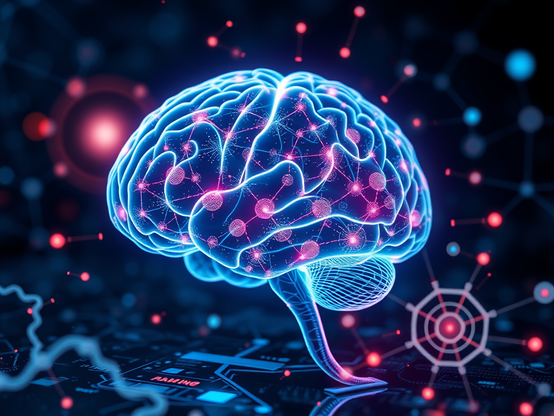
Tiny engineered brain models reveal that psychiatric disorders may arise from distinctive disruptions in neural communication rather than obvious structural damage. Credit: SciTechDaily.com

Health

Scientists Discover Neural Basis of Schizophrenia and Bipolar Disorder

By Roberto Molar Candanosa, Johns Hopkins University, December 20, 2025, 8 Comments,
5 Mins Read

Facebook Twitter Pinterest Telegram, Share

Using lab-grown brain tissue, researchers uncovered complex patterns of neural signaling that differ subtly between healthy brains and those linked to severe psychiatric disorders.

For the first time, scientists have used pea-sized brain organoids grown in the laboratory to uncover how neurons may malfunction in schizophrenia and bipolar disorder. These psychiatric conditions affect millions of people around the world, yet they remain difficult to diagnose because researchers still lack a clear understanding of their underlying molecular mechanisms.

The results could eventually help clinicians reduce diagnostic uncertainty when treating these and other mental health conditions. At present, such disorders are typically identified through clinical judgment alone, and treatment often relies on lengthy trial-and-error approaches to medication.

A detailed account of the findings was published in the journal APL Bioengineering.

“Schizophrenia and bipolar disorder are very hard to diagnose because no particular part of the brain goes off. No specific enzymes are going off like in Parkinson’s, another neurological disease where doctors can diagnose and treat based on dopamine levels even though it still doesn’t have a proper cure,” said Annie Kathuria, a Johns Hopkins University biomedical engineer who led the research. “Our hope is that in the future we can not only confirm a patient is schizophrenic or bipolar from brain organoids, but that we can also start testing drugs on the organoids to find out what drug concentrations might help them get to a healthy state.”

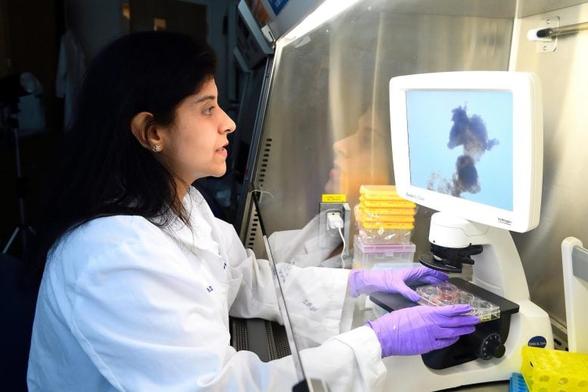
Annie Kathuria. Credit: Will Kirk / Johns Hopkins University

Machine learning decodes disease specific signals

Kathuria’s team created the organoids, simplified versions of brain tissue, by reprogramming blood and skin cells from people with schizophrenia, bipolar disorder, and from healthy volunteers into stem cells capable of forming brain-like structures. They then applied machine learning tools to analyze the electrical activity of the organoids’ cells, allowing them to identify neural firing patterns associated with healthy and diseased states. In the human brain, neurons communicate through small electrical signals.

Continue/Read Original Article Here: Scientists Discover Neural Basis of Schizophrenia and Bipolar Disorder

#AnnieKathuria #BiomedicalEngineer #BipolarDisorder #Discover #HealthResearch #JohnsHopkinsUniversity #MentalHealth #NeuralBasis #Schizophrenia #Scientists #SciTechDaily

We are falling short of the Paris Agreement’s targets

Scientists at Utrecht University have uncovered a hidden bias in how fairness and ambition have been judged that rewards big polluters and penalises vulnerable nations

https://scitechdaily.com/has-climate-math-been-rigged-this-whole-time/

#climateChange #globalWarming #ParisAgreement
#emissionTargets #SciTechDaily

Has Climate Math Been Rigged This Whole Time?

New research reveals that climate fairness calculations have long favored wealthy, high-polluting nations by letting them delay urgent action while shifting responsibility onto vulnerable countries.

SciTechDaily

Scientists Discover Hidden Cause of Alzheimer’s Hiding in Plain Sight – SciTechDaily

A new study by UC San Diego researchers has shown that the gene PHGDH, once considered only a biomarker for Alzheimer’s, actually plays a direct causal role by disrupting gene regulation in the brain through a newly discovered, non-enzymatic function. Using AI, they identified a drug candidate, NCT-503, that targets this “moonlighting” function and significantly slowed Alzheimer’s progression in mouse models. Credit: SciTechDaily.com

Health

Scientists Discover Hidden Cause of Alzheimer’s Hiding in Plain Sight
By University of California – San DiegoMay 10, 2025, 9 Comments, 7 Mins Read

A new study by UC San Diego researchers has shown that the gene PHGDH, once considered only a biomarker for Alzheimer’s, actually plays a direct causal role by disrupting gene regulation in the brain through a newly discovered, non-enzymatic function. Using AI, they identified a drug candidate, NCT-503, that targets this “moonlighting” function and significantly slowed Alzheimer’s progression in mouse models. Credit: SciTechDaily.com
Researchers found the PHGDH gene directly causes Alzheimer’s and discovered a drug-like molecule, NCT-503, that may help treat the disease early by targeting the gene’s hidden function.

A recent study has revealed that a gene previously identified as a biomarker for Alzheimer’s disease is not just a marker, it is a direct cause of the disease. Researchers at the University of California, San Diego discovered that the gene plays a previously unrecognized secondary role that actively drives the development of Alzheimer’s. Using artificial intelligence, the team was able to uncover this hidden function and identify a potential therapeutic strategy to block the gene’s harmful activity.

The findings were published on April 23 in the journal Cell.

Alzheimer’s disease affects approximately one in nine people aged 65 and older, making it the most common form of dementia. Although certain genetic mutations are known to cause Alzheimer’s, these cases represent only a small fraction of the total. Most individuals with Alzheimer’s do not carry mutations in any of the established disease-causing genes. These sporadic or “spontaneous” cases have long puzzled scientists, as their underlying causes remain largely unknown.

Read more: Scientists Discover Hidden Cause of Alzheimer’s Hiding in Plain Sight – SciTechDailySource Links: Scientists Discover Hidden Cause of Alzheimer’s Hiding in Plain Sight

#AlzheimerS #CausesDisease #Cell #Disease #Health #Science #SciTechDaily #UCSanDiego

Scientists Discover Hidden Cause of Alzheimer’s Hiding in Plain Sight – SciTechDaily

A new study by UC San Diego researchers has shown that the gene PHGDH, once considered only a biomarker for Alzheimer’s, actually plays a direct causal role by disrupting gene regulation in the bra…

DrWeb's Domain

《日裔基因研究發現令人震驚的結果》( #Gemini翻譯
"Who Are the #Japanese ? New DNA Study Shocks Scientists" by #SciTechDaily

https://scitechdaily.com/who-are-the-japanese-new-dna-study-shocks-scientists/

摘要:( #Gemini整理
『一項新的DNA研究發現,日本人的起源和遺傳多樣性比先前認為的更為複雜。研究表明,日本人有三個祖先群體,而不是兩個。其中一個群體與曾經居住在東北亞的蝦夷人有關。此外,該研究還利用DNA信息識別與某些疾病相關的基因。』
『A new DNA study found Japanese have 3 ancestral groups, not 2. One group is related to the Emishi people. The study also identified genes linked to certain diseases.』

#WGS - #JEWEL project
#長知識 #不能只有我看到

Who Are the Japanese? New DNA Study Shocks Scientists

By studying the genomes of more than 3,000 people across Japan, researchers have shed light on the population’s complex ancestry. The work may also pave the way for future precision medicine. Researchers discovered that the genetic lineage of Japan’s population includes three ancestral groups, re

SciTechDaily

#TheMetalDogArticleList
#SciTechDaily
Decoding the Geometry of Music: 70-Year-Old Math Problem Solved
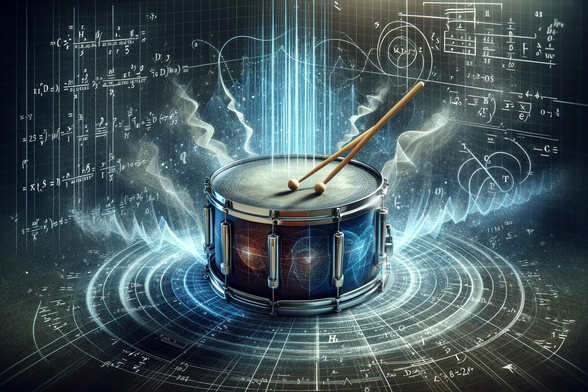
A professor and his collaborators have proven Plyas conjecture for the eigenvalues of a disk, a tricky problem in mathematics. Is it possible to deduce the shape of a drum from the sounds it makes? This is the kind of question that Iosif Polterovich, a professor in the Department of Mathemat

https://scitechdaily.com/decoding-the-geometry-of-music-70-year-old-math-problem-solved/

#GeometryOfMusic #MathProblemSolved

Decoding the Geometry of Music: 70-Year-Old Math Problem Solved

A professor and his collaborators have proven Pólya’s conjecture for the eigenvalues of a disk, a tricky problem in mathematics. Is it possible to deduce the shape of a drum from the sounds it makes? This is the kind of question that Iosif Polterovich, a professor in the Department of Mathemat

SciTechDaily

A team of early-career researchers from @UniKoeln announced to have successfully deciphered the hitherto "unreadable" Central Asian #Kushan #script, puzzling™ scholars for about seventy years:

https://scitechdaily.com/seventy-year-old-puzzle-solved-researchers-decipher-ancient-unknown-kushan-script via #SciTechDaily

Seventy-Year-Old Puzzle Solved – Researchers Decipher Ancient “Unknown Kushan Script”

A team of early-career researchers from the University of Cologne has successfully deciphered the enigmatic 'unknown Kushan script,' a script that has puzzled scholars for over seventy years. After a multi-year investigation, researchers Svenja Bonmann, Jakob Halfmann, and Natalie Korobzow analyzed

SciTechDaily

Once upon a midnight dreary …

Turns out, #ravens been spending time with us much longer than Edgar probably would've imagined (i.e. at least 30,000 years):

https://scitechdaily.com/ravens-in-prehistory-scientists-unearth-a-30000-year-old-relationship-with-humans via #SciTechDaily

Ravens in Prehistory: Scientists Unearth a 30,000-Year-Old Relationship With Humans

Scientists from the University of Tübingen and the Senckenberg Centre for Human Evolution and Palaeoenvironment examine human-raven relationships. Long before the establishment of the first Neolithic settlements around 10,000 years ago, humans and wild animals had already formed diverse relations

SciTechDaily

The Hidden Mathematics of Crowds: How Pedestrians Inadvertently Self-Organize

https://scitechdaily.com/the-hidden-mathematics-of-crowds-how-pedestrians-inadvertently-self-organize/

"The discovery, recently published in the prestigious journal Science, constitutes a major advance in the interdisciplinary science of ‘active matter’ – the study of group behaviors in interacting populations ranging in scale from bacteria to herds of animals." --#universityOfBath #SciTechDaily

#api360 #robotics #AI

The Hidden Mathematics of Crowds: How Pedestrians Inadvertently Self-Organize

Mathematical research from the University of Bath in the United Kingdom has shed new light on the formation and behavior of crowds. Have you ever pondered how people, without having a discussion or even giving it a second thought, instinctively form lanes when walking through a crowded area? A

SciTechDaily