 DoomsdaysCW
@wauz Open to suggestions! One of my cooking show documentaries was the companion series to #SaminNosrat's #SaltFatAcidHeat!
 CmooreArt
@MaQuest after @DoomsdaysCW After watching #saltfatacidheat on Netflix I had to order the Tamari sauce from Japan; omg it is amazing I’m totally addicted to the stuff. My mouth is watering just writing about it.
From what I've been learning about natural sea salt, it has more minerals and potassium content -- which gives flavor without as much sodium content (like one would see in commercial salt), @praetor . I suggest watching the TV series, #SaltFatAcidHeat -- the salt episode in particular -- where they talk about that with regards to traditionally-made Japanese sea salt!
 Conscious Dancer
Monday Love to your Creative Compass
“The principles of true art is not to portray, but to evoke.”
~ Jerzy Kosinski
Which way does your compass point? How do you know when you’re on track? Do you have a simple system to navigate every aspect of your life?
#CreativeCompass
#SimplifyLife
#FundamentalElements
#SaltFatAcidHeat
Read More Here
https://consciousdancer.com/monday-love-to-your-creative-compass/

Monday Love to your Creative Compass
“The principles of true art is not to portray, but to evoke.” ~ Jerzy Kosinski Which way does your compass point? How do you know when you’re on track? Do you have a simple system to navigate every aspect of your life? I recently bought my daughter a famous culinary book for her birthday. In Samin
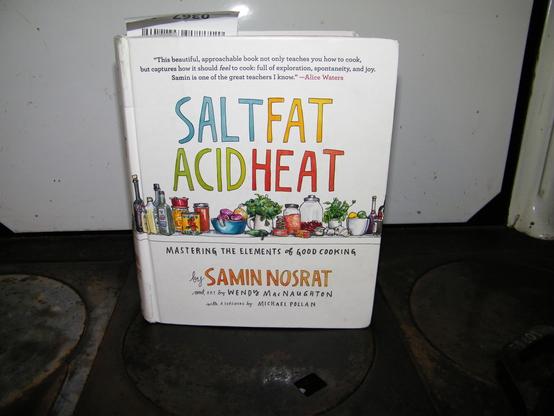
So, not too long ago, someone here on Mastodon (I've forgotten who) suggested I pick up a copy of #SaminNosrat's #SaltFatAcidHeat. It is NOT a vegetarian cookbook, but it does have some veggie recipes that I'm planning on trying out (and sharing with folks here). I watched the TV series on Netflix (CW - lots of images of meat on the episodes), but I learned how to make salt from salt-water, learned about cold spots in the oven, saw how traditional tamari is made in Japan, and how microflora in the soil affects the taste of olive oil! And lots about the chemistry and science behind cooking! Some good stuff!
#Cookbooks #CookingScience #Recipes #Cooking #MichaelPollan #WendyMacNaughton
#Cookbooks #CookingScience #Recipes #Cooking #MichaelPollan #WendyMacNaughton
 mx alex tax1a - 2020 (6)
just started the Ligurian Focaccia bread from #SaltFatAcidHeat, except we made a half-recipe because that's the one that fits our life rn, wish us luck
 Andrea Zio
I am a huge fan of Samin Nosrat (@[email protected]) -- the author of #SaltFatAcidHeat; as well of the @freakonomics family of podcasts (#FreakonomicsRadio, #NoStupidQuestions, #FreakonomicsMD, #PeopleIMostlyAdmire)
When Samin was then interviewed by Stephen Dubner for FreakonomicsRadio, I was super excited and I was right to be.
I think it is one of the best #interviews I even listened to.
check it out here: https://freakonomics.com/podcast/extra-samin-nosrat-always-wanted-to-be-famous/

 Julian Lam
For what it's worth the process is rather simple if you have a frothing wand.
One egg yolk
¾ cup oil
Start whisking the egg yolk and add oil a drop at a time until the emulsion comes together, then add oil faster.
Thanks to #SaminNosrat and #SaltFatAcidHeat for the recipe, heh.