Sethianism

The Sethians were 1 of the main currents of Gnosticism during the 2nd & 3rd centuries AD. Along with Valentinianism & Basilidianism.

It was speculated to have originated in the 2nd century AD as a fusion of 2 distinct Hellenistic Judaic philosophies & was influenced by Christianity & Middle Platonism.

The Sethians (In Latin: Sethoitae) are 1st mentioned (alongside the Ophites) in the 2nd century by our boy, Irenaeus (who wasn’t Gnosticism’s friend) & in Pseudo-Tertullian texts. All later accounts appear to be largely lifted from Irenaeus. Hippolytus repeats info from Irenaeus.

According to Epiphanius of Salamis (circa 375), Sethians were found, in his time, only in Egypt & Palestine. But 50 years earlier, they had been found as far as Greater Armenia. Greater Armenia (a.k.a. the Armenian Empire) was an Armenian kingdom (in the ancient Near East) that existed from 331 BC to 428 AD, 758 years.

Philaster’s (4th century AD) Catalogue of Heresies puts the Ophites, Cainites, & Sethians as pre-Christian Jewish sects. However, since Sethians identified Seth with Christ (in the Second Logos of the Great Seth), Philaster’s belief that the Sethians had pre-Christian origins hasn’t found acceptance in later scholarship.

Sethianism claims that gnosis 1st descended upon Seth (3rd son of Adam & Eve), whose knowledge the Sethians regard as their origin.

Norea (who’s either Noah’s wife or Adam & Eve’s daughter) plays a role. As seen in Mandaeism & Manicheanism.

The Sethian cosmogonic myth (or their origin of the universe/cosmos) gives a prologue to Genesis & the rest of the Pentateuch (the first 5 books of the Hebrew/Christian Bible). This presents a radical re-interpretation of the Orthodox Jewish conception of creation & the divine relation to reality. Their cosmogony is most famously in the Apocryphon of John, which describes an Unknown God.

From the “Unknown God” emanate aeons. This is a series of paired female & male beings. The 1st of these is Barbelo, who is a co-actor in the following emanations.

The aeons that result are representative of the various attributes of God, which are indiscernible when they aren’t abstracted from their origin. God & the aeons comprise the sum total of the spiritual universe, known as the Pleroma. Pleroma generally refers to the totality of divine powers.

In some versions of the myth, the aeon Sophia (knowledge) imitates God’s actions, performing an emanation of her own without the prior approval of the other aeons in the Pleroma. This results in a crisis within the Pleroma, leading to the appearance of Yaldabaoth.

This figure is commonly known as the demiurge (the “artisan” or “craftsman”) after the figure in Plato’s Timaeus. Sophia, at first, hides this being. But it escapes, stealing a portion of her divine power from her in the process.

Yaldabaoth uses this stolen power to create a material world imitating the divine Pleroma. To complete this task, he spawns a group of entities known collectively as Archons, the petty rulers & craftsmen of the physical world. Like him, they’re commonly depicted as zoomorphic, having animal heads.

At this stage, the events of the Sethian story start to cohere with the Genesis story everyone knows. The demiurge & his archontic associates fulfil the role of the Creator. In Genesis, the demiurge proclaims himself to be the only god, claiming that there weren’t any other gods better than him.

The demiurge unknowingly emanates a shadow ‘image’ of Adam, while unwittingly transferring the portion of power stolen from Sophia into the 1st physical human body. He then makes Eve from Adam’s rib in an attempt to isolate & regain the power that he’s lost.

By way of this, he tries to SA Eve, who then contains Sophia’s divine power. Several texts picture him as failing when Sophia’s spirit transplants itself into the Tree of Knowledge. The pair eat from the tree of the divine epignosis, guided by Christ appearing as an “eagle” above it to guide them to remember their true “nature above.”

Most surviving Sethian texts are preserved only in Coptic translation of the Greek original. Very little direct evidence of Gnostic teaching was available before the discovery of the Nag Hammadi library.

We’ve posted a few of these texts. Check them out at your leisure:

  • Holy Book of the Great Invisible Spirit
  • Second Treatise of the Great Seth
  • Pistis Sophia
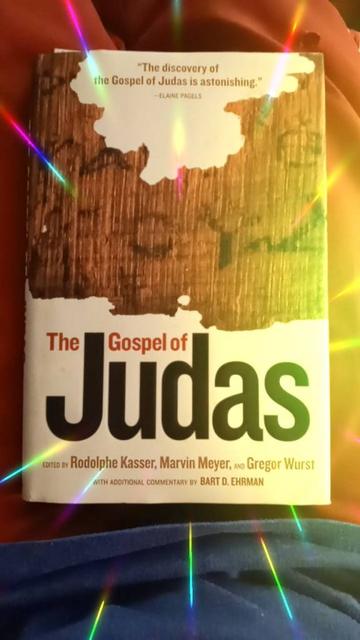
  • Gospel of Judas
  • Manichaean Psalms of Heracleides

The Gospel of Judas is the most recently discovered Gnostic text. National Geographic (Yes, that National Geographic. You know, NatGeo, y’all!) published an English translation of it. Our founder has a VERY well-worn copy of this book. It’s well-worn because they’ve read it numerous times.

This text portrays Judas Iscariot as the “13th spirit/daemon,” who “exceeded” the evil sacrifices of the “man who clothed me (Jesus).”

Its reference to Barbelo & inclusion of material similar to the Apocryphon of John & other such texts connects the text to Barbeloite &/or Sethian Gnosticism.

Make a one-time donation

Your contribution is appreciated.

Donate

Make a monthly donation

Your contribution is appreciated.

Donate monthly

Make a yearly donation

Your contribution is appreciated.

Donate yearly #2ndCenturyAD #331BC #3rdCenturyAD #428AD #4thCenturyAD #Adam #Aeons #ApocryphonOfJohn #Archons #ArmenianEmpire #Barbelo #Barbeloite #Basilidianism #Cainites #CatalogueOfHeresies #Christ #Christianity #Circa375 #Creation #Daemon #Demiurge #Egypt #EpiphaniusOfSalamis #Eve #Genesis #Gnosticism #GospelOfJudas #GreaterArmenia #HellenisticJudaism #HolyBookOfTheGreatInvisibleSpirit #Irenaeus #Jesus #JudasIscariot #Latin #MiddlePlatonism #NagHammadiLibrary #NationalGeographic #NearEast #Noah #Norea #Ophites #Palestine #Pentateuch #Philaster #PistisSophia #Plato #Pleroma #PseudoTertullian #Saklas #SecondLogosOfTheGreatSeth #SecondTreatiseOfTheGreatSeth #Seth #SethianGnosticism #Sethianism #Sethians #Sethoitae #Sophia #Timaeus #TreeOfKnowledge #Valentinianism #Yaldabaoth #Zoomorphic
The Unfathered: A Short Story for a Long World

There is a part of the Book of Genesis that almost no one reads aloud. It sits between the famous scenes, the garden and the flood, and it is only a list. Adam lived a number of years and begat Seth. Seth lived and begat Enosh. The text walks down the page through nine generations of fathers and sons, each man reduced to two facts, that he lived and that he made another like himself, until the line reaches Noah and the world is ready to drown. I used to skip those passages. I read one again last night, on a laptop in an apartment I am about to leave, and I understood for the first time that a genealogy is a horror story told slowly enough to be survived. […]

https://bolesblogs.com/2026/06/07/the-unfathered-a-short-story-for-a-long-world/

Seth thinks he's a Mermaid too? I think I'm a Mermaid too 🤭 #seth #sleipnir #loveeternal #onetruelove #mermaid #calypso #churchofsatan
His thing in my thing on a boat??? 🤭 Not on a boat??!! 🌝 #sleipnir #seth #loveeternal #devotion #churchofsatan
I made my thing grow shut for the one trve love 🤭 I became the virgin Mary for a God who walks the Earth. #seth #sleipnir #loveeternal #devotion #churchofsatan
His thing in my thing 🤭 shtap! I hate it when the government is inbetween trve love. #sleipnir #loveeternal #seth #devotion #churchofsatan
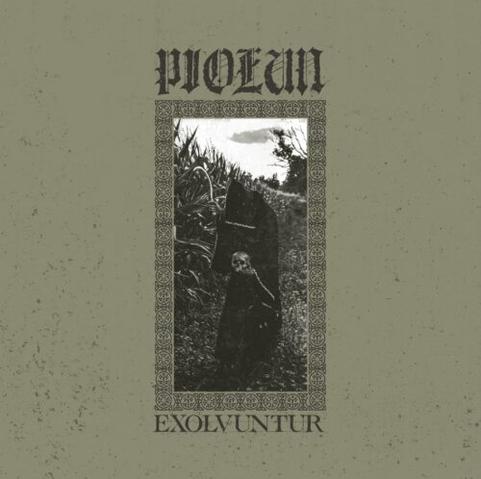
Piołun – Exolvuntur Review By Thus Spoke

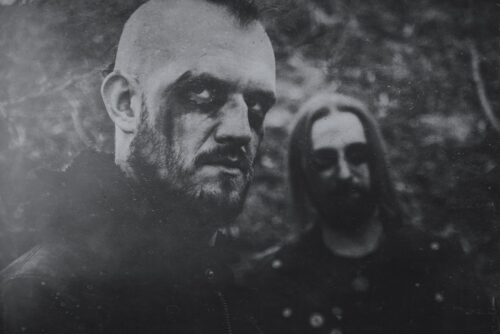
It’s impressive how some artists work in multiple bands at once, and more impressive how common this seems to be. Often, the fact that an act is a side-project of or also features a particular musician is the sole reason you check them out, conferring a degree of quality or prestige. Piołun is one of these bands, a duo comprised of Mānbryne and ex-Blaze of Perdition guitarist Łukasz Barański—who here also handles vocals—and relatively unknown drummer Vitor. Like those groups, Piołun is black metal in a style that has grown increasingly associated with the Polish scene in particular—melodic but understated, enriched with a pinch of atmosphere and a slightly gritty vibe. The band’s debut, Rzeki Goryczy, was met with general acclaim, and it should therefore delight fans that Exolvuntur follows closely in its footsteps, albeit aiming to be “more dynamic and melodic.” In fact, this sophomore is exemplary in many ways, but not all of them are complimentary.

Exolvuntur is simple on the surface, sticking to unflowery tremolos and uncomplicated tempos, occasionally employing group1 vocals for roaring emphasis. Particular turns of instrumental phrase echo those of Mānbryne (“Moribunda,” “Hiems”), while others carry a more Sethian tone (“Manifest-kresu,” “Czas”). But Piołun don’t ape anyone so much as draw from a common well of spiritedness. More overtly than on the debut, they hit upon the familiar hazily-layered riffing and minimalistic melodic scales of second-wave-cum-meloblack in general, and structure their compositions uniformly around the recurrence of a singular uplifting high guitar line. This allows them to centre their spirit, which vitriolic vocal delivery and the occasional nods to the epic in their key refrains demonstrate they have an abundance of. Spirit and familiarity only go so far, however.

Piołun know how to write a smart rhythmic hook and a melancholic lead. Repeated stop-starts (“Sierpniowy-brzask,” “Hiems”), an offbeat to the descent of a tremolo (“Manifest-kresu”), and emphatic push-pulls between vocal delivery and guitar line switching (“Moribunda”) make for a consistently spunky energy. It pairs well with Exolvuntur’s best refrains, which feel mournful in that vaguely medieval sense only the trvest black metal is capable of (“Manifest-kresu,” “Sierpniowy-brzask,” “Proba-Sznura”). Exolvuntur is rather more uplifting than harrowing, filled with layered, iterated melodies (“Sierpniowy-brzask”) and anthemic, emphatic roars (“Czas,” “Kolo-zycia”). This applies to forward-launching blazers (“Manifest-kresu,” “Kolo-zycia”), rhythmic fillers (“Czas), and mellow bridgers (“Sierpniowy-brzask,” “Moribunda”) alike. It’s nothing you haven’t heard before but like a favourite hoodie or comforting tv show you’ve watched so many times, you know every line, there’s something endearing and warming about this album—strange as that would seem given its overt heaviness and darkness.

Yet Exolvuntur’s charms mask a simplicity that approaches shallowness. These shimmering lead riffs that are good in isolation and already familiar in an abstract sense are recycled with barely a semitone of difference across the record (“Sierpniowy-brzask,” “Proba-Sznura,” “Hiems”); the remainder feel like filler. Operating between a handful of notes that could constitute a theoretical “average” for this style of meloblack, their cadence, execution, and frequency is not only predictable but so void of imagination that they make every movement feel trite and their emotionality manufactured. It forms a key part of the problematic repetitiousness that plagues Exolvuntur, where tempos suffer from a similar banality, mechanically moving between a tripping march and nondescript blastbeat of some form, killing the fire of a stinging lead and with nary a fill or rollover to be heard. “Heard” is key here, because the drums somehow sound jarringly clacky at one moment and anaemically muffled everywhere else—like a bongo in a phone booth—which makes potential drum gymnastics very difficult to distinguish. At the heights of speed and intensity, vocals and much of the guitars are swallowed by this mire such that everyone is jostling for position, and passionate snarls feel unintentionally strained rather than punchy.

Piołun did not need to fall back on triteness. Not only are there sweeping refrains (“Proba-Sznura”) and passionate arcs (“Manifest-kresu”) that demonstrate a flair for the dramatic and deep, their very debut Rzeki Goryczy does too. The duo exercised restraint in keeping Exolvuntur below 40 minutes, but that restraint seems to have bled into the songwriting, in a genre and proclaimed take on it that necessitates at least a little excess—in emotion, heaviness, speed, or complexity. Exolvuntur is a slice of nostalgia for some, a comforting wash of approximately vicious black metal, but it shows how great a distance there is in evoking a sound and using it to evoke anything else.

Rating: Disappointing
DR: 6 | Format Reviewed: 320 kbps mp3
Label: Malignant Voices
Websites: Bandcamp | Facebook
Available Worldwide: May 22nd, 2026

#20 #2026 #BlackMetal #BlazeOfPerdition #Exolvuntur #MalignantVoices #Mānbryne #May26 #MelodicBlackMetal #Piołun #PolishMetal #Review #Reviews #Seth