 LinuxGizmos.com [Unofficial]
Sixfab AI HAT+ and Edge AI Expansion Board add DEEPX acceleration to Raspberry Pi 5
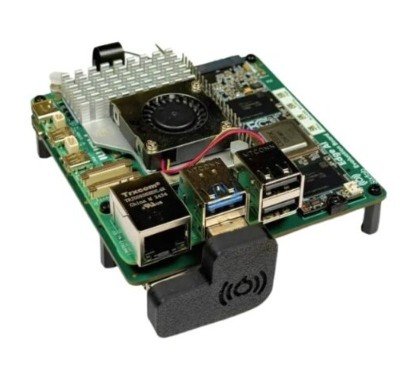
Sixfab AI HAT+ and Edge AI Expansion Board add DEEPX acceleration to Raspberry Pi 5
Lilbits: Lenovo teases a larger gaming tablet, OpenBSD ported to the Pomera DM250, Microsoft simplifies Windows Insider channels
Lenovo has been selling gaming tablets under the Lenovo Legion brand since 2022. But while the company has updated the processor and other key specs several times over the past four years, one thing that’s stayed the same is the screen size: 8.8 inches.
Now it looks like Lenovo is preparing to launch its first model with a larger screen.
Detailed specs aren’t available yet, but it also looks […]
#amazonLuna #framework #gameStreaming #gamingTablet #legionTab #lenovo #lilbits #luna #openbsd #pomeraDm250 #radio #raspberryPiHat #riscV #spacemitK3 #suptronicsX1208 #windowsInsiderProgram #zuikiVividnode Read more: https://liliputing.com/lilbits-lenovo-teases-a-larger-gaming-tablet-openbsd-ported-to-the-pomera-dm250-microsoft-simplifies-windows-insider-channels/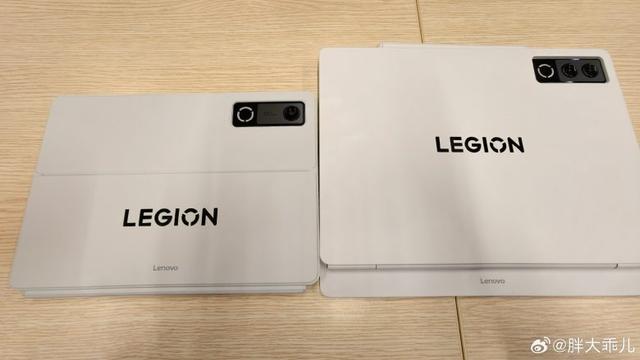
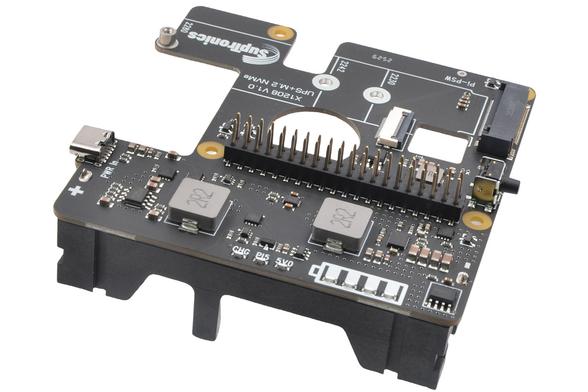
The SupTronics X1208 is a UPS and M.2 NVMe SSD HAT for Raspberry Pi 5 designed to offer fast storage and protect the system against data loss during power outages for Edge Computing, NAS, data logging, and other always-on applications. The HAT draws up to 5V/5A from the USB-C port, which charges a 21700 lithium-ion battery (1.5A) and powers the Raspberry Pi 5 directly through the 40-pin GPIO header, eliminating the need for extra cables. It also features an M.2 M-key NVMe slot supporting 2230/2242/2280 SSDs up to 4TB with PCIe 2.0/3.0 speeds. The UPS supports power switching, auto power-on, safe shutdown on low battery, and GPIO-based power/charging control, along with power loss detection. The X1208 board is also equipped with a Maxim fuel gauge I2C chip for battery voltage and capacity monitoring. SupTronics X1208 UPS + M.2 HAT specifications: Compatibility – Raspberry Pi 5 Model B Storage – M.2 M-key
DreamHAT+ Enables 60 GHz Radar Sensing on Raspberry Pi 4B and 5
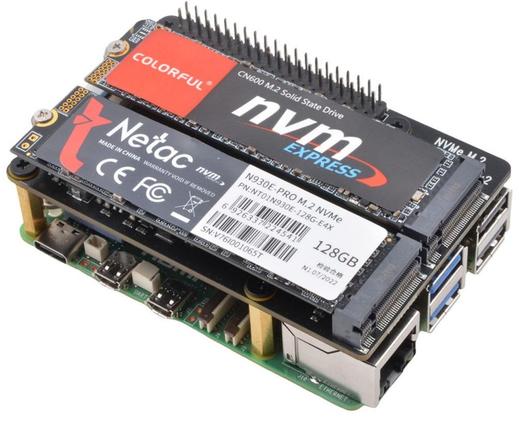
Connect two M.2 2280 SSDs to a Raspberry Pi 5 with Geekworm’s X1004 Dual NVMe HAT
Raspberry Pi 5 add-on boards that allow you to attach a PCIe NVMe solid state drive to the little computer are becoming so common that I told myself I wasn’t going to write about new models anymore.
And then I saw the Geekworm X1004 Dual 2280 NVMe SSD shield. Available from AliExpress for $43, this little board is one of the more expensive […]
https://liliputing.com/?p=166373
#geekworm #geekwormX1004 #pcie #raspberryPi5 #raspberryPiHat #ssd #suptronics
PiSquare Lets You Run Multiple HATs on a Raspberry Pi
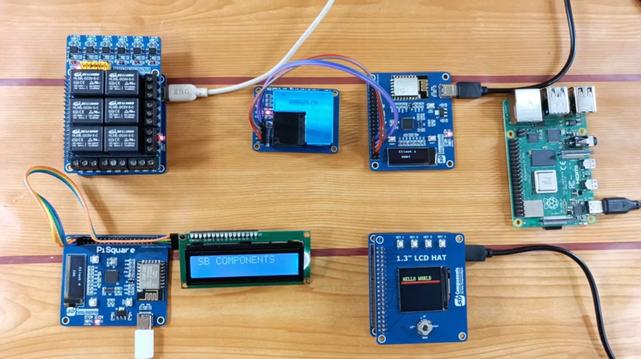
The Raspberry Pi's venerable 40-pin header and associated HAT ecosystem for upgrades has been a boon for the platform. It's easy to stack extra hardware on to a Pi, even multiple times in some cases. However, if you want to run multiple HATs, and wirelessly at that, the PiSquare might just be the thing for you.
The PiSquare consists of a board featuring both RP2040 and ESP-12E microcontrollers. It interfaces with Raspberry Pi HATs and even lets you run multiple of the same HAT on a single Raspberry Pi, as it's not actually directly using the UART, SPI, or I2C interfaces on the host Pi itself. Instead, the PiSquare communicates wirelessly with the Pi, handling the IO with the HAT itself.
It's unclear how this works on a software level. Simply using existing software tools and libraries for a given Raspberry Pi HAT probably won't work with the wireless PiSquare setup. However, for advanced users, it could serve a useful purpose, allowing one Raspberry Pi to command multiple HATs without the fuss of having to run more single-board computers where just one will do. Boards will be available on Kickstarter for those interested in the device.
We've seen other creative things done with the Raspberry Pi and the HAT system, too. If you've been cooking up your own neat hacks for the platform, drop us a line!
Know which way the wind blows, whether weather boosts your mood
As a quantified-self experiment, [Ayan] has tracked several daily habits and moods for a couple of years and discovered some insights. Too much coffee is followed by anxiety while listening to music leads to feelings of motivation and happiness. There was a strong correlation in the data, but [Ayan] wondered if external factors like the weather and air quality also played a role.
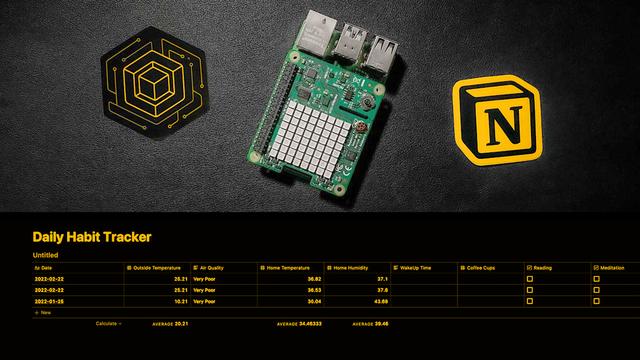
To find out, [Ayan] extended the custom dashboard built in Notion.so with weather data and some local sensors. Working at Balena.io (yes, the makers of the ubiquitous Raspberry Pi SD card flashing tool, Etcher), [Ayan] turned to balenaCloud to translate the data from (you guessed it) a Raspberry Pi into the dashboard via Notion’s API beta. We think Notion holds a lot of promise for all sorts of web-based dashboards as a research notebook and organizational tool. Who knows where the API will lead any interested readers?
Check out the full tutorial where [Ayan] walks you through the hardware used and each step to connect the APIs that bring it all together. [Ayan] plans to add a coffee-maker integration to automate that data entry and would welcome help getting a manual trigger set up for the data integrations.
#hardware #internethacks #raspberrypi #balena #datacollection #etcher #notion #quantifiedself #raspberrypihat #sensehat
Un piccolo raspberry pi zero 2 per un nostro cliente 😎
Qualità prezzo niente male!
Per cosa lo usiamo? Giù nei commenti 😀
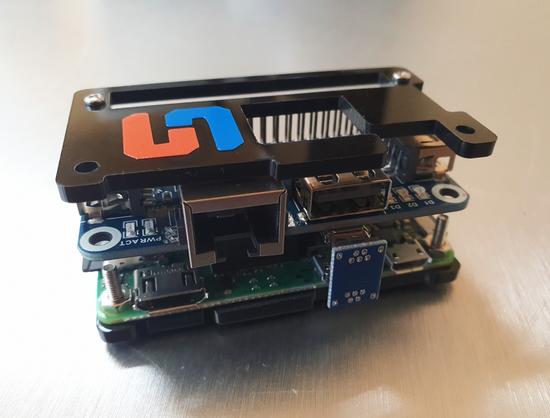
New Part Day: Raspberry Pi HAT for IEEE1588 Precision Time Protocol
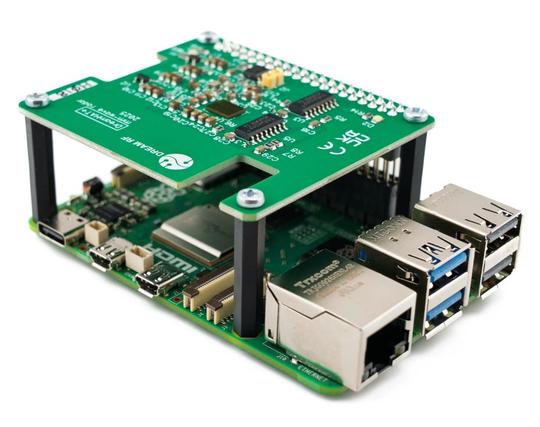
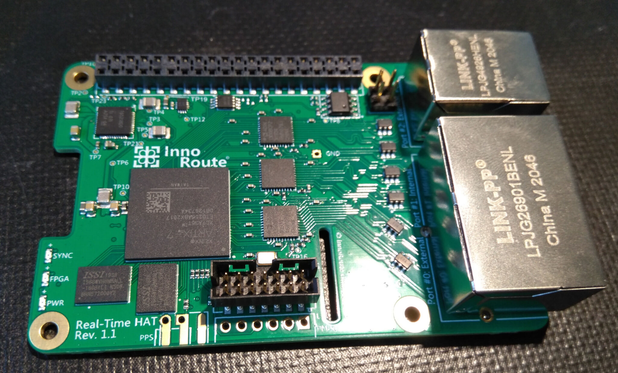
The new Real-Time HAT by InnoRoute adds IEEE1588 PTP support in hardware to a Raspberry Pi 4 nestled beneath. Based around a Xilinx Artix-7 FPGA and a handful of gigabit Ethernet PHY devices, the HAT acts as network-passthrough, adding accurate time-stamps to egress (outgoing) packets and stripping time-stamps from the ingress (incoming) side.
This hardware time-stamping involves re-writing Ethernet packets on-the-fly using specialised network hardware which the Raspberry Pi does not have. Yes, there are software-only 1588 stacks, but they can only get down to 10s of microsecond resolutions, unlike a hardware approach which can get down to 10s of nanoseconds.
1588 is used heavily for applications such as telecoms infrastructure, factory equipment control and anything requiring synchronisation of data-consuming or data-producing devices. CERN makes very heavy use of 1588 for its enormous arrays of sensors and control equipment, for all the LHC experiments. This is the WhiteRabbit System, presumably named after the time-obsessed white rabbit of Alice In Wonderland fame. So, if you have a large installation and a need for precisely controlling when stuff happens across it, this may be just the thing you're looking for.
IEEE1588 PTP Synchronisation
The PTP client and master device ping a few messages back and forth between themselves, with the network time-stamper recording the precise moment a packet crosses the interface. These time-stamps are recorded with the local clock. This is important. From these measurements, the time-of-flight of the packet and offset of the local clock from the remote clock may be calculated and corrected for. In this way each client node (the hat) in the network will have the same idea of current time, and hence all network packets flowing through the whole network can be synchronised.
The beauty of the system is that the network switches, wiring and all that common infrastructure don't need to speak 1588 nor have any other special features, they just need to pass along the packets, ideally with a consistent delay.
The Real-Time HAT configures its FPGA via SPI, straight from Raspberry Pi OS, with multiple applications possible, just by a change on the command line. It is possible to upload custom bitstreams, allowing the HAT to be used as a general purpose FPGA dev board should you wish to do so. It even stacks with the official PoE HAT, which makes it even more useful for hanging sensors on the end of a single wire.
Of course, if your needs are somewhat simpler and smaller in scale than a Swiss city, you could just hack a GPS clock source into a Raspberry Pi with a little soldering and call it a day.
#fpga #networkhacks #raspberrypi #ieee1588 #newpartday #ptp #raspberrypihat #xilinx
 Brad Linder
 Brad Linder
 adingbatponder
  👾
👾

 hackaday unofficial

 unitoo.it