One of my fav topics, dive in next week, huge document attached #alwaysbecharging #publiccharging www.linkedin.com/posts/freder...

Warum ist das Laden an öffentl...
Warum ist das Laden an öffentlichen Ladesäulen so häufig intransparent und teuer? Und was können wir dagegen tun? Diese Fragen haben wir gemeinsam mit Agora Verkehrswende an Die BBH-Gruppe gestellt.… | Frederik Digulla

Warum ist das Laden an öffentlichen Ladesäulen so häufig intransparent und teuer? Und was können wir dagegen tun? Diese Fragen haben wir gemeinsam mit Agora Verkehrswende an Die BBH-Gruppe gestellt. Die ehrliche Antwort ist: Die Preisspreizung an ein und demselben Ladepunkt (je nach Vertragspartnern) liegt nicht an den Betriebskosten, sondern an der Optimierung des eigenen Ertrags. Ladepunktbetreiber mit lokaler Marktmacht setzen intransparente Preise, diskriminieren unabhängige Mobilitätsanbieter und bevorzugen eigene oder verpartnerte Dienste. An der Zapfsäule würden wir uns das nicht bieten lassen. Oder auch ein Bäcker, der jedem Kunden einen anderen Preis für das Brötchen abverlangt, würde wohl nicht lange im Geschäft bleiben. Warum akzeptieren wir das also beim Laden von E-Autos? Das Gutachten zeigt: Wir haben ein faktisches Umsetzungsdefizit beim Diskriminierungsverbot der EU-Verordnung AFIR. Das führt zu weniger Wettbewerb und höheren Preise. Die gute Nachricht: Es gibt Lösungen und sie sind kurzfristig umsetzbar! Das Gutachten von Becker Büttner Held zeigt drei zentrale Hebel: 🔵 AFIR-Vorgaben konsequent durchsetzen: Ad-hoc-Laden aufwerten, diskriminierungsfreien Zugang für alle Mobilitätsanbieter herstellen 🔵 Markttransparenzstelle einrichten: Preise in Echtzeit sammeln, Verstöße sanktionieren: am besten bei der Bundesnetzagentur 🔵 De-minimis-Regelung in § 7c EnWG einführen: Kleinere Energieversorger und Stadtwerke werden vom strikten Entflechtungsverbot ausgenommen. Sie sind wichtige eher gemeinwohlorientierte Träger des Ladeinfrastrukturausbaus gerade in wirtschaftlich weniger attraktiven Bereichen Das sind effektive Instrumente, die den Wettbewerb stärken und faire Preise ermöglichen können. Für Menschen ohne eigenen Lademöglichkeit ist das keine Theoriediskussion. Es entscheidet darüber, ob sie sich den Wechsel auf Elektromobilität leisten können. Und damit auch darüber, ob wir unsere Klimaziele erreichen und allen Menschen bezahlbare Mobilität ermöglichen. Das vollständige Gutachten ist in den Kommentaren verlinkt.

EV Charging Before, During, And After Hurricane Milton Hit Florida

EV charging data and anecdotal evidence both indicate that charging up an EV was easier than filling up a gas tank before and after Milton.

CleanTechnica
EV Charging Before, During, And After Hurricane Milton Hit Florida

EV charging data and anecdotal evidence both indicate that charging up an EV was easier than filling up a gas tank before and after Milton.

CleanTechnica

Curious about the cost differences between charging your EV at home versus public charging stations? Our latest article breaks it down for you! 🚗💨 Discover the pros, cons, and real savings of home EV charging compared to using public stations. Check it out now! 🔋⚡
#EVCharging #SustainableLiving #ElectricVehicles #HomeCharging #PublicCharging #CleanEnergy #EVCommunity #ArmyoftheTread

https://armyofthetread.com/cost-comparison-home-ev-charging-vs-public-charging-stations/

Cost Comparison: Home EV Charging vs. Public Charging Stations

Explore the costs, convenience, and potential savings of EV home charging compared to charging at public stations.

Army of the Tread

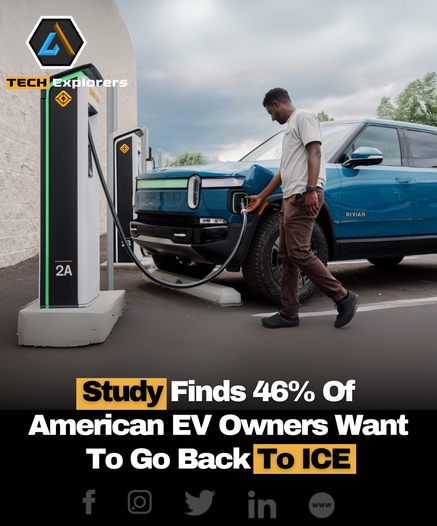
A recent McKinsey & Co. survey reveals that 46% of US EV owners are considering a return to combustion-powered vehicles. The study, which included over 30,000 participants from 15 countries, highlights key concerns such as inadequate public charging infrastructure, high ownership costs, and the need for better options for long journeys.

MORE DETAILS: https://myelectricsparks.com/study-reveals-46-of-u-s-ev-owners-consider-returning-to-ice/

#EVSwitchBack #EVOwners #CombustionEngines #PublicCharging #EVSurvey #McKinseyReport

@hacks4pancakes As others in this thread have said that looks like a J1772 socket. Which if your car only supports level 1 and level 2 charging (both AC) makes sense.

When you're looking for public charging you should look for Level 2 charging with a J1772 plug. You shouldn't have to buy anything to use those charges (other than paying for the electricity)

Try using this AAA map https://ev.aaa.com/resources/?value=CHARGERS#chargerscontent

Which you can filter by J1772 connector type.

My guess is you've found a CHAdeMO charger. https://en.wikipedia.org/wiki/CHAdeMO

I haven't used chargemap so I'm not sure how you filter that app.

#J1772 #EV #PublicCharging

Resources - AAA

EV Resources Beta Homepage EV Resources Beta COST CHARGERS TRIP EMISSIONS INCENTIVES

AAA

I remember one time I was at the IKEA near Portland Internation Airport and they had removed a couple of the public chargers around 2-3 years ago. I didn't notice if they put them back when I swung by a few months ago.

Green Car Report: Study: Some retailers aren't doing much to support EV charging

https://www.greencarreports.com/news/1142534_study-some-retailers-not-doing-much-to-support-ev-charging

#EVCharging #EVChargingInfrastructure #PublicCharging

Study: Some retailers aren't doing much to support EV charging

In a look at 270,000 retail locations controlled by 75 major retail and fast-food chains—brands like Costco, Ikea, Walmart, and Target—only 1% offered EV charging.

Green Car Reports

I wish we used BYOC (bring your own cable) on L2 EVSEs here in the US. We have a lot of vandalism, neglectful damage, etc. on public charging infrastructure and doing it the European way would eliminate most of those issues at L2 public charging.

Win-win for drivers as well as the owner/operators of the charging systems.
#EV #PublicCharging #EVInfrastructure https://mastodon.social/@Some_Emo_Chick/111794507222066983

Having owned an #EV for a year now, I have to say the single most problematic thing is the UK’s public charging networks. Notably the ones that insist on you creating an account, topping up a balance prior to charging, and not bothering to make the process mobile browser friendly.
Not to mention the extortionate price per kWh some charge. (I can charge at home for 9p/KWh and some charge 79p/KWh)
Just stick with contactless payments and stop harvesting personal info.
Drivers of ICE vehicles wouldn't put up with it if the same happened at the pumps.

#ElectricVehicles #EV #PublicCharging

More electric utes needed in Australia, solar group says, as it takes first of its kind on road trip

Australia needs policy changes, more vehicle chargers and a bigger focus on regional areas to catch on low-emissions transport, Solar Citizens says

The Guardian