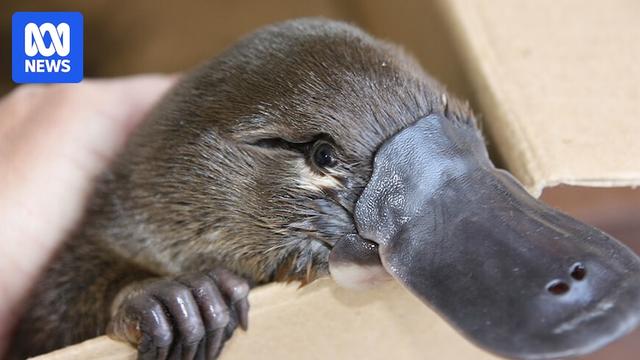
Platypuses need threatened species recognition in NSW, researcher says

"The species was only "hanging on, not thriving" in NSW and the Murray-Darling Basin."

"There's no state or national monitoring framework for platypuses...Dr Bino said platypuses had survived Australia's natural cycles for millions of years, but were now struggling to adapt to human-driven changes. We've been disrupting the natural flow regime and fragmenting and isolating platypus populations."

"Platypus are pretty much wiped out from the mainland in South Australia. They used to occur all along the Murray but that's no longer the case." >>
https://www.abc.net.au/news/2026-04-27/platypuses-should-be-threatened-species-in-nsw-researcher-says/106520128
#platypuses #conservation #habitat #rivers #NSW #monotremes #MDB #ThreatenedSpecies #biodiversity #water #pollution #sprawl #ImperviousSurfaces #roads #runoff #drowning #WipeoutAU

Platypus researcher says the species is just 'hanging on' in NSW

A leading researcher is calling for the platypus to be recognised as a threatened species in NSW, saying a lack of data is the only reason it has not been reclassified.

The Animal That Shouldn't Exist: New Discoveries About Platypuses - YouTube
https://www.youtube.com/watch?v=1ABN5dLK3L4

#Animals #Nature #Platypuses

2026 Discovery: The Platypus is Even Weirder Than We Thought

YouTube
Platypuses found dead in illegal fishing traps in regional Victoria

Anglers are urged to dispose of illegal fishing nets and stick with safer open-top traps, after two platypuses are found drowned in regional Victorian waterways.

ABC News
Urban rewilding has brought back beavers, hornbills and platypuses to city parks – and that’s just the start

Bringing nature back to our cities doesn’t just mean plants and birds. We can bring native animals back too.

The Conversation

NSW platypuses are accumulating the “forever chemical” perfluorooctane sulfonate (PFOS) in very high concentrations.

"The platypus (Ornithorhynchus anatinus) is a semi-aquatic monotreme that occupies a high trophic position in the freshwater ecosystems of eastern mainland Australia and Tasmania. Platypuses are continuously exposed to anthropogenic contaminants including perfluorooctane sulfonate (PFOS). This study examined PFOS concentrations in the livers of deceased platypuses (eight wild; one captive) that were opportunistically collected across NSW over a two- and a half-year period. There was a large variation in PFOS concentrations, ranging from < 1 µg/kg to 1200 µg/kg. This study presents the first report of PFOS contamination in platypuses, revealing their PFOS levels are broadly similar to those found in river otters (Lutra canadensis) and lower than those in American mink (Mustela vison), both which occupy similar ecological niches in freshwater systems. This study raises concerns about the impact of PFOS on platypus health."

"Platypuses are vulnerable to many impacts associated with human activity including hydrological changes, decline in water quality, increase in litter and discarded fishing line, illegal opera house nets (yabby traps) and water contamination...There are no guidelines on what constitutes safe concentrations of PFOS in wildlife."

>>
Warwick, K.G., Wright, I.A., Whinfield, J. et al. First report of accumulation of perfluorooctane sulfonate (PFOS) in platypuses (Ornithorhynchus anatinus) in New South Wales, Australia. Environ Sci Pollut Res 31, 51037–51042 (2024). https://doi.org/10.1007/s11356-024-34704-w
#pollution #water #rivers #contamination #NSW #Wildlife #platypus #platypuses #penguins #PFOS #PFAS #ForeverChemicals #Gleniffer #bellingen #NeverNever #bellinger #catchment #AquaticInvertebrates #DrinkingWater #FoodChain #SyntheticChemicals

First report of accumulation of perfluorooctane sulfonate (PFOS) in platypuses (Ornithorhynchus anatinus) in New South Wales, Australia - Environmental Science and Pollution Research

The platypus (Ornithorhynchus anatinus) is a semi-aquatic monotreme that occupies a high trophic position in the freshwater ecosystems of eastern mainland Australia and Tasmania. Platypuses are continuously exposed to anthropogenic contaminants including perfluorooctane sulfonate (PFOS). This study examined PFOS concentrations in the livers of deceased platypuses (eight wild; one captive) that were opportunistically collected across NSW over a two- and a half-year period. There was a large variation in PFOS concentrations, ranging from < 1 µg/kg to 1200 µg/kg. This study presents the first report of PFOS contamination in platypuses, revealing their PFOS levels are broadly similar to those found in river otters (Lutra canadensis) and lower than those in American mink (Mustela vison), both which occupy similar ecological niches in freshwater systems. This study raises concerns about the impact of PFOS on platypus health.

SpringerLink

Waterways contaminated with "forever chemicals"
The fate of Bellingen's platypuses

"An Australian-first study found perfluorooctane sulfonate (PFOS) in the liver of deceased platypuses collected from numerous rivers in eastern NSW. PFOS is toxic to humans and has been linked to some cancers."

"Scientists from Western Sydney University (WSU) have discovered perfluorooctane sulfonate (PFOS) in the livers of eight deceased platypuses collected from numerous eastern NSW rivers, from the north coast in Bellingen to the alps of Jindabyne."

"All eight wild platypuses collected from NSW waterways over the past two and a half years returned results with concentrations of some PFOS in them, ranging from 4 micrograms per kilogram (µg/kg) to 1,200 µg/kg — some of the highest concentrations of any species in the world."
>>
https://www.abc.net.au/news/2024-08-20/australia-first-study-finds-forever-chemicals-in-platypuses/104244072

Platypus Survival - Inspired by True Events
https://bellingenarea.blogspot.com/2023/11/platypus-survival-inspired-by-true.html
#platypuses #Bellingen #rivers #creeks #water #NSW #PFOS #pollution #sentinels #PerfluorooctaneSulfonate #FirefightingFoam #contamination #monotremes #wildlife #chemical #FoodChain #MidNorthCoast

Australian-first study finds 'forever chemicals' in platypuses, sparks warning contamination 'more widespread than we know'

Researchers involved in an Australian-first study on the presence of "forever chemicals" in platypuses say they are "shocked" by the findings.

ABC News

The absence of a substantial stomach in #platypuses and short-beaked #echidnas has baffled scientists for centuries, but a #study has found a specific #gene that may be the cause of their strange digestive system.

So, how do these unique creatures digest their food? And how do they get by without a conventional #stomach?

The University of Adelaide PhD Candidate Jackson Dann shares his “bizarre” research with us in the latest 60 Seconds of Science.

https://youtu.be/nQgHRQGEkcU

🎥 Taronga Zoo Sydney

#australia #australiananimal #australiananimals #dna #research #facts #education #knowledge
#academia #research #academicchatter #biodiversity #ecology #biology #food #nature #wildlife #science #scientist

- YouTube

Enjoy the videos and music you love, upload original content, and share it all with friends, family, and the world on YouTube.

Recreational fishing is a popular pastime in Australia’s inland rivers and streams. Unfortunately, in the process, many people are unwittingly killing platypuses (Ornithorhynchus anatinus).

Platypuses can become trapped in commonly-used yabby nets or tangled in fishing wire, causing them to drown.

Learn more about what we can do to continue enjoying fishing while protecting our platypuses… https://ausgeo.co/fishingplatypus

#ausgeo #australia #seeaustralia #wildlife #platypus #platypuses #nature #seal
#environment #pollution #government #nature #wildlife

Hook, line and sinker: the much-needed changes to recreational fishing to prevent more platypus deaths

Recreational fishing is a popular in Australia’s rivers and streams, unfortunately in the process, many are unwittingly killing platypuses.

Australian Geographic
Press & Sun-Bulletin

How can platypuses be mammals when they lay eggs?

Press & Sun-Bulletin
How the Platypus and a Quarter of Fishes Lost Their Stomachs

The platypus is an anthology of weirdness. It has a leathery duck-like bill, a flattened tail and webbed feet. The males have a venomous claw on their hind feet, and the females lay eggs. And if you look inside a platypus, you’ll find another weird feature: its gullet connects directly to its intestines.