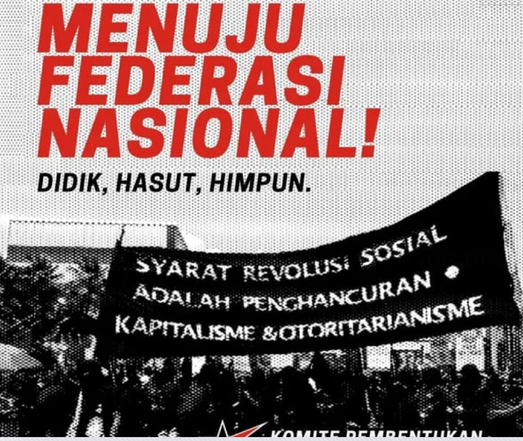
Charity als Aufpolierung des Selbstbildes ist vor allem zu Weihnachten seitens übermäßig vermögender Menschen gebräuchlich. Leider hilft Charity nur kurzfristig und beendet nicht das System, was die Ungerechtigkeiten erschafft. Für eine solidarische Welt benötigen wir genau deshalb „Mutual Aid“ oder auf Deutsch „gegenseitige Hilfe“. Horizontal organisierte Netzwerk in denen einander geholfen und unterstützt wird als Ablösung von Almosen der Oberschicht.

Habt euch lieb!

#sozialrevolution
#anarchismus
#kommunismus
#plattformismus
#anarchism
#communism
#platformism
#socialrevolution
#revolution
#socialism
#hannover
#weihnachten
#nächstenliebe
#charity
#mutualaid

Was ist Plattformismus?

Der Plattformismus ist eine Strömung des Anarcho-Kommunismus, die darauf abzielt, anarchistische Bewegungen effizienter und strukturierter zu gestalten. Die Ideen wurden 1926 in der "Organisatorischen Plattform der Allgemeinen Anarchistischen Union" formuliert, einem Werk, das unter anderem von Nestor Machno verfasst wurde. Er analysierte das Scheitern der anarchistischen Bewegung während der russischen Revolution und identifizierte mangelnde Organisation als Hauptursache.
Um dem entgegenzuwirken, entwickelte er vier zentrale Prinzipien:
1. eine theoretische Einheit, bei der alle Mitglieder eine gemeinsame ideologische Basis teilen sollten.
2.eine tatkitsche Einheit, um anarchistische Aktionen gezielt zu koordinieren.
3. die kollektive Verantwortung, damit Entscheidungen gemeinsam getragen werden.
4. den Föderalismus, der autonome Gruppen vernetzt, aber nicht zentralisiert.

Plattformismus unterscheidet sich demnach vor allem durch seine Organisationsstruktur von anderen anarchistischen Strömugen. Während viele Anarchist*innen auf spontane und dezentrale Bewegungen setzen, verfolgt er eine geplante, strategische Heransgehensweise. Damit grenzt er sich sowohl vom Individualanarchismus als auch vom autoritären Kommunismus ab, der eine zentralisierte Kontrolle über revolutionäre Prozesse anstrebt.

In der Praxis zeigt sich der Plattformismus in sozialen Bewegungen.Historische Beispiele für seinen Einfluss reichen von anarchistischen Gruppen in der spanischen Revolution bis hin zu modernen Organisationen wie der FAU (Freie Arbeiter*innen Union) und der "Plattform" in Deutschland oder dem internationalen Anarkismo-Netzwerk. Auch Bewegungen wie die Zapatistas in Mexiko sind in Teilen plattformistisch angehaucht.

Heute ist der Plattformismus kaum bekannt, doch sind seine Ansätze weit verbreitet. In der deutschen antifaschistischen Bewegung sind beispielsweise das Zusammenwirken aus Autonomie und Vernetzung bekannt. Dennoch sehen wir, dass weitere Aspekte des Plattformismus nötig sind, um eine sozialrevolutionäre Bewegung aufzubauen. Denn die theoretische und taktische Einheit ist wichtig, damit eine Organisation ihre Ziele effektiv verfolgen kann.

Unser Ziel ist es, die Ideen des Plattformismus voranzutreiben und zu verbreiten, um eine klassenbewusste, antiautoritäre Bewegung aufzubauen.

Für die soziale Revolution!

#sozialrevolution #anarchismus #kommunismus #plattformismus #anarchism #communism #platformism #socialrevolution #revolution #socialism #hannover

Interview on Especifist Anarchism for Ekintza Zuzena

From Regeneración, we’re publishing the interview conducted by the magazine Ekintza Zuzena with a comrade for its 2025 issue (https://www.nodo50.org/ekintza/2025/numero-51-de-la-revista-ekintza-zuzena/), as it reviews the fundamental threads of our movement.

A preliminary question: How would you define and situate the historically known platformist anarchism? And what about specificist anarchism?

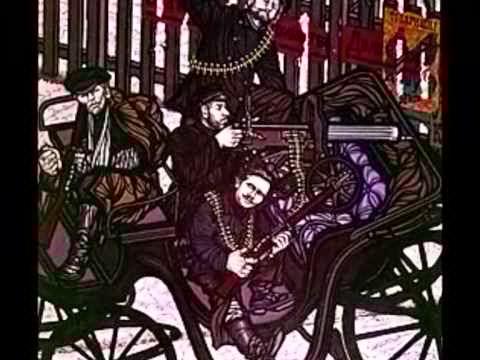
I’ll start with some historical notes. First, the Platform emerged in France in the 1920s among anarchist militants who came from Russia. Finally at peace, after a long revolutionary war they couldn’t win, they were able to take stock of their journey as a movement during the Russian Revolution. The Dyelo Truda group (one of those exile groups composed of prominent figures such as Nestor Makhno, Pyotr Arshinov, Ida Mett, Gregori Maksimov, and others) concluded that the cause of the defeat by the Bolsheviks was the lack of organization, program, and discipline of the Russian anarchist movement. They had acted differently in each place. There were never any overall strategic plans or forums to discuss them. The Bolsheviks were able to defeat them city by city, region by region, without putting up a fight on any level other than in Ukraine.

Dyelo Truda proposed a new organizational model: the General Union of Anarchists. This model sought to unify the most active elements of anarchism into a single organization under the program outlined in The Platform. I will clarify that it was not a complete program, but a partial one, as they recognized. The full program would have to be debated within this General Union once it was underway.

This new platformism was highly critical of the “anarchist synthesis,” an organizational model that blended anarchists from all currents of anarchism into a single organization. According to the platformists, the lack of homogeneity of approaches “would inevitably lead to disintegration when confronted with reality.” In other words, it would render the organization ineffective in the face of the major challenges facing any movement. They were extremely critical of anarchist individualism and nihilism (“chaotic anarchism,” they called it). They were also unconvinced by anarcho-syndicalism, since in Russia it had been oriented almost exclusively toward industrial workers, neglecting the peasantry, which was the majority social component in Russia.

So, which anarchist militants were they addressing?

We base our hope on other militants: on those who remain faithful to anarchism, having experienced and suffered the tragedy of the anarchist movement, and painfully seek a solution.[1]

Therefore, they proposed an organization with tactical and strategic unity and discipline. Militants should not join an organization to do whatever they wished, but to fulfill its program. Dyelo Truda intended the Platform to be the revolutionary backbone and meeting point of Russian anarchism, given that at the time they were speaking to exiles, although it would soon be extended to all territories.

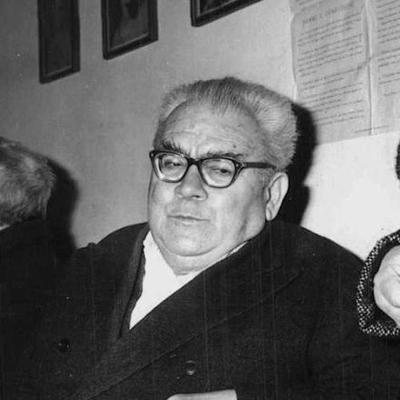
These approaches were the reason why the Platform fell out of favor with many militants in other countries at the time, and its development was thus slowed. However, its ideas were the driving force behind the Bulgarian Anarchist Communist Federation, which was strongly present in the resistance to the 1934 coup d’état, in the partisan resistance of World War II, and in the postwar period against Soviet domination, until it was finally liquidated in 1948. These ideas also took root in France, among a sector of anarchism that maintained them from its beginnings until the postwar period. And later, they were promoted again by the Libertarian Communist Federation, with Georges Fontenis as its leading exponent. This FCL greatly influenced European anarchism in the 1950s and 1960s, with the French movement being one of the key movements for anarcho-communism today.

Especifismo, for its part, arose directly from the Uruguayan FAU in 1956. Paradoxically, they didn’t discover The Plafaform until many years later. Their starting point was Errico Malatesta, whose emphasis on specific organization and refutation of individualism caught their attention. Another of their role models was Mikhail Bakunin, who was enormously important to our movement, promoting specific organizations such as the International Alliance for Socialist Democracy. And their other reference point was Uruguay’s earlier specific organizations, organic constructions from the 1920s and 1930s. Thanks to those older militants, who had been in the fray for years, it became clear that the task of political organization wasn’t philosophizing and holding meetings, but rather how to approach the tasks of the different work fronts: union, student, neighborhood, and internal.

Their first task was to create the Organic Charter, in which they situated their organization in the Latin American context of the 1950s and outlined short-, medium-, and long-term plans. The younger militants sought to avoid automatically transferring other plans and formulas that had been used in other historical situations. Their anarchism would have to be rooted in the country and its concrete reality.

This especificism (from “specific” organization) was put into practice alone for years by the FAU until it was also taken up by Argentine groups in the 70s. It must be said that they never contemplated anarchist synthesis because nobody really took this avenue of organization into consideration.[2] The FAU went through different stages and even strategic objectives that brought it closer to the Latin American popular national movement of the 70s, which was in its stage of greatest visibility and size, with numerous social fronts and even its own armed organization, the OPR-33.

In the 1990s, especifismo moved away from these perspectives and began to spread to other countries such as Brazil and Chile. From there, in the 2000s, it began to converge with the anarcho-communist movement typical of Europe and the Anglo-Saxon world, and today it is part of the same international movement.

In Latin America, these organizations do not publicly call themselves Especifistas, but rather “organized anarchism,” which is also the name given to the International Coordinator of the organizations of our movement.

Although we like these models of anarchism, which we understand as the most capable of influencing reality through anarchism, we must clarify that we are neither a Russian, French, nor Latin American organization, so we will have to create a local anarchism, with the makeup of that local anarchism, to operate in the 21st century.

What is your assessment of the current state of the Iberian libertarian movement, and what challenges and needs do you see in your field?

A movement is a set of actions, ideas and efforts organized by a group of people who share common goals to influence society. Starting from this perspective, you will agree that there is no single homogeneous libertarian movement, given that there are no common objectives across this amalgam of individuals, collectives, initiatives, scenes, spaces, organizations, or unions that claim to be anarchists.

Based on this premise, we could first identify a libertarian movement that seeks to achieve libertarian communism. This would be composed of anarcho-syndicalism and some anarchist collectives and organizations, as well as their related social or cultural projects that help them reach a wider audience.

There are also other paradigms similar to libertarian communism but with different characteristics. I’m talking about communalism, democratic confederalism, the anti-capitalist side of cooperativism, a part of autonomy (whether Marxist or indigenist) and similar proposals, or the radical environmental and anti-development movement. These people tend to be fellow travelers of anarchism and, to some extent, even come from its ranks or have passed through its collectives or organizations, but, for whatever reason, they have disassociated themselves from the libertarian movement as we understand it. Therefore, these initiatives cannot be considered part of our movement; rather, they build and participate in others.

Therefore, speaking of the libertarian movement itself, we have a considerable union space—without achieving the strength of yesteryear, of course—made up of the CGT and CNT and all their offshoots (Solidaridad Obrera, CNT-AIT, SAS Madrid, STS-C, and other smaller union groups). This movement has a considerable presence throughout Spain. It’s true that it’s a divided and often inter-struggle union space, which diminishes its potential and contributes to its discredit. It’s also true that for some unions, libertarian communism is such a far-reaching aspiration that it’s not even considered in their current strategy.

If anarcho-syndicalism is the spearhead, there are also organizations or organic initiatives behind it that were founded to contribute to the goal I mentioned earlier. These would be the anarchist synthesis organizations and collectives (this includes what was once called “neighborhood anarchism”), the anarcho-communist ones (currently called “specific,” which seems to be the most popular word right now), and the insurrectionist ones. Their strength is limited to their own members, and their influence extends to the broader spaces in which they operate. We’re talking about some very specific neighborhoods where they operate. Their presence influences the anti-capitalist scene in the places where they operate, and they are generally based in the urban areas and cities of their metropolitan areas (Madrid, Barcelona, ​​Seville, Valencia, Zaragoza, Granada, A Coruña, etc.). And their real impact comes from their militant capacity and commitment. That’s why they have influence.

Next, we have what we can understand as informal anarchism, autonomism, or, as Murray Bookchin would say, “lifestyle anarchism”. We could almost consider it a subcultural scene rather than a political movement, but I don’t deny the interest of many of the people who participate in it in transforming society at its roots. It inherited part of that subcultural component from the Iberian Peninsula punk scene, which so influenced the anarchism of the 1990s and 2000s.

This informal anarchism or autonomism organizes events that can occasionally become massive, such as protests, protest camps or anarchist book fairs, but they generally remain spaces for socializing and networking rather than for social intervention. As a criticism, they run the risk of falling into inbreeding by residing solely on the margins of the social mainstream. In this sector, we can find both people whose goal is libertarian communism and also those who are not interested and seek to live as freely as possible in today’s society.

However, through informal organizations, various networks and coordinators of squatted social centers, libertarian athenaeums, media outlets and counter-information organizations have been launched, and they have participated in other social movements such as anti-militarism, environmentalism and the fight against the globalization of capital.

In Spain, during the 1990s and 2000s, a dualism prevailed: anarcho-syndicalism, understood as a political organization, and informal anarchism, generally anti-organization. This was almost hegemonic, and there was little room for organizational attempts that lasted rather short (the second Autonomous Struggle, Libertarian Alternative, Galician Anarchist Federation, local and regional libertarian assemblies, networks of libertarian athenaeums, and CSOs, etc.). During those years, a peninsular-wide libertarian space was never established, beyond the FIJL linked to insurrectionalism or the FAI, which by 2000 already seemed focused exclusively on libertarian culture.

However, the movement later gained momentum. The youth movement built organizations: the FIJA and the first FEL, as well as some local libertarian youth organizations. Anarcho-independence movements were strengthened with Negres Tempestes in Catalonia, which generated their own momentum. This was a time of heightened anti-development struggles, attracting hundreds of people. Anarchist book fairs proliferated. Anarchist websites such as Alasbarricadas and Klinamen, and other more diverse ones such as Indymedia, LaHaine and Kaosenlared, received thousands of visits; there were still various publications in the form of fanzines, magazines, and newspapers.

From 2010-12, anarchism began to unite, developing in neighborhood or municipal and regional assemblies. This coincided with the period following the 15M movement. In some cases, such as in Catalonia, federations were formed between these groups. But all this lasted only a short time, lasting two, three, or five years, with the exception of some groups that achieved generational change, as was the case with Heura Negra in Vallcarca (Barcelona). Those local libertarian assemblies were the political school for most activists of our time, because there were truly that many groups.

The lack of consolidation of these collectives paralleled the crisis of insurrectionalism as a result of the repressive measures it suffered between 2011 and 2016. But it wasn’t just a repressive issue, it was also a political one. Whatever happened, all of this paralyzed their political project of the Coordinated Anarchist Groups. This crisis demobilized part of their militancy or caused it to drift toward other, more practical projects, and also prevented it from renewing itself generationally.

The most political anarchism, so to speak, was also articulated during that time. For example, Embat in Catalonia, Apoyo Mutuo in Madrid, Aragon, and Seville, Aunar in Aragon, and the Libertarian Student Federation (FEL). We’re not going to lie to anyone: we’re talking about a very small scene that didn’t even manage to become a proper movement, despite our intentions.

Regarding Embat, our analysis of the period after the 15M was that many essentially libertarian ideas and practices had been seen, but they were barely articulated by the libertarian movement. Proposals were taken to town squares individually and embraced by a politically diverse audience. We were aware—we saw them—that in those same squares there were Marxist or social democratic political organizations that had the goal of increasing their own membership. So we understood that it was necessary to have our very own organization to channel that spontaneous libertarian spirit toward a revolutionary perspective. That’s why Embat was born.

During this period, we were able to garner some sympathy, but we failed to attract those libertarian people who were embedded in the social and popular movements. Most of them preferred to continue without a specific organization. This proved fatal with the emergence of Podemos in 2014. Many people who should have been previously organized as anarchists ended up joining the circles and candidacies of Podemos, Ganemos, Sí Se Puede, Más Madrid, or the CUP in Catalonia. Without a strategic line of their own, they adopted social democratic lines until they burned out and went home or until they completely converted to those positions.

Meanwhile, people from libertarian assemblies, insurrectionalist movements or informal anarchism gradually entered anarcho-syndicalism. This time not to turn it into a political organization as in the 1990s, but rather because of labor issues or to help develop some social and cultural area within the unions. They also entered the housing struggle, this time without the intention of “radicalizing the struggle,” but rather as just another actor. Something similar must have occurred in the 1980s with people emerging from libertarian athenaeums.

During those years, 2015-2020, we should highlight the influence of the Federation of Anarchists of Gran Canaria in the libertarian field. Their approach combined elements of social and insurrectionary anarchism under an identitarian anarchist discourse that championed “neighborhood anarchism.” They were also the driving force behind the first Tenants’ Union in the entire state and, at the time, advocated for a rent strike. They managed to bring anarchism to the most disadvantaged neighborhoods of Gran Canaria, reaching a range of people who hadn’t been reached in decades. The FAGC attempted to replicate their neighborhood anarchism elsewhere in the state, giving dozens of talks and writing numerous texts. However, this didn’t succeed and no one on the Peninsula copied his model, which was a shame, since we have always loved anarchism with such strong social roots.

After the 2020 pandemic, we experienced the rise of the GKS/Socialist Movement and its great impact among the youth of the revolutionary left. Anarchism was literally out of the picture at that time, as we have seen. The ambiguous discourse—half Leninist, half autonomous-libertarian—that this socialist movement had in its early days attracted groups of young militants to those areas. Even people who had previously been active in social or insurrectionalist anarchism, which put a good part of our movement on guard.

Consequently, the need to offer an anarchist organizational alternative became clear. Thus, Alternativa Libertaria and Liza were born in Madrid in 2023 (the former later joined the latter), now Hedra in Alicante, Impulso in Granada, the Seminario de Estudios Libertarios Galegos (Galician Libertarian Studies Seminar), and, within synthetic anarchism, the Horizontal network at the state level (although it hasn’t made much headway so far) and some new groups. Libertarian Action of Zaragoza even joined the FAI, a group well established in its neighborhood. Currently, some anarchist assemblies are being re-established in various cities, such as Seville, with that plural or synthetic character that we previously saw in other similar ones. All of this occurs in a context of true growth of anarcho-syndicalism, which has also opened new study centers and cultural organizations.

In short, it has been necessary to offer strong organizations in response to the need of working-class youth to organize. Right now, our entire political space is under construction. Even so, many territories remain with virtually no libertarian entity beyond anarcho-syndicalism, a few propaganda orgs, okupied social centres or music bands.

We are concerned that no assessment has been made of the 2010-2020 decade and that collectives are emerging that uncritically copy the same models that entered into crisis in those years. Because there are not many spaces for interrelation between currents, no kind of collective teaching is being transmitted, a starting point that comrades starting out now can take as a reference. This could be the role of Ekintza Zuzena.

In the summer of 2024, the First Meeting of Especifist Anarchism was held in Catalonia. What need did this initiative respond to, and what is your assessment of it?

The Meeting was a response to previous contacts between the various organizations and groups that exist in Spain and claim to be part of the especifist movement. We intended to draw the attention of this unorganized, but still pro-organizational, libertarian community in the state. That is, those people who now feel the need to have someone supporting them to work politically as anarchists without fearing the other currents of the socialist left.

At that time, about 80 people gathered at the Calafou factory (Vallbona d’Anoia), exceeding our expectations. Many people came who did not belong to the organizing organizations (Batzac, Embat, FEL, Liza and Regeneración Libertaria), and we had some very fruitful discussions with like-minded people from Granada, Galicia, and elsewhere.

During the meeting, a greeting was recorded for Black Rose, our sister organization in the United States, on the occasion of its Convention (something like the annual congress they hold there).

A strong point was the quality of the debate, with very solid arguments. It was also clear that everyone was pulling in the same direction: the need for political organization and social integration—which is to be expected at a meeting of this tendency, but which is not a common occurrence in current anarchism, and that’s why it pleasantly surprised us.

And a weak point was the lack of communicative capacity our movement still has, usually allergic to audiovisual media and with no desire to be the center of attention or make a spectacle of its own everyday life. Admittedly, this demonstrates a modicum of common sense, but I think it’s also positive to make a little noise, to be known and seen.

What groups or initiatives are currently promoting this movement, and what are their goals?

The initiatives currently promoting this movement in Spain are as follows, in order of creation:

Federación Estudiantil Libertaria (FEL). Emerging in 2008 from several student assemblies in Madrid, Catalonia and Aragon, it was rebuilt in 2014 after a, let’s say, generational hiatus, and has lasted until this year. Its tendency was oriented toward “social and organized anarchism” until recently, when it began to define itself as specific. As student groups come and go quite quickly, it hasn’t managed to consolidate in recent years and now only existed in Catalonia. At the end of last year, it joined Batzac, forming its student front.

Regeneración Libertaria. A web portal created in 2012 as a space for current analysis, theoretical articles, social studies, and libertarian culture within social and organized anarchism. Last year, given that its current members adhere to the Especifista movement, they decided to put the medium at the service of a common project. So today it is the official portal of the Especifist movement or organized anarchism in the Spanish state. It serves as a link between the organizations that promote it and as a point of debate and exchange of ideas.

Embat, Organització Llibertària de Catalunya. Founded in 2013 as Procés Embat[3] (like the previous ones, under the paradigm of “social and organized anarchism”) and since 2015 under its current name. It is an organization that has gone through different stages: one of consolidation, acting as a network of activists (2013-15); another of social integration as an organization (2015-19); another very active during the Independence Procés (2017-18), the 2020 hiatus, which was used to create our Political Line[4], and the current era. We are currently active in the areas of housing, education, feminism, eco-social issues, and labor.

Batzac, Libertarian Youth . Founded in 2017, it organizes young people who, in most cases, have not previously participated in activism. Until now, it had not declared itself a specialist organization, but rather a social anarchist organization. This is due to its interest in achieving specific social integration, as it does in housing, in the student sphere, and in the workplace. It has recently embraced the FEL (Libertarian Student Federation) in Catalonia.

Liza, Plataforma Organizativa de Madrid. Founded in 2023, it brought together a group of people in need of organization who shared a strategic and tactical vision halfway between platformism and especifism. Its emergence was combined with good online communication and great activity, which enlivened the Iberian scene, resulting in the current semblance of coordination. Its integration is primarily in housing and neighborhoods. It’s also worth highlighting their interest in debating with the rest of the anarchist movement, confronting autonomist and anti-organizational tendencies. Liza absorbed an organizational project called Alternativa Libertaria, which emerged from FEL Madrid.

Impulso – Granada defines itself as a space for reflection on organized anarchism. Created at the end of 2024, for now, it’s precisely that which defines them: a space for debate and training around the ideas of organized anarchism in Granada. Their intention is to move forward gradually, without skipping steps, until culminating in a political organization.

Hedra, Organización Especifista de Alicante. This is a recent arrival, having been created in January 2025. It is the first to be created under the label of especifismo, as its theoretical foundations draw directly from the primary texts of this movement. Its integration is in housing and in the neighborhood through a group of associations.

I will also mention the publishing house Teima. Currently working on publishing a book by Felipe Correa, called Black Flag. The publisher will publish texts from our movement in Spanish. However, there are some publishers that publish books in our vein, such as Descontrol in Barcelona or Ardora y Bastiana in Galicia.

In addition to these organizations, which are public, there are other initiatives in other parts of the country that have not yet come to light, and which I won’t mention so as not to jinx them. Some of them come from anarchist synthesis collectives or assemblies that are drifting toward our style of anarchism. By the way, none of them come from Euskal Herria, so let’s see if anyone is interested!

Regarding the stated objectives, the priority is to create a broader anarchist movement with a greater impact on society, bringing anarchism back to the forefront of social struggle.

It’s worth mentioning that we are also coordinating with other European organizations of our same current and with those from the rest of the world. The current international coordination brings together more than twenty organizations, and several more are in the process of joining. The best-known are the Union Communiste Libertaire (French-speaking European countries), Die Plattform (Germany), Anarchist Communist Group (UK), Black Rose Federation (USA), Federación Anarquista Uruguaya, Federación Anarquista de Rosario (Argentina), Coordinadora Anarquista de Brasil (Anarchist Coordinator of Brazil) and Tekoshina Anarsist (Rojava). We are also in contact with other new initiatives currently being created. In some ways, it seems to be a parallel process to that in Spain, which indicates that the anarchist movement is seeking to be better organized.

The concept of popular power has had its greatest diffusion in Latin America, where it has generated significant debate. What is your interpretation or definition of the issue of popular power? How would you differentiate it from left-wing populism?

It was in the 1960-70s that the FAU opted to borrow this concept from the Chilean MIR, the Tupamaros, and other movements of the time that combined various forms of Marxism (primarily Leninism and Guevarism), Liberation Theology, national liberation, and Latin Americanism (those who maintain that Latin America is one country). It should be added that anarchism also influenced this amalgamation, something that is often overlooked. In the 1960s, people’s power replaced Leninist concept of “dual power.”

The Latin American anarchists of the time understood this as logical, since this dual power (those soviets that coexist with the bourgeois state in an advanced phase of the class struggle, once the revolutionary stage has been reached) in turn drew on the ideas of Bakunin.

In the FAU of the 1950s and 1960s, there was a lively debate about the historical subjects who should carry out the revolution. Given the configuration of Uruguayan society at the time, it was necessary to create a subject that would unite all the oppressed sectors of society. The idea of ​​”the people” was used, but the people were understood as those “below”. They had nothing to do with the bourgeoisie. It was somewhat like when the historical CNT-FAI spoke of “the working people” in their newspapers and manifestos. They didn’t refer solely to the proletariat, since at that time, to ordinary people, it sounded like talk of factories and little else.

In this relationship between ideology and the production of historical subjects—a relationship that, if it didn’t exist, would mean neither ideology nor subject—moments of ideological validity are formed. Historical subjects/agents expand and lead to the hegemony of social bodies, based on the validity of ideologies.[5]

As the class struggle unfolded in Latin America, alliances between the organized labor movement, the student movement, the first feminist associations, the peasantry, and grassroots collectives centered on identity, such as Afros, mestizo, and indigenous peoples, came into play. Furthermore, in the 1970s, the social war received support from the self-employed and small business owners expelled from industrial production. The class struggle often moved to neighborhoods or communities far from the city, and elements of counterpower were generated from below in the midst of the struggle. This was popular power: the people in motion, diffuse, anonymous, contradictory, creative, festive, and combative. Land seizures, industrial cordons, armed groups, occupation of universities—this was popular power in the eyes of ordinary people. In no way should it be confused with interclassism, with its conscious “from below” nature.

In the 2000s, the critique began. The especifist or organized anarchist organizations used popular power in their political language. But Marxist organizations did too. In Cuba and Venezuela, all ministries carried the tagline “popular power.” So the term was also linked to the socialist state. Comrades critical of the concept of popular power also pointed out that anarchism was being abandoned within the especifist ranks toward Marxism or national populism. Some anarchists even went further, denying the adherence to anarchism of our entire movement, viewing it as a crypto-Marxism as a whole. This is the origin of the conflict.

With Embat, it was even comical to see that, during the first few years, certain people would always come to all our talks and say that popular power couldn’t be anarchist in any way. Ironically, we held the opinion that, in reality, everyone understood us perfectly, except for the “most anarchist” ones. No one seemed to have the slightest problem with the Black Power movement of the American Black Panthers, a concept roughly equivalent to popular power.

However, the passing of the years has largely mitigated those debates. If some organizations or individuals drifted toward other ideological positions, the vast majority did not, contributing to the libertarian movement as a whole, and not just to our current in particular. Today, in Spain, this concept has been largely accepted, even by people who come from other currents, such as anarcho-syndicalism or by libertarians who are active in neighborhoods or housing projects without ever having been on our wavelength.

Regarding left-wing populism, we must say that it engages in interclassism, mixing working-class demands with more bourgeois middle-class ones. This would be the main difference. Specificism defends a “strong people” [Pueblo Fuerte] built as a front for the classes oppressed by capitalism and the state. Although we speak of both currents of popular power, there are substantial differences. Let’s see what the specificist view is:

We proclaim the most complete socialization of all spheres of social activity. The socialization of the means of production exercised by the organs of real representation of society and not by the State; the socialization of education, the administration of justice, defense organizations, the sources of knowledge and information, and most especially the socialization of political power. In this last aspect, we advocate the abolition of the State and governmental forms of power as the only guarantee of eliminating all forms of domination. […]

We are fully convinced that this is effectively possible through direct democracy, exercised by grassroots popular organizations organized in a self-managed manner and linked within a federalist framework, where these same popular organizations are expressed in new institutional forms. Today we know more firmly than ever that the model of society we propose is not only possible but is practically, and in accordance with the historical and revolutionary experience of different peoples of the world, the only valid path to truly building socialism.[6]

It would be bold to say this isn’t anarchism.

To what extent can the desire not to remain locked in the [activist/anarchist] ghetto and to participate (with a non-dogmatic discourse) in current social struggles or processes lead to political contradictions with anarchist or basic principles of the society for which you fight? Do you remember any occasions when you experienced this dilemma?

Social processes are complex by nature. There are many forces at play and many vested interests. The challenge is to build transformative collective interests in a democratic, transparent, and fraternal environment.

For Embat, the crucible was 2017. We had to position ourselves in a tremendously complex scenario. The Spanish state was in crisis and Catalan society demanded a response. This was the referendum. In just a few months, we experienced a large-scale process of collective empowerment. In just a few weeks, I’d say. The movement was already underway, but the events encouraged many more people to join the process. Counter-power structures were created, the committees for the defense of the Republic. They operated as assemblies, calling for actions and demonstrations. But they also had the opportunity to be spaces for territorial counter-power. Another initiative worth considering was the Constituent Procés, which proposed a constituent assembly for an independent Catalonia that would accommodate the most advanced social aspects. Social and union movements also joined the process in their own way. They joined and were responsible for the famous general strike of October 3rd, one of the most widely followed in Catalan history. The slogan of blocking transportation—trains, roads, and in 2019, the airport—naturally emerged. Something that had only been theorized about in anti-capitalist debate years before and was dismissed due to a lack of strength was put into practice.

Although we were perfectly aware that the leadership of this entire process was in the hands of the “traditional” Catalan political class, we also saw what was happening below. Our response was that we had to be there. We always felt that much more could have been done if all the social and union movements had acted unitedly and as a bloc. But this would have required a much greater organized anarchism, which is what we are trying to build.

Another complex and conflictive moment in which we had to take a stand was during the pandemic. Embat’s position denounced the police state and the state’s militarization of public spaces, while workers in “essential services” were forced to go to work without sufficient protective measures. We also highlighted the devastating effects of the privatization of healthcare and the management of nursing homes and clinics by private entities. At the same time, we welcomed the self-organized mutual support groups that emerged in many places, as well as the grassroots initiatives in which we participated, such as the Social Shock Plan or the attempted rent strike that was proposed during those months. I would add that we took advantage of the lockdown internally to develop our political line, which required much debate. And during that time, the International Coordination, in which we participated, was also strengthened.

The contradictions were clear within our libertarian movement: some focused on denouncing the police state and the infantilization of people, while others preferred to focus on denouncing privatization and self-organization. We didn’t see a unified approach, and each of us fought a bit of our own battle. Perhaps what united us most was those proposed shock plans and similar ones.

NOTES

[1] This excerpt can be found in the Introduction to The Platform https://www.nestormakhno.info/spanish/platform/introduccion.htm

[2] For more information, see The Strategy of Especifismo. Interview by Felipe Correa with Juan Carlos Mechoso: http://federacionanarquistauruguaya.uy/wp-content/uploads/2017/08/La-Estrategia-del-Especifismo.pdf

[3] Embat in Catalan refers to the crash of a wave against a rock. It sounded powerful and poetic to us, and it seemed a better name than the typical acronyms of other libertarian organizations of our time.

[4] This was when Especifismo was adopted as one of the guiding principles. The Political Line can be consulted at: https://embat.info/programa-i-linia-politica/

[5] Popular Power from a Libertarian Perspective. https://federacionanarquistauruguaya.uy/poder-popular-desde-lo-libertario-fau/

[6]Ibid.

source: Anarkismo

https://abolitionmedia.noblogs.org/?p=22523

#anarchism #especifismo #platformism #southAmerica

¿Qué fue Bring the Ruckus? | Regeneración Libertaria

"Bring The Ruckus (BTR) fue una organización anarquista de la primera década del siglo XXI (2001-2012) situada en Estados Unidos. Se autodenominaban una organización de cuadros que participaban en luchas de masas para construir poder dual. Estas son ideas similares a las [...] de las posiciones plataformistas y especifistas, pero llegaron a estas de forma independiente, sin situarse dentro de esta tradición. Convivieron con la Northeastern Federation of Anarcho-Communists (NEFAC), de corte plataformista y participaron en debates con esta corriente."

https://www.regeneracionlibertaria.org/2025/07/14/que-fue-bring-the-ruckus/

#anarchism #antiracism #platformism

¿Qué fue Bring the Ruckus? - Regeneración Libertaria

Bring The Ruckus (BTR) fue una organización anarquista de la primera década del siglo XXI (2001-2012) situada en Estados Unidos. Se autodenominaban una

Regeneración Libertaria
Erich Mühsam, Plataformismo y Consejismo Anarquista - Regeneración Libertaria

Contexto Histórico y Fundamentos del Anarcocomunismo de Mühsam

Regeneración Libertaria

What is (Organized) Anarchism? — Black Rose Federation

We present this translation of a booklet produced by our Argentine sibling organization Federación Anarquista Rosario (FAR) as a basic introduction to our tradition within the anarchist movement.

Translation by Enrique Guerrero López

Introduction

For a long time, our organization [FAR] has had the intention of creating an introductory piece on Anarchism, and especially of our current, Especifismo. Mainly because there are different interpretations of Anarchism, fairly widespread, established as a kind of “common sense” that we believe are significantly different from our proposal. Lately Anarchism has been associated with a “rebellious” lifestyle, rather than with a project of struggle and popular organization that aims to achieve a socialist and libertarian society.

This material is introductory, and therefore implies curtailing topics that should be taken up elsewhere, particularly by those who wish to deepen what has been engaged with here.

Our intention is to root this project in the various social sectors that suffer the consequences of Capitalism, seeking to add more comrades to the struggle for a new SOCIALIST AND LIBERTARIAN1 world.

UP WITH THOSE WHO STRUGGLE!

Where Does Our Proposal Come From? (Some History)

Anarchism emerged as a current of socialism at the end of the 19th century in Europe and then, thanks to the phenomenon of immigration, it spread throughout the world. In our country [Argentina], during the last decades of the 19th century and the first decades of the 20th, it was one of the predominant ideologies of the working-class. At that time, exploited workers sought to resist the living conditions imposed on them by the capitalist class, and at the same time they yearned for another social arrangement without exploitation or domination.

The IWA (International Workingmen’s Association) brought together workers and revolutionaries from Europe, and from various countries around the world, to outline a strategy to fight against the system. In that organization, also known as the First International, the figure of Mikhail Bakunin stood out, who argued with Karl Marx on the strategic orientation of revolutionary struggle. The main difference between the two was in relation to the State. Marx argued that the State could be an instrument for the liberation of the working class, while Bakunin proposed that Capitalism and the State were two sides of the same coin. Although this was not the only difference, it was the most important and led to the breakdown of the First International. The field of Socialism would be divided between Marxists and Anarchists.

Anarchism would not go unnoticed in the history of the struggle of the oppressed. It has been the protagonist of great processes of social transformation, such as the Libertarian Makhnovist Ukraine, anarchist contributions to the Mexican Revolution, the Spanish Social Revolution, and the Commune of Manchuria, among others.

What Do We Fight Against? (How We See the System of Domination)

AGAINST CAPITAL
In today’s society, the phenomenon of economic exploitation is so characteristic that it has led some currents of Socialism to think that it is the defining feature of the historical moment in which we live, to the point of thinking that it determines all the rest of the forms of domination. In other words, everything that happens in a capitalist society is explained solely by the economy.

For our part, while we do not believe that exploitation mechanically determines our existence, we do not ignore the importance of this phenomenon, which, in the emergence of our ideology, has been the articulating axis of the organizations and resistance of the oppressed class. What is exploitation? Basically it divides society into classes. Thus we find on the one hand the owners of the means of production and the land, called: Bourgeoisie, Employers, these are the Exploiters. On the other hand there are those who own nothing but their labor power: the Proletariat, the Workers, these are the Exploited.

Through a series of historical processes, capitalist society, since its birth, has created and recreated this structural inequality, also drawing from inequalities inherited from previous historical moments. In this system the Bourgeois “freely hire” the Workers and in exchange for their work they give them a “wage.” This is always less than the wealth generated by the Workers, but enough for their survival. In Capitalism then, the Bourgeois have the freedom to accumulate wealth, and therefore to live in great luxury. Workers, for their part, have the freedom to sell their labor power and thus are barely able to achieve subsistence. This is a conception of freedom, which, as we will see, is absolutely opposite to the one upheld by anarchism.

AGAINST THE STATE
In the current context, defining the State is complex, since throughout history it has changed and perfected itself as an institution of domination.

The State acquired different functions and forms, becoming an increasingly important and constitutive element of the capitalist system.

Schematically, we can say that the State is the institution that suppresses the people’s ability to decide how to administer and carry out social life. The State always works for the operation of the system of domination, intervening in social conflict, guaranteeing the privileges of the powerful and seeking to bring the entire political life of society into its orbit.

If we think about the changes experienced through time, we find that in the 19th century the state had a purely repressive function, but for much of the 20th century it was

becoming a more “friendly” institution for society, guaranteeing certain essential services such as healthcare and education. This adopted form became known as the Welfare State. But the Welfare State did not arise from the goodwill of the rulers, rather it can be explained as a product of a clever maneuver by the dominant classes to contain social struggles, which had generated a significant challenge to Capitalism. It has now been several decades since the State was transformed into what is usually called a Neoliberal State, where its role has focused primarily on ensuring the functioning of the Market.

Despite these changes, the State never abandoned its repressive function, since it holds what is known as the “monopoly on the legitimate use of force,” that is to say, that it has the legal capacity to repress the population to impose its decisions. Nor did it stop trying to control society in various ways, especially in its protection of the exploitative social arrangement which produces wealth and privilege of the Bourgeois.

Today the Neoliberal State primarily assumes the form of domination through social control. This mechanism enables the possibility of highly unequal societies, with highly controlled areas where wealth and power are found, and areas of exclusion, generally located on the peripheries. Excluded populations live in these areas, where the State intervenes in a dual sense: through social containment with welfare policies and through militarization and repression. Over time, social control is assumed by the general population to be normal, incorporating into everyday life the logic of surveillance, allowing the State to transfer this function to society.

It is also important to analyze so-called “democracy” at this point, which, through the fiction of political participation through voting, has the effect of legitimizing the unjust functioning of today’s society. Any possibility of social transformation is subject to the logic of bourgeois democracy, which in practice generates apathy and depoliticization, since the people “delegating” the resolution of their affairs to professional politicians—who centralize this task—lose all connection to and responsibility for social decisions. It must be admitted that these operations aimed at legitimizing the functioning of capitalist society have been relatively successful. Thus, a certain part of the left today is institutionalized, and all its practice is meticulously regulated by the State. From Marxism this orientation is justified by understanding the State as a neutral instrument, which, in the hands of the workers, can serve to achieve Socialism. History shows otherwise, with the experience of the Soviet Union and others that ended up leading to yet another variant of Capitalism.

AGAINST PATRIARCHY
Patriarchal oppression is sustained through asymmetric power relations and uses mechanisms to generate, develop and perpetuate the domination of heterosexual men over women and other gender identities. Over time these differences in power have crystallized in our culture, giving rise to the existence of roles and values assigned to the feminine (for example, weak, caring, sensitive) and the masculine (for example, strong, hard working, intelligent). School, Family, Work, the State and other institutions educate us to assume these roles, while those who do not fit into them are discriminated against in different areas of life. Likewise, everything related to the feminine is undervalued, and that translates into a lack of access to rights and participation.

We can say that Femicides are the most visible expression of patriarchal violence, however there are other violent mechanisms that are unleashed on women’s bodies, which have important effects on the reproduction of the system of domination. Problems such as Sex Trafficking, the Violation of Sexual and Reproductive Rights — that is, the elimination of bodily autonomy — high levels of Sexual Harassment both within the family and public, and Wage Discrimination are just some of the many expressions of Patriarchy. While it is more evident in the cultural sphere, Patriarchy operates in an economic dimension, since, within the gender roles imposed by this form of oppression, women in general attend to domestic tasks (eg, feeding, cleaning, caring for children and the elderly) but without any remuneration or recognition. This is very relevant because social reproduction is key to the functioning of the system. Even in Capitalism this unpaid work is essential for the functioning of the market, since it allows people to arrive well fed, rested, and prepared to be exploited.

Now, in a Capitalist System where everything is measured in money, it is thanks to Patriarchy that domestic work is understood as an uncompensated obligation, since this mechanism of oppression appeals to the moral imposition that falls on women to assume these tasks for the mere fact of being women.

AGAINST COLONIALISM, IMPERIALISM AND RACISM
Throughout history, Capitalism expanded, creating institutions and social forms that did not exist before. Borders and Nation-States emerged from this process. The notion that political authority must perfectly coincide with a clearly determined geographic space and borders is an invention of Capitalism; this notion did not exist before.

The idea that the spaces occupied by a State must coincide with a Nation, that is, with a group of inhabitants with a common culture and identity, is also new.

As we know, the region in which we live is going through a colonization process that began in the 15th century, with the arrival of conquerors from Europe. This meant the possibility of expanding Capitalism, through the looting of common goods and also the standardization of the world, imposing on the peoples of these lands the culture, laws and language of the conqueror. The ideology of Nationalism is part of this process, which occurred through systematic violence and genocide against indigenous and black populations.

From this process, Racism was established as a mechanism of cultural and political domination, dividing society into castes, where races considered inferior occupied the lowest echelons. We can assert that this form of Racism endures to this day.

The initial phenomenon of Colonization began to transform itself and its economic and cultural dimension took on a greater intensity through what is known as Globalization. In this way, a world with central countries was configured, where most of the technologically advanced industrial production is found, and peripheral countries from which natural resources are extracted at the expense of peoples and nature.

In today’s world there are various Imperialist World Powers that compete for the territories and markets of the world. This cuts through the reality of the peoples on a daily basis, since these imperial projects intervene not only through the military dimension but, as we said above, their presence is important economically, politically and culturally.

Some expressions of this form of oppression can be found in: the presence of foreign military bases in different parts of the country and region, in the looting of common goods and economic dependence, in the colonization of culture, in the interference of the transnational control and surveillance apparatuses, in the action of international NGOs that impose welfare. In turn, the local State itself operates with a colonialist logic, repressing and starving native populations, denying them their right to self-determination.

What Do We Propose? Toward a Socialist and Libertarian Society

We aim, as final objectives, at the destruction of the Capitalist System of Domination and the construction of a Socialist and Libertarian Society.

The destruction of the system of domination can be framed in the pursuit of a revolutionary process of rupture with the current social order, which occurs in parallel with the construction of the society we want.

A break with domination as a model of power, and the construction of a model of Popular Power, necessarily leads us to discard statist and institutional routes in our strategy since these are contradictory with the objective of social revolution.

That is why we advocate Self-Management, Libertarian Federalism, Anarcho-Feminism and Anti-Colonialism as methodologies of social organization, which can transform the power model of domination and turn it into one of Popular Power.

We propose, therefore, a federal organization of society, organized from the bottom up through basic bodies of discussion and decision making, which are coordinated with each other through delegation, forming a dynamic, decentralized and directly controlled society. The objective of Federalism is a new institutionality, where there is no place for any kind of privilege, be it economic, social or political. It is an institutional framework where the revocation of delegates is immediately assured and where, therefore, there is no room for the usual political irresponsibility that characterizes Representative Democracy.

This is a practice and an institutionality that must reflect the rights and obligations of all members of society. Their right to be elected and elector, and also their obligation to report back in an effective, practical, daily way. This must be applicable both for the broadest global bodies as well as for bodies at the grassroots.

In the economic sphere, this process will go hand in hand with the abolition of private property and socialization of all the means of production, all that is produced and all the resources vital to humanity. Building a new egalitarian society carries with it a distribution of the collective product of our labor based on the determination of needs and the distribution of work equitably according to individual capacities. Guiding all economic activity towards the sustainability of life, understanding that the economy also includes all actions related to the reproduction and care of people and that this must also be carried out within a framework of respect and protection of the natural world of which we are part.

In the political-cultural sphere, the destruction of Patriarchy and Racism in pursuit of a just society—which does not discriminate based on people’s gender or race—will not only imply questioning of our existing social relationships, but also require the construction of other types of relationships, alongside the specific struggles of social movements.

But we understand these organizational models in relation to the processes of struggle, and with the particularities of each place, taking into account cultural integrity, language, ways of life, and ethnic identities. Thus, we do not think of a revolution as a homogenizing phenomenon of society, but rather, as one precisely capable of making those individual, collective, cultural, regional, etc. particularities blossom, so that they do not deny others and so that they recognize and strengthen each other in these differences. That is why we advocate anti-colonialism as a perspective and methodology of action that aims at people’s cultural self-management.

How Can We Achieve Our Objectives?

Especifismo proposes organizational action through two parallel paths: the path of Anarchist Political Organization and the path of Social Organization for the class struggle.2 We chose this organizational method because it respects the specificity and dynamics of each space of struggle, making social spaces remain open to comrades of different ideologies, in addition to the fact that the political organization can function cohesively without being tied to the dynamics of social struggles.

The anarchist political organization practices Federalism and is therefore deeply democratic, with decisions being made from the base. Collective Responsibility and Discipline are also emphasized, that is, carrying out agreements, consistency and constancy in the daily life of militants. The organization functions based on collective agreements for which Theoretical, Ideological and Strategic Unity is fundamental. At the same time, it carries out Social Insertion in spaces where the class struggle takes place to become a motor of these struggles.

To carry out social insertion, which implies organization at the social-political level, the organization is divided into fronts: Union, Neighborhood, Student, etc. It is on this terrain where the struggle against the system of domination takes place, resisting the oppression of Capital, the State, Patriarchy, and Imperialism. This is where a project of Revolutionary Rupture with the system is built.

This project is built from the perspective of Popular Power, which implies that social struggles are carried out with a combative method of construction from the base, with the leadership of popular organizations. Class Independence is extremely important in this sense, in order to maintain autonomy from the State and Capitalism. For this reason, the method of struggle that we propose for the popular field is that of Direct Action, which forges a Strong People in the daily struggle and resistance.3

It will be the task of the political organization to promote mobilization for short-term demands within the social milieu, articulated with the project of radical transformation of society, with a view toward building a Socialist and Libertarian society.

For Socialism and Freedom

Organized Anarchism or Especifismo is a conception of Anarchism that emerged in Latin America in the 1960s from the impetus of the FAU (Uruguayan Anarchist Federation). Especifismo is a historical form of organization that is related to a broader tradition of Anarchism called Organizational Dualism, which proposes anarchist organization at two levels: an ideological-political one, specifically anarchist, composed of the Political Organization and another a social-political level composed of Social or Mass Organizations. We have already seen this proposal in the conceptions and practices of Bakunin and Malatesta.4

We aim at a change in the social structures that sustain Capitalism by deploying a method of building Popular Power which is developed in the daily class struggle. For this purpose, in addition to organizing ourselves politically as anarchists in the FAR, we play an active part, strategically and collectively, in Unions, Neighborhood and Student Organizations, etc.

“…high politics is not the origin point (…) or reason behind our struggle. The origin is in the pain and longing of that great humanity of which our people are a part.

Because we know that man [sic] is a social being, we want him [sic] to develop his [sic] capacity and put it at the service of society, because we want all decisions that concern society to be assumed and resolved in a social way, because we want wealth not to be individual or of a few but social, of all, that is why we call ourselves Socialists.

Because we trust more in agreement than in imposition, in knowledge than in coercion, in freedom than in authority. That is why we are libertarians.

But we’ve already learned that labels are sometimes misleading. That is why we do not dedicate ourselves to labeling the struggle of the oppressed. There may be people who identify themselves in a similar way who do not know well what they want, and there are also those with other names, or sometimes even without knowing how to give it a name, seeking the same thing.

We call all those who, without pettiness, in their own way and in their measure, fight for these ideals.”

Gerardo Gatti
Definitions of a Comrade
Buenos Aires, June / July 1975

The contents expressed in this booklet are not intellectual speculations carried out in spaces far removed from popular reality, rather they are systematizations of years of struggle and organization, which function as working hypotheses and point to an accumulation of experiences toward the construction of a revolutionary strategy in the anarchist sense. Therefore, its reading, and its necessary rereading throughout the militant trajectory of each reader, implies a commitment to the cause of SOCIALISM AND LIBERTY.

Notes

  • Libertarian here refers to a socialist political perspective that embraces federalism and opposes the state. Originally used by the French anarchist communist Joseph Déjacque in 1857 as a synonym for anarchism, the term only recently became associated with a strain of far-right pro-market individualism. This inversion of the term’s original meaning is largely limited to the United States; elsewhere in the world the phrase retains its association with left-wing anti-state socialism. ↩︎
  • We took the concept of “parallel paths” from a Catalan anarchist, Antonio Pellicer Paraire, who belonged to the Bakuninist wing of the 1st International, and who was very influential in the formation of anarchism and in the organized labor movement in Argentina. ↩︎
  • See: Create a Strong People: Discussions on Popular Power by Felipe Corrêa.  ↩︎
  • See: Bakunin, Malatesta and the Platform Debate: The Question of Anarchist Political Organization by Felipe Corrêa and Rafael Viana da Silva. ↩︎
  • source: Black Rose Federation

    https://abolitionmedia.noblogs.org/?p=18766

    #anarchism #blackRoseFederation #especifismo #platformism

    Translation: What is (Organized) Anarchism?

    We present this translation of a booklet produced by our Argentine sibling organization Federación Anarquista Rosario (FAR) as a basic introduction to our tradition within the anarchist movement. Translation by Enrique Guerrero López Introduction For a long time, our organization [FAR] has had the intention of creating an introductory piece on Anarchism, and especially of […]

    Black Rose/Rosa Negra Anarchist Federation
    JURNAL ANARKI: Two Interviews with Chilean Anarchist Groups
    Here are two interviews by JURNAL ANARKI, anarchist publication in Indonesia, and the band La Lira Libertaria in Chile and the neo-platformists Boina Anarquista. These are the first English translations. We hope you find them
    https://neversleep.noblogs.org/post/2025/02/17/jurnal-anarki-two-interviews-with-chilean-anarchist-groups/
    #Chile #CombativeAnarchy #Indonesia #InsurrectionaryAnarchism #international #Mapuche #platformism
    JURNAL ANARKI: Two Interviews with Chilean Anarchist Groups – never sleep

    Interview between synthesis anarchists Boina Anarquista in Chile and JURNAL ANARKI in Indonesia

    1. What motivates you to create this counter-information newspaper?

    A: Hello, good day. Well, the platform began as a newspaper, edited precariously with Word. What motivated us was that nearly 11 years ago, in 2013, when the waves of the student movement in Chile were still present, we started researching and came across a book about anarchist propaganda in Chile. We were amazed by how much of it existed in the 1920s.

    Around that time, there were other physical-format newspapers: El Surco (2009-2013), El Amanecer (from Chillán, in central-southern Chile) (2011-2013), El Sol Ácrata (from Calama, northern Chile; 2011-2024), Acracia (from Valdivia, far south of Chile; 2012-2019) and Solidaridad, a Libertarian-Communist newspaper, aligned with the branch closest to especifismo or platformism (2010-2016).

    It was within this context that we decided to found a newspaper called Periódico La Boina (2014), which only released 7 issues. Financial problems, time constraints, and lack of coordination led to its discontinuation, but we noticed that the website’s visits kept growing, reaching over 100,000 per year.

    The need to communicate, reflect, critique, share, and discuss with other comrades enriches our ideas and fosters camaraderie, especially through printed propaganda. What I see as a downside—and something we are also guilty of—is that there’s a lot of digital propaganda circulating on social media. While it’s positive to have more contact with comrades from other places, the information becomes more instantaneous, preventing deeper reflection. It also introduces anxiety over likes, making everything faster.

    We believe it’s necessary to return to printed propaganda without neglecting the digital. It’s essential to discuss and reflect as the anarchists of the past used to do.

    2. In our informal conversation, you mentioned your involvement in a historical archive project. Could you tell us more about it?

    A: Yes, I am currently part of a group called Archivo Histórico La Revuelta, which has existed since 2009. The mission of the archive is to preserve the memory of anarchist history. Archivo La Revuelta publishes a magazine called Acontratiempo, where we present research by comrades on the history of anarchism in Chile and elsewhere.

    The issue is that, according to some historians, anarchism arrived in Chile in the 1890s and lasted until 1930, when the last mass anarchist unions existed (of course, there were experiences in the 1950s and 1960s, and we have found active comrades in the 1970s, but they are marginal compared to Marxist groups). After that period, anarchism experienced a revival, gradually growing with counterculture and punk in the 1990s. So the archive has the mission of preserving anarchist memory in this region, both from the 20th century and from the late 1990s and early 2000s. There are many struggles led by younger comrades, as young as 16 years old, who may not be as familiar with the struggles fought in the early 2000s, for example.

    That’s why the archive doesn’t just focus on the history of anarchism from 100 years ago but also on the present. We aim to collect and reconstruct the history of anarchism from the 1990s, when there were many zines and the first newspapers, to understand what interested comrades of those years and to share those struggles and discussions with younger comrades so they can learn about the efforts and ideas of those who came before them.

    On the other hand, anarchist research has emerged in recent years. Its main historians might include Eduardo Godoy, Manuel Lagos, or study groups like the Grupo de Estudio José Domingo Gómez Rojas, which has the Editorial Eleuterio.

    Currently, the archive operates in a physical space called Casa Anarquista La Termita, which is shared with other anarchist projects. Also, with comrades dedicated to research, we are also organizing the IV Congress on Research about Anarchism(s) – Santiago – October 2025. The first Congress was held in Buenos Aires, Argentina (2016); its second edition was in Montevideo, Uruguay (2019), and São Paulo, Brazil (2022).

    3. People from non-Latin countries are often surprised by the growing anarchist tensions in Chile, especially the diversity of the anarchist movement, its rejuvenation among youth, and the intense repression anarchists face while maintaining combative and insurrectionary actions. What makes all this possible?

    That’s a complex and good question. Let’s take it step by step

    1. Historical Context: Anarchism in Chile lost its influence around 1930, following a populist, proto-fascist dictatorship led by Carlos Ibáñez del Campo (1927–1931). It continued to exist but with diminished societal impact.

    Decades later, during Pinochet’s dictatorship (1973–1990), a plebiscite was held to decide whether he would continue in power. The “NO” won in 1988, leading to the return of democracy in Chile. However, the former dictator remained Commander-in-Chief of the Army, and many aspects of the dictatorship were incorporated into the new democracy, such as the 1980 Constitution, the neoliberal economic model, and Pinochet’s privileged status within the state. Even, the arrest of Pinochet in London (1998) and his subsequent rescue by the center-left Concertación coalition further cemented dissatisfaction with the new democratic transition. This dissatisfaction, combined with the commemorations of the 500th anniversary of the Spanish invasion of the Americas, fuelled a critical leftist resurgence. In that context, the first demonstration where anarchists became visible took place during the Quincentenary in October 1990.

    2. Punk Counterculture and Diversification of Social Struggles: Discontent was reorganized, punk flourished, and various identity-based struggles,—anti-militarism, feminism, vegetarianism, LGBTQ+ rights, Mapuche rights, and human rights—gained prominence. Alongside the growth of the extra-parliamentary left, anarchism saw a cultural renaissance.

    While older anarcho-syndicalists active in the 1950s had limited influence on the young punks and dissenters, these youth revived the movement almost from scratch.

    Besides that, since the 2000, an okupa movement (squatter) turning abandoned houses into cultural centers. These okupa houses were fundamental to revitalize the anarchist movement.

    3. Social Discontent in Chile: In a neoliberal context where the state provides no social safety net, the people vs Capital/State conflict intensifies, fuelling discontent, because the state doesn’t answer to people’s needs. In our view, this makes it easier for critics of the state in neoliberal countries, in comparison to social democratic states. Everything in Chile—education, healthcare, pensions, even water—is commodified, making the enemy both the State and Capital, which are seen as indistinguishable.

    This dynamic has sparked uprisings, including the Mapuche resistance (with the creation of the Coordinadora Arauco Malleco in 1997), major protests against APEC in 2004, and the resurgence of the student movement in 2001, 2006, and 2011. In this way, anarchism grows in the Chilean discontent, with the appearance of many collectives and some ideas of making a federation, that finally breached.

    4. Insurrectionary/Informal and Individualist Anarchism: Direct actions, such as bombings of banks and financial institutions, have shaped the public perception of anarchism. For instance, the tragic death of Mauricio Morales in 2009 brought widespread media attention to anarchism, sparking curiosity among many.

    Events like the Caso Bombas (2010–2012) revealed irregular evidence and questionable investigations, highlighting state repression and inadvertently strengthening anarchist propaganda.

    5. Subversive Culture: In Chile, subversive culture, inspired by revolutionary leftist organizations from the dictatorship era (e.g., MIR, MAPU-Lautaro, FPMR), feeds anarchism with imagery of bank heists, explosive devices, and molotov cocktails. While these actions aren’t ideologically anarchist, they inspire a subversive ethos.

    What makes it possible is the existence of a subversive culture of Molotovs and a decentralization of struggles. However, excessive decentralization and individualism have led to a lack of coordination, which is fundamental to anarchism and something Chilean anarchism lacks.

    Anarchism in Chile is very diverse, but also scattered and perhaps somewhat uncoordinated.

    3.- In Chile, there are events like the “Day of the Young Combatant” to keep alive the memory of those who fell in the struggle. How much does this commemoration of fallen combatants influence society?

    The “Day of the Young Combatant” commemorates the deaths of two brothers from a Guevarist leftist organization during the dictatorship: Eduardo (20 years old) and Rafael (18) Vergara Toledo, militants of the Revolutionary Left Movement (MIR).

    Although it is the anniversary or commemoration of an entire revolutionary left, anarchism has been reclaiming this commemoration, originally rooted in the revolutionary left. For society in general, it’s just another day to get home early, as there might be clashes with the police in neighborhoods or communities, making it potentially dangerous. In fact, a segment of society has renamed the “Day of the Young Combatant” as the “Day of the Young Delinquent.”

    For the left, it is a day of remembrance, and for the more revolutionary left and anarchists, it is a day of combative memory.

    At a societal level, it doesn’t contribute much, but through the fallen, we are recognized, as the fallen are acknowledged by the press. For example, many people don’t know what anarchism is but associate anarchists with “bomb-planting” because an anarchist named Mauricio Morales planted a bomb in 2009. While this is a crude caricature and a reductionist perspective, anarchism exists in society and the press—whereas in other countries, like Peru, for example, it wouldn’t make the news. The fallen make us recognizable in society, but not in substance.

    Half of the graffiti says things like “Tortuga presente” or “Punky Mauri.” Political culture revolves around the fallen: “Political prisoners to the streets, Punky Mauri presente,” but it doesn’t engage much with our everyday oppressions or systemic critique. One weakness of anarchism in Chile is creating a proactive political culture and a critique of the system that resonates with Chile’s most oppressed, beyond political prisoners and martyrs (who are extremely important but lack broader connection with most people suffering under capitalism).

    Although there is proactive propaganda, it is much scarcer than the other kind. Personally, I believe the two must go hand in hand: proposals, denunciations of political prisoners, and remembrance of comrades—the past (the fallen), the present (political prisoners), and the future (what we propose or aim for, what we want).

    5. By “normalizing” combative action, Chileans seem ready for any general uprising. How did the movement achieve this diversity of tactics? Are there debates or even internal divisions on the matter?

    There is a normalization of political/revolutionary violence because it never stopped. Since the dictatorship, perhaps the actors have changed. In the last 20 years, anarchists have taken the lead, whereas previously, it was the revolutionary left (Leninist or Guevarist).

    However, this doesn’t mean we are prepared for a social uprising or revolt. There is a normalization where, in moments of conflict or rebellion, people know what to do, such as clashing with the police, burning private property, or destroying infrastructure. But a revolt involves more than just normalizing violence; it’s demanded by the struggle and the repression it faces. For this, there is no preparation. There is also a lack of coordination with others or mutual aid. We are never fully prepared, and the revolt exposed our weaknesses.

    Mutual aid exists but is scarce, as are cooperative projects (which do exist and are valuable experiences). For many anarchists, the conflict is more alluring, which is fine, but as I said before, conflict must go hand in hand with proactive proposals to create the new world we believe in.

    For example, during the social revolt, many anarchists improvised their actions because:

    1. Anarchist nihilism and individualism prevailed, at least in Santiago.

    2. There was a sense that “revolution is not possible,” only conflict with authority. Freedom wasn’t seen as achievable through revolution but through conflict, as it seemed almost impossible for society to rebel against its masters.

    3. However, they were wrong—society did rebel. The question is: where were the anarchists? Disorganized and uncoordinated, though adept at resisting repression in street violence. But there was a lack of construction: where are we going? What’s our roadmap? As Malatesta used to say, “we need a program.”

    Unfortunately, anything that sounds like “program” or “organization” is perceived as platformist or bureaucratic, which stagnates us. We need both affinity groups, spontaneous revolutionary violence, and organization, planning, and strategy. There’s a lack of synthesis from our perspective. Therefore, no, we are not ready for a revolt.

    6. Can you tell us how much support the struggle for the Mapuche people’s autonomy has in Chilean society? And what contribution do anarchists make to this struggle?


    The Mapuche struggle has a significant impact on society because the Mapuche have organized since the 1980s, confronting the racism in Chilean society. For example, my mother lived in Temuco, and in the 1990s, supermarkets would serve her before Mapuche women—a clear example of racism.

    In 1997, truck burnings marked the beginning of the Coordinadora Arauco-Malleco (CAM), which, in one of its statements, rejected both Marxism and anarchism as European ideologies. Many leftists support their struggle for the restitution of lands usurped during the 19th-century “Pacification of the Araucanía” and the 20th-century expansion of latifundistas (see historian Martín Correa). Leftists, whether progressive, revolutionary, or anarchist, often support this struggle—especially after the killings of Alex Lemún and Matías Catrileo (the latter an anarcho-punk in his youth).

    There are different types of support. In the south, several armed Mapuche organizations exist: CAM, Resistencia Mapuche Malleco, Weichán Auka Mapu, and the Mapuche National Liberation Movement. Many resort to political violence, such as burning forestry trucks or reclaiming land, as they view transnational timber companies and latifundistas as their primary enemies—not Chileans, whom they also see as oppressed by the State/Capital.

    Many Chileans support this, but among progressives, some believe the truck burnings or attacks are police setups, right-wing political schemes, or acts by businessmen themselves. This denies the violence of the oppressed against oppressors.

    The more revolutionary left and anarchist groups do not believe in the setup theory (though setups exist, not everything is one). They affirm the oppressed’s legitimate right to use political violence against oppressors. Solidarity is shown through protests or ceremonies for the fallen, especially on October 12, which commemorates the arrival of invaders to the Americas.

    It’s important to note, however, that some comrades claim that while we show great solidarity with the Mapuche struggle, the Mapuche struggle doesn’t reciprocate much support for Chileans’ social struggles. This highlights contradictions within social movements.

    Additional Question: Please share your thoughts or anything you would like to say that was not asked in this brief interview. There are no limits.

    Answer: Sometimes, we comrades believe that anarchism in Chile is romanticized, often referred to as the “Greece of Latin America.” While there is indeed a significant subversive culture, and anarchists occasionally make headlines, we believe there is a lack of coordination. There are many organizations, but they do not focus on envisioning a future or drafting a program, nor is there much thought given to building large-scale organizations. I think we need to reflect on this.

    I would also like to add that some comrades and I feel there is currently stagnation. The movement that grew from 2006 to 2019 no longer seems to be present. It is said that after the uprising and the democratic referendums meant to channel public discontent, many people became disillusioned and no longer want to fight. Adding to this, we are now governed by progressivism, which promised to change Chile’s economic system—a promise that remains unfulfilled. There is a sense of demotivation among the Chilean people.

    On another note, there is a growing xenophobia toward the Venezuelan population. This stems partly from cultural differences but also from the rise in organized crime and drug trafficking. Chile remains one of the safest countries in the region, but its population is among the most fearful of crime. This has led to the State arming itself not only against crime and drug traffickers but also against social organizations that question political and economic power structures.

    Received by email

    https://abolitionmedia.noblogs.org/?p=16934

    #anarchist #chile #indonesia #platformism #southAmerica

    Interview between synthesis anarchists Boina Anarquista in Chile and JURNAL ANARKI in Indonesia – Abolition Media

    D. Chatzivasileiadis: International Call for the Revolutionary Union of Anarchists

    First part, introductory: 12th of February 2012

    On 12 February 2012 the last big battle of the anti-austerity movement (in the Greek territory) took place. Other open battles followed in the following years, but after that day, when the movement realized that it had reached the limits of its power, it did not revive. The objective of this longstanding insurrectionary movement, which was to cancel the parliament during the passing of the controversial laws or even to occupy it, was lost for good during the popular attempt on 12/2/2012. It was the biggest militant gathering since 1973. Half a million people, once again, but for what would be the last time, surrounded the central institution of the regime and after being repelled by chemical bombardment, we made persistent efforts to reach the target again. The state’s military machine, without resorting to the use of standard weapons of warfare, overpowered a huge yet unarmed mass of people.

    The turning point of the anti-austerity movement became a critical juncture for various poles of the anti-authoritarian movement that led them to prioritize the question of the revolutionary program and the question of organization. We all recognized the impasse of one-dimensional insurrectionism, that is, of the deferral of all questions to the dynamics of the insurgent mass and to the moment of insurrection. However, the road to overcoming all the culminated weaknesses remained blurred. The program and the political organization became the new points of deferral for all critical issues, while denouncing insurrectionary practice. On the other hand, for the political poles who denied the necessity of organizational unity, it was enough to distort the experience and the project of the insurrection into an ephemeral experience or into an expression of the prevalence of alternativist experimentation. The advocates of the need for organization of the popular power were few and weak within the political balances in the movement; they were voices that stemmed from armed practice and were therefore capable of being conscious of the material conditions of the current class-political conflict. Both those who replaced insurrectionism with organizationalism and those who removed the subversive substance of insurrection, underestimated the revolutionary qualities of the struggling mass. It is enough to make an observation from the depths of Bolshevik social democracy a century ago, not famous for its insurrectionism, in order to leave behind these conservative positions as the prehistory of bourgeois philosophy. Antonio Gramsci: “The use of the word spontaneous is elitist because it refers to a scholastic and academic conception that identifies as true and worthy of consideration only those insurrectionary movements that are 100% conscious, meaning movements that are guided by premeditation to the last detail or placed along an abstract theoretical line”1. Structurelessness [tn: otherwise known as informalismo] and alternativism fall under the same critique invertedly, because they also separate social spontaneity from revolutionary orientation and the capacity for readiness, so as to identify as genuine, spontaneous and authentic only those movements that seem to favor the validation of such a separation. A recent example is the separation of the 1st Palestinian Intifada from the organized armed resistance, in the service of the repudiation of the October 7 revolutionary initiative.

    The reintroduction of the issues about program and organization also reactivated the questions of the relations between political and class or social organization, the question about competency over drafting the program and about its class basis. Within the course of the dialogue on the issue of organization in the past five years locally (Athens), collective proposals and personal theoretical positions have been formed with references to the Platform of Dielo Truda. Since 2020, from the state of exile and from prison, I have taken a position on these key issues in a number of analytical texts. The evolution of the class-political struggle on a global scale, the state of the anarchist movement internationally and the directions that the use of platformist ideas in the Greek movement have taken, require the articulation of a precise proposal on the union of anarchists today; a proposal for the renewal and not the distortion and burial of our revolutionary history. Many of us have participated in the struggle for organization over the last decade. Also many study history and the active dialogue. Judging that currently in the Greek movement there is no declared project of revolutionary anarchist organization, and from the state of being incarcerated, I aim to address directly (and therefore simultaneously) the whole of the anarchist movement locally and internationally. The very logic of my proposal, which I consider to emanate from the historical lessons of revolutionary anarchism, requires that it be communicated over the maximum geographical range without delay. As a prisoner of the revolutionary people’s war, who unwaveringly advocates subversive action and organization, I ought to give this political proposal the character of a call.

    My text will come in segments, so that it may be easily understood. It will be published in sequences, and in order to save time I will avoid repeating the arguments I have already presented in previous texts. I am addressing the comrades who want to understand. I will briefly discuss the basics, the conclusions and the coherent train of thought. In the part where I describe the theoretical model and the general organizational path of the anarchist union, I will be particularly specific and accompany the text with diagrams.

    With the invaluable solidarity of a few comrades, the text can initially be published in both Greek and English. Its republication and translation into other languages will be an indicator of its recognition or rejection as a fruitful proposal.

    The first question that needs to be answered before I proceed is the productive order of the questions posed. First comes the program or the organization? First the political or the class/social organization? Past, present and future of practical theory, in what order? There are six different arrangements of time points and each gives a reading of the universe from a different starting point. Which is most appropriate for developing a proposal for revolutionary organization? I will directly note the general order and in the course the sequence of specific themes will become clear. The discussion about organizational questions presupposes that we determine the goal. The general revolutionary program comes first. Therefore, we begin with what follows and what is to come, in accordance with the revolutionary purpose and revolutionary practice as preconditions. Then we go through the history of our purpose, its practice and its organization, so that we can discuss on the current context bearing the knowledge of our history. Revolutionary practice is a restoration of the optimum of the evolutionary path of the human species and a rupture from the historical chains of our class-political weaknesses. This brings us to the topical program of struggle and after that particularly to the organizational program. Although the general revolutionary program, which refers to the whole of the revolutionary social subject, precedes the discussion on the matter of political organization, the questions about the general organization of the social/class movement and of the social revolution appear downsized and distorted when the revolutionary vision is actively absent. Thus, while the social movement is the matrix and not a mechanical extension of political organizations, it is misleading to discuss its development if we have not defined our basic commitments as comrades and interlocutors on the subject. The questions on social self-direction and classless reconstruction are the last to be dealt with, but we must certainly deal with them, although the last word is always with bodies much broader than political organizations.

    Second part: A basic coherent program of class liberation and social self-management.

    For ten years now, since the preliminary work for the formation of an anarchist political organization in the Greek movement, there has been much talk about the “revolutionary program”. The program is signified as the expected new testament that will solve the riddles of history. All the investments in the program, which is always postponed, focus on the revolutionary social transformation after the overthrow of state and capitalist power. Do we really need such a program? If so, why was the international revolutionary proletarian movement of the last two centuries incapable of drawing it up, but we, the modern Greek philosophers of anarchy are capable?

    Yes, a defined revolutionary cause is required for the revolutionary struggle. Revolution is a total social transformation, since, even if it does not immediately change everything, it puts everything under trial under unified criteria. A general program of social transformation is necessary for the orientation of the revolutionary struggle.

    The evolution of social intelligence in general and the struggles of the exploited classes during the centuries of domination of the capitalist mode of production in particular, made the drafting of an anti-capitalist revolutionary program necessary and feasible. We have had this program for centuries now, at least ever since Babeuf, or rather since the Münster Commune and beyond. Liberation of the producers from the domination of capital and social self-management through the producers’ associations and the communities [tn: otherwise, the demos]… As long as we are still within capitalism, the idea remains radical, but anyone who presents it as new is rather self-satisfied

    Those convinced of the absence of the revolutionary program will object that the above statement is a truism of zero value in terms of the need they point out, because the general historical program is too abstract. We agree, but the discussion must begin with the recognition that we have the general program in many variations and with plenty of experiences of its imperfect application. Nor is there any lack of specificity. In the anarchist movement alone, Proudhon, Bakunin, Kropotkin, the revolution in Ukraine, Dielo Truda, the CNT, other libertarian revolutionary projects (Korea, China), etc., have formulated and/or implemented concrete programs. Were they all incomplete? There are two ways to answer the question, an idealist-elitist one and a materialist-prudent one. One version: they lacked a consistent concretization of the ideal. Who defines the criteria of consistency with the ideal? The concretization of the ideal and the determination of the criteria of consistency are a tautology. Only a new concretization can become a criterion of inconsistency. But then, since the judgment is applied retrospectively, it is authoritarian, claiming ownership of “authenticity”. Moreover, such judgments are ahistorical. So we go to the other version. Each program expresses a historically finite subjectivity. Therefore, the topical reformulation of the general program is constantly necessary. Let’s be cautious here. We are dealing with two dimensions of change: on the one hand, the general conditions of the class-political struggle and the material conditions evolve, and on the other hand, the subjects who through their struggle reassess, reformulate, etc. are renewed. An important evolutionary social contribution of the anarchist movement is the political cultivation of openly composing collective thought. The reformulation of historical reference data by every subject of revolutionary struggle brings history and writings to life. Each new reformulation is a piece that was inevitably missing due to historical dialectics and will become a new testament, but it cannot be “The Program”. This exists only in the most abstract political-social purpose, always within historical limits and has been formulated long before. Openness to reformulations is not of interest to us as a matter of epistemological relativism, although it is inherent as a natural parameter – it is of interest to us from the point of view of the needs, relations and possibilities of each struggling subject and, fundamentally, of the active and therefore primarily living subjects. In the movement of social self-direction, of liberation from all class domination and incidentally from heteronomous political management, each participating subject specifies and revises all programs. No political subject can specify a revolutionary program in the absence of the subjects who will implement it. What is called a program can only be common as a process of practical transformation through successive formulations of collective judgments and new proposals. Save this observation for later.

    We go to the reflective dimension of change, to the historical objectivity of class-political conditions. Revolution is an antagonistic process. The time framework for the proposed program does not begin when the class-political enemy is eliminated, it begins every day anew, having as its horizon that catalytic moment. The separation of a stage of class-political antagonism from the stage of social transformation is mechanistic, socially unnatural and a figment of the crudest bourgeois mentality. To say from a materialist and not an idealist position that the end is determined by the means is to say that the process of conflict and the process of social transformation are a single process with two aspects at once, its relation to the class-historical establishment and its relation to the freedom it brings about. The general leaps are made thanks to the development of the unity of the two aspects; they do not confirm the postponement of social transformation and the reduction of the conflict to a mediating stage, a “necessary evil” in contradiction to the ideal end. The answer to “how do we get there?” is the practical “this is how we apply the purpose here and now”. The “grand program” is concretized in the set of current programs of immediate subversive action and social reconstruction, programs whose implementation began centuries ago and is still a long way off.

    The real pivotal issue in any program is not the concretization of the ideal, but the concretization of the ways of struggle in the present evolutionary phase of the ongoing historical antagonism between revolution and counter-revolution and its forthcoming phases. The anti-austerity movement failed to block the bourgeois parliament, not because it did not know what to do next, but because it was not suitably and sufficiently organized class-wise, socially and politico-militarily to overpower the counterinsurgency at the contested point that would objectively open up the prospect of revolutionary directions, if there existed political subjects ready for that. Every program is determined through the day-to-day specific terms of the conflict between revolution and counter-revolution, and the program must be basic in terms of the temporally immediate correlation of ends and means and coherent in terms of the temporally immediate requirements of revolutionary unity. Great revolutionary ideas take concrete radical forms through these two practical immediacies (of becoming and totality).

    Historically there is one ideal program common to all those who desire the abolition of exploitation. Even the liberal left agrees that the form of polity that has historically been called anarchy is the ideal. Political programs differ along the way. Marxists place stages in the program for overcoming bourgeois civilization, especially Leninists mediate evolution with the political party state, liberals do not recognize any way outside the gradual transformation of the present state, i.e. they are reformists in the narrow sense, while liberal anti-authoritarians hope for changes to occur in ideas and morals that will overpower and paralyze the power of the state. Historically, we have not been called anarchists in general those of us who value the anarchist vision – I know right-wingers who embrace it – but those who fight for the direct overthrow of capitalism and the state. The different programs may converge in the different partial albeit necessary struggles, even in projects of overthrowing political regimes. For example, I note only the collaboration of Italian anarchists and republicans in the Spanish anti-fascist front2 . However, different political programs define different and antagonistic intermediate goals and to varying degrees different practices and types of organization. Precisely because the points of conflict run through the general struggle and there come moments when non-anarchist co-fighters assume pro-regime positions and cross over to the enemy side or become the new counter-revolution, the distinct anarchist program demands an autonomous political base (drastically, productively/organizationally, programmatically/ideologically) to withstand the alternations of the counter-revolution and move forward stronger in its perspective. Thus the crucial concretization of the anarchist revolutionary program does not involve the theoretically specific questions of post-revolutionary social organization, but the immediate class-political conditions of foundation and coherence. The ways in which we struggle, before defining exactly the imaginary vision of the society we want, first define our determination to actually get there.

    The political anarchist organization, that is, the united direct and programmatic action of people who are practically committed to the struggle for anarchy, is a necessary but not a sufficient condition for the implementation of an anarchist program of revolutionary struggle. A mass workers’ or broader social/proletarian movement in general does not suffice either. Revolutionary struggle does not move forward without the organizational correlation of its political purpose and its social/class basis. It requires the organization of the social/class struggle in politically autonomous terms (ideological, programmatic, material and practical). The development of class and social organizations of direct struggle in fundamental political terms is a basic condition for the unfolding of a revolutionary anarchist program. Based on its class-political, class-social and socio-political organic unity, the revolutionary anarchist movement can and does become coherent in direct struggle, co-forming conditions of politically broader co-organization and front-line struggles. In terms of its syntax, every class or even social organization has a political identity. Also the characteristics of social/class fronts express political relations. The revolutionary anarchist organization and its programmatic proposals do not intervene in what is falsely regarded as neutral organizational social spaces, instead they organize social space in libertarian revolutionary terms and thus intervene in the class-political struggle and position themselves within the popular world. The socio-political bases of the evolving anarchist program are furthermore the defining foundations for the revolutionary transformations that can be made after a defeat of the counter-revolution. The constants of the direct struggle on the class field concretize the ‘grand program’.

    I think it’s clear that I entered the subject of so-called organizational dualism. I will come back to it later, analyzing the issues of revolutionary anarchist organization and program in their topicality. For now, however, take it for granted that, in this political proposal, duality (or trinity, by distinguishing community-based self-organization in class-political oppression and exploitation and the territorial self-organization of the free community) does not distinguish social/class identities from political ones and does not imply the recognition of an apolitical universal class organizational field. For which class organizations does it make sense to be based on the synthesis of different political identities? Those formations that can be open to the cooperation of existing class-political and socio-political organizations and their counterpart at the most elementary scale of organization, such as labour unions of a particular company or business and local popular assemblies. A grassroots sectoral union, a Nth grade federation or a social structure and a supra-local organ of social self-management are always created with a specific political vision, which is inscribed in their aims, in their modes of struggle and in their modes of internal functioning. Logically, the subordination of class or social organizations to the political organization puts a stranglehold on mass participation or grassroots autonomy. However, the anarchist revolutionary organization has a duty and need to take initiatives to build up and engage participation in grassroots organizations consistent with its program.

    What distinguishes the anarchist revolutionary program from any other political program? I noted earlier that all other paths invest in stages contradictory to the ultimate goal. They do not simply anticipate that the struggle must cross successive antagonistic states, as any political subject would logically think, but more fundamentally they concentrate their forces on contradictory intermediate goals. All other currents characterize anarchism as utopian. Their discrediting claim against the anarchist struggle is based solely on the utopian character that their own programs ascribe to the ultimate cause. The liberal and Marxist left’s investment in intermediate stages, which bear elements of statism and capitalism, presents libertarian communism as utopian.3

    So, it is true to say that anarchist practice predominantly focuses on the consistency of ends and means. But this observation only applies to the ultimate end that other programs characterize as utopian. Statist political organizations are for the most part consistent with the most direct of their intermediate ends. It is important to understand this in order to be aware of the strengths and difficulties of the anarchist struggle. We turn to the question. The anarchist revolutionary program is not characterized by its consistency to the immediate, intermediate or ultimate goal, but by the immediacy of the ultimate goal. The anarchist program denies the denunciatory utopianism of bourgeois socialist theories.

    The power of our programmatic proposals is the immediate implementation of the conditions of the stated purpose. Immediacy in time: Now! Immediacy of subject: Us, here, the oppressed popular body. Here and now.

    Immediate implementation of the conditions that the Revolutionary Self-Defense Organization4 had summarized in the three basic directions for the contemporary international revolutionary movement that will abolish the domination of state and capital:

    Α. The immediate aim is the overthrow of the political-military and financial regime, the overthrow of state institutions and the uprooting of mechanisms of authority. Β. The immediate aim is the socialization of all wealth through armed communes that should and must be established today by the revolutionary action of labor and community assemblies and the formation of open federal structures in an universal framework. Self-organization of the confrontation must aim at pushing back exploitation and control, it must also reinforce the self-defense of the social movement and of all its advances. Fighters have the socio-political duty to transfuse class and social resistances with the paradigm of direct counterattack against the political-military and economic regime and with the experience which conveys that we can crush terrorism and its domination. C. Mass revolutionary self-organization, social self-direction here and now.

    Of course, if immediacy is not applied to the proposition itself, i.e. if the proposition is not manifested in practice, then the term of immediacy is false and the proposition loses its validity. The anarchist program does not wait for elections, some definitive insurrection or a universal ecumenical assembly and consensus to be implemented. It is from their immediate revolutionary deed that anarchist proposals derive their crystal clear and unparalleled truth and, incidentally, their social force.

    The particularly great difficulties and the heavy tasks of the anarchist struggle derive from the same point. To fight today, cutting all bridges with the old world. This is what consistency to immediacy means. For a century and a half now the anarchist movement has built a legacy of paradigms of self-sacrificing immediacy. Its history and its truth have brought it to the strongest position of influence among the currents of resistance within the capitalist metropolis in the last half century.

    Nevertheless, the rejection of intermediate stages in which established political conditions prevail, rejection which implies allowing for the direct responsibilities to be determined and scrutinized by the struggling subjects, is open to interpretations that are blatantly contradictory to the duty of immediacy and to the determination of any common criterion of consistency. Undoubtedly, the commitment to the immediacy of the social purpose makes the responsibilities vis a vis the objective conditions of domination, exploitation, extermination, etc., heavier and more radical; far from being relativistic or fragmentary and negligible. The ideology of “freedom of choice” between fields and forms of struggle is a cover for a self-serving conservatism, which, being uncommitted to any immediate duty with regards to the class-political conditions, tends to attribute a minimum of radicalism or even reactionary stances in its association with the class or political frontier (e.g. in relation to the Palestinian resistance). Where bourgeois conventions do not apply, there it becomes apparent whether the refusal of intermediate conventional goals is an expression of direct struggle and a commitment to march to the completion of the struggle or an idealistic evasion.

    The ideology of “freedom of choice” is also projected deceptively with seemingly serious political terms by collective subjects who present themselves as advocates of robust organization: practical and programmatic commitments that are fundamental in the aforementioned terms of immediacy are respectively called tactics and strategies that are optional according to circumstances. This ideological modesty manifests itself precisely where circumstances are the product of conservative fixation on underlying weaknesses.

    The culmination of this deconstructive relativism is the common use of the natural consequence of the consistency between ends and means (renamed as an anarchist ‘principle’), in order to claim inaction due to the condition about not violating the ‘principles’. Like the hypocrisy of the religious zealots, it doesn’t matter if you do what is necessary or you do nothing against the savagery of authority and the tragedy of the times, as long as you do nothing that falls into or resembles the political practices of the politically intermediate stages. In this normative context the ideologically safest option is to do nothing.

    The evasions from the heavy tasks of immediacy confirm the reactionary denunciation of anarchism as a utopian political current. In the historical flow of the struggle, however, it is subversive acts, not unarmed declarations, that count more.

  • From the book by Raúl Zibechi, Dispersing Powers: Social Movements as Anti-State Forces (AK Press, 2010)
  • Umberto Tomazini, The Anarchist Blacksmith, ed. Eutopia, Athens 2024
  • The platformist organizations UNIPA and OPAR in their project have analyzed the historical reversal of the
    accusation about utopianism and the opportunist motive of Marxist utopianism.
    (https://uniaoanarquista.wordpress.com/documentos/documentos-internacionais/)
  • https://athens.indymedia.org/post/1592926/
  • Received by email

    https://abolitionmedia.noblogs.org/?p=16848

    #anarchist #AnarchistPrisoners #DimitrisChatzivasiliadis #europe #greece #internationalist #platformism

    Documentos Internacionais

    Plataforma Internacional do Anarquismo Revolucionário – Idioma – Português / Brasil Plataforma Internacional del Anarquismo Revolucionario – Idioma – Espanhol Plate-forme In…

    Unipa