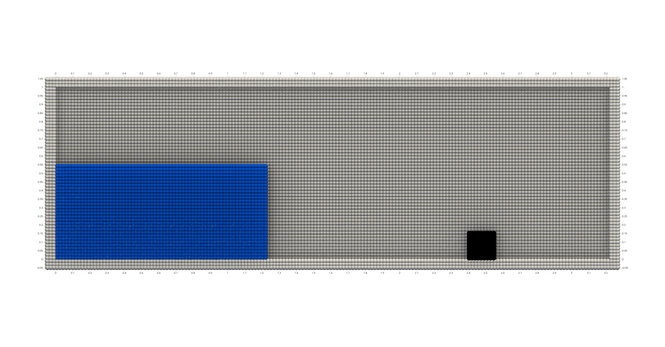
Having Just Realized™ that I can use Sphere Glyphs to render my particles in #ParaView, I am now Very Happy™ because my low-resolution #SPH simulations can be made to appear so much nicer.

#SmoothedParticleHydrodynamics #CFD #ComputationalFluidDynamics #rendering #visualization

If when you execute `paraFoam` in #OpenFOAM you get `paraview: not found` and you could not repair it, you can create a `.foam` file via `foamToVTK` and save the output to a .foam file and open it via #paraview.

#LetsLearnOpenFOAM

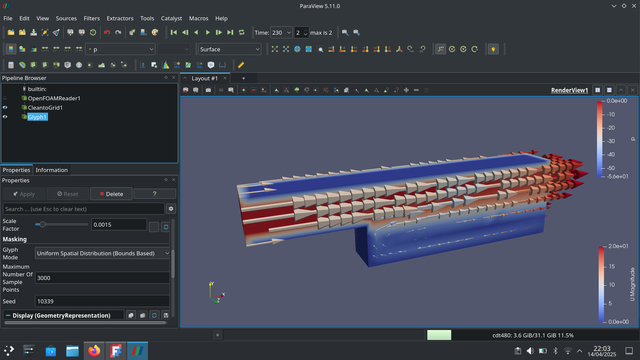
Following on from my earlier stuff about being inspired about parachute/recovery systems and Ballute design in @FreeCAD I've dived into setting up the CfDoF workbench and bashing through a simple tutorial pushing water through a stepped tube. I think I borked the glyph a little, but I feel like I've learnt a little... and seen a LOT to learn. #OpenFOAM #CFD #Paraview
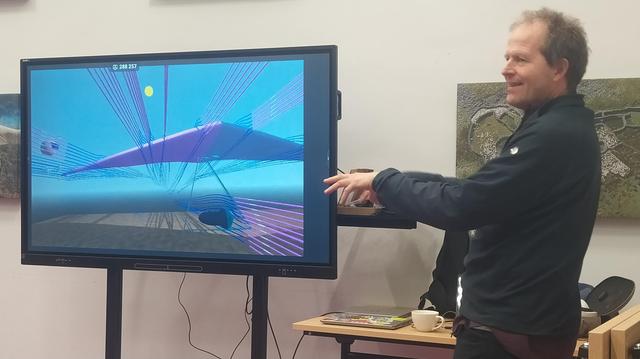
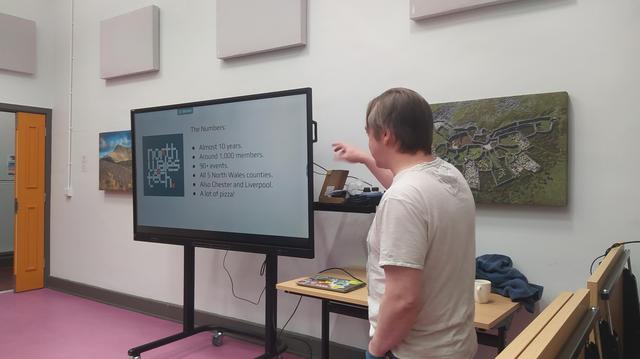
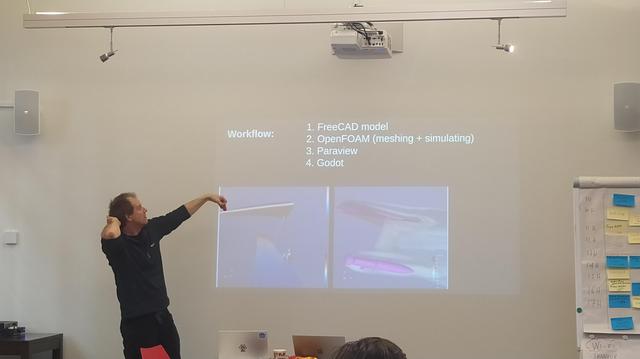
Great evening speaking at and helping run a North Wales Tech meetup event locally this evening. Great to see some of the @DoESLiverpool crew come over! @goatchurch gave an excellent presentation on @FreeCAD #paraview and using the #godot engine to build multiplayer #vr viewing environments for engineers.
Next up at #FreeCADDay is Julian @goatchurch speaking about #Godot as a front end for #VR / #XR interaction with #Paraview.

Registration for the upcoming (free) virtual ANARI Hackathon on Oct. 21-23 is now open!

Come join us to work on various projects related to ANARI -- we will be meeting via Zoom to "divide and conquer" on all kinds of fun things to work on.

https://www.khronos.org/events/anari-hackathon-2024
#ANARI #analytical #render #paraview #VisIt #Ascent #OSPRay #PTC #raycast #OpenUSD

ANARI Hackathon 2024

Deploying and developing royalty-free open standards for 3D graphics, Virtual and Augmented Reality, Parallel Computing, Neural Networks, and Vision Processing

The Khronos Group

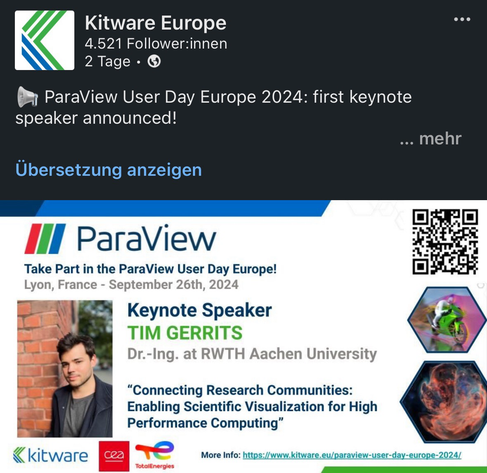
🎉 I‘m happy to announce that I was invited as keynote speaker for this year‘s ParaView User Day Europe! 🇪🇺

In the last couple of years at #NHR4CES we have been working towards bringing visualization to the HPC community, while also enabling visualization scientists to make use of HPC infrastructure. 🤝

In this journey, #ParaView has played an essential part (with all its up- and downsides 😅).

I’m excited to talk about that journey this September in Lyon 🇫🇷 and connect with users and researchers

I've been working on thermal support in #GPUSPH, and was finally at the stage where I could run some tests and check the results. Except that #ParaView was refusing to open my files, complaining about “invalid token”s. I just spent over half an hour trying to understand what I changed in my code that had broken the output, even though I haven't changed anything related to it recently … turns out it wasn't my problem, but an issue with an upgrade ParaView and libexpat:
https://discourse.paraview.org/t/i-cannot-read-a-vtp-file-i-could-open-yesterday-can-someone-try-to-open-it/13938/12
I cannot read a .vtp file I could open yesterday. Can someone try to open it?

BTW I tried downgrading libexpat1 on my Debian installation to 2.5.0-2+b2 and it solved the issue for me, which seems to confirm that the issue is in the expat library rather than in ParaView itself.

ParaView

Exploring the Venturi effect.

A simulation was performed to create this model which depicts streamlines within a tube. The lines are coloured to show that the pressure at the throat section is lower (blue) than the pressure at the inlet or outlet sections (red).

#stem #cfd #flowvis #animation #3d #sketchfab #atpl #openfoam #paraview

https://sketchfab.com/3d-models/exploring-the-venturi-effect-ec57ac1bfceb46399d7627616ef5aee2

Exploring the Venturi effect - 3D model by famousandfaded

The Venturi effect occurs when the velocity of a fluid increases as the area of the container it flows through decreases. The pressure in the tube decreases as the fluid flows through the narrow section due to this increase in velocity. A simulation was performed to create this model which depicts streamlines within a tube. The lines are coloured to show that the pressure at the throat section is lower (blue) than the pressure at the inlet or outlet sections (red). Particle movement is based on velocity measured during the simulation. The particles travel faster as the rate of flow increases in the narrower section of the tube. They slow again as the tube widens. - Exploring the Venturi effect - 3D model by famousandfaded

Sketchfab