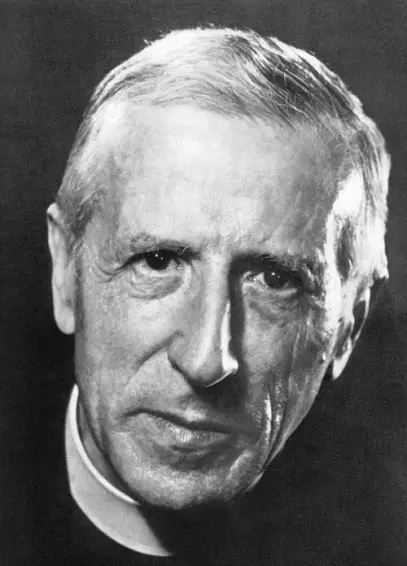
Consciousness Explained Away: Daniel Dennett’s Illusionism and the Theory That Spends Its Own Foundation
When Daniel Dennett died on April 19, 2024, at the age of eighty-two, the philosophical world lost one of the last serious defenders of a position so counterintuitive that even sympathetic readers spent decades trying to talk themselves into it. Dennett argued, across more than fifty years of writing, that consciousness as we ordinarily understand it does not exist. The reds and greens you see, the texture of cool water against the palm, the sense that there is somebody home behind your eyes reading these words: all of it, on Dennett’s account, is what he called a user illusion, a simplified internal model the brain generates for navigation purposes, with no inner light behind it and no observer to whom the show is being staged. The position is called illusionism, and it remains the strongest possible challenge to the panpsychism we considered in the previous article on Iain McGilchrist. If Dennett was right, McGilchrist’s whole project rests on a misdescription of what we are.
The essay that follows takes Dennett’s position seriously enough to argue with it. Treating illusionism as obvious nonsense, the way much of the philosophical commentariat does, is unworthy of the work he produced and bad for thinking. Treating it as established science, which his more enthusiastic defenders sometimes do, is a different mistake in the opposite direction. The honest position holds that Dennett gave us one of the most carefully developed materialist accounts of mind on offer, that significant portions of his work contributed real progress to cognitive science, and that the metaphysical core of illusionism collapses on close inspection in ways his admirers prefer not to discuss.
Begin with the position itself, stated as charitably as I can manage. Dennett’s 1991 Consciousness Explained developed what he called the Multiple Drafts model. Instead of a single inner stage where conscious experience plays out, he argued, the brain runs many parallel processes that compete and revise one another in real time. There is no Cartesian Theater, no master audience, no central self watching the show. What we call consciousness is an emergent narrative effect, a kind of running editorial composite produced by neural activity that has no privileged location and no privileged moment of conscious recognition. Asking when something becomes conscious is like asking exactly when a manuscript becomes finished while it is still being edited by twenty hands at once. The question presumes a unity that does not exist.
The illusionist refinement came later. In 2016, the philosopher Keith Frankish edited a special issue of the Journal of Consciousness Studies under the title “Illusionism as a Theory of Consciousness,” for which Dennett contributed a major essay called “Illusionism as the Obvious Default Theory of Consciousness.” The argument runs as follows. When you say “I am conscious of a red stripe,” what is happening is not that some inner film is playing redness for an inner viewer. What is happening is that your brain has constructed a representation of redness, and the representation reports itself as having phenomenal character it does not actually possess. Dennett borrowed Alan Kay’s term “user illusion” from computer science, where it described the desktop metaphor that lets users operate a machine whose real workings remain hidden. Consciousness, on this view, is the brain’s user illusion of itself.
The position commits Dennett to a startling consequence. There are no qualia, no raw feels, no phenomenal properties of experience. Philosophical zombies, the imagined creatures functionally identical to humans but with no inner experience, do not exist as a separate possibility from us, because all of us already are what zombies were supposed to be. We function and talk about our experiences. We act as if there is something it is like to be us. The inner light we imagine glowing behind our reports is not actually there. Dennett wrote, with characteristic mischief, that he was committed to the view that we are all philosophical zombies, adding immediately that the line should not be quoted out of context. It usually was.
Where the case works, it works for these reasons.
The argument is effective because the Cartesian Theater is genuinely incoherent. If you ask where in the brain the conscious moment happens, you find no such place. Cognitive neuroscience has searched for decades and located nothing resembling a master observer. Vision goes to the visual cortex. The auditory cortex processes sound. The prefrontal cortex coordinates working memory. Nowhere is there a screening room with a viewer in it, and the question “who is watching?” leads into infinite regress. Dennett’s destruction of the homunculus model was a real philosophical achievement and remains the cleanest available demolition of a picture most people hold without noticing they hold it.
It works also because Benjamin Libet’s experiments from the 1970s and 1980s established that neural preparation for a decision precedes conscious awareness of having made it by roughly three hundred milliseconds. The conscious self arrives at its own decisions slightly after the brain has already begun acting. This finding does not prove illusionism, but it strongly suggests that consciousness is less central to cognition than introspection reports. Whatever conscious experience is, it cannot be the executive director it feels like being.
A further strength: cognitive science has produced extensive evidence that introspection is unreliable as a guide to what the brain is doing. Change blindness experiments, inattentional blindness, the failure to notice major scene transitions, the brain’s confabulation of unified perception from broken inputs, all of this points toward a system that fabricates narrative coherence rather than reporting it. Daniel Kahneman’s two-system model, much of social psychology, and large stretches of cognitive neuroscience converge on the conclusion that the conscious self is told a story rather than told the truth. Dennett built his philosophy on this evidence and built it carefully.
Illusionism earns additional power because it does what philosophy of mind so rarely accomplishes: it makes empirical predictions. The position predicts that no matter how carefully we examine the brain, we will find no special phenomenal properties, no unbridgeable explanatory gap, only the increasing detail of computational and neural processes. This is testable in principle, falsifiable in principle, and more honest than positions that retreat to unanalyzable mystery whenever the science gets close.
Last, the program takes seriously the strangeness of the universe physics describes. There is no good reason to assume that ordinary human experience accurately reports the deep structure of reality. We did not evolve to perceive truth. We evolved to survive long enough to reproduce, and our perceptual and introspective apparatus was tuned for that purpose. Dennett’s willingness to follow the implication wherever it led is the mark of a serious philosophical mind.
The case carries equally serious weaknesses, however, and the weaknesses cluster around a single point that has dogged illusionism since its first formulation.
The argument is not effective because illusion presupposes consciousness. An illusion is a false appearance, and a false appearance requires a perceiver to whom the false appearance appears. To say consciousness is an illusion is to say there is something it is like to be deceived about consciousness, which means there is something it is like to be the system Dennett claims has no something-it-is-like-to-be. The American theologian David Bentley Hart put the objection sharply in his 2017 essay “The Illusionist,” published in The New Atlantis: you cannot suffer the illusion that you are conscious because illusions are possible only for conscious minds. The point is so obvious that Dennett’s defenders have spent thirty years trying to argue around it, and the arguments have grown increasingly baroque without ever quite touching the core of the objection.
It is also not effective because the redefinition trick is visible. When Dennett says consciousness is an illusion, he means consciousness as ordinarily described, with its qualia and its unified inner viewer. When he then says we are all functioning fine, that we have user illusions and multiple drafts and complex representations, he has reintroduced under different names exactly the phenomena he claimed to eliminate. Galen Strawson made this point with particular force, arguing that Dennett denies the existence of the data a theory of consciousness is supposed to explain, then offers a theory of something else and calls it a theory of consciousness. The maneuver is rhetorically powerful and philosophically empty.
A further weakness: the Cartesian Theater Dennett demolishes is a straw position most contemporary philosophers of mind do not hold. Phenomenal realists need not believe in a homunculus or a master viewer or a screening room in the head. They need only believe that there is something it is like to undergo experience, which is a far weaker claim than the picture Dennett spent his career attacking. By demolishing the strong version, he left the weak version intact while pretending he had demolished both. Thomas Nagel made the point in The New York Review of Books in March 2017, reviewing From Bacteria to Bach and Back: Dennett asks us to turn our backs on what is glaringly obvious, the immediate awareness of subjective experience, and offers in exchange a story about neural machinery that may all be true while leaving the original question untouched.
The position fails because it cannot account for the difference between systems that obviously experience something and systems that obviously do not. A thermostat represents the temperature. It models its environment. It adjusts behavior based on internal states. By Dennett’s lights, what makes the thermostat different from you is degree of complexity rather than presence or absence of inner life. If illusionism is right, your experience of pain is a more complex version of what the thermostat does when it registers cold. This consequence is so wildly at odds with what we know about pain that it functions as a reductio of the position rather than a confirmation of it. John Searle pressed this objection for decades, and Dennett never produced a response that satisfied anyone outside his immediate circle.
Last, illusionism cannot explain why the illusion exists in the first place. If consciousness is an evolutionary user-interface, why does it have phenomenal character at all? The question of why there is a felt redness rather than mere redness-detection is exactly the hard problem David Chalmers identified in 1995, and Dennett’s response was to deny that the question was real. Denying a question is not answering it. Other illusionists, including Frankish, have been more candid about this gap and acknowledged it as an outstanding problem for the program. Dennett tended to close the question by force of personality rather than by force of argument, and his defenders inherited the closure without inheriting the personality that made it almost convincing.
A specific paradox deserves separate treatment. Dennett’s commitment to philosophical zombies being identical with us is either trivially true or wildly false depending on which definition of zombie one uses. Under his own redefinition (a creature functionally indistinguishable from a human, with no extra non-physical properties), of course we are all zombies in his sense, because his sense is constructed precisely to include us. Under Chalmers’s original definition (a creature functionally identical but lacking phenomenal experience), the claim that we are all such creatures is the central thing in dispute, and Dennett’s announcement that we are all zombies amounts to declaring victory rather than achieving it. The wordplay is amusing. The argumentative work it pretends to do is fictional.
Where does this leave the project? Several genuine contributions survive the dismantling.
The Multiple Drafts model gave cognitive science a serviceable framework for thinking about how the brain produces unified-feeling experience from distributed parallel processing, even if the framework does not require illusionism as its metaphysics. The user illusion metaphor remains useful for describing how introspection misrepresents underlying neural activity, even if the metaphor cannot bear the metaphysical weight Dennett placed on it. His destruction of the Cartesian Theater counts as permanent philosophical progress, and any future theory of consciousness will need to accommodate Dennett’s critique whether it accepts his positive program or rejects it. His sustained engagement with cognitive science kept philosophy of mind close to the empirical work that ought to constrain it, and the field is healthier for the discipline he imposed.
What does not survive is the central claim. Consciousness is real in any standard sense of the word, since illusions themselves require conscious subjects. The hard problem cannot be dissolved by redescription, because redescription leaves the original problem intact under a new vocabulary. The experiential reds and greens and pains and hopes that fill our days are either real, in which case illusionism is false, or unreal, in which case the question of what is doing the reporting becomes urgent and unanswered.
Return now to the McGilchrist question with these results in hand. If illusionism fails at its center, the hard problem stands, and the panpsychist option becomes more attractive by a process of elimination, since materialist emergence and illusionist deflation have both encountered serious difficulty. This does not establish that McGilchrist is right. It establishes that his position belongs among the few options still on the table after the most ambitious materialist program of the late twentieth century has been worked through and found wanting at its center.
The deeper lesson concerns what philosophy can and cannot accomplish by argument alone. Dennett spent fifty years constructing what he called the obvious default theory of consciousness. He convinced a small circle of admirers, antagonized a larger circle of critics, and produced a body of work that will be read for a long time. None of it solved the hard problem. None of it could solve the hard problem, because the hard problem is what we are made of, and arguments about consciousness produced by conscious beings cannot get behind the consciousness that produces them. Dennett saw this difficulty and tried to argue it away. The honest verdict is that he failed, gracefully and intelligently, in a way that taught us a great deal about what success would require.
We owe him the courtesy of saying so out loud. He would have preferred direct refutation to polite agreement, and direct refutation is what the work deserves. The user illusion remains a useful metaphor and a serviceable instrument for cognitive science. As metaphysics it cannot hold. The inner light Dennett spent his career trying to extinguish is the one thing his arguments could not reach, because the arguments themselves arrived in consciousness, were read in consciousness, and were rejected or accepted in consciousness, and no maneuver of language can exit the medium in which the maneuver takes place.
We assume our own inwardness because we have nothing else to assume from. Dennett’s wager was that we could think our way past this assumption to a more austere description of reality. The wager was honorable, and it failed.
The argument from austerity has its own seductions, and we should name them. There is a certain kind of intellectual pride that takes pleasure in eliminating what others find precious, and Dennett was not immune to it. His writing carried a confident scorn for opponents that was less philosophical virtue than personal style, and the style propagated through his disciples in ways that have hurt rather than helped the program. A position that depends on the personality of its founder for its persuasive force is a position that has not yet earned the right to hold the field. Dennett’s work will outlive him. Whether illusionism survives without his voice carrying it remains to be seen, and the early evidence suggests not.
What we can take from him, what we should take from him, is the discipline of refusing to mystify. The hard problem is real, but real problems are not solved by reverence. Dennett’s failure was an honest failure pursued with rigor and wit, and the field needs more such failures and fewer of the soft evasions that pass for theory in the consciousness literature. If we end up disagreeing with everything he claimed, we still owe him the standard of work he set, and the willingness to argue all the way down rather than retreating into vocabulary that protects the question from being asked clearly. He asked it clearly. He answered it wrongly. Both halves of that judgment matter, and both halves are why he will be read after his answer is forgotten.
Part two of three. For the full sequence and reading guide, see The Consciousness Trilogy: Reading Three Wagers on the Question We Cannot Settle.
#argument #brain #consciousness #dennett #editorial #illusion #mcgilchrist #mystify #panpsychism #pathways #philosophy Philo Sophies
 jan
jan David Boles
 Rod Van Meter
 (Roughly) Daily