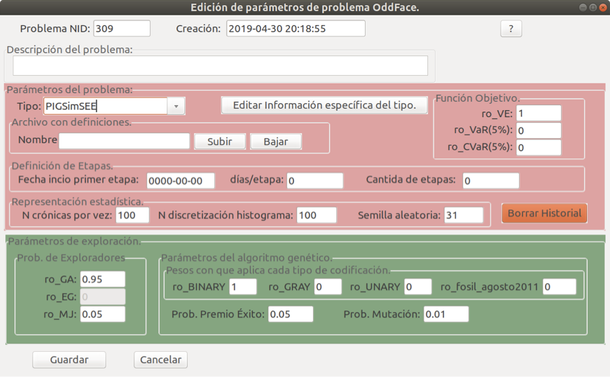
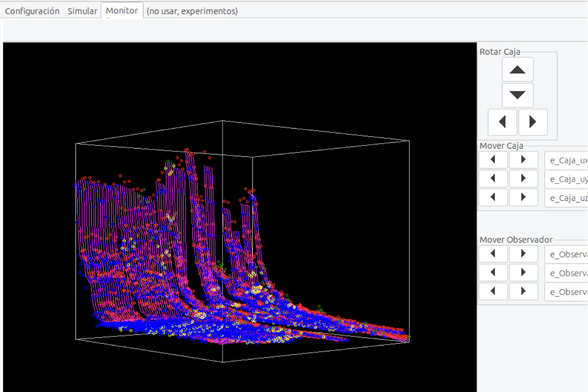
#SimSEE is an open platform for the #Simulation of Electric Power Systems.

With SimSEE, one can analyse the evolution of e.g., volumes of energy, money exchanged by participants in the market, and risk calculations for contracts.

It is developed in #Object_Pascal with the #Lazarus_IDE.

https://simsee.org

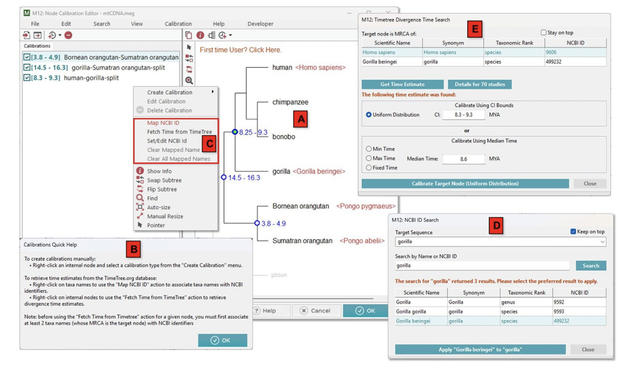
#MEGA is a global project and widely used software for molecular evolutionary and phylogenetic analyses. Originally developed in C++, it has been ported to #Object_Pascal for cross-platform compatibility on #macOS, #Windows, and #Linux.

https://doi.org/10.1007/s00239-025-10287-z
https://pubmed.ncbi.nlm.nih.gov/41247409/

The irony: the entire RISC-V base ISA (RV64GC) is beautifully RISC: simple opcodes, fixed 32-bit instructions (+ compressed), load/store architecture, no flags, no implicit state. Then RVV comes along and throws all those principles out the window: global implicit state, microcode-like behavior, variable semantics of the same instruction.

Because vsetvli changes the semantics of all subsequent V-instructions based on the current VLEN configuration. For a JIT compiler in an Emulator and for an Emulator in general, this means having to continuously track the vtype state and react to any changes, a fundamental contradiction to the principle of statically analyzable instructions. It feels like the RISC-V Foundation sacrificed the simplicity and elegance of the RISC principle to create a powerful but extremely complex "super-SIMD" that is difficult to efficiently map in a JIT. A more traditional SIMD extension with fixed vector widths and clearly defined instruction semantics would have been much more JIT-friendly. The upcoming P extension does go in that direction, but it is primarily targeted at embedded and low-power applications rather than high-performance computing.

#riscv #riscv64 #emulation #pasriscv #object_pascal #delphi #free_pascal

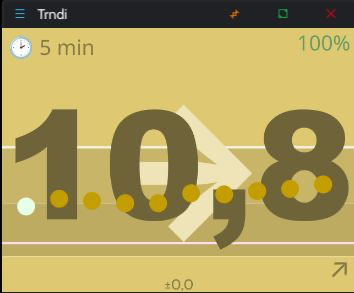
#Trndi is a #glucose monitoring application written in #Object_Pascal. It fetches interstitial sugar readings from continuous glucose monitors (CGM) via different APIs and shows them on the desktop. It also presents a trend over time, colouring, and JavaScript extensions.

https://trndi.app

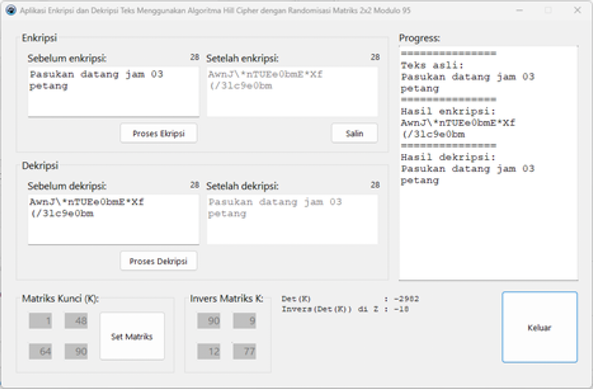
A Hill Cypher modulo 95 #cryptography method generates a matrix-based key with a quantifiable randomisation algorithm. In a recent paper, the use of random matrices is implemented in an app written in #Object_Pascal with the #Lazarus_IDE.

https://doi.org/10.26554/integrajimcs.20252111

PasRISCV now has its own local CLI debugger alongside the GDB remote server. It supports breakpoints, single-stepping, register & memory inspection, and allows simultaneous local CLI and remote GDB sessions. A public debugger API enables future graphical debugger frontends.

https://youtu.be/yznijHMKj_0

#riscv64 #riscv #emulation #pascal #object_pascal #debugger

PasRISCV debugger demonstration

YouTube
This cross-platform RPN calculator has been written in #Object_Pascal with the #Lazarus IDE for the #Free_Pascal compiler. Source code has been made available.

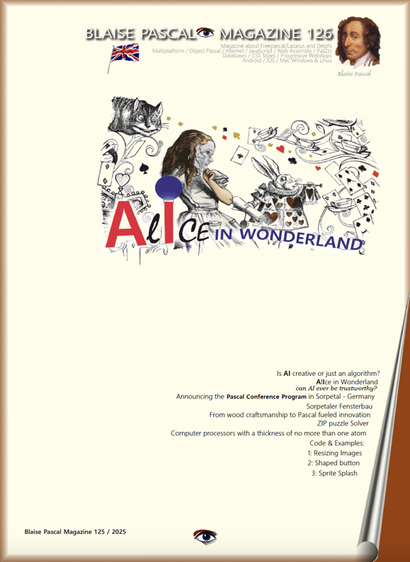
Issue #126 of the Blaise Pascal Magazine: ZIP puzzle solver in #Pascal, Resizing images, shaped buttons and sprites with #Lazarus and #Object_Pascal, multiple articles on AI and infos to the upcoming Pascal Conference 2025.

www.blaisepascalmagazine.eu

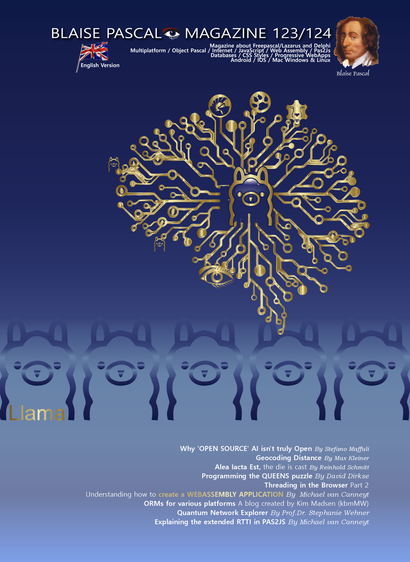
Issue 123/124 of Blaise Pascal Magazine released: #Geocoding with #Pascal, a die-cast simulator for teaching statistics in #Object_Pascal, QUEENS puzzle in Pascal, threading #Free_Pascal code via #WebAssembly in the browser, RTTI in #PAS2JS etc.

https://www.blaisepascalmagazine.eu

Blaise Pascal Magazine | Pascal is the future of programming