 Martin Boller


Как выбрать опорный генератор и не разочароваться. Пример точной настройки 10 МГц с помощью ЦАП до 0.3 ppb (3 мГц)
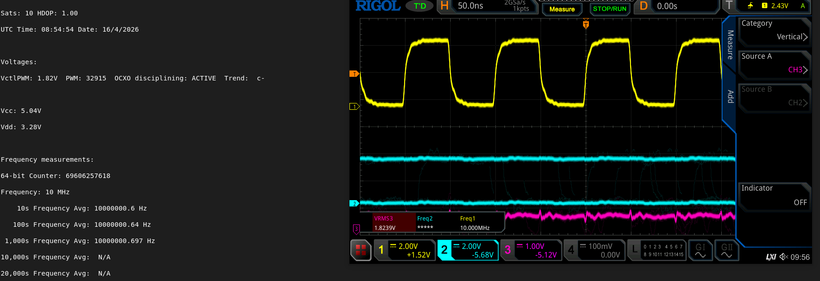
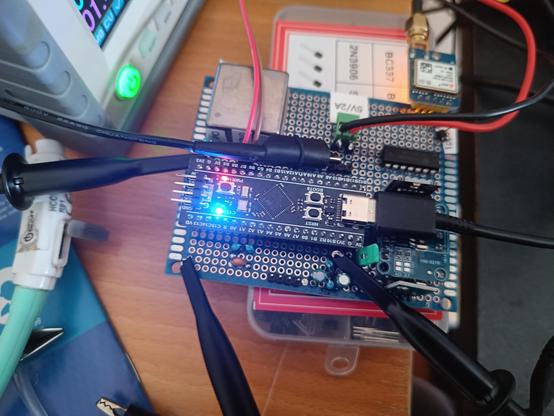
Один из ключевых параметров качества радиотехнических устройств стабильность частоты, определяемая опорным генератором. Однако стремление к максимальным характеристикам не всегда оправдано. Выбор топового генератора без учета условий эксплуатации может привести к неоправданным затратам, усложнению конструкции и снижению надежности системы без существенного выигрыша для пользователя. В этой статье кратко рассматриваются основные типы опорных генераторов — от простых кварцевых резонаторов до высокоточных рубидиевых стандартов. С ростом стабильности частоты увеличиваются стоимость и сложность конструкции, а вот надёжность, может снижаться. На основе этого анализа предлагаются критерии выбора оптимального решения для разных задач. Также приводятся практические результаты: экспериментальные данные по долговременной стабильности частоты доработанного термостатированного генератора и результаты его программной подстройки с использованием ЦАП после выхода на рабочий режим.
https://habr.com/ru/companies/stc_spb/articles/945814/
#генератор #резонатор #OC #TCXO #OCXO #Rb #XO #Crystal #oscillator #стабильность_частоты

Введение Один из ключевых параметров качества радиотехнических устройств стабильность частоты, определяемая опорным генератором. Однако стремление к максимальным характеристикам не всегда оправдано....
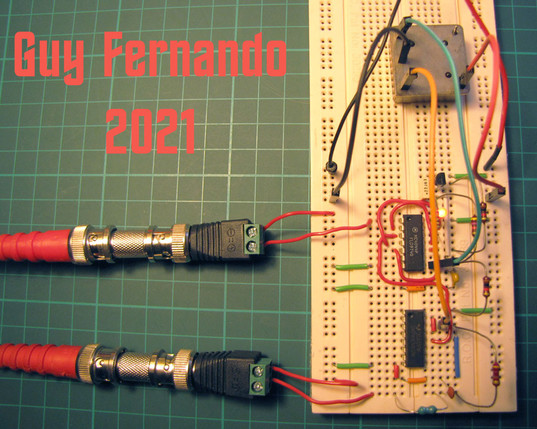
On breadboard we have a clean 10MHz sine-wave frequency reference. It is phase locked to a 1MHz GPS disciplined oscillator. My design uses a phase locked loop and decade counter to finely control an oscillator. Next step is to build it properly.
#Electronics #PLL #GPSDO #OCXO
[28/09/2021]
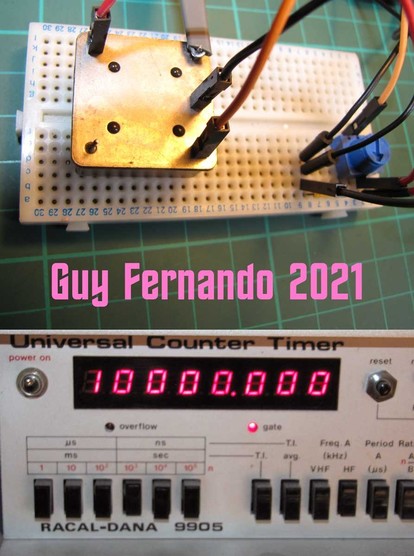
It’s module testing time! The OSC5A2B02 Oven Controlled Crystal Oscillator (OCXO) makes a rock steady frequency reference. This one is finely adjustable around 10.000000MHz.
#Electronics #FrequencyReference #OCXO #VCO #HamRadio #AmateurRadio
[11/09/2021]
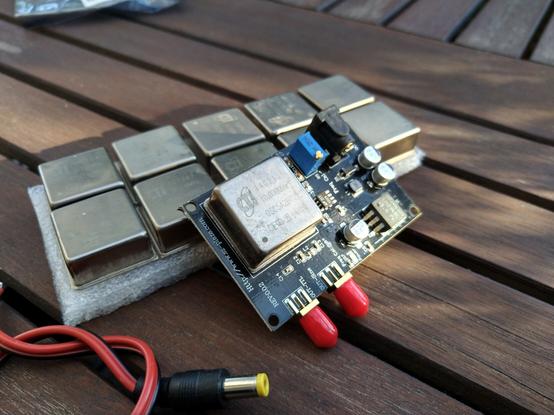
So very used #OCXO oscillator cans from ebay.
They ware cheap and most of them should work.
Plenty of projects of mine and from friends will have nice, stable and cheap reference clocks.
And if there are duds, I get to pull one to bits or possibly learn how to repair OCXO's.
I plan to use one as a refclock for a homebrew signal generator, when I repair and re-home it to a better case.
And for a #24GHz project.
Edge-Mounted Meters Give This Retro Frequency Counter Six Decades of Display
With regard to retro test gear, one's thoughts tend to those Nixie-adorned instruments of yore, or the boat-anchor oscilloscopes that came with their own carts simply because there was no other way to move the things. But there were other looks for test gear back in the day, as this frequency counter with a readout using moving-coil meters shows.
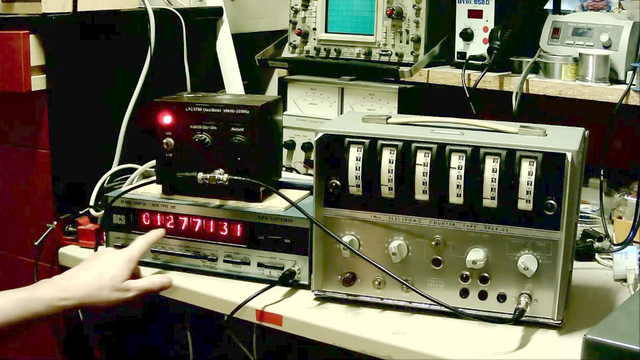
We have to admit to never seeing anything like [Charles Ouweland]'s Van Der Heem 9908 electronic counter before. The Netherlands-based company, which was later acquired by Philips, built this six-digit, 1-MHz counter sometime in the 1950s. The display uses six separate edge-mounted panel meters numbered 0 through 9 to show the frequency of the incoming signal. The video below has a demo of what the instrument can do; we don't know if it was restored at some point, but it still works and it's actually pretty accurate. Later in the video, he gives a tour of the insides, which is the real treat -- the case opens like a briefcase and contains over 20 separate PCBs with a bunch of germanium transistors, all stitched together with point-to-point wiring.
We appreciate the look inside this unique piece of test equipment history. It almost seems like something that would have been on the bench while this Apollo-era IO tester was being prototyped.
#retrocomputing #teardown #decade #electroniccounter #frequencycounter #germanium #movingcoil #ocxo #ovencontrolledcrystaloscillator
 GripNews
 Habr
Habr i4cy 📌
 Josef 'Jeff' Sipek
 ftg
ftg hackaday unofficial