Stuck in the Filter: October 2025’s Angry Misses

By Kenstrosity

They say it’s going to be a harsh winter this year. They always say that, and it’s almost never true, at least not from where I’ve set up camp. However, no matter the weather I am a harsh taskmaster, doling out grueling hours, no pay or benefits, and probably the worst coffee on the planet to my dutiful minions. It takes a special kind of person, motivated by pure unadulterated greed to ravenously scour the filter for dusty, almost-forgotten gems like they do.

But we are thankful for them for being exactly that! And we also benefit, in the form of quality(ish) chunks of glimmery, shimmery metal. BEHOLD!

Kenstrosity’s Riffy Representation

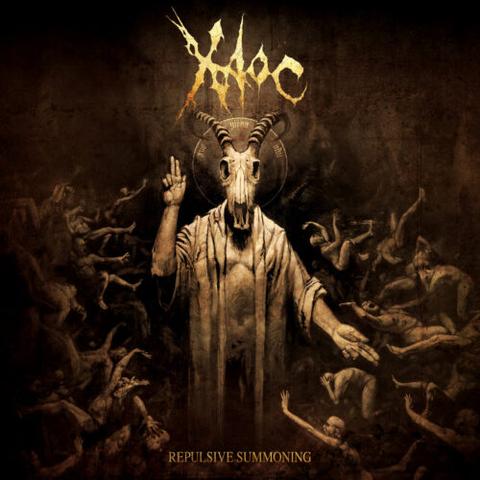
Xaoc // Repulsive Summoning [October 31, 2025 – Edgewood Arsenal Records]

Xaoc’s history is one of the more confusing I’ve encountered in my time writing for this blog. After breaking up in 2008, a new lineup spawned in 2022 to record and release Proxime Mortis from the ashes of songs written pre-breakup, supported by Edgewood Arsenal. At some point this year, two more members spawned in anticipation of this new slab Repulsive Summoning. But the band’s labeled as Split Up already on Metallum? I don’t understand what’s going on there, but at least I can say that Repulsive Summoning is a turbo banger! These riffs are bonkers, full of verve and swagger, brimming with groove and muscularity. A happy mix of Vomitory and Dormant Ordeal, this Virginian outfit know how to throw down. Highlights like “Ave Solva Coagula,” “Antima Samskara,” “The Great Perfected Ones,” and the entire “Degenerate Era” three-part suite reduce my body into a fine slurry by the grinding, vicious power of their riffs alone. But the rabid growls, ballistic percussion, and meaty guitar tones contain more than enough fuel to propel those riffs across this tight and thunderous 35-minute runtime. It’s a simple record, built to beat me down and leave me broken and bloodied, but it’s also an effortlessly memorable affair that leaves me wanting more despite the mounting medical bills. Don’t sleep on Xaoc!

Andy-War-Hall’s Succulent Surplus

Canvas of Silence // As the World Tree Fell [October 31st, 2025 – Rockshots Records]

Finnish symphonic metallers Canvas of Silence describe themselves as “prog-influenced chorus metal,” and that description goes far in outlining their debut As the World Tree Fell. Their core sound resembles a progged-out Nightwish moonlighting as a melodeath band, committing ludicrous bombast on symphonic-heavy cuts like “The Great Unknown” and “Wayfarer” amidst a sharp Gothenburg riff attack in “Watching the World Tree Fall” and “Drown.” Canvas of Silence mete out a balanced approach of light and dark sounds between Theocracyesque prog-power (“One With the Wind,” “Humanimal”) and Madder Mortem-like gothic twists (“Drown,” “Anthem for Ashes”), all reined in by the commanding vocal presence of singer Loimu Satakieli.1 Sitting somewhere between Anette Olzon (ex-Nightwish, The Dark Element) and Agnete Kierkevaag (Madder Mortem), her impassioned and heavily-layered singing turns As the World Tree Fell into a smörgåsbord of lush, catchy and anthemic tunes of an uplifting, sing-along nature. Optimism permeates As the World Tree Fell, felt at a fever pitch on the enormous choral bridge of “Humanimal” and the folky power metal jaunt of “One With the Wind.” Even on lyrically dark/mournful passages like “Wayfarer” and “Garden of the Fallen,” Canvas of Silence deliver soaring, hopeful crescendos that at times reach Fellowship levels of good cheer. Canvas of Silence can craft sincerely beautiful moments, and though As the World Tree Fell’s production can be sterile and overly loud2 I am nothing but excited to see what these Finns can cook up next.

Spicie Forrest’s Punky Proferrings

Violent Testimony // Aggravate [October 17th, 2025 – Horror Pain Gore Death Productions]

Do you wish there was more grind in your life? Well, Cheyenne, Wyoming’s Violent Testimony just assumed you would. Combining the punky flair of Napalm Death with the lead foot ethos of early Pig Destroyer and Cattle Decapitation, debut LP Aggravate is 26 minutes of delicious grindy goodness. From the opening salvo of “God Complex Massacre” to the final detonations of “Hit N’ Run,” Violent Testimony shows absolutely no restraint. D.N.’s Gatling drums mow down everything in their path while T.W.’s serpentine bass clears the chaff and flattens any obstruction. Shrapnel propelled by N.Y.’s brutish, breakneck riffing can be seen burying itself in concrete walls, still quivering (“Rider in the Night,” “Psychotic Episode”). Caustic growls and vitriolic screams tear from T.W.’s throat at mach fuck (“Flashbang Celebration,” “Obligatory Manifestation of Infinite Grind”). With only two tracks exceeding the two-minute mark, Violent Testimony screams their piece with as much sound and fury as possible before moving on and picking their next bone with the system. This keeps Aggravate a lean, densely-packed offering. If you need to get pissed off right now and even the fastest death metal is too slow, Violent Testimony is all too happy to decimate the opposition with you.

Uaar // Galger og Brann [October 17th, 2025 – Fysisk Format Records]

Hailing from Oslo, Norway, crust outfit Uaar celebrates their tenth birthday by releasing their debut LP. Galger og Brann, which means “Gallows and Fire” in Norwegian, expands on the foundations laid by established acts like Skitsystem and Tragedy. With one foot firmly planted in black metal and the other in hardcore, Uaar unleashes a cacophony of rage unfettered. D-beats abound, courtesy of Truls Friesl Berg, creating a frantic, enraged atmosphere. Dag Schaug Carlsen’s blackened rasps are so cold they burn, matching the evil pall hanging over tracks like “Galeås” and “Den siste.” Post-flecked, Ancsty tendencies (“Alt Skal Brenne,” “Overalt”) peek through the feral hardcore riffage (“Håpet forsvinner”) of guitarists Erik Berg Friesl and Jon Schaug Carlsen, while bassist Stian S. Evensen provides the muscle to convince you these guys aren’t screwing around. Uaar is well-versed in their base genres, alternating between and mixing black metal and hardcore effortlessly. The occasional blues-tinged heavy metal lead—as in “Overalt” and “Dolken”—keep Galger og Brann from being a one-note affair. With a dearth of standout blackened hardcore releases this year, Uaar’s Galger og Brann is a welcome—if late—addition to the list.

Scorching Tomb // Ossuary [October 24th, 2025 – Time to Kill Records]

I’ll be honest, I’ve never considered Montreal, Canada, to be prime death metal territory. Luckily, Scorching Tomb doesn’t care what I think. Debut LP Ossuary is an aural violation born of Tren-induced hardcore aggression and filthy old school death metal. With a guitar tone (Philippe Lelbanc) like sandpaper and a bass like swallowing gravel (Miguel Lepage), Scorching Tomb plays in the same cesspools as Bloodgutter and Rotpit. We normally associate melted faces with guitar solos, but that honor belongs to whatever corrosive noises issue forth from vocalist Vincent Patrick Lajeunesse’s guts. Drummer Émile Savard loves a blast beat, often detonating them in short bursts to support an already bone-breaking assault (“Feel the Blade”). “Stalagmite3 Impalement” and “Sanctum of Bones (Ossuary)” are particularly savage, with tetanus-inflicting riffs and bloodthirsty screams threatening to drag you into the crypt to be used for meal prep. On “Skullcrush,” Sanguisugabogg’s Devin Swank perfectly matches Scorching Tomb’s vile depravity, cementing them as a promising new act in the scene. Ossuary is raging, muscle-bound, caveman death metal drowned in a vat of viscera and sewage, and it tastes incredible.

ClarkKent’s Gratifying Goodies

Sutratma // Adrift [October 3rd, 2025 – Self-Release]

While I didn’t purposely seek out more doom during my self-imposed month of picking only doom promos, Sutratma’s fifth full-length, Adrift, ranks as one of the better doom albums I listened to in November. This California four-piece has been writing funeral doom for 15 years, and it shows in their ability to craft effective melancholic slow-burns that strike a balance between melody and crushingly heavy. Adrift impresses straight out the gate with the piano-drenched “Wind and Sea.” This song nicely melds the sorrowful softness of the piano with punishing guitar riffs and impressive growls. Just like stalwarts My Dying Bride, Sutratma mixes growls with cleans, and Daniel Larios’s cleans effectively hit you right in the feels while the growls take on a more despairing note. There’s plenty of variety from song to song, with organs stealing the show on “Guiding Star” and a lovely melody on “The Great Bereaver” that builds up to a moving finale. Just like with Oromet, there’s a serenity to the music that is calming, and the skilled songwriting and musicianship lends a poignancy to it all. With the frenzy of list season upon us, it’s nice to have something like this to remind us that it’s okay to just slow down—even when an angry ape is berating you for more content.

Starer // Ancient Monuments and Modern Sadness [October 10th, 2025 – Fiadh Productions]

Josh Hines, the one man behind black metal project, Starer, has been very busy. Since forming Starer in 2020, he has released four EPs and now, with the release of Ancient Monuments and Modern Sadness, four LPs. I first became acquainted with this band on 2023’s Wind, Breeze, or Breath and was taken in by Hines’s aggressively atmospheric take on black metal. Ancient Monuments and Modern Sadness hits the ground running on “I Cry Your Mother’s Blood” with some aggressively catchy melodies. The aggression continues on “Il-Kantilena” with its icy riffs and pumping blast beats. Meanwhile, “The Field of Reeds” combines the black n’ roll of Fell Omen with the fuzzy reverb of atmoblack for a rollicking good time. Hines screams into the void as subdued symphonics add layers of melody, providing a surprising amount of depth to each song. Because of the frenetic pace, the 50-minute runtime flies right by, even as songs like “Song of the Harper” do their best to vary the tempo. For black metal, the production is lush and gorgeous, giving air to all instruments. The epic, ten-minute finale is the culmination of Hines’s ability to put together complex and compelling music that both excites by its aggression and dazzles with its atmospherics. Black metal fans should not miss this one.

Grin Reaper’s Haunted Harvest

Black Cross Hotel // Songs for Switches [October 31st, 2025 – Someoddpilot Records]

Three years after dropping their favorably reviewed debut Hex, keys-drenched and industrialized outfit Black Cross Hotel returns bearing Songs for Switches. 80s-inspired synths, mid-paced chugs, and dance-ready grooves pack neatly into forty-one minutes of grubby fun, sure to interest fans of Ministry and Killing Joke, or anyone with a predilection for leather. Where Hex boasted a wider assortment of tempos, Songs for Switches narrows its focus to mid-paced songs with a keener emphasis on keyboard melodies. Averting a direction that could have been limiting, Black Cross Hotel smartly sidesteps this by shaving down song lengths and arranging the tracks for optimal pacing. Individual moments across the album evoke Me and That Man (“Eyes from Nowhere”), Soulfly (“Blood Dance”), and Joy Division (“Typo”), casting an eclectic array of sounds into Mount Gloom to forge ten dangerously fun tracks. Though I liked the album at first listen, it took multiple spins for Songs for Switches’ distilled aesthetic to fully unfurl, and once it did, my appreciation redoubled. With a sinister atmosphere designed as much for pain as pleasure, Black Cross Hotel has readied your room for a night you won’t forget.

Miasmata // Subterrania [October 31st, 2025 – Naturmacht Productions]

Still hawking their distinctive blend of meloblack and heavy metal, Miasmata dropped sophomore platter Subterrania on what was one of the most congested release days of 2025.4 In addition to the recurring influences of Windir (“Die at the Right Time”) and Iron Maiden (the intro to “Subterrania” smacks of The X Factor), Subterrania adds a dollop of thrash into the mix. Opener “Those Who Cross the Flame” struts out with a punky riff that wouldn’t be out of place on an Anthrax record, while “Full of the Devil” tastes as much like Testament or Havok as Diamond Head. The beauty of Miasmata, both on debut Unlight: Songs of Earth and Atrophy and Subterrania, is one-man mastermind Mike Wilson’s aptitude to synthesize a mighty host of influences into a unique sonic palette all his own. As Sharky noted in Unlight’s review, Miasmata has a knack for remarkable restraint. Subterrania clocks under forty minutes, layering slithery riffs upon one another in a way that propels the music in constant motion, shifting and unfolding so organically that the album slips by before you realize it’s over (an especially impressive feat considering the self-titled closer’s near fourteen-minute runtime). If you missed Miasmata’s latest on release day, go rectify that. Don’t let Subterrania get lost to the underground.

Dolphin Whisperer’s Autumnal Anomoly

夢遊病者 // РЛБ300119225 [October 28th, 2025 – Self Release]

As if plucked into lucidity from amidst a hazy, proggy machination, РЛБ30011922 steps into its narrative—an exploration of a beloved figure in its creator’s life, including sound clips describing the trials through which she persisted—with an entrancing stumble. Through an understated math rock lens, tight kit rhythms with a tension-building hi-hat clashes strut against a loud and leading bass voice across 37 minutes of fluid guitar textures. Whether it’s the chunky fusion reminiscent of Hackett-era Gordian Knot, the playful rhythmic post-rock that evokes a band like toe, or the fuzzed-out punctuation that tell a prog tale as ’70s King Crimson would, 夢遊病者, also known as Sleepwalker, makes their love of sound as clear as their love of РЛБ30011922’s inspiration. In a setting this free and detailed, not a single moment of this one-long-song opus passes by without taking a moment to focus on a given performer’s escalation in the drama of the movement. Wielding short guitar solos as segues into popping double-kick trots, spoken word exposition as pedal switch-up opportunities, all leading to a crescendo of bent and bluesy expression, 夢遊病者 succeeds in more than just holding an audience captive with their jammy and heartfelt statement. РЛБ30011922, like the shorter form releases that have graced these halls before, will have you coming back time and time again to explore its sentiments, which feel both traced from a dream yet rooted in rich, earthly tone pleasures.

Saunders’ Slinky Sneaks

Enragement // Extinguish All Existence [October 31st, 2025 – Transcending Obscurity]

The back end of 2025 has thrown down some delightfully vicious, chunkified, and straightforward death metal gems, courtesy of the likes of Depravity, Glorious Depravity and Terror Corpse. Not to be discounted, Finland’s Enragement dropped their own intense slab of brutal death on fourth LP, Extinguish All Existence. Cutting with any pleasantries, Enragement get down to business, slamming through a tight, burly collection of Americanized death, keenly treading a balance between thuggish beatdowns, chest-busting blasts, slammy, pig-squealing grooves, and more traditional, though deceptively diverse brutal death fare. Despite the certifiably crushing formula deployed, there is an air of accessibility, perhaps attributed to the clean but suitably beefy production job, bludgeoning, addictive grooves and sinister currents of atmospheric melody flowing through the album’s riff-centric veins. Thrashy, straightforward bursts of fury are tempered by more technical flourishes and an impressively versatile vocal assault. The likes of Devourment, Deeds of Flesh, Dawn of Demise and Benighted are perhaps fitting reference points, however, Enragement blast their own path of uncompromisingly heavy destruction.

Stephen Brodsky // Cut to the Core Vol. 1 [October 3rd, 2025 – Pax Aeturnum]

There are a couple of ways to broach this latest solo endeavor from lovable rogue and Cave In/Mutoid Man mastermind Stephen Brodsky. Brodsky delivers refreshed interpretations of various ’90s hardcore songs, reimagined in acoustic form. Those familiar with the original compositions will likely have fun dissecting and comparing the original anthems. While others, such as myself, largely unfamiliar with the originals, can enjoy these polished takes in their reimagined form, without comparison. Over the years, I have developed a strong connection with Brodsky’s works and come to appreciate his softer, acoustic flavorings. The likes of Snapcase, Converge, Texas is the Reason, Threadbare and By the Grace of God are some of the acts covered with typical style, zest, and emotion. Brodsky’s expressive and emotive delivery showcases both a loving appreciation of the material and deeper emotional connection that bleeds through the often darker, melancholic vibes of the acoustic constructions. The collection is remarkably consistent and infectious, highlighted by Brodsky’s crisp and soulful acoustic playing and distinctive singing voice on standout cuts, including “Windows” (Snapcase), “Benchwarmer” (Lincoln), “Fissures” (By the Grace of God), “Farewell Note to This City” (Converge), and “Voice” (Sense Field).

Soul Blind // Red Sky Mourning [October 10th, 2025 – Closed Casket Activities]

Riding a familiar wave of early ’00s alt-rock/metal and ’90s grungy nostalgia, New York’s Soul Blind emerge with sophomore LP, Red Sky Mourning. Although they tread dangerously close to overt derivation of prominent influences, including Alice in Chains, Deftones, and Helmet, Soul Blind manage to just stay afloat on their own terms. The dreamy melodies, chunky alt metal riffs, and soaring, Cantrell-esque vocal melodies cultivate some earwormy hooks and fuzzy, 90s/’00s feels. Soul Blind possess a knack for writing textured, mildly sludgy, infectious rock ditties, dabbling in shoegazing atmospherics, and sturdier alt metal territories along the way. Soul Blind relish in AIC inspired earworms (“Dyno,” “Hide Your Evil”), grittier, more aggressive alt metal fare (‘Billy,’ “New York Smoke”) and airy, indie pop-rock (“Thru the Haze”). Soul Blind have work to do to stand out from their influences and develop a more unique sound and robust character. However, the signs are positive for better things to come. Red Sky Mourning is a solid throwback album and handy companion piece to the equally nostalgia-inspired album from Bleed earlier in the year.

#2025 #Acoustic #Adrift #Aggravate #AliceInChains #AmericanMetal #AncientMonumentsAndModernSadness #Ancst #Anthrax #AsTheWorldTreeFell #AtmosphericBlackMetal #BlackCrossHotel #BlackMetal #Bleed #Bloodgutter #ByTheGraceOfGod #CanadianMetal #CanvasOfSilence #CattleDecapitation #CaveIn #ClosedCasketActivities #Converge #Crust #CutToTheCoreVol1 #DeathMetal #Deftones #Depravity #DiamondHead #DormantOrdeal #EdgewoodArsenalRecords #Enragement #ExtinguishAllExistence #FellOmen #Fellowship #FiadhProductions #FinnishMetal #FuneralDoom #FysiskFormatRecords #GalgerOgBrann #GloriousDepravity #GordianKnot #GrooveMetal #Grunge #HardRock #Hardcore #Havok #HeavyMetal #Helmet #HorrorPainGoreDeathProductions #IndependentRelease #IndustrialMetal #InternationalMetal #IronMaiden #JapaneseMetal #KillingJoke #KingCrimson #Lincoln #MadderMortem #MeAndThatMan #MelodicBlackMetal #Miasmata #Ministry #MutoidMan #MyDyingBride #NapalmDeath #NaturmachtProductions #NewZealandMetal #Nightwish #NorwegianMetal #Oct25 #Oromet #Ossuary #PaxAeternum #PigDestroyer #ProgressiveMetal #ProgressiveRock #RedSkyMourning #RepulsiveSummoning #Review #Reviews #RockshotsRecords #Rotpit #Sanguisugabogg #ScorchingTomb #SelfRelease #SelfReleased #SenseField #Skitsystem #Snapcase #SomeoddpilotReocrds #SongsForSwitches #SoulBlind #Soulfly #Starer #StephenBrodsky #StuckInTheFilter #StuckInTheFilter2025 #Subterrania #Sutratma #SymphonicMetal #TerrorCorpse #Testament #TexasIsTheReason #TheDarkElement #Theocracy #Threadbare #TimeToKillRecords #toe #Tragedy #TranscendingObsurityRecords #Uaar #ViolentTestimony #Vomitory #Windir #Xaoc #РЛБ30011922 #夢遊病者
Vandampire – Hope Scars Review

By Spicie Forrest

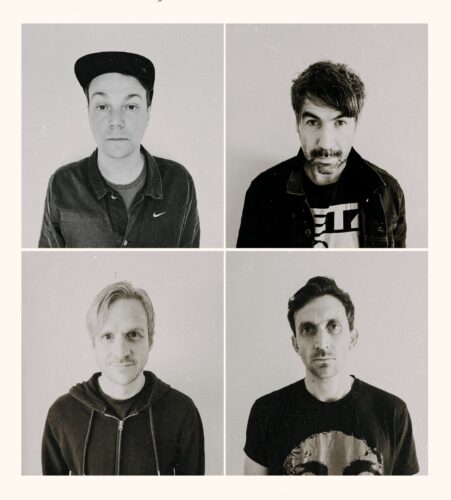
Post- historically implies an evolution of or successor to a previous idea (modernism, rock, structuralism, punk, hardcore, colonialism, etc.). While a little nebulous, post-metal more or less riffs on the post-rock blueprint. It utilizes metal’s intense, abrasive instrumentation to create an emotional vulnerability that even the best power ballads fail to capture. There is a tenderness in its crushing weight, a sense of freedom and catharsis in its restraint. It is this corner of the metalverse that South West England-based Vandampire inhabits. Founded in 2018 and with two EPs1 under their belt, Hope Scars not only marks Vandampire’s debut full-length, but the official debut of their second guitarist, as well. Post-metal is a saturated field, though, and it’ll take a lot for Hope Scars to stand out in the crowd.

One thing I can say for certain is that Hope Scars stands head and shoulders above Vandampire’s previous EPs. Past releases certainly contained all the elements on display here, but Hope Scars sees Vandampire mixing those sounds in elegant fashion. Where once sludge and post-metal stood apart or minimally integrated, here they are inseparable, a cohesive whole. Crushing, abrasive guitars (Joseph Siddons, Matthew Billingham) dance and thrash over basslines (Michael Edmonds) three c’s thiccc. Drummer Mark Litchfield, rather than simply keeping time, enunciates and elevates his bandmates’ performances. The result is tonally sludgy, like Kowloon Walled City, but softened by the patient, thorough sensibilities of post-metal songcraft. In keeping with this description, Billingham utilizes hardcore shouts and screams, but is smartly pushed back in the mix, so his vocals feel more like an instrument than a focal point. His delivery occasionally fails to capitalize on Hope Scars’ more emotive landscape, but it’s generally well-suited to the style. The Vandampire of Hope Scars is unmistakably the Vandampire of early EPs, but the maturity and nuance on display here is astonishing by comparison.

As noted in their promo material, Vandampire’s core weapon is The Riff™, and Siddons and Billingham wield it well. They oscillate between stone and sludge with surprising dexterity, riffs effortlessly flowing from one to the next (“Ultralow,” “A Promise”). Vaunted lead guitars soar over a dense rhythm section (“Hope Scars,” “Let Ruin End Here”), reminding me of Explosions in the Sky and the erhu played on Deadly Carnage’s Endless Blue. Those leads are my favorite thing on the album, searingly bright amidst the sludge. Siddons and Billingham, in concert with Edmonds’ teeth-rattling bass and Litchfield’s lively and energetic drums, weave a spell both heavy and heartfelt, hopeful and tragic. Like a metal Mogwai, Vandampire ties your feet to a sinking anchor but always makes sure you can see light on the surface.

Vandampire’s evolved style on Hope Scars fails to avoid the bloated and poorly paced pitfalls of the genre. Hope Scars’ two interludes break the album into three digestible parts, but ultimately prove frustrating. “In Ascension” builds beautifully in the back half, but fades out and misses the opportunity to lead into “Eaves.” I enjoyed the Americana tone of “I Will Miss Everything I Forget,” but this is also a standalone, and at three minutes each, these interludes linger entirely too long for what they are. The biggest bloatual offenders, however, are “Eaves” and “Let Ruin End Here.” The former fades out halfway through its five-minute runtime, leaving me with ambient noises and muffled conversation that suggest they just…forgot to turn off the mic. The latter begins to wind down a full three minutes before the end of its 12-minute runtime and concludes with 80 seconds of bird sounds. All told, Hope Scars could stand to lose at least ten minutes.

Vandampire’s vast improvement over previous efforts and an instrumental section that’s absolutely locked in make for good, engaging music. There’s a lot of great playlist fodder on here, but playlist fodder doesn’t make a great album. Roughly a quarter of Hope Scars is fluff, and while some of it—the interludes—could have been better utilized, at least half of it just wastes time. Vandampire has come a long way since they started in 2018, and if Hope Scars proves anything, it’s that they have the chops to go much further. I’ll just have to wait until next time to see if they get there.

Rating: 2.5/5.0
DR: 8 | Format Reviewed: 320 kbps mp3
Label: Ripcord Records
Websites: Bandcamp | Facebook | Instagram
Releases Worldwide: October 31st, 2025

#25 #2025 #deadlyCarnage #englishMetal #explosionsInTheSky #hopeScars #kowloonWalledCity #mogwai #oct25 #postMetal #review #reviews #ripcordRecords #sludgeMetal #vandampire

Burned in Effigy – Tyrannus Aeternum Review

By ClarkKent

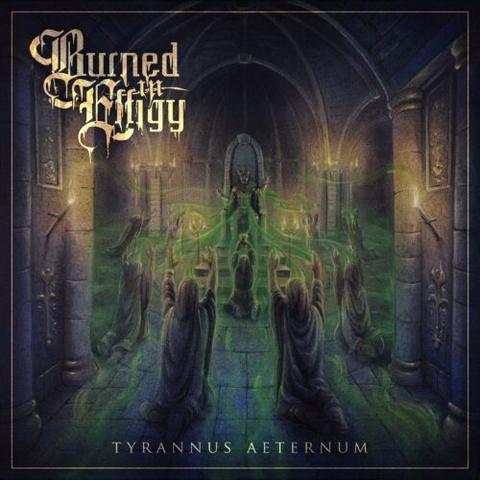
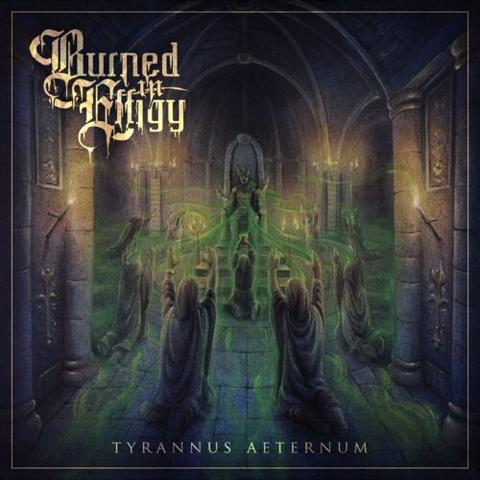
On their debut, Rex Mortem, the king was dead, but on Burned in Effigy’s sophomore effort, Tyrannus Aeternum, the king is now eternal. Their brand of neo-classical melodeath impressed Holdeneye three years ago—he hailed the debut as a mix of “brutal and beautiful.” However, he showed a rare moment of restraint in scoring Rex Mortem just shy of the vaunted 4.0, and plenty of commenters felt it should have earned that extra notch. Melodeath acts are a dime a dozen, and they don’t always successfully elevate themselves above the generic. So when Burned in Effigy infused their songs with virtuoso-level guitar melodies that emulated classical compositions, they quickly rose above the pack. At just a tidy 32 minutes, fans wanted moar, and now they seek to deliver—moar songs, moar length—on Tyrannus Aeternum.

Be careful what you wish for—moar is not always better. While there are certainly more songs, this album of neo-classical melodeath is notably shy of the neo-classical riffs that made the debut so electric. Tyrannus Aeternum hews a little too close to Burned in Effigy’s main source of inspiration, The Black Dahlia Murder, and some tracks, like “Masquerade,” sound like they could have come straight off of Abysmal or Nighbringers. This isn’t to say there’s nothing to enjoy. The front half has good energy and concise song lengths, even if most of the songs don’t hit quite as hard as anything on the debut. Plus, the record sounds great. The dual guitar approach remains impressive—there’s still plenty of noodly stuff and some melodic riffs that will remind you of the debut. As usual, Smedy’s vocal attack provides a lot of character, as he alternates between Strnad-like rasps and throaty growls. The kit work by Eddie Dec is a particular standout. His speedy, muscular blast beats steal the show on “Sacrificial Seance” and “Monstrosity Reborn.”

One of Rex Mortem’s strengths was its conciseness, and on Tyrannus Aeternum, Burned in Effigy introduce some bloat. It’s not that 45 minutes is necessarily too long, but where songs on the debut hit the 3-4 minute sweet spot, here they often drag on too long. This gets worse on the back half, where most tracks top five minutes. This final stretch becomes wearying, except for the fantastic “The Racking.” The back half also shifts away from the energetic melodeath and more into death-doom territory. These songs still have plenty of good moments, but the lack of hooks makes some of them, frankly, boring. The final two tracks represent the worst stretch on the record. It would have been better to end on the high note of “The Racking” rather than make us wade through an extra ten minutes of forgettable tunes.

Burned in Effigy show signs of their former selves on the two standout tracks, but it takes until song number five, “Wage of Exile,” to get there. The song opens with a neo-classical melodic lead—finally!—and doesn’t let up the energy until ending on the thematically appropriate, “Long live the king!” As good as this is, it’s “The Racking” that steals the show. It sounds fresh and lively, employing a wide variety of guitar techniques—melodic leads, tremolos, and even a neo-classical bass line—as well as some classical strings to keep it sounding fresh and energetic. Tyrannus Aeternum also has a couple of one-minute interludes where Burned in Effigy are at their most experimental musically. “Procession” takes a brief break with some upbeat Spanish guitar, while “Gallows Hymn” is more whimsical and cinematic, sounding like it could find a home on the score for Wednesday. Since these interludes precede the two best tunes on Tyrannus Aeternum, one could argue they should have included more of them.

Sadly, this is probably the biggest disappointment of the year for me. There’s a part of me that wonders if I’m more down on this just because it doesn’t live up to its predecessor. Yet, if this were the debut instead, I don’t think Burned in Effigy would have garnered as much attention. Nonetheless, there’s plenty to enjoy on Tyrannus Aeternum, and plenty to show that Rex Mortem wasn’t a fluke. This feels like a band still trying to shore up its own identity, and hopefully, by the next go-around, they’ll have a better grasp on who they are and return to their exciting roots.

Rating: 2.5/5.0
DR: 8 | Format Reviewed: 320 kbps mp3
Label: Self-Released
Websites: Bandcamp | Facebook
Releases Worldwide: October 31st, 2025

#25 #2025 #americanMetal #burnedInEffigy #deathMetal #melodicDeathMetal #neoClassicalMetal #oct25 #review #reviews #selfReleased #theBlackDahliaMurder #tyrannusAeternum

Danheim – Heimferd Review

By Mystikus Hugebeard

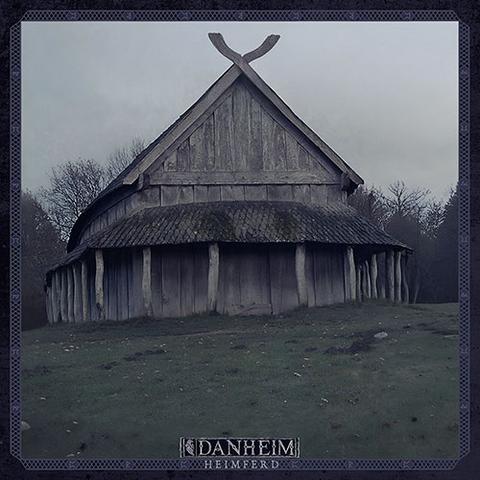
Ah, the Viking Age. One of the most mythologized eras in history, and a bottomless well of inspiration for cool things like video games, shows, books, tattoos, and bad things like obsession over ancestral purity, shockingly racist ideologies, and lutefisk. But the best thing of all, and most importantly, music! Which leads us to Danheim (Literally “Danish Home”). Danheim is the solo Nordic folk project by Reidar Schæfer Olsen, and Heimferd is his first full album in four years, which might as well be an eternity. Danheim is usually very prolific, with eight albums released between 2017 and 2021, with about a gazillion singles released during and after those 4 years. Furthermore, Danheim is one of the more well-known Nordic folk artists; he has numerous collaborations with, to name a few, Gealdýr, Sigurboði, Heldom, and has, like Wardruna, been featured on the History Channel’s Vikings. In other words, Danheim is something of a titan of the genre—is Heimferd worth the wait?

Danheim’s music, and by extension Heimferd, is a sonic extension of the version of the Vikings that has embedded itself within people’s imagination and contemporary media: an intoxicating image of a powerful and mysterious people, plunged into a captivating world of violence and mysticism.1 Most might immediately connect Danheim’s sound to Wardruna (not unjustifiably), but that paints a rather flat picture. The music is cinematic in a way that calls to mind a less avant-garde Heilung, it vibrates with a slightly electronic, tribal weight that, at this point, belongs more to Danheim than any of his peers (but one might still compare it to Vígundr or Heldom), and it’s atmospheric and densely layered like, well, Wardruna. But I believe it’s the simple immediacy of Danheim’s that has made him the Nordic folk titan that he is. It’s just so easy to fall under the spell of electronically augmented droning chants set to the rhythm of deep, beating drums, heard in some form or another in nearly every song on Heimferd.

…and yet, there sadly wafts an air of shallowness across Heimferd. There is an unfulfilled relationship between Heimferd’s sound and its songwriting. Heimferd’s stellar production and the variety of instruments create a captivating soundscape, but so rarely do songs breathe or evolve in a way that gives the songs life. This is felt all throughout Heimferd. “Heljar Skuggar” and “Rúnmyrkr” each utilize engaging, distorted chants in the vein of Heilung, but feel stagnant, without peaks or valleys. Songs are often lacking in stakes or tension, the worst of which is heard in the lifeless “Valvejen” as it flits loosely between tagelharpa melodies and excessive downtime. For songs meant to sound almost hypnotic in their droning, much comes off as forgettable, like “Kominn Dagr” as it switches from monotone chanting into a toothless tagelharpa melody, neither section given ample time to grow or make an impact. Clearly, Danheim places a lot of emphasis on atmosphere, and Heimferd is indeed viking-y at a distance—but up close, there is little to sink your teeth into.

This is not always the case, however, with a handful of songs towering above the rest. The vocal-heavy closer, “Yggdrasil II” (a sequel to “Yggdrasil” from 2018’s Fridr), has a quiet majesty to its rhythmic and beautiful chorus. “Vindfari” is an unassuming song that really sneaks up on you, as the drums march behind a simple chanting melody with a peculiar, percussive vocal delivery to some words that adds unique character to the song. Heimferd’s best song is “Haukadalur,” though. This song moves and breathes like a living thing, as distant haggard exhalations augment a powerful beat which heralds a coarse, dancing tagelharpa. These songs have such richness to their melodies, making the most of Danheim’s accessible and engaging style. It feels as if this has been my experience with every Danheim album: two or three genuinely stellar tracks that speak of an artist capable of amazing things, surrounded by songs that sound great but leave little impression.

Danheim has ever been frustrating for me, and Heimferd reaffirms that feeling. His infectious soundscape sufficiently conjures a Viking-age atmosphere and energy, but with base songwriting that so rarely transforms the music into something lasting or impactful. It’s strange, because my first listen of Heimferd was the most positive one, and I think it’s because Danheim’s style of Nordic folk can be cathartic in a way not many other artists within the genre are. But on each subsequent spin, when I listen closer, probing, pleading for depth, I’m left wanting. Heimferd is the distilled essence of the modern perception of Vikings, but with little drama or tension. It’s fun, but ephemeral.

Rating: Mixed
DR: 7 | Format Reviewed: 320 kbps
Label: Season of Mist
Websites: official | bandcamp
Releases Worldwide: October 31st, 2025

#25 #2025 #Danheim #DarkFolk #Gealdýr #Heilung #Heimferd #Heldom #Neofolk #NordicFolk #Oct25 #Review #Reviews #SeasonOfMist #Sigurbodi #Vigundr #VikingMusic #Wardruna

Bergfried – Romantik III Review

By Grin Reaper

After dropping debut EP Romantik I in 2022 and follow-up Romantic II in 2023,1 Austrian-Hungarian duo Bergfried rides in on a wave of 80s nostalgia to deliver debut full-length Romantik III. The conclusion of a trilogy, main character Anna (voiced by Anna de Savoy2) tirelessly roams hell in pursuit of her lost lover. During the search, Anna clashes with God and Devil3 in her quest for love reunited. Bergfried and the Romantik series are the creations of Erech von Lothringen, guitarist on Romantik III and mastermind of Narzissus and Ancient Mastery, among others. While his other projects lean toward black metal, Bergfried forges something entirely different—a rock opera. Does Bergfried’s take on the style breathe new life into a tale as old as time, or would it have been kinder to leave it in the past?

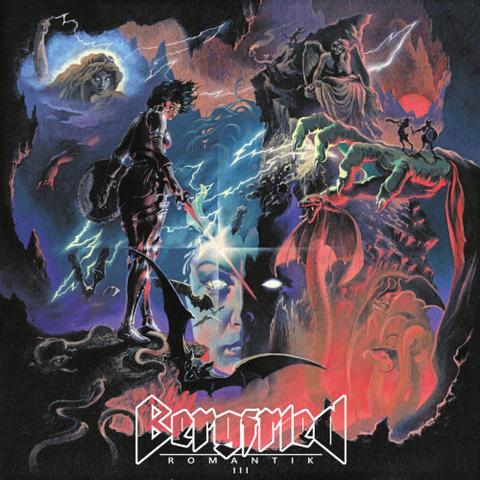
If The Dark Crystal and Star Wars-inspired album art doesn’t clue you in, 80s vibes radiate throughout Romantik III, but not in the way I initially expected. Advance single “Queen of the Dead” sizzles with its Smouldering good hooks. Upon hearing it the first time, the promise of polished steel, bulging breastplates, and synth-laden heavy metal really rattled my saber. Listening through the entire album, however, reveals an altogether different beast. Lead track “Dark Wings” takes off with a riff that could easily nestle into The Cult’s Love, and it doesn’t take long to realize that Romantik III doesn’t follow the boot-trodden, retro heavy metal path of Eternal Champion or Blood Star. Instead, Bergfried’s platter favors an intersection of Meatloaf (“Dark Wings”) and Pat Benatar (“Fallen from Grace”).

Romantik III’s success hinges on Anna de Savoy’s performance, and she mostly triumphs alongside von Lothringen and various guests.4 Never satisfied to linger on one sound for too long, Bergfried bears a handful of ballads (“For the Cursed,” “Star-Crossed Love”), 80s pop rock anthems (“Dark Wings,” “Tears of a Thousand Years”), and a touch of pop punk à la Blink-182 (“Serenades,” after the unadorned piano-ballad intro). Throughout the album, Anna de Savoy brandishes her voice to carry the story forward, harnessing an earnest, commanding presence. Unfortunately, her voice falters on a few occasions (the pre-chorus of “Tears of a Thousand Years,” for example), undermining an otherwise tremendous display of heartfelt conviction. The music supports her effectively, with rollicking guitar, synth, and bass undergirding the tale Anna spins without ever pulling attention away from her for too long. The guitar solos warrant praise as well,5 expanding Romantik III’s sonic range with snappy licks and quicker paces to keep things moving.

An organic mix and slick diversity pervade Romantik III’s nine tracks, preventing Bergfried from getting too mired in morose exposition. That said, some of the slower moments undercut the momentum built by preceding ones. In particular, the transition from “Gates of Fate” to “Serenades” dampens impact. The former is a rousing track that yields to a minute-long piano and vocal passage. “Serenades” eventually picks up, but by then the energy has stalled and requires a jump-start. The same issue recurs between “Tears of a Thousand Years” and “Star-Crossed Love.” Ballads can offer moments to expound on important story elements without distraction, and can also be an effective mechanism to control pace. What works against Bergfried in Romantik III, though, is that the best moments are the upbeat ones. Still, the individual track lengths are concise, and an easy-to-digest, forty-four-minute runtime makes replays easy. The mix and master are also perfectly suited to the 80s atmosphere, with bouncy bass and natural drums recalling production predating loudness wars and digitally-enhanced perfection.

Bergfried’s Romantik III does something many bands struggle with by creating a unique vision and sound that leans heavily on influences without aping them. With further refinement, their next project could be something fabulous, but for the time being Bergfried has bestowed listeners with an intriguing and offbeat album. I enjoyed my time with it, yet I’m not sure I’ll return to the Romatik series often. Given the talent and care that went into crafting it, though, I’ll be acutely attuned to whatever adventure these romantiks embark on next.

Rating: Good
DR: 7 | Format Reviewed: 320 kbps mp3
Label: High Roller Records
Websites: Bandcamp | Facebook
Releases Worldwide: October 24th, 2025

#1980s #2025 #30 #80sMetal #AncientMastery #Annihilator #AustralianMetal #AustrianMetal #Bergfried #Blink182 #BloodStar #Dragony #Elvenking #Enforcer #EternalChampion #HardRock #HeavyMetal #HighRollerRecords #Meatloaf #Narzissus #Oct25 #PatBenatar #PopRock #RedEyeTemple #Review #Reviews #RomantikIII #Smoulder #TheCult

Howling Giant – Crucible & Ruin Review

By Dear Hollow

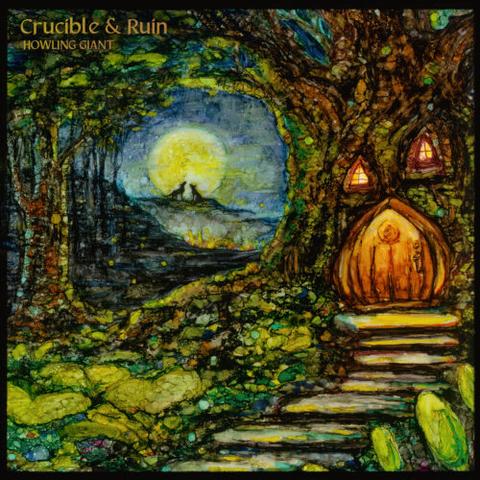
Howling Giant occupies such an odd place within its scene. The Nashville collective is stoner metal and psych rock to the core in an energetic way that recalls the down-and-dirty acts like High on Fire or Mastodon, but layers of melody and creative chord usage feel progressive a la Intronaut or Baroness and the triple vocal harmonies are catchy yet evasive, not unlike Torche or Helmet. They also don’t take things too seriously, with a solid sense of humor and a relatable relationship with fans to bring their formidable technical skill to earth.1 Now a release removed from the formidable debut full-length The Space Between Stars and even more from the Black Hole Space Wizard suite, Howling Giant proves their worth once more.

To address the elephant in the room, Glass Future saw Howling Giant’s progressive tendencies flying their freak flag too much. While attempting to keep the stoner murk and reconcile it with aptly crystalline melody, the band lost what is so great about them: solid songwriting. It’s completely contrary to what gave them the edge over genre mates Sergeant Thunderhoof in their dueling split – their head-first dabbling in more elusive chord progressions felt like a more stoner-inclined dime-store version of Intronaut’s Habitual Levitations. This is what makes third full-length Crucible & Ruin so refreshing:2 it’s everything you love about the Nashville now-quartet – and more. The template of killer riffs, soaring choruses, searing solos, and stoner haze is amplified by new guitarist/synth player Adrian Zambrano – adding layers and textures to Howling Giant’s already winning formula.

Howling Giant feels reinvigorated with Crucible & Ruin. Songwriting prowess on full display, the kitchen sink of riff, solo, melody, and catchiness has never looked so clean. While some remnants of Glass Future hang around in more evasive chord structures and emphasis on melody (instrumental “Lesser Gods”), the tracks shift from the anthemic to the kickass, rounded out by the understated Helmet-esque triple-vocal attack – a potentially divisive element of Howling Giant’s sound –3 and that warm stoner haze. Chunky riffs dominate and add a jolt of energy (“Hunter’s Mark,” “Beholder I: Downfall”), while anthemic choruses and transcendent chord progressions take listeners to a psychedelic heaven (“Archon,” “Archivist”). Southern fried bluesy vibes a la All Them Witches also grace the vibe with a backwoods atmosphere (“Beholder II: Labyrinth,” “Melchor’s Bones”), paying homage to their home state of Tennessee. All assets culminate in the two parts of “Beholder,” the Phrygian key giving them a more epic and grandiose feel.

With the addition of Zambrano, Howling Giant has never felt so fleshed out. Compared to the flashy vocals and melodies of Sergeant Thunderhoof, Howling Giant has always been a meat-and-potatoes type of band, but Crucible & Ruin finds the band building upon this template using more versatility in its musical arsenal. Layers of melodic overlays grace rhythmic punch a purpose and intensity (“Canyons,” “Scythe and Scepter”), the tasteful balance between the melodic and the skronky add intrigue and madness (“Hunter’s Mark,” “Archon,” “Beholder I: Downfall”), and ethereal atmosphere is built atop and duels with more downtuned riffs and bass (“Lesser Gods,” “Archivist,” “Beholder II: Labyrinth”). The dueling guitars add a much-needed and ridiculously tantalizing dimension that takes Howling Giant’s already solid sound to new heights.

Howling Giant’s vocal approach of hyper harmonies will remain a divisive element, the central riff and spoken word of “Melchor’s Bones” can get a bit repetitive, and instrumental “Lesser Gods” is a bit questionable, but don’t let that distract you from the fact that it’s the band’s best album to date. Crucible & Ruin distills everything that makes Howling Giant great and beefs it up, weaponizing their already formidable songwriting with Zambrano’s melodic and textural synth and fretwork. Featuring riffs upon riffs with complex songwriting that doesn’t fly over listeners’ heads, relatable vocals that don’t lose their punch, and new guitar work that takes the band to new heights, across a forty-eight-minute runtime that zips by, it’s hard not to bob your head. While comparisons to Mastodon, Baroness, and Anciients are fair, Howling Giant is its own beast, an intersection of stoner haze, riffy intensity, and melodic taste. Crucible & Ruin caught me by surprise in the best way, and is sure to appear at year-end.

Rating: 4.0/5.0
DR: 6 | Format Reviewed: 320 kb/s mp3
Label: Magnetic Eye Records
Websites: howlinggiant.bandcamp.com | howlinggiant.com | facebook.com/howlinggiant
Releases Worldwide: October 31st, 2025

#2025 #40 #AllThemWitches #AmericanMetal #Anciients #Baroness #CrucibleRuin #CryOfTheAfflicted #Helmet #HighOnFire #HowlingGiant #Intronaut #MagneticEyeRecords #Mastodon #Oct25 #PsychedelicRock #Review #Reviews #SergeantThunderhoof #StonerDoomMetal #StonerMetal #StonerRock #Torche

Sunken – Lykke Review

By Twelve

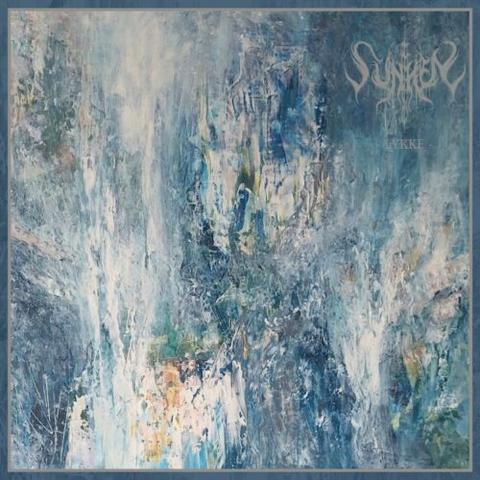
I love Sunken’s music. It’s been over five years since I first heard their sophomore full-length, Livslede, an album I fell in love with almost instantly for its depressive, atmospheric black metal, an album of incredible emotion buoyed by exceptional songwriting. Since then, it’s been a regular revisit any time I’m having an even vaguely unhappy day, and I’ve been eagerly awaiting the day I could review these Danes again. At last that day is here. Sunken are back with their third full-length release, Lykke. They’re just in time too—the days are getting shorter, colder, and altogether darker, which means now is a great time to “sink” into a great slab of mournful black metal.

Sunken’s brand of black metal is—still—tricky to describe, but the principal thing to point out about it is that it is deeply mournful. It’s unmistakably black metal, as Joachim Larsen’s blast beats quickly demonstrate. Guitarists Simon Krogh and Alexander Salling seemingly live for the tremolo, both in blackened riffs and melodic leads. But those leads are drenched in despair—”Og Det Er Lykke” is downright depressive, with a heavy backdrop of riffs counterbalanced by a measured lead that oozes melancholy. The song’s climax is an overflow of heartbreaking turmoil, written and performed expertly. There are times, as in opener “Din Roest Malede Farver I Luften,” when Jonas Faghtmann’s bass is carrying the low end by itself, so occupied are the other instruments with higher, more woeful melodies. Put together, and you get Lykke, an album that is powerfully cathartic, with every element working together to share impassioned anger, sorrow, and despair.

In my review for Livslede, I noted that the experience made me feel physically cold, so strong was Sunken’s affinity for baleful, depressive black metal. Lykke doesn’t have quite the same quality, but it does expertly capture a feeling of grief1—raw and powerful, but also comparatively softer than its predecessor. The stronger use of keys contributes heavily here, as songs like “Glaedesfaerd” demonstrate. Here, they cast a solemn sheen that blankets the heavy, blackened frenzies Sunken have crafted beneath. When Martin Thomasen’s vocal style shifts from shrieks to grieving howls, the music feels unhinged, desolate—but it’s those keys, those orchestral arrangements from Max Uldahl Pedersen, that ground it in the tragic, sorrowful sound Sunken performs so well.

In a practical sense, these trends away from Livslede also mean that Lykke is closer to being atmospheric black metal than depressive black metal. That no song is shorter than ten minutes—and that there are only four of them—makes Lykke feel drawn out, as though lingering in its own despair. Add to that the more prominent orchestrations, and it feels both more melodic and less than Sunken have been in the past. It feels more melodic, because the keys and lead guitars are produced in a way to make them prominent in their melancholy, and less because these choices emphasize individual melodies and hooks less. It feels as though Sunken focused this time on creating experiences over particularly memorable songs and passages. I don’t think there are any specific standout moments, but that does not make the songwriting any less impressive, nor the performances less impactful, though it does make Lykke feel just a little unfocused. Similarly, I also find Thomasen’s forays into raw howled vocals don’t work with this more atmospheric music as well as his “regular” style of snarling, shrieking, and snarling. The switches feel arbitrary, and the former style less effective.

Sunken have an extraordinary way of capturing sadness in their music. Make no mistake, Lykke is a powerful album. There are some choices that I’m not fully sold on, but that’s largely my holding Sunken in such high regard. I’ve really enjoyed Lykke, and am impressed by Sunken’s songwriting, talent, and ability to convey, purely by their music, the way I feel when everything is just sort of bleak.

Rating: 3.5/5.0
DR: 8 | Format Reviewed: 192 kbps mp3
Label: Eisenwald Records
Websites: sunkendenmark.bandcamp.com | facebook.com/SunkenDenmark
Releases Worldwide: October 24th, 2025

#2025 #35 #AtmosphericBlackMetal #DanishMetal #EisenwaldRecords #Lykke #Oct25 #Review #Reviews #Sunken

Stillbirth – Survival Protocol

By Samguineous Maximus

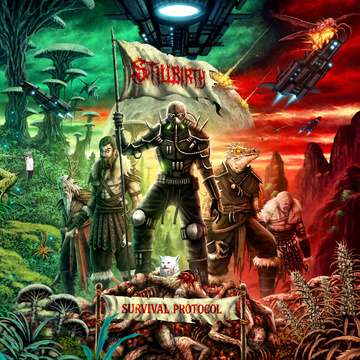
I take a seat in a cramped, rusted chair. Across from me sits a gorilla in some sort of crown and a man whose face could only be described as Abbathian. It’s time for my first performance review at AMG Headquarters, and things aren’t looking great. “Atmospheric nü metal/free jazz? German dance music? What are we, discount Pitchfork?” Druhm bellows between frustrated simian grunts. I turn towards the head honcho for mercy, but instead, he fixes me with an eldritch stare. The words don’t pass his lips—they appear directly in my skull like a psychic command: “Brutal death metal.” He hands me a grime-encrusted CD which reeks of beer and seaweed. German brutal death metal veterans Stillbirth are responsible for this fetid package, which lies before me. It’s Survival Protocol, their ninth full-length. The attached blurb promises “a dystopian landscape” that’s “equal parts destruction and party.” The last time this group of fun-loving krauts appeared here with 2020’s Revive The Throne, it was deemed competent, but nothing impressive. Does Survival Protocol break this cycle? Or are we once again strapping in for forty minutes of well-crafted bludgeoning destined to dissolve into the great gory morass of brutal death mediocrity?

The sound present on Survival Protocol is a particularly modern and clean take on the subgenre, which bridges the gap between brutal death, slam, and deathcore. Stillbirth employ chugtastic beatdown riffs and dexterous chromatic tremolo runs atop ever-present double bass gallops in a way that we’ve come to expect from this style. On this record, however, the band showcases some more melodic and prog-leaning moments alongside impressive technicality in a way that reminds me of countrymates Cytotoxin. The best songs weave between stankface-inducing over-the-top slam breakdowns and surprisingly tasteful guitar harmonies (“Baptized in Blood,” “Sacrificial Slaughter”). There’s just something magical about the juxtaposition of impressive death metal licks and stupidly gauche “BREEE”1 frog noises. The band showcases a sly songwriting wit that, when deployed correctly, brings a grin to my jaded face. Unfortunately, not every slab of meat on this cornucopia of carnage has festered appropriately.

The biggest issue with Survival Protocol is that large sections fall into a kind of monotonous death metal “grey zone,” where everything is maximally heavy, so none of it feels particularly impactful. I appreciate Stillbirth’s take on the classic “Liege of Inveracity” riff when it surfaces for premium ape-brained satisfaction (“Existence Erased,” “Cult of the Green”), but you can only hear so many slam riffs into tech-adjacent fast riffs into more slam riffs before things start to dull a bit. To the band’s credit, guitarists Leonard Willi and Szymon Skiba are clear devotees of the ancient texts, and their riffcraft is consistently enjoyable. They demonstrate both instrumental mastery and a playful energy that’s just fun to bask in. This shines most on the closer, “Kill to Rule,” which is built around a repeating chord progression and gives both players room to show off with dueling leads. Unfortunately, standout moments like this aren’t consistent, and even after repeated listens, I find myself struggling to remember which parts belong to which songs.

That’s not for lack of effort, though. Stillbirth inject bits and pieces of other musical styles here and there to keep things fresh and the pit moving. “Trapped in Darkness” opens with a fun electronic interlude before diving into classic brutal death riffing, while album highlight “Baptized in Blood” begins with a playful, salsa-inspired acoustic section that reappears during the bridge to introduce a tasty solo and melodic outro. Moments like these add welcome levity and variety to the tracklist, while also showcasing the band’s solid grasp of their death metal fundamentals. Stillbirth clearly know their way around a Suffocation riff (or twenty), and their delivery of the brutal death formula on Survival Protocol is at least entertaining. It checks all the expected boxes, but it checks them well enough that the full album remains an enjoyable listen.

With Survival Protocol, Stillbirth once again deliver a competent, meaty slab of brutal death/slam that gets the job done without breaking a sweat or a boundary. The riffs are chunky, the grooves are mean, and the band’s veteran polish is unmistakable. This is an album that bludgeons efficiently but rarely leaves a lasting dent. There’s no question these guys know their craft. Several tracks here hit hard and hit right, but Survival Protocol ultimately feels like a victory lap rather than a challenge. It’s a fun listen while it’s on, and it’ll get a pit moving without issue, but once the dust settles, there’s not much urging me to spin it again.

Rating: 2.5/3.0
DR: 5 | Format Reviewed: 320 kb/s mp3
Label: Reigning Phoenix Music
Website: facebook.com/StillbirthParty
Releases Worldwide: October 31st, 2025

#25 #2025 #BrutalDeathMetal #Cytotoxin #DeathMetal #Deathcore #GermanMetal #Oct25 #ReigningPhoenixMusic #Review #Reviews #Slam #Stillbirth #Suffocation #SurvivalProtocol

Despised Icon – Shadow Work Review

By Owlswald

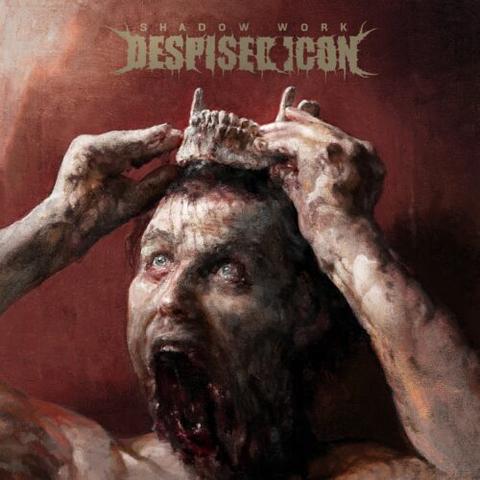
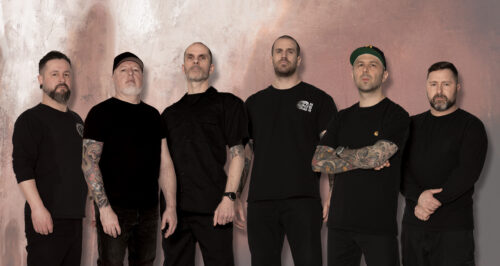
Widely regarded as one of the original architects of deathcore, Canada’s Despised Icon hardly needs an introduction. But just in case you’ve been living under a rock for the past two decades, here’s a brief introduction: back in 2002, when MySpace was all the rage and everyone had a friend named Tom, five dudes from Montreal dropped their debut LP, Consumed by Your Poison. Heavily influenced by the likes of Suffocation and Dying Fetus, these Canadians continued to hone their crushing sound on 2005’s The Healing Process by injecting metalcore and hardcore elements into their deathly framework. This unique formula culminated with their third LP, The Ills of Modern Man (2007)—the crown jewel of their discography that made Despised Icon deathcore royalty. The rest, they say, is history. Fast forward 18 years and, following a hiatus and three subsequent albums, the group has now readied their seventh LP, Shadow Work. So, dust off that windbreaker and lace up your best pair of New Balance kicks; it’s time to dive into Shadow Work.

In typical Despised Icon fashion, the opening title track instantly rips one’s jaw from its joints with a strong, technical launch. Leading the assault is Éric Jarrin and Ben Landreville’s signature pitch-shifted guitar squeals (a staple since 2019’s Purgatory), which, alongside rapid-fire tremolo scales, synchronize perfectly with Alex Pelletier’s blistering rhythms and Sebastien Piché’s grinding bass to fuel the album’s heavy, frenetic passages. The dual-headed vocal attack from Alex Erian and Steve Marois sounds as strong as ever, alternating raspy screams, slam-style pig squeals and hardcore chants that add a sharp, aggressive edge. Guest spots from Matthew Honeycutt (Kublai Khan TX), Scott Ian Lewis (Carnifex) and Tom Barber (Chelsea Grin) compliment Erian and Marois’ delivery but ultimately land with mixed results. Shadow Work’s powerful first half (“Shadow Work” through “The Apparition”) proves Despised Icon can still execute with the same ferocity as on past efforts. Conversely, Shadow Work’s energy wanes toward the end with formulaic pit anthems (“Obsessive Compulsive Disaster,” “Fallen Ones”) settling into a cliché hardcore spirit, though the record’s strongest material warrants repeat listens.

The first half of Shadow Work delivers a powerful blend of technical proficiency and a dash of genre experimentation before the album settles into a more formulaic hardcore groove. “Death Of An Artist” is a straight-up, drum-driven banger that introduces new wrinkles like clean vocals, dissonant high leads and a tasteful thrash and death eeriness that adds fresh flavor to Despised Icon’s well-known formula. Similarly, “The Apparition” is a relentless burner, injecting elements of symphonic death and black metal while maintaining the group’s core sound. Across the album’s succinct 37 minutes, monolithic breakdowns are plentiful—tense builds frequently give way to gut-punching beatdowns replete with fret slides (“Shadow Work”), air raid sirens (“The Apparition”) and stutter-step riffing (“Death of an Artist”), delivering a seismic release and an irresistible urge to pit.

However, Shadow Work hits a predictable wall at its midpoint, slumping into an over-reliance on tropey, Hatebreed-adjacent, inspirational anthems. Characterized by pervasive gang vocals, two-step riffs, and cheesy lyrical themes, tracks like “Fallen Ones,” “Obsessive Compulsive Disaster,” and “Reaper” feel less about pushing Despised Icon’s established deathcore boundaries and more about catering to the masses, thereby detracting from Shadow Work’s initial aggression. While Scott Ian Lewis’ gruff, thrashy vocal textures on “In Memoriam” effectively add a new element and the raucous “Omen of Misfortune” or “ContreCoeur” offer relief, Despised Icon’s heavy reliance on clichéd, tough-guy hardcore vocal cadences and themes holds Shadow Work back. For instance, lines like “From the ground up, never gave up, from the gutter to the surface” (“Reaper”) leans too far into its hardcore roots. Even the otherwise stronger early track “Over My Dead Body” is hampered by a cheesy hardcore/nu-metal feel in its bridge, its jarring cadence and Honeycutt’s yelling of “bitch” further exposing Shadow Work’s central weakness.1

Shadow Work is a good record marred by frustrating dualities. The first half unleashes the punishing, technical ferocity and syncopated slams that cement Despised Icon’s legacy as godfathers of deathcore. Yet, Shadow Work’s potential is sacrificed in the latter half, by leaning too hard on formulaic, predictable hardcore anthems. By repeatedly prioritizing comfortable clichés over their trademark sound, Despised Icon ultimately delivers an uneven album that only teases at the complete savagery fans know these legends are still more than capable of delivering.

Rating: Good
DR: 5 | Format Reviewed: 256 kbps mp3
Label: Nuclear Blast
Websites: despisedicon.com | facebook.com/despisedicon
Releases Worldwide: October 31st, 2025

#2025 #30 #CanadianMetal #Carnifex #ChelseaGrin #Deathcore #DespisedIcon #Devourment #DyingFetus #Hatebreed #KublaiKhanTX #NuclearBlast #Oct25 #Review #Reviews #ShadowWork #Suffocation

Bastard Cröss – Crossripper Review

By Tyme

As a massive fan of anything that creeps, crawls, horrifies, or shocks, I enjoy no season more than Halloween. And since October 31st falls on a release day to steel-toed-boot this year, and with me closing in on my first 365-day stint as a staffer at AMG no less, I was especially eager to recover something particularly apropos from the promo pit. Enter Philly’s fresh and ferocious foursome, Bastard Cröss, and their Morbid and Miserable Records debut album, Crossripper. Formed in 2021, with a couple of EPs and splits tucked under their bulleted belts, Bastard Cröss come correct from the crypts of Philadelphia to regale us all with crude, blackened-thrash tales ‘inspired by horror movies’ and ‘notably dark and violent documented events from religious history.’ Sounds like a recipe for tons o’ fetid fun as this most horrible of holidays draws nigh. Does Bastard Cröss have what it takes to toll Samhain’s bell, though, or are they just one more razor-blade-filled treat meant to trick us?

Bastard Cröss play Neanderthalic, throwb(l)ack thrash, and it’s clear they poured every ounce of their blood, sweat, and beers into Crossripper as it sounds like a long-lost 1985 album that would’ve had tape traders salivating back in the day. Forged in fires from an age when Slayer were still Showing No Mercy and Bathory had yet to quaff a drop of Blood Fire or Death, and with a pinch or two of punk attitude ala early Motörhead and Anti-Cimex thrown in as well, Crossripper is robustious and raw. Album opener “Parasitic” sets the table by delivering all the Bastard Cröss goods. Infernal Bastard’s pulse-quickening drum intro gives way to Beheader of Priests’ heaving bass and the satisfyingly speedy, dual guitar mayhem of Blasphemous Axe and Heathen Chevalier, who also share vocal duties. Their approach runs the gamut from Quorthonic croaks and Tom Araya-like wails to everyman gutturals that would complement any would-be death outfit to a tee. Adrift in the sea of metal’s retro movement—more modern comparisons to Nocturnal or Deathhammer are apt—Bastard Cröss stand out by injecting perfect amounts of mayhem and melody into Crossripper’s well-written, tightly executed songs.

Bastard Cröss are nothing if not all-out balls-to-the-wall, horns-held-high fun. Memorable moments abound throughout Crossripper’s easily digestible thirty-seven-minute runtime. Whether plodding forth in Morbid Tales-like fashion before death galloping along (“Crossripper”) or wammy diving your ears into liquified submission (“Lycan Knights”), by the time the beer-can popping sound byte accentuates the punk-in-cheek attitude swarming the start of “Satanic Pandemonium,” you should be thrash-stomping your drunk ass all over the living room and smashing empty PBR cans against your forehead. Bastard Cröss even manage to squeeze in an admirable homage to 80s hair-metal cock rock in the form of “Demons at Midnight,” a song possessed by sleazy riffage and another one of Crossripper’s many catchy-as-hell choruses. I even looked forward to the beautifully executed, acoustically driven outro to the excellent album closer “Behead the Priest,” which features some angelic, cherry-on-top vocal emanations from Marisa Monaco.


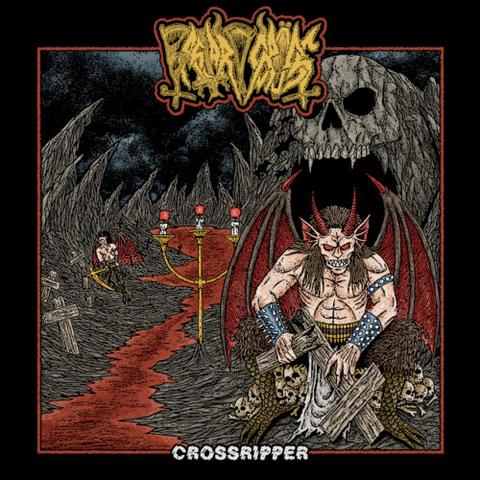
Everything about Crossripper oozes speed-laced, devil-metal nostalgia. From the primitive, yet perfectly rendered, Sandy Rezalmi cover art to the cheeky, we-mean-business band aesthetic and appropriately raw, period-style production, Bastard Cröss nail so many things on Crossripper, I’m left with little to complain about. In fact, I can’t look back on any part of my time with Crossripper and say I didn’t enjoy it. I suppose my lone critique would be that if Bastard Cröss continue swimming in the pool of retro-80s speed-blackened thrash metal, it might be a bridge too far for them to cross and achieve any level of innovative greatness. Not that this is a death sentence by any means. Should Bastard Cröss continue to put out this level of quality horror-loving retro metal, they’re poised to enjoy a pretty solid career.

I’m not the biggest fan of the phrase ‘mileage may vary,’ but I feel it’s appropriate when it comes to summarizing the Bastard Cröss experience. Crossripper doesn’t do anything you haven’t probably heard before. But what it does do is pretty damn good. In this digital age, when there’s more music at your fingertips than at any other moment in history, it’s assessing what music warrants your time and, in some cases, hard-earned cash that has become the commodity by which reviewers provide the most value. And I can assure you, spending thirty-seven minutes with Bastard Cröss and Crossripper this Halloween is definitely worth yours.

Rating: 3.5/5.0
DR: 8 | Format Reviewed: 320 kbps mp3
Label: Morbid and Miserable Records
Websites: Bandcamp | Facebook
Releases Worldwide: October 31st, 2025

#2025 #35 #AmericanMetal #AntiCimex #BastardCröss #Bathory #BlackMetal #Crossripper #MorbidAndMiserableRecords #Motörhead #Oct25 #Review #Slayer #SpeedMetal #ThrashMetal