 No Minister
What Are Erica Stanford’s Education Reforms Really About?
And are NZ teachers correct about where the system is headed?
I’ll start with a confession: I am pleasantly surprised by Erica Stanford. Not because she is perfect, no minister is, but because she is the first Education Minister in decades willing to say the quiet part out loud:
Critical Pedagogy, the Neo‑Marxist backbone of our curriculum, has to go[i].
For years, New Zealand’s education system has been marinated in Paulo Freire, Critical Literacy, Critical Mathematics, “other ways of knowing,” and the usual post‑structuralist detritus. Teachers may not know the genealogy, but they certainly know the slogans.
And if you spend any time on social media (as I do), you’ll see a steady stream of teachers mourning the loss of their ideological comfort zone. They want a return to Critical Pedagogy — even if they have no idea where it came from.
But the real question is this:
Are their fears about Stanford’s “knowledge‑rich” reforms even remotely grounded in reality?
Let’s examine the claims.
The “Knowledge‑Rich Curriculum” Panic
A number of teachers online insist that Stanford is importing a “knowledge‑rich” curriculum from the UK and USA, based on E.D. Hirsch’s The Schools We Need. They claim:
- it’s “rote learning”
- it’s “Victorian”
- it “kills critical thinking”
- England is “backing away from it”
- it’s “American conservative ideology”
This is the usual script.
The irony? These same teachers are oblivious to the fact that Critical Pedagogy and Culturally Relevant Teaching have dominated American education for decades — right up until the Trump administration pushed back.
If Hirsch is the bogeyman, he is a very small one compared to Freire, Giroux, Ladson‑Billings, and the entire Critical Education Studies apparatus.
What Stanford Is Actually Doing
Stanford’s reforms are not mysterious. They are:
- restoring subject knowledge
- raising literacy and numeracy expectations
- introducing structured teaching
- removing ideological content
- requiring curriculum clarity
- tightening ERO accountability
This is not “Hirschian indoctrination.” It is basic educational competence.
New Zealand’s literacy and numeracy collapse is not a philosophical debate; it is a national emergency.
A knowledge‑rich curriculum is not ideology. It is how every high‑performing system on Earth works.
The Ofsted Panic: Fact or Fiction?
Propagandist Brie Elliot claims that ERO leadership visiting Ofsted (UK) and AERO (Australia) is a sign that NZ is importing a punitive, high‑stakes inspection regime.
Her concerns include:
- Ofsted’s reputation for stress
- the Ruth Perry tragedy
- schools advertising their ratings
- ERO shifting to clearer judgements
- charter schools expanding
- the Minister having conversion powers
Let’s separate fact from fear‑projection.
FACT:
Ofsted has been criticised for its single headline grade. England removed that grade in 2024.
FACT:
ERO is moving toward clearer reporting categories.
FACT:
ERO has internal morale issues.
FICTION:
NZ is importing Ofsted’s punitive culture wholesale.
FICTION:
Clearer reporting equals “weaponised reviews.”
FICTION:
This is a plot to force schools into charter conversion.
FICTION:
Knowledge‑rich curriculum = American conservative ideology.
What’s actually happening is simple: ERO is being forced to stop producing vague, euphemistic reports that hide school failure.
For 20 years, ERO reports have been so soft, so coded, and so politically sanitised that parents could not tell whether a school was failing.
Teachers liked it that way. Parents did not.
Stanford is correcting that imbalance.
Are Teachers Correct That England Is “Backing Away” From Knowledge‑Rich Reform?
No.
England removed the headline grade from Ofsted reports — not the knowledge‑rich curriculum.
In fact:
- The UK’s Core Knowledge approach remains intact.
- The English Baccalaureate remains intact.
- The knowledge‑sequenced curriculum remains intact.
- The phonics‑based literacy reforms remain intact.
- The maths mastery reforms remain intact.
England’s reforms have improved literacy and numeracy, especially for disadvantaged students.
Teachers claiming England is “backing away” are either misinformed or wishfully thinking.
The Real Reason Teachers Are Panicking
It is not Ofsted. It is not Hirsch. It is not charter schools. It is not “rote learning.”
It is this: Critical Pedagogy is being removed from the curriculum, and many teachers don’t know how to teach without it.
For 20 years, teacher training has been dominated by:
- inquiry learning
- student‑led learning
- identity‑based teaching
- “other ways of knowing”
- anti‑colonial framing
- Critical Literacy
- Freirean pedagogy
These methods are ideologically fashionable — and empirically disastrous.
Stanford is replacing ideology with structure. Teachers trained in ideology feel threatened.
So, Are Their Concerns Valid?
Valid concerns?
A few, but not the ones they think.
- ERO needs internal reform.
- ERO must avoid becoming punitive.
- Charter conversion powers should be used sparingly.
Invalid concerns?
Almost everything else.
- Knowledge‑rich curriculum is not harmful.
- England is not abandoning it.
- Hirsch is not the puppet‑master.
- Critical thinking requires knowledge.
- Structured teaching is not “Victorian.”
- Removing Critical Pedagogy is not “American conservatism.”
The teachers’ objections are ideological, not educational.
Knowledge‑Rich Curriculum vs Critical Pedagogy
CategoryKnowledge‑RichCurriculumCritical Pedagogy
(Neo‑Marxist)Core PurposeBuild a shared base of factual knowledge so students can think, read, and reason effectivelyDevelop “critical consciousness” to challenge power structures and social hierarchiesView of KnowledgeObjective, cumulative, culturally transmitted; knowledge precedes skillSocially constructed, political, contested; knowledge is a tool of oppressionRole of the TeacherExpert instructor who imparts essential knowledgeActivist‑facilitator who guides students toward ideological awarenessRole of the StudentLearner acquiring foundational knowledge and skillsEmerging activist who must interrogate society through identity and oppression lensesCurriculum StructureSequenced, coherent, cumulative; builds year on yearFluid, thematic, identity‑based; content chosen for political relevanceLiteracy ApproachPhonics, explicit instruction, structured practiceWhole‑language, “authentic texts,” student‑led readingCritical ThinkingBuilt on knowledge; you cannot think critically about what you do not knowTreated as political critique; “critical thinking” = critiquing power and identityAssessment PhilosophyMastery, accuracy, demonstrated competenceDe‑emphasis on merit; focus on equity, identity, and “lived experience”View of CultureShared cultural literacy strengthens social cohesionDominant culture is oppressive; curriculum must “decolonise” knowledgeView of the IndividualCapable learner who benefits from structure and knowledgeSocially constructed subject shaped by power, identity, and oppressionClassroom DynamicsTeacher‑led, structured, predictableStudent‑led, inquiry‑based, politically framedEducational GoalLiteracy, numeracy, knowledge, competenceActivism, identity formation, ideological critiqueInternational EvidenceStrong results in UK, Singapore, Australia, and charter networksConsistently poor outcomes; linked to literacy decline and widening gapsUnderlying PhilosophyCognitive science, educational psychology, classical liberal educationMarxism → Freire → Critical Theory → identity politics
Knowledge‑Rich education is about teaching children things they need to know. Critical Pedagogy is about teaching children what they should think in terms of Marxism about society.
One builds competence. The other builds activists.
The Bottom Line
Erica Stanford’s reforms are:
- evidence‑based
- internationally mainstream
- aligned with high‑performing systems
- a necessary correction to 20 years of ideological drift
The teachers panicking on social media are not defending children. They are defending a worldview.
And for the first time in decades, that worldview is being challenged.
[i] While Critical Pedagogy was only formalised under the Ardern-Hipkins government, it has been in place informally for much longer.
#AWFLAffluentWhiteFemaleLeftist #CriticalTheory #Education #EducationCurriculum #EducationOutcomes #LeftistMyths #LeftistsLeftism #NeoMarxism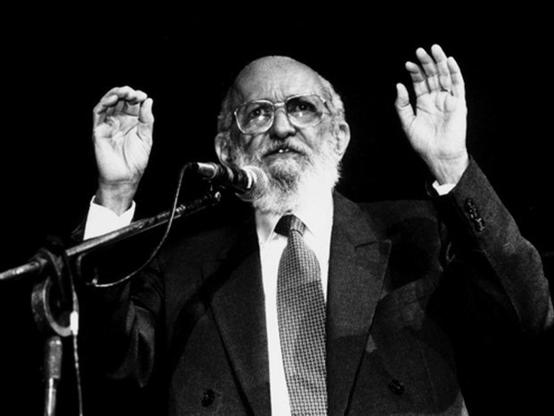

 Nikos Schneider
 aparatorul

 Wokerati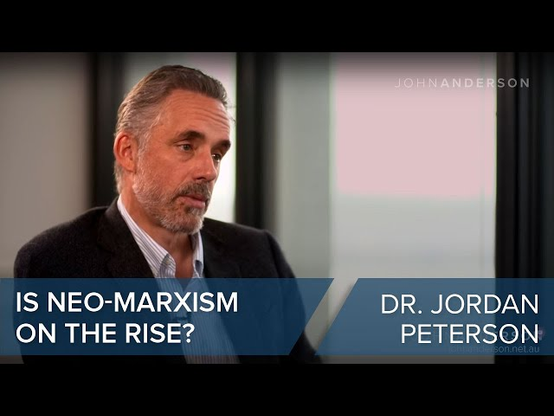


 Gerard Coen