Okapi: African Unicorns

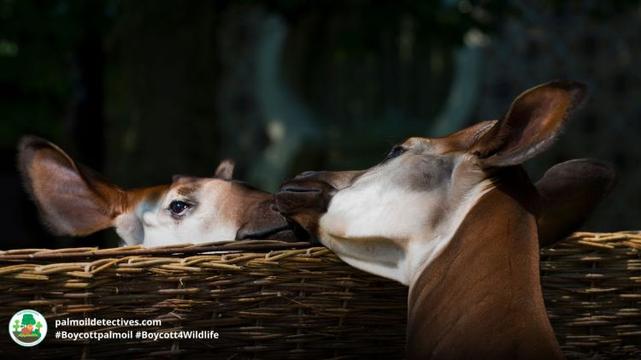
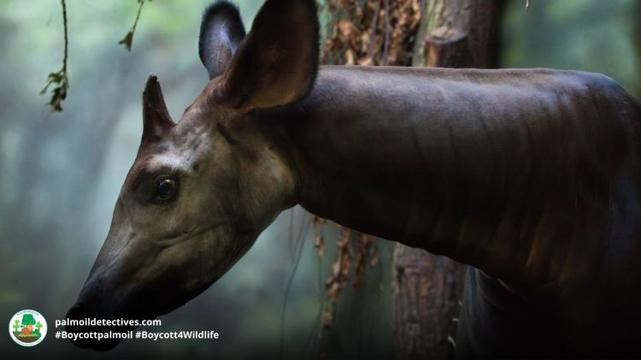
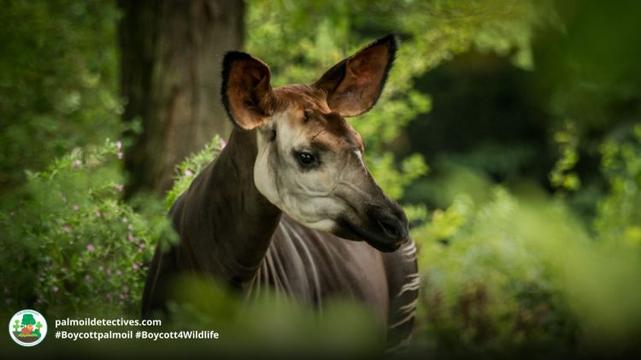
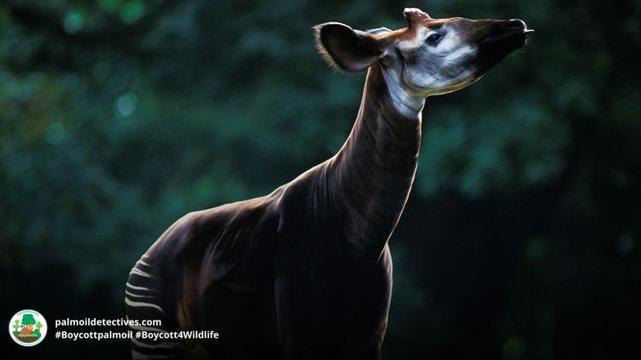
Deep in the heart of Africa, in the dense tropical rainforests of the Democratic Republic of the Congo (DRC), there lurks a very curious creature. With long legs and predominantly dark brown coat of short fur, Okapi look, at first glance, a bit like a horse. But a second look will reveal a somewhat deer-like face atop a relatively long, flexible neck, and, most strikingly, horizontal white stripes on its upper legs and rump. Help them to survive every time you shop #BoycottPalmOil #Boycott4Wildlife and be #Vegan.

The #Okapi is to #Congo what the Panda is to China, a national treasure and a strange blend of a #giraffe and #zebra. They’re #endangered by #palmoil and #tobacco #deforestation. Help them survive when u #BoycottPalmOil #Boycott4Wildlife @palmoildetect https://wp.me/pcFhgU-10X

Share to BlueSky Share to Twitter

These stripes, the exact patterns of which are unique to each individual, look like streaks of sunlight filtering through the trees in a dark forest, or like a giraffe dipped in chocolate. This helps the animal fade into the shadows.

One might reasonably assume, based on brief glimpses of the animal’s striped hindquarters as it runs deeper into the jungle, that it is some kind of shy forest zebra. But it is, in fact, the okapi – the only close living relative of the giraffe.

All in the Family

Though okapis and giraffes look quite different, they actually have several things in common. To start with, they both possess the same relatively short, hair-covered horns called ossicones. However, although both male and female giraffes have them, they are present only on male okapis.

Secondly, both species have the same pacing gait. They simultaneously step forward with the front and hind leg on the same side of the body, rather than moving alternate legs on either side of the body like most other hoofed animals.

And finally – that tongue. A giraffe has an extremely long, mobile, blue-black tongue, around 45-50 cm in length, which is used not only for grasping foliage but also for poking up its own nostrils to give them a good clean. The okapi’s tongue is just as dextrous and long, if not slightly longer, and can be used to wash its own eyelids and clean its ears, inside and out.

The okapi is to the Congo what the giant panda is to China

A national and cultural symbol of the DRC, this animal gives its name to many businesses in the country and its image can be found almost everywhere, from government ranger uniforms to the watermarks on Congolese banknotes. Despite this, it is largely unheard of in the western world. In fact, the okapi is so shy and reclusive that it remained unknown to science until the turn of the 20th century.

Hunt for the Okapi

Although some Africans had known about the okapi for a very long time, it wasn’t until 1890 that the explorer Sir Henry Morton Stanley provided the western world with the first report of the animal. Stanley was already famous for finding a certain Scottish missionary in the heart of Africa several years previously and reporting the first words of their encounter: ‘Dr Livingstone, I presume?’. But although Stanley explored the Congo rainforest, he never actually saw the okapi himself – he merely had it described to him by local people. In volume 2 of his book, In Darkest Africa, Stanley wrote:

The Wambutti [a native tribe] knew a donkey and called it atti. They say that they sometimes catch them in pits. What they can find to eat is a wonder. They eat leaves.’

From this somewhat vague description, the ‘atti’ became surrounded with a unicorn-like mystique throughout much of the West, half-believed but never seen. Indeed, it became known as the ‘African unicorn’ by many Europeans. In 1900, the British high commissioner of Uganda, Sir Harry Johnston, was eager to get to the bottom of this mystery.

At this time, several Mbuti pygmies had been kidnapped by a German showman to be exhibited at the 1900 Paris World’s Fair, and the Belgian government of the Congo sought Johnston’s help in returning them to their home in the Ituri Forest. In doing this, Johnston befriended the Mbuti people and learned from them more about the mysterious animal mentioned in Stanley’s writing. The Mbuti occasionally hunted the creature and called it ‘o’api’ (the apostrophe was pronounced like a ‘k’). Though Sir Harry Johnston, like Stanley before him, did not see the living animal, he did at least see okapi tracks in the rainforest and acquired from some local soldiers in an isolated village several pieces of striped skin from an okapi’s hindquarters. Two of these strips of skin, sent home by Johnston, became the first incontrovertible physical evidence of the okapi’s existence to reach Europe, although the scientists back in London prematurely described it as a new species of zebra.

By 1901, Johnston had returned home to Uganda, but in February of that year he received two okapi skulls and a complete skin of the animal from Belgian soldiers in the Congo. The shape of the skulls and teeth told Johnston that this animal must be a forest-dwelling relative of the giraffe, and he sent the skin and skulls, along with a letter and a watercolour painting of two okapis, back to England. These were exhibited during a meeting of the London Zoological Society, and later that year the enigmatic animal was given the scientific name of Okapia johnstoni, in honour of Sir Harry Johnston himself.

This is the painting that Sir Harry Johnston made in 1901. Considering that he had never seen a living okapi and that he based the painting on just a couple of skulls and a skin, it is reasonably accurate.

Cryptozoology and Conservation

The okapi became something of a sensation in the early 20th century. This excitement largely stemmed from the fact that people were amazed that an animal this large had gone unnoticed for so long. But it was soon realised that, contrary to popular belief at the time, not all the big animals on the planet had been discovered by science. A year later, in 1902, the mountain gorilla was first found in the high mountain forests of Central Africa, and in 1912 the western world learned about the Komodo dragon for the first time.

Even as the decades past, the okapi retained its air of mystery. Impressively for such a large animal, the okapi managed to avoid being photographed in the wild until as recently as 2008 – and even then it was only captured by a camera trap. Acquiring a near-mythical status due to its rare and elusive nature, it became a poster-child for cryptozoologists. As a perfect example of a big mammal that had remained unknown to science for so long, the okapi demonstrated to many that other large unknown animals might still be out there, waiting to be discovered.

But the okapi is very real – and also very endangered. No one knows how widespread the okapi once was, or even how many remain today – a vague estimate of between 10,000 and 20,000 has been given. Partly, this is because they are extremely wary of humans and almost impossible to spot in the wild, and partly because the DRC is one of the last places on Earth you would want to be an endangered species.

You don’t need to know much about the okapi to know that the DRC has endured terrible and widespread violence in recent years. Decades of misrule under a succession of dictators has seen much of the Congo’s natural resources spin out of the government’s control. In many places of the country, illegal gold, coltan and diamond mines operate with impunity, causing pollution and deforestation. Following years of civil war, general lawlessness has prevailed, and poachers are rife. (For a more detailed exploration about the situation in the DRC and how it has affected wildlife, especially gorillas and African grey parrots, I highly recommend reading this article by Alex.)

Sometimes, the okapi and the people that protect them get caught in the crossfire. In June 2012, a group of rebels known as Mai Mai Simba launched a vicious attack on the Okapi Wildlife Reserve in the Ituri Forest, apparently as retaliation for a crackdown on poaching and mining in the area. The exact details of the attack are too horrifying to describe in detail here, but the militia killed six people, burned down the wildlife facility, and killed 13 okapis that were being housed there to raise local awareness about the species and their forest home.

The okapi has certainly been on a journey in the past 120 years. From being completely unknown to science, it was quickly catapulted to relative fame, with people admiring it for its near-mythical status. It briefly became a cryptozoological icon and is today a symbol of national pride for the people of the only country in which it lives. But that same country is factionally-divided and wrought with violence. Can the okapi survive it? We can only hope that the situation in the DRC improves – that human and animal exploitation ends and stability is restored. Perhaps then it can become a centre for eco-tourism, a place where people from all over the world can come and enjoy the beauties of one of Africa’s most biodiverse countries.

Read more about the Okapi and the threats they face

Okapi Okapia johnstoni

Read more

by Palm Oil Detectives

To find out more about the okapi, the hard work being done to conserve this amazing animal, and how you can help save the species, be sure to visit the Okapi Conservation Project website.

By Nature Nook

Discover more on Nature Nook

Read more

#AfricanNews #animals #Boycott4wildlife #BoycottPalmOil #Congo #conservation #deforestation #DemocracticRepublicOfCongo #endangered #EndangeredSpecies #giraffe #NatureNook #Okapi #OkapiOkapiaJohnstoni #palmoil #TheDemocraticRepublicOfCongo #tobacco #vegan #wildlife #zebra
African Greys: How politics killed the parrot

The African Grey Parrot of the Congo is an understated beauty sporting ash-grey plumage, which partially conceals the red flash of their short tails – not to be confused with the smaller and darker Timneh grey parrot. This species is found, as their name suggests, in the Democratic Republic of the Congo (DRC), along with Kenya, Tanzania and parts of Angola. Already globally threatened, any self-described bird lover must understand jus how the political environment in the DRC is threatening this gorgeous parrot. One of the most pervasive threats for these rare birds is poaching for the illegal pet trade, which, in the past 40 years alone, has resulted in almost three million birds being snatched from their homes. That’s three million birds who will never reproduce in the wild and ensure continuity of this species. Help these birds every time you shop and be #Vegan, #BoycottPalmOil #Boycott4Wildlife.

African Grey #Parrots are supremely intelligent #birds 🦜 In one study, a #bird named Alex was shown a mirror to see himself. He responded with an existential question ‘What colour?’ to researchers. #BoycottPalmOil #Boycott4Wildlife 🌴🩸⛔️ @palmoildetect https://palmoildetectives.com/2021/03/30/african-greys-how-politics-killed-the-parrot/

Share to BlueSky Share to Twitter

https://youtu.be/fwCIMXSZ0ZI

Conflict in the Congo

The DRC has a history riddled with colonial rule, oppression, and civil war. Sadly, the turbulence within this divided nation is far from over. It is estimated that since 1998, conflict, famine and disease have claimed the lives of around 5.4 million people. Though it is debatable as to how many of these deaths can be directly attributed to the war itself, this figure has caused many to cite the Second Congolese Civil War as the deadliest conflict since World War II. And yet the loss of life does not start or end with the troops and citizens of the DRC and its surrounding nations. War anywhere in the world is horrific, but in a nation with species as diverse as those in the DRC, the ecological effects can be profound. Many animals great and small, from the lesser-known okapi to the iconic gorilla, have suffered the devastating consequences of human politics. 

The DRC has been victim to multifaceted attacks of circumstances. While many ex-colonies struggled to unite after colonial rulers withdrew or were overthrown, the DRC has still had a journey more fraught than most. The tactic of divide and conquer is a militaristic method as old as time, and one that the DRC’s colonial rulers were not ignorant of. Politically dividing nations keeps them unstable and thus easy to control. It follows, therefore, that the first thing that must be done upon the defeat of a colonial oppressor is to mend the rifts carved in society. This, however, is far easier said than done. In the DRC, it presented an unstable climate ripe for international exploitation, which attracted many unsavoury organisations after the precious resource buried in the DRC’s very soil: coltan, a black metallic ore from which the mineral tantalum is extracted.

The conflict within the DRC is one that is far too complicated to even begin to explain in an article such as this, but I hope that the brief overview I have given will provide context as to why the plight of wildlife within the country’s borders has reached such an egregious level. Of course, war of any kind will always have an associated death toll. Landmines, after all, don’t discriminate between species, and little can survive in the devastation of a battlefield. The violence has pushed animals from their homes, scared birds from their nests, decimated habitats, and forced locals to exploit their own environment. But the extent of the damage goes even deeper. 

To see the damage done to the wildlife in this region, let’s look at the mountain gorilla. These huge apes seek refuge and valuable feeding ground in the lush forests of the DRC, but these once-safe green spaces are being carved into. Huge illegal mining operations to excavate the valuable coltan have pockmarked the animals’ homes, with explosives making light work of what precious little habitat remains. Vast areas of forest have already been cleared, going right through mountain gorilla territory, in order to create pathways for transporting coltan from the DRC to neighbouring Rwanda, where it can be laundered into international markets.

The brutal illegal mines that run on slave labour do nothing to protect the wildlife caught up in their endless pursuit of profit, but even the legal operations cause immeasurable damage to the natural world. There is simply no way to carve such enormous caverns into the soil without disrupting the species that call it home, turning peaceful habitats into busy workplaces. Miners also bring fresh diseases into untouched areas of forest, affecting the gorillas further. And to cap off the brutality of the quarries themselves, thousands of starving miners must be kept fit to work, which means food … lots of it. So what do they eat?

The gorillas.

Bushmeat is the cheapest and most reliable source of food that can be acquired without drawing attention to the illicit activities hidden in the depth of the forest. Because of this, gorillas are often shot and killed to be eaten. According to the World Wide Fund for Nature (WWF), just over 1,000 mountain gorillas now live in the wild, a staggeringly low population. Yet that is still an increase (due to extensive conservation efforts and ecotourism) from the 650 individuals recorded when comprehensive monitoring of this species began in the 1950s. 

The mountain gorilla is a subspecies of eastern gorilla that is found only in Uganda, Rwanda and the Democratic Republic of the Congo.
Image Source: Emmanuelkwizera

While the gorilla is the perfect face for the plight of wildlife in the DRC, I have chosen to focus today on the Congo African grey parrot. This is because, even today, few people are aware of the extent of the perils that this species faces. The African grey is one of the most fascinating animals on this Earth. One famous individual known as Alex (short for Avian Learning Experiment) was the first non-human animal believed to have asked an existential question – he reportedly asked ‘What colour?’ in reference to his own reflection, a command that he was taught to ask of objects that his handler presented him with. Though the extent of Alex’s real understanding is still unknown, the fact remains that his talents at object identification and verbalisation demonstrate the mind-blowing intelligence of these parrots.

This intelligence is perhaps what makes their struggle all the more heartbreaking. The desolation of any animal species is nothing short of a tragedy, but the concept of harming an animal capable of such emotional depth presents an even more alarming sense of injustice. The physical and emotional torment faced by the Congo African grey is mirrored by the also extremely intelligent mountain gorillas, making the entire situation within the DRC one that represents a real depth of human and animal suffering – one that simply must be addressed as a matter of urgency. 

Parrots in Peril

African grey parrots unfortunate enough to nest in areas of forest obliterated by the coltan trade find themselves displaced and homeless, but this troubling issue is overshadowed by the horrors of the illegal pet trade. This is primarily an issue for the smaller, easier-to-smuggle parrots, but it would be ignorant to assert that the pet trade does not affect gorilla populations as well. Despite a gorilla’s immense size, the corruption within the DRC allows smugglers to get away with trading such large mammals. The pet trade flourishes for the very same reasons coltan mining has been allowed to wreak such immeasurable havoc upon the once-diverse fauna of the DRC – necessity.

African Grey Parrot Psittacus erithacus

With politicians distracted from conservation efforts and strapped for access to resources, international trafficking organisations are free to take full advantage of a starving population and a nation rich in resources. But it would be unfair to imply that the politicians of the DRC are powerless. Indeed, accusations of corruption in the nation are rife and wide-spreading. Nearly every prominent figure within the relevant governing bodies has been accused of turning a deliberate blind eye to the continuous persecution of the natural world within their jurisdictions. This willful ignorance on the part of those meant to defend the DRC’s wildlife is almost certainly one bought with the use of blood money. Large criminal syndicates responsible for illegal mining or animal trafficking have the funds to pay off corrupt officials or organisations.

Many charities have sought a solution by training rangers to physically protect the habitats of African grey parrots. A growing awareness of groups that are operating in the area, raiding parrot nests and taking large numbers of chicks for the pet trade, has aroused a move to defend these birds. However, simply victimising the perpetrators of animal trapping and trafficking may not be fair. More often than not, those who orchestrate the trapping operations, the individuals who risk their lives to abduct these parrots, are people with no other choice available to them. They are simply people who have been preyed upon by those with more money and power.

Towards the beginning of the Second Congolese Civil War, the growing need for coltan in the international community gave rise to children dropping out of schools to instead hunt for this precious ore, which they could then sell, leaving them able to support their families from very young ages. However, the knock-on effect has been an entire generation of uneducated workers ripe for exploitation from the powerful criminal organisations operating within the region. With no other options to feed themselves and their families, many people are forced to perform the dirty work for those who stand to make the real profit from these poaching operations.

There are huge financial gains to be made from the illegal pet trade. This is because parrots are relatively prolific breeders. Each year, parrots will have clutches of one to three eggs. However, being such social birds, the parrots will stay in large, often multigenerational flocks. This allows poachers to pursue two lucrative avenues. The first is to trap huge numbers of chicks. That process starts with the trapper waiting for the parents to leave the nest, then climbing the tree to abduct the chicks within. The second is to set out glue-based traps. Though this method will largely capture adult birds that will never fully adjust to the life of being a pet, they are still profitable for the pet trade as they are capable of being bred from to produce offspring that can be hand-reared and sold on. The birds will have their feathers chopped to prevent escape and then packed into crates.

Congo African greys are afforded the highest level of protection under CITES (the Convention on International Trade in Endangered Species), meaning any international trade of the animals is completely prohibited. However, high-level criminals are able to use a number of methods to smuggle the birds across the border.  The level of corruption within the DRC means officials can often be paid to sign off on shipments, turn a blind eye to their contents, issue faulty permits, or even allow unregistered flights to take off from international airports. It seems that the most common method used is that of acquiring a permit meant for a separate species and then simply transporting the birds via a commercial flight, banking on flight attendants being unable to differentiate between types of parrot. The adult birds are most often sent to South Africa, where they can then be laundered into legal bird breeding farms. 

This illegitimate business is so successful because the risk versus reward is heavily weighted in their favour. Even at the point where illegal shipments might arouse suspicion, many authorities have a vested interest in turning a blind eye. Parrots, especially African greys, are loud, destructive and messy. Often, any governmental body that seizes a shipment of parrots will then be responsible for it to a degree. With the birds’ origins unknown, release is not as simple as merely opening the box. Introducing new parrots to existing flocks can spread disease and disrupt breeding, making it imperative that the correct release location is chosen. Moreover, re-release permits must be acquired that involve rigorous health checks and monitoring of the birds. This may leave organisations with huge numbers of unruly birds on their hands that they struggle to get rid of. Therefore, it is easier to simply pretend you never saw them in the first place and allow them to move on.

With nearly all risk mitigated, the traffickers are free to take the profit. A single African grey parrot can sell for around $1,000 USD, a price tag that justifies the high mortality rate associated with shipping the birds. An even larger profit stands to be made if the poacher is lucky enough to stumble upon a rare colour mutation whereby the glorious red of the tail feathers has spread to the rest of the bird. Some chicks are hatched, even in the wild, with more red feathers than expected, and, if bred, these individuals can sometimes produce entirely red offspring – rare specimens that fetch obscene prices. 

Protecting Parrots

The gruesome reality in the DRC combines a humanitarian crisis and a heartbreaking threat to some of the most spectacular species on this Earth. But it is not completely without hope. Environmental agencies have already made progress in providing greater career opportunities in the DRC, to the mutual benefit of wildlife and local communities. Poachers know the areas and tactics of animal trappers better than anyone else, and when provided with the opportunity for legitimate work, many are all too happy to get involved. This means there is a wealth of strong, experienced and hardworking individuals willing and able to be recruited as rangers to protect the wildlife they once attacked.

Timneh Parrot Psittacus timneh

This has been immensely successful in the case of the mountain gorillas. Rangers work closely with these apes, monitoring them day and night to protect them from poachers. With such an intimate knowledge of the gorillas, both individually and as a species, some rangers have been able to lead hugely successful wildlife spotting trips. Tourists from all over the world pay large sums to see wild gorillas on tours guided by these rangers. The money from this tourism is able to directly fund the rangers’ work and other conservation efforts in the area. Local communities that once hunted the gorilla for bushmeat now recognise them as the greatest source of income to their area and take great pride in learning about them.

Though it is not yet happening on the same scale, a similar tactic is being applied to parrots all over the world. There have been major successes with macaws in Bolivia, aided by the World Parrot Trust, and we can only hope that in the future a similar recovery will be seen in the numbers of African grey parrots in the wild. 

The role that the international community has played can also be tackled. Raising awareness of where our beloved parrots may have come from can promote better shopping habits and a more responsible consumer market. If the demand for African greys is diminished enough, the monetary gain will no longer justify the risk of poaching, and criminal organisations will be forced to turn their attention away from our precious wildlife. In addition, the commercial airlines flying cargo from the DRC are being increasingly pressured to provide the relevant training to their staff to recognise illegal shipments and stop them before they can cross the border, whereupon they become much harder to track down. And on top of this, charitable organisations are building facilities to take on seized African grey parrots, reducing the burden on legal authorities.

All in all, we are a long way from a perfect situation, but glimmers of hope reinforce the importance of raising awareness for the African grey, and how politics pushed it to the brink.

If you have more money and time to dedicate to this cause, eco-tourism in the area is doing massive amounts of good for the mountain gorilla. Gorilla trekking through the lush forests of the Congo basin makes for a unique and exciting holiday, while your money and time support the efforts of the rangers. While you’re in the area, ensure you go and buy arts and crafts made by local people, as well as supporting local eateries and travel services. The more your tourism supports the economy, the better local people and communities will be able to protect the natural world around them.

By Nature Nook

Discover more on Nature Nook

Read more

#AfricanGreyParrot #Angola #Bird #birds #Birdsong #Boycott4wildlife #BoycottPalmOil #CITES #conflict #Congo #crime #DemocracticRepublicOfCongo #DRC #ForgottenAnimals #illegalPetTrade #Kenya #mining #MountainGorilla #nature #NatureNook #Parrot #Parrots #poachers #poaching #SeedDispersers #songbirds #Tanzania #TheDemocraticRepublicOfCongo #TimnehParrotPsittacusTimneh #vegan

The Rarest Rhino: The Two Last Northern White Rhinos of Kenya

The rarest rhino in the world can be found wallowing in the mud at the Ol Pejeta Nature Conservancy in Kenya. Constantly guarded by vigilant rifle-clad guards, these two animals have no idea that they are the last members of their kind. They are northern white rhinos – the very last northern white rhinos anywhere on Earth. They have been poached to the very edge of extinction, with virtually no hope for recovery.

These last two Northern White Rhinos are blissfully unaware that they are the last members of their kind in #Kenya a tragic tale of a disappearing species of #rhino by Jason @thenaturenook

Tweet

The white rhino, paradoxically, is simultaneously both the rarest and commonest of all the world’s rhinos. If you consider the species as a whole, it is the only one that isn’t considered endangered (the IUCN classifies it as ‘Near Threatened’). However, all but two members of this species belong to the southern subspecies, of which roughly 20,000 individuals remain – far more than all the other four rhino species combined. The southern and northern white rhinos look remarkably similar, even if you stood them next to each other – although very trained eyes and scientific literature will tell you that their body proportions are slightly different and the northern white tends to hold its head a little higher.

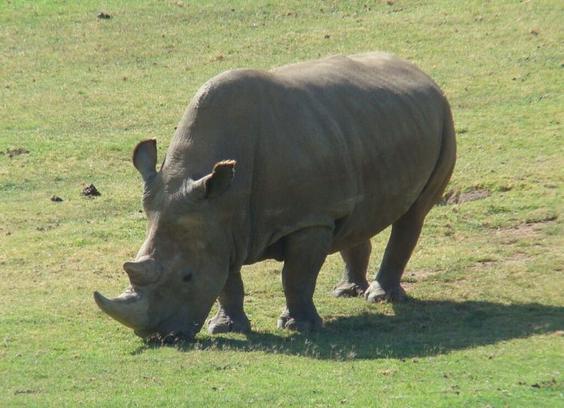
The image above is of a southern white rhino. Although the two subspecies are genetically distinct, they interbred (and thus shared genes) as recently as 14,000 years ago, when grasslands expanded to bring their ranges closer together, before retreating again.
Image Source: Prosthetic Head

The northern subspecies once roamed Africa in their thousands. But by the 1980s, intensive poaching had massively reduced their numbers, to the point that only around 15 wild individuals remained. In 2005, a survey found only four remaining animals, in the Garamba National Park in the Democratic Republic of the Congo. Considering that the national park is in the middle of a seemingly relentless war zone, it’s unsurprising that only a few years later even these last individuals were gone.

A very small captive population remained but they rarely reproduced. In a last-ditch attempt to save the subspecies, four rhinos from Dvůr Králové Zoo in the Czech Republic (the only reproductive animals of their kind left) were transported to Ol Pejeta Nature Conservancy in 2009, where they were monitored and protected round-the-clock by armed guards. It was hoped that being back in their natural habitat might stimulate these rhinos into breeding. Sadly, they never did. One of the four, a male, died in 2014 from natural causes. A year later, in 2015, the last two remaining northern white rhinos in captivity (one at Dvůr Králové Zoo; the other in San Diego Zoo), which were both elderly and unable to breed, also died, leaving the three living at Ol Pejeta Nature Conservancy – Sudan, Najin and Fatu – as the final representatives of their kind. But even these surviving animals – grandfather, mother and daughter – were too old, too ill, and too related to breed naturally.

Source:Sheep81

In 2017, Ol Pejeta Conservancy teamed up with Tinder and Ogilvy Africa to launch a fundraising campaign in order to try and save the subspecies. They created a Tinder account for Sudan, the last remaining northern white rhino male. ‘I’m one of a kind,’ Sudan said on his profile. ‘No, seriously, I’m the last male white rhino on planet earth. I don’t mean to be too forward, but the fate of my species literally depends on us getting together. I like to eat grass and chill in the mud. No problems performing under pressure. 6ft tall and 5,000lbs if it matters.’ Tinder users could swipe right to make their donations for the development of new fertility treatment for the rhinos since all attempts to get them to mate naturally had failed.

But sadly, on 19 March 2018, Sudan was euthanised after suffering from age-related health issues, leaving only two ageing females left alive. Barring the existence of unknown or misclassified male northern white rhinos elsewhere in Africa, the subspecies is functionally already extinct.

The northern white rhino is probably the most endangered mammal on the planet right now. Only two known individuals survive, both of which are female. They are living their final days in semi-captivity in Ol Pejeta Conservancy in Kenya.
Image Source: Ray in Manila

But there is one possible means of salvation.

Egg cells have been taken from both Najin and Fatu and, in August 2019, were artificially inseminated using the frozen sperm that had been extracted from the last northern white rhino males, before they had died. Two of the resulting embryos were viable. In January 2020, another embryo was created using the same technique. All three embryos have been placed in liquid nitrogen until they can be placed in a surrogate mother, almost certainly the closely related southern white rhino.

Is the northern white rhino too far gone? Is it simply in limbo, waiting for the inevitable confirmation that the species has become yet another casualty in the extinction event that is threatening biodiversity around the world? Or will advanced reproductive technologies allow for one of the greatest comebacks of all time?

By Nature Nook

Discover more on Nature Nook

Read more

#Congo #DemocracticRepublicOfCongo #Kenya #nature #NatureNook #TheDemocraticRepublicOfCongo #TheNorthernWhiteRhino

The Stealth and Beauty of the Clouded Leopard

Beautiful and unique Clouded Leopards are #endangered by #palmoil, #meat #mining #deforestation and human persecution across their range. Help them every time you shop and be #vegan, #Boycottpalmoil and #Boycott4wildlife

https://youtu.be/78wTRPCQDyw

The Stealth and Beauty of the Clouded #Leopard 🌧️🦁🐆 These beautiful beings face #extinction from #palmoil #deforestation 🌴🩸☠️🔥🚜⛔️ Help them to survive and be #vegan #Boycottpalmoil #Boycott4Wildlife @palmoildetect https://palmoildetectives.com/2021/03/08/the-stealth-and-beauty-of-the-clouded-leopard/

Share to BlueSky Share to Twitter

Found in the forests of Asia, this secretive midsized cat is almost as mysterious today as it was nearly 200 years ago when it was first described. We do know, however, that it has a taste for the treetops. This wonderfully agile feline is an incredible arboreal hunter, capable of catching monkeys, civets and even birds in the trees, balancing itself with the longest tail, in relation to body size, of any cat. In fact, the clouded leopard is probably the most talented climber in the whole cat family.

It is one of just two species of feline that can rotate its flexible ankles backwards (the other is the margay from South America), which allows it to climb down a tree headfirst with squirrel-like ease, move along horizontal branches while hanging beneath them like a sloth, and even dangle from a branch using just its hind feet. Its Malayan name is harimau-dahan, which means ‘branch tiger’.

With regard to the clouded leopard’s name, although it does have beautiful cloud-like markings on its body, it is not a leopard. It isn’t even part of the Panthera genus of ‘big cats’, where true leopards – along with lions, tigers and jaguars – sit. Originally, there was just one species of clouded leopard, but scientists ‘split’ the species in 2006 because of genetic differences between those found on mainland Asia and those found on the islands of Borneo and Sumatra. The images in this article are of the clouded leopard; the second, more recently recognised species, which tends to be darker in colour and has smaller cloud markings, is now known as the Sunda clouded leopard.

Relative to its size, the clouded leopard has the longest upper canine teeth of any predator. At 5 cm long, they’re not much shorter than those of a tiger, even though a tiger can be up to 10 times larger in body size. It seems as though the clouded leopard is the closest living species we have to the extinct sabre-toothed cats.

By Nature Nook

Discover more on Nature Nook

Read more

How can I help the #Boycott4Wildlife?

Take Action in Five Ways

1. Join the #Boycott4Wildlife on social media and subscribe to stay in the loop: Share posts from this website to your own network on Twitter, Mastadon, Instagram, Facebook and Youtube using the hashtags #Boycottpalmoil #Boycott4Wildlife.

Enter your email address

Sign Up

Join 3,172 other subscribers

2. Contribute stories: Academics, conservationists, scientists, indigenous rights advocates and animal rights advocates working to expose the corruption of the palm oil industry or to save animals can contribute stories to the website.

Wildlife Artist Juanchi Pérez

Read more

Mel Lumby: Dedicated Devotee to Borneo’s Living Beings

Read more

Anthropologist and Author Dr Sophie Chao

Read more

Health Physician Dr Evan Allen

Read more

The World’s Most Loved Cup: A Social, Ethical & Environmental History of Coffee by Aviary Doert

Read more

How do we stop the world’s ecosystems from going into a death spiral? A #SteadyState Economy

Read more

3. Supermarket sleuthing: Next time you’re in the supermarket, take photos of products containing palm oil. Share these to social media along with the hashtags to call out the greenwashing and ecocide of the brands who use palm oil. You can also take photos of palm oil free products and congratulate brands when they go palm oil free.

https://twitter.com/CuriousApe4/status/1526136783557529600?s=20

https://twitter.com/PhillDixon1/status/1749010345555788144?s=20

https://twitter.com/mugabe139/status/1678027567977078784?s=20

4. Take to the streets: Get in touch with Palm Oil Detectives to find out more.

5. Donate: Make a one-off or monthly donation to Palm Oil Detectives as a way of saying thank you and to help pay for ongoing running costs of the website and social media campaigns. Donate here

Pledge your support

#AnimalBiodiversityNews #animals #bigCat #Borneo #Boycott4wildlife #BoycottPalmOil #carnivores #conservation #deforestation #endangered #extinction #leopard #meat #mining #nature #NatureNook #palmoil #predator #predators #smallCat #Sumatra #vegan

The Plight of the Pangolin

My favourite animal changes all the time. When I was younger, I cycled through various large, majestic cats such as tigers, jaguars and snow leopards. At one point, I considered the polar bear among my favourites; another time, the hippo. But now I much prefer stranger, more obscure, more underappreciated animals. And a weird, elusive, nocturnal creature that looks almost like a walking pinecone fits that bill perfectly – the pangolin.

Pangolins are scaly enigmas that fascinate people of all ages. All species face imminent extinction from #Chinese #medicine, the #pet trade and #deforestation. Join the #Boycott4Wildlife and halt deforestation. By @thenaturenook

Tweet

Share to BlueSky Share to Twitter

Share to BlueSky Share to Twitter

For many people, the first time they heard about this animal was probably in very recent months when it was identified as a possible culprit in transmitting COVID-19 from its original hosts (thought to be horseshoe bats) to humans. For better or worse, this recognition has brought the pangolin into mainstream media. 

But even before the pangolin attracted global attention for its potential role in the pandemic that still grips the world, many conservationists had already been focusing on this strange, scaly creature for many years. And that’s because it has the dubious honour of being the most trafficked (non-human) mammal in the world. 

Scaly Enigmas

The protective armour of a pangolin accounts for up to a third of the animal’s body weight.
Image Source: Tikki Hywood Trust via U.S. Fish and Wildlife Service Headquarters

There are only two groups of armoured mammals alive today. In the Americas, there are 21 species of armadillo, two of which can roll up into virtually impregnable balls to defend themselves. And on the other side of the world, in Africa and Asia, there are eight species of pangolin, which, although superficially similar in appearance to the armadillos, are not closely related to them at all.

Whereas armadillos are mainly protected by plates of dermal bone, the pangolin, uniquely among mammals, is almost completely covered in large brown scales made out of keratin (the same substance our hair and nails are made from). These scales overlap like shingles on a roof to create an almost impenetrable layer of armour that very few predators can overcome. The pangolin can even erect its scales and shut them like powerful scissors, chopping off anything that pokes between them, including, it is said, human fingers. As the scales wear out, they are replaced, one by one, so that a pangolin has the same number throughout its life.

The only places on a pangolin’s body not protected by scales are the sides of its face, the tip of its snout, and its belly and throat, which are naked except for a few fine, sparse hairs. If it feels threatened, it tucks its head towards its belly and wraps itself into a ball with its thick, muscular tail clasped tightly around itself. In fact, the name pangolin comes from the Malay word pengguling, which means ‘one who rolls up’.

Pangolins have both fascinated and confused Europeans for hundreds of years. These animals seemed to have a hybrid quality about them – part reptile, part mammal, and with just a little hint of fish. In the 17th century, the strange scaly skins of pangolins arrived in Europe more often than the living animals, although they were usually simply labelled as ‘scaly Indian lizards’.

Image Source: Tikki Hywood Trust via U.S. Fish and Wildlife Service Headquarters

Pangolins may look a bit like scaly anteaters, but their closest relatives are in the order Carnivora, which includes dogs, cats, hyenas, bears and seals. Of the eight species of pangolin, four live in Africa and four in Asia. Some of the smaller species spend their lives in trees and clamber around with the aid of a long, grasping tail. The smallest, the long-tailed pangolin from Africa, is also the most arboreal; its tail has 46 or 47 vertebrae – the most of any mammal. The larger species, however, are completely ground-dwelling. The front claws of a pangolin are so large that they aren’t much good for walking on, so it either walks on its knuckles or trundles along on its hind legs, hunched over so that its body is almost horizontal, with its front paws raised near the chest as if in prayer.

To make and maintain its scales, a pangolin needs a high-protein diet, which it satisfies by eating vast numbers of ants and termites.
Image Source: David Brossard

The pangolin’s powerful claws are reserved primarily for digging and ripping open ant and termite nests. Once it has done this, it laps up the insects with a long, sticky tongue. The tongue of the biggest species, the giant pangolin, can reach lengths of up to 40 cm – one of the longest tongues relative to body size of any mammal – and the sheath that houses it extends right down the front of the animal’s chest and connects with its pelvis. The pangolin has no teeth, so ants collected by the mucus on the tongue are swallowed whole and mashed up by the horny lining and muscular movements of the stomach. It may also swallow small stones and sand to further grind up its food.

The Scale of the Problem

Hyenas and big cats can, occasionally, and with some considerable effort, pry a rolled-up pangolin apart. But the armour that normally protects this animal makes it acutely vulnerable to the deadliest predator of all: ourselves. In fact, rolling into a ball simply allows humans to pick it up and carry it off to the cooking pot or a crate with little fuss.

Culinary uses of pangolin range from bushmeat in Africa to delicacies in high-end Asian restaurants. In Vietnam, restaurants can charge up to US$150 per pound of pangolin meat, for it is considered a luxury food. Among Vietnam’s business elite, it is highly-prized as a status symbol, with businessmen frequently ordering pangolin meat to impress visitors. Even in restaurants that specialise in cooking exotic wildlife, pangolins are often the most expensive item on the menu. Sometimes, customers are required to order two hours in advance and place a deposit based on the animal’s weight. Restaurant employees may even kill the pangolin at the table, in front of diners, to show authenticity and freshness.

Ironically, given that they are supposed to protect the animal, it is a pangolin’s scales that make it so valuable in the illegal wildlife trade. These scales are highly sought after in many parts of both Africa and Asia for their purported benefits in traditional medicine, despite the fact that they (like rhino horn) are made only of keratin. They are incorrectly believed to, among other things, improve blood circulation, cure male impotence, stimulate lactation, and treat skin conditions.

The ground pangolin is known as bwana mganga, or ‘the doctor’, in Tanzania because every part of its body is believed to have medicinal use. There is, of course, absolutely no evidence that these scales have any impact on human health, yet the claims made on their behalf seem to become more outlandish by the year. Indeed, their ‘benefits’ have gone beyond the merely medical and can now supposedly ward off evil spirits and confer invisibility.

In the 1990s, a kilogram of pangolin scales was worth about $14. Today, that same weight may be worth $1,000 – $3,000 on the black market.
Image Source: Kenneth Cameron, via the U.S. Fish and Wildlife Service Headquarters

The number of pangolins killed annually is hard to quantify. A conservative figure of 200,000 a year has been given, but that is likely to be an underestimate. Pangolins have been hunted and trafficked so extensively that all eight species are now threatened. Three are perilously close to extinction. The wild population of the Chinese pangolin, in particular, has declined by more than 80% in the last 20 years.

In 2016, CITES (the Convention on International Trade in Endangered Species) granted all eight species of pangolin the strictest form of protection, banning all international commercial trade. However, this has not slowed the increases in illegal killing or highly organised smuggling. Because they are notoriously difficult to keep alive and breed in captivity, and because three of the four Asian species have already been so extensively poached that they are now hard to find, illegal traders have turned to the African species. Pangolins are now being smuggled on an almost industrial scale from Africa to Asia to keep up with demand.

The black market is certainly lucrative: a kilogram of pangolin meat can be worth hundreds of dollars; a kilo of scales thousands of dollars. In 2017, China intercepted a shipment from Africa of nearly 12 tonnes of scales – representing around 30,000 pangolins. And in 2019 alone, authorities seized a staggering 81 tonnes; the average shipment size has increased from 2.2 tonnes three years ago to 6.2 tonnes today. What is most worrying about this is that the majority of the illegal trade goes undetected and unreported, with seizures representing only around a quarter of actual trade.

The Chinese and Javanese once used the pangolin’s hard, scaly hide to make elaborate body armour. This suit of armour, made almost entirely from pangolin scales decorated with gold leaf, was presented to King George III in 1820 by the Governor General of the East India Trading Company and can today be seen displayed at the Royal Armouries in Leeds.
Image Source: ExonOxon

Hope for the Future?

On 26 January 2020, in an attempt to curb the spread of COVID-19, China slapped a temporary ban on buying, selling and eating wild animal meat, and began shutting down breeding farms across the country. However, this ban does not extend to animals traded for fur, medicine or research. According to the Wildlife Conservation Society, this ‘creates a potential loophole for traffickers who may exploit the non-food exemptions to sell or trade live wildlife’.

In June, China’s state media announced that pangolin scales had been removed from the official list of traditional Chinese medicine treatments, with strict penalties for those caught killing or trading them. Great news, right?

Not quite.

Though it was widely interpreted as a ban on pangolin scales, it soon became apparent that pangolin scales could still be used as ingredients within certain patent medicines – that is, medicines that are processed and ready-made. In other words, people will have to stop eating pangolins and buying their scales outright, but they can still take pills that contain pangolin parts. In total, eight formulae for medicines within the official 2020 pharmacopoeia were discovered still listing pangolin scales as an ingredient. Licensed companies and hospitals, of which there are approximately 700, are still able to legally produce medicines containing them. Many of these scales will undoubtedly come from China’s existing stockpiles, but it is unknown how large these stockpiles are. It is also suspected that, if the situation is not managed properly, pangolin scales may be illegally laundered into these stockpiles in the future, creating a black market nestled within a legal system. That’s if it’s not happening already.

A baby pangolin (delightfully known as a pangopup) is born with soft, pale scales, although they soon harden and darken. Infants will ride on their mother’s tail as she forages for insects.
Image Source: Shukran888

It is believed that pangolins account for as much as 20% of all illegal wildlife trade globally. Every five minutes, another wild pangolin is snatched from its home by a poacher. Yet in Europe, we barely know these animals even exist. In a survey of 2,000 people across the UK, only 8% of participants were able to correctly identify pangolins when shown pictures of them. Over 50% mistook them for armadillos. If these endearing creatures are to be saved, widespread awareness of their plight is critical.

A survey found that only 8% of people in the UK know what a pangolin is. These charismatic and cool creatures deserve more recognition, they face multiple human threats. Read the latest post on pangolins by @thenaturenook editor Jason

Tweet

The unfortunate fact is that large, charismatic mammals tend to win public hearts over small, secretive, scaly ones. Pangolins just don’t have the widespread appeal of the great icons of conservation, such as tigers, rhinos or polar bears. But their very strangeness might yet save them. We have always had a fascination with the bizarre and the mysterious – and it is my hope that there is still enough desire to stop the world’s more unusual animals from disappearing forever.

By Nature Nook

Discover more on Nature Nook

Read more

#AnimalBiodiversityNews #Boycott4wildlife #Chinese #deforestation #JasonWoodcock #Medicine #NatureNook #pet #WhiteBelliedPangolinPhataginusTricuspis