

The article discusses a study that uses non-invasive brain scanning combined with computer modeling to measure how the Alzheimer’s drug memantine interacts with brain receptors in living patients, aiming to confirm drug action without invasive procedures. It also shows how these methods can track changes in brain activity over time in people with cognitive impairment or Alzheimer’s disease.

This approach is of interest to psychology readers because it demonstrates how brain activity and receptor dynamics relate to cognitive function and disease progression, and it highlights innovative methods for studying brain mechanisms in living humans.

Article Title: New brain scanning method safely tracks how Alzheimer’s drugs work in living patients

Link to PsyPost Article: https://www.psypost dot org/new-brain-scanning-method-safely-tracks-how-alzheimers-drugs-work-in-living-patients/

Copy and paste broken link above into your browser and replace "dot" with "." for link to work. We have to do it this way to avoid displaying copyrighted images.

#neuroimaging #alzheimersdisease #memantine #nmda-receptors #magnetoencephalography

Researchers at Oregon Health & Science University successfully mapped the precise binding sites where disease-associated #autoantibodies attach to the #NMDA receptor, identifying a novel #therapeutic target for anti-NMDA receptor encephalitis.
#Neuroscience #MolecularNeuroscience #MolecularBiology #sflorg
https://www.sflorg.com/2026/01/ns01142601.html
Scientists identify target to treat devastating brain disease

This discovery opens the door to the first targeted drug therapies for anti-NMDA receptor encephalitis

Naked Mole Rats, Aspartame, Restless Leg Syndrome | Robert Sapolsky Father-Offspring Interviews #91

YouTube
🌘 NMDA 受體拮抗劑:比您想知道的更多
➤ 解密 NMDA 受體的亞基選擇性、結合動態與神經元靶向如何影響藥物效用
https://grillbert.substack.com/p/nmda-receptor-antagonists-a-bit-more
這篇文章深入探討了 NMDA 受體拮抗劑的作用機制,解釋了它們為何能產生麻醉、治療阿茲海默症或憂鬱症等效果。作者透過比較美金明 (Memantine) 和氯胺酮 (Ketamine) 的例子,說明瞭藥物對 NMDA 受體不同亞基的選擇性、其與受體結合後被「囚禁」或「閃爍」的動態,以及藥物作用於興奮性或抑制性神經元的差異,共同決定了其複雜的生理和行為影響。
+ 氯胺酮和美金明竟然作用機制差異這麼大,以前都只知道它們是NMDA拮抗劑,這篇分析真的讓我大開眼解!
+ 作者的文筆很生動,把複雜的 NMDA 受體機制講得很有趣,特別是「囚禁」和「閃爍」的比喻。
#神經科學 #藥理學 #NMDA 受體
NMDA Receptor Antagonists: Slightly More than you Wanted to Know

Insights from Memantine and Ketamine's divergent effects on the Brain

Biomusings

Insight Article: A new mode of action for unconventional NMDA receptors

Presynaptic #NMDA receptors can shape timing-dependent long-term depression in a way that departs from their classic postsynaptic role. #Neuroscience
https://elifesciences.org/articles/107049?utm_source=mastodon&utm_medium=social&utm_campaign=organic_insights

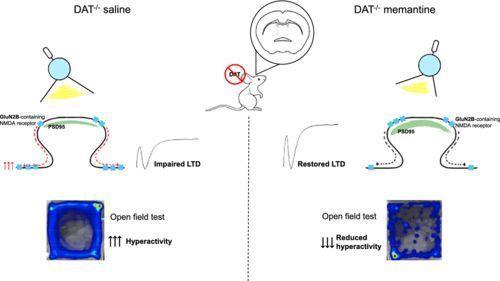
Memantine‐induced functional rewiring of the glutamate synapse in the striatum of dopamine transporter knockout rats - Caffino - British Journal of Pharmacology
#openaccess
#NMDA
#ionchannels

https://bpspubs.onlinelibrary.wiley.com/doi/10.1111/bph.17403?af=R

https://ncbi.nlm.nih.gov/pmc/articles/PMC10479373/ Synaptic Plasticity 101: The Story of the AMPA Receptor for the Brain Stimulation Practitioner (Brown, et al, 2022) #brains #Neuroplasticity #ampa #nmda #ketamine #mentalhealth #NeuroScience
Synaptic Plasticity 101: The Story of the AMPA Receptor for the Brain Stimulation Practitioner

The fields of Neurobiology and Neuromodulation have never been closer. Consequently, the phrase “synaptic plasticity” has become very familiar to non-basic scientists, without actually being very familiar. We present the “Story ...

PubMed Central (PMC)

https://deborahcopaken.substack.com/p/could-ketamine-cure-tinnitus
#tinnitus #ketamine #KetamineInfusion #clinicaltrial #nmda

I don't know for sure what really caused my tinnitus to become continuous. But the onset is strongly correlated with my two consecutive surgical awarenesses. Got pretty noticeable with the first one and now it's non-stop, loud, high pitched, and completely maddening.

I can't afford #ketamineinfusions out of pocket, regardless of whether it's for my #PTSD or for tinnitus.
#ottawa #ontario

Could Ketamine Cure Tinnitus?

I entered a clinical trial to see if ketamine would stop the constant ringing in my left ear. The catch? I'd have to spend 90 minutes, while tripping, completely immobile in an MRI.

Ladyparts
mGluR5 from primary sensory neurons promotes opioid-induced hyperalgesia and tolerance by interacting with and potentiating synaptic NMDA receptors

Aberrant activation of presynaptic NMDA receptors (NMDARs) in the spinal dorsal horn is integral to opioid-induced hyperalgesia and analgesic tolerance. However, the signaling mechanisms responsible for opioid-induced NMDAR hyperactivity remain poorly identified. Here, we show that repeated treatment with morphine or fentanyl reduced monomeric mGluR5 protein levels in the dorsal root ganglia (DRG) but increased levels of mGluR5 monomers and homodimers in the spinal cord in mice and rats of both sexes. Co-immunoprecipitation analysis revealed that monomeric and dimeric mGluR5 in the spinal cord, but not monomeric mGluR5 in the DRG, directly interacted with GluN1. By contrast, mGluR5 did not interact with μ-opioid receptors in the DRG or spinal cord. Repeated morphine treatment markedly increased the mGluR5-GluN1 interaction and protein levels of mGluR5 and GluN1 in spinal synaptosomes. The mGluR5 antagonist MPEP reversed morphine treatment–augmented mGluR5-GluN1 interactions, GluN1 synaptic expression, and dorsal root–evoked monosynaptic EPSCs of dorsal horn neurons. Furthermore, CRISPR-Cas9–induced conditional mGluR5 knockdown in DRG neurons normalized mGluR5 levels in spinal synaptosomes and NMDAR-mediated EPSCs of dorsal horn neurons increased by morphine treatment. Correspondingly, intrathecal injection of MPEP or conditional mGluR5 knockdown in DRG neurons not only potentiated the acute analgesic effect of morphine but also attenuated morphine treatment–induced hyperalgesia and tolerance. Together, our findings suggest that opioid treatment promotes mGluR5 trafficking from primary sensory neurons to the spinal dorsal horn. By directly interacting with NMDARs, presynaptic mGluR5 potentiates and/or stabilizes NMDAR synaptic expression and activity at primary afferent central terminals, thereby maintaining opioid-induced hyperalgesia and tolerance. Significance Statement: Opioids are essential analgesics for managing severe pain caused by cancer, surgery, and tissue injury. However, these drugs paradoxically induce pain hypersensitivity and tolerance, which can cause rapid dose escalation and even overdose mortality. This study demonstrates for the first time that opioids promote trafficking of mGluR5, a G protein-coupled glutamate receptor, from peripheral sensory neurons to the spinal cord; there, mGluR5 proteins dimerize and physically interact with N -methyl- D -aspartate receptors to augment their synaptic expression and activity. Through dynamic interactions, the two distinct glutamate receptors mutually amplify and sustain nociceptive input from peripheral sensory neurons to the spinal cord. Thus, inhibiting mGluR5 activity or disrupting mGluR5- N -methyl- D -aspartate receptor interactions could reduce opioid-induced hyperalgesia and tolerance and potentiate opioid analgesic efficacy.

Journal of Neuroscience