This brief highlights why the Mind & Brain News item matters to mental health professionals. It documents artificial neurons that can communicate with living brain cells, demonstrated by flexible, low-cost devices that emit lifelike electrical signals capable of activating neural tissue in mouse brain samples. For psychotherapists, social workers, and other mental health clinicians, the example of neural interfacing illustrates how advances in neural signaling and neuroplasticity concepts are being modeled and explored, informing the neurobiological context relevant to mental health care.

Article Title: Artificial neurons successfully communicate with living brain cells

Link to Science Daily Mind-Brain News: https://www dot sciencedaily dot com/releases/2026/04/260417225020 dot htm

#NeuralInterfaces #ArtificialNeurons #Neuroplasticity #BrainResearch #MentalHealthScience

Copy and paste broken link above into your browser and replace "dot" with "." for link to work.

We have to do it this way to avoid display of copyrighted images.

This brief highlights a discovery about the brain’s waste-removal system, a topic with meaningful implications for mental health work. Understanding how fluid dynamics and drainage pathways operate in the brain can inform perspectives on aging, injury, and neurodegenerative processes that influence mood, cognition, and functioning.

The relevance lies in the potential to shape discussions about brain health, resilience, and the long-term impact of neurological changes on psychosocial well-being. For clinicians across fields—psychotherapists, social workers, and mental health professionals—the delineation of a previously unknown drainage hub provides a framework for considering how physiological brain maintenance intersects with emotional regulation, stress responses, and access to effective interventions.

Article Title: Scientists just found a hidden “drain” inside the human brain

Link to Science Daily Mind-Brain News: https://www dot sciencedaily dot com/releases/2026/04/260408225934 dot htm

A hidden waste-removal pathway in the brain has finally been caught in action. Using cutting-edge MRI scans, researchers discovered that fluid flows along the middle meningeal artery in a slow, lymphatic-like pattern—very different from blood. This confirms the presence of a previously unknown drainage hub in humans. The finding could transform how scientists approach brain aging, injury, and diseases like Alzheimer’s.

via Mind & Brain News -- ScienceDaily https://www dot sciencedaily dot com/news/mind_brain/

April 9, 2026 at 10:11AM

#brainhealth #neuroscience #lidomain #neurodegeneration #mentalhealthscience

Copy and paste broken link above into your browser and replace "dot" with "." for link to work.

We have to do it this way to avoid display of copyrighted images.

The brief highlights a shift in understanding of fear and memory, illustrating that non-neuronal cells—astrocytes—play active, real-time roles in forming, recalling, and modulating fear responses. This challenges traditional neuron-centric models and underscores the importance of considering glial contributions when interpreting fear-related processes, which may inform a broader, systems-oriented perspective for mental health practice.

Article Title: These overlooked brain cells may control fear and PTSD

Link to Science Daily Mind-Brain News: https://www dot sciencedaily dot com/releases/2026/04/260403224508 dot htm

These overlooked brain cells may control fear and PTSD
https://www dot sciencedaily dot com/releases/2026/04/260403224508 dot htm
Astrocytes, once thought to be mere brain “support cells,” are now revealed to be key players in fear memory. Researchers found they actively help form, recall, and weaken fear responses by interacting with neurons in real time. Changing astrocyte activity directly altered how strong fear memories became. This breakthrough could lead to entirely new treatments for anxiety-related disorders.
via Mind & Brain News -- ScienceDaily https://www dot sciencedaily dot com/news/mind_brain/
April 4, 2026 at 07:47AM

#neuroscience
#fearconditioning
#PTSDresearch
#astrocytes
#mentalhealthscience

Copy and paste broken link above into your browser and replace "dot" with "." for link to work.

We have to do it this way to avoid display of copyrighted images.

This brief highlights an intersection between the brain’s physical milieu and neural signaling, underscoring how tissue mechanics can influence molecular guidance cues. For mental health professionals, this foregrounds the environment-as-biology concept, illustrating a pathway by which early and ongoing bodily context may shape neural connectivity relevant to development and symptom expression.

Article Title: Scientists discover a hidden force that helps wire the brain

Link to Science Daily Mind-Brain News: https://www dot sciencedaily dot com/releases/2026/03/260304184233 dot htm

#brainhealth #neuroscience #neurodev #mentalhealthscience #neuroplasticity

Copy and paste broken link above into your browser and replace "dot" with "." for link to work.

We have to do it this way to avoid display of copyrighted images.

This brief underscores how language, with its reliance on familiar words and predictable patterns, aligns with cognitive processing tendencies observed in everyday contexts. For mental health professionals, the emphasis on anticipatory processing and stepwise meaning construction highlights why conversational predictability can support client engagement, comprehension, and emotional safety during therapeutic exchange.

Article Title: Scientists reveal why human language isn’t like computer code

Link to Science Daily Mind-Brain News: https://www dot sciencedaily dot com/releases/2026/02/260219040811 dot htm

#LanguagePsychology #Cognition #TherapyCommunication #MentalHealthScience #Neuro Linguistics

Copy and paste broken link above into your browser and replace "dot" with "." for link to work.

We have to do it this way to avoid display of copyrighted images.

This brief highlights repurposing research that intersects neurodegenerative processes with familiar medications, a topic of interest for mental health professionals exploring novel biological pathways influencing cognition and mood. It spotlights how existing pharmacotherapies, including a shingles vaccine and sildenafil, may be reconsidered for broader neurological impact, offering a lens on translational science that can inform colleagues about potential future avenues in patient-care discussions and interdisciplinary collaboration.

Article Title: Viagra and shingles vaccine show surprising promise against Alzheimer’s

Link to Science Daily Mind-Brain News: https://ift dot tt/PT0ntlJ

#Alzheimer’sResearch #Neuropharmacology #RepurposedDrugs #MentalHealthScience #CognitionResearch

Copy and paste broken link above into your browser and replace "dot" with "." for link to work.

We have to do it this way to avoid display of copyrighted images.

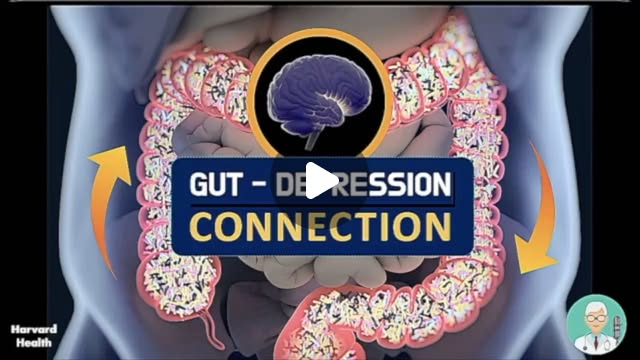
Chronic stress can damage the gut’s protective lining, triggering inflammation that may worsen depressive symptoms. The material emphasizes the gut–brain axis as a mechanism underpinning mood disorders, a topic of particular significance to psychotherapists, social workers, and other mental health professionals. Moreover, the finding that Reelin levels decline under stress and can be restored with a single injection—accompanied by antidepressant-like effects in preclinical models—highlights a tangible biological target at the gut–brain interface for future inquiry and collaboration between disciplines.

Article Title: Scientists discover protein that could heal leaky gut and ease depression

Link to Science Daily Mind-Brain News: https://ift dot tt/UqYFBak

#GutBrainAxis #ReelinProtein #DepressionResearch #ChronicStress #MentalHealthScience

Copy and paste broken link above into your browser and replace "dot" with "." for link to work.

Before you continue to YouTube

Before you continue to YouTube

Stress may short-circuit your brain’s ability to manage emotions—especially if you live with anxiety or depression. #StressAndTheBrain #MentalHealthScience #EmotionRegulation

https://geekoo.news/when-stress-hijacks-the-brains-emotional-control/

When Stress Hijacks the Brain’s Emotional Control | Geekoo

Stress can impair the brain’s ability to manage emotions—especially in those with mental health disorders. New research reveals how, and why this matters for therapy success.

Geekoo