 MushroomBot
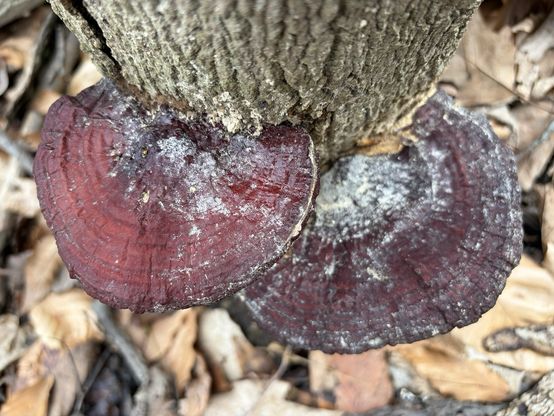
Fomitopsis spraguei
https://www.mushroomexpert.com/Fomitopsis_spraguei.html
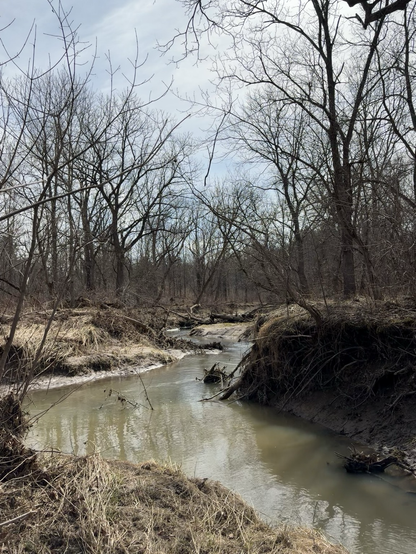
Ecology: Saprobic on the dead and living wood of oaks and other hardwoods; also possibly parasitic on living trees; causing a brown cubical rot; growing alone or gregariously; annual; spring through fall; widely distributed in North America east of the Rocky Mountains. The illustrated and described collections are from Illinois and Ohio.
Cap: 2-10 cm across; up to 6 cm deep; semicircular to nearly circular or irregular in outline; planoconvex to flat or shallowly depressed; rugged and pocked; very finely fuzzy toward the margin when young, becoming finely fuzzy overall; dry, or, when very fresh, sometimes exuding clear droplets of liquid; grayish overall, becoming whitish; fresh margin brownish orange; when young and fresh bruising grayish green, especially near the margin.
Pore Surface: Grayish white; bruising grayish green when fresh, but bruising brownish at maturity; 1-3 angular pores per mm; tubes 2-4 mm deep.
Stem: Usually absent, but occasionally present as a stubby, lateral extension; 1-2 cm long; 1-2 cm thick; whitish to brownish; fuzzy.
Flesh: Whitish to watery gray or slightly bluish; when fresh and young clearly divided into zones of whitish and grayish; unchanging when sliced; soft-leathery, becoming tougher with age.
Odor and Taste: Odor fragrant; taste not distinctive.
Chemical Reactions: KOH negative on flesh; yellowish on cap surface and pore surface.
Microscopic Features: Spores 5-8 x 4-5 m; ellipsoid; smooth; hyaline in KOH; inamyloid. Hyphal system trimitic: generative hyphae 2-4 m wide, thin-walled, clamped, smooth; skeletal hyphae 4-6 m wide, thick-walled, smooth; binding hyphae 2-4 m wide, thick-walled, non-septate.
#mushrooms #fungi #mycology #shrooms #mushtodon #sporespondence #floraspondence


 Bodhi 心
 Scott
Scott

 K Belisario (she/her)