"Trump Weighing Order To Seize Elections By Declaring Sham National Emergency: Report"

I see no way to fight except full walkout all sectors. Organise the General Strike.

Organise the General Strike.

ORGANIZE

Not just unions, all workers, tools down.

#aflcio #uaw #longshoremen #generalStrike

Big unions, little unions. Unorganized, medical, communications, transportation.

https://www.huffpost.com/entry/latest-news-live-updates_n_699c2475e4b0f41da8d4babb/liveblog_69a08057e4b0b62154a86936

Poll: Just 27% Support U.S. Attack On Iran

HuffPost

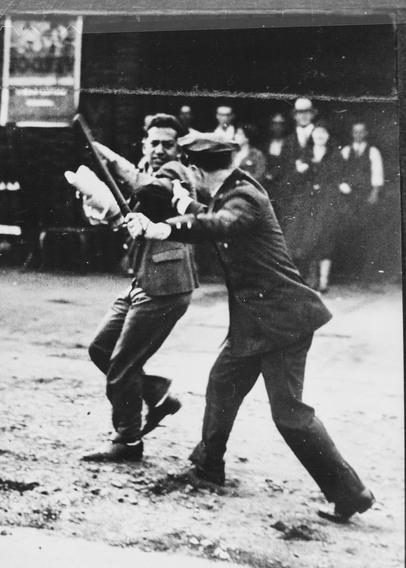
Today in Labor History July 20, 1934: Seattle police fired tear gas and clubbed 2,000 striking longshoremen during the West Coast port strike. Meanwhile, the governor of Oregon called out the National Guard to break the strike on the Portland docks. By the end of the strike, all the West Coast ports had become unionized. 1 worker died in Seattle and another died in Portland. And 2 in San Francisco. The San Francisco deaths led to a General Strike

#workingclass #LaborHistory #seattle #Portland #strike #waterfront #longshoremen #union #policebrutality #policemurder #police #acab

Plaque commemorating the 1934 San Francisco General Strike.

Reads: In memory of Howard Sperry and Nick Bourdoise, who gave their lives on Bloody Thursday July 5, 1934 so that all working people might enjoy a greater measure of dignity and security.

Sperry and Bordoise were fatally shot by San Francisco police at the intersection of Mission and Steuart Streets, when longshoremen and seamen attempted to stop maritime employers from breaking their joint strike. Community outrage at these killings sparked a General Strike by all San Francisco unions.

The maritime strike continued through the middle of summer, concluding with a union victory which brought decent conditions to the shipping industry and set the stage for the rebirth of a strong and democratic labor movement on the west coast.

"An Injury to One is an Injury to All"

#workingclass #LaborHistory #sanfrancisco #GeneralStrike #longshoremen #police #policebrutality #union #strike #policemurder #acab

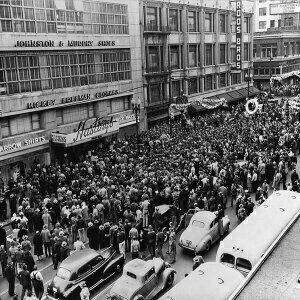
Today in Labor History July 16, 1934: The San Francisco General Strike began, with 150,000 workers participating. The longshoremen’s strike actually started on May 9 and lasted 83 days, leading ultimately to the unionization of all West Coast ports. The strike grew violent quickly, with company goons and police brutalizing longshoremen and sailors. They hired private security to protect the scabs they brought in to load and unload ships, housing them in moored ships and wall compounds that the strikers attacked. In San Pedro, two workers were killed by private security on May 15. Battles also broke out in Oakland, San Francisco, Portland and Seattle. On Bloody Thursday, July 5, in San Francisco, police attacked strikers with tear gas and with clubs while on horseback and later fired into the crowd, killing two and injuring others. A General Strike was called on July 14 and began on July 16, lasting 4 days. Many non-unionized workers joined the strike. Movie theaters and night clubs shut down. Many small businesses shut down & posted signs in solidarity with the strikers.

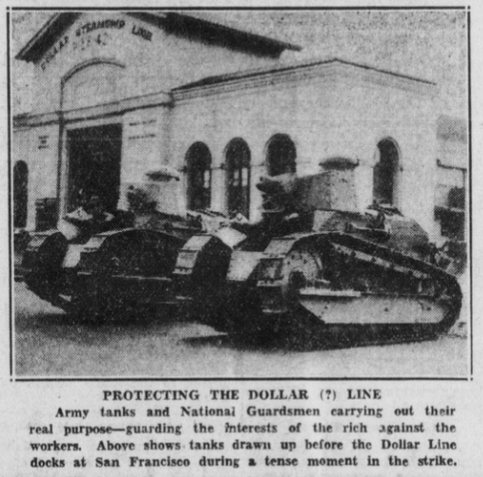
On July 17, the cops arrested 300 people they accused of being communists, radicals or subversives. The National Guard also blocked both ends of Jackson Street that day with machine gun-mounted trucks to aid vigilante attacks on the Marine Workers Industrial Union headquarters and the ILA soup kitchen. They raided many other union halls and communist organizations. Vigilantes kidnapped and beat a lawyer for the ACLU, as well as 13 radicals from San Jose, CA.

#workingclass #LaborHistory #GeneralStrike #sanfrancisco #longshoremen #waterfront #union #communism #vigilantes #bloodythursday #policebrutality #police #acab

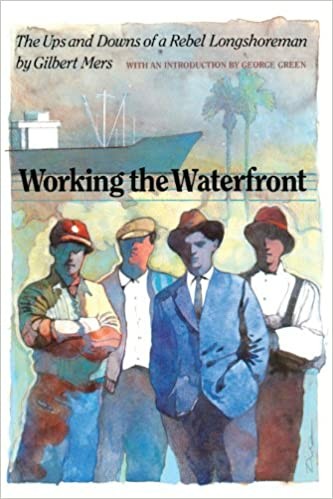
Today in Labor History July 5, 1998: Rebel Longshoreman, writer and Wobbly (IWW) Gilbert Mers (1908-1998) died. Mers wrote the book “Working the Waterfront: The Ups & Downs of a Rebel Longshoreman” in which he exposed the Texas Rangers of the 1930s and 40s as legalized strike-breaking bullies.

#WorkingClass #LaborHistory #longshoremen #IWW #GilbertMers #waterfront #TexasRangers #writer #author @bookstadon

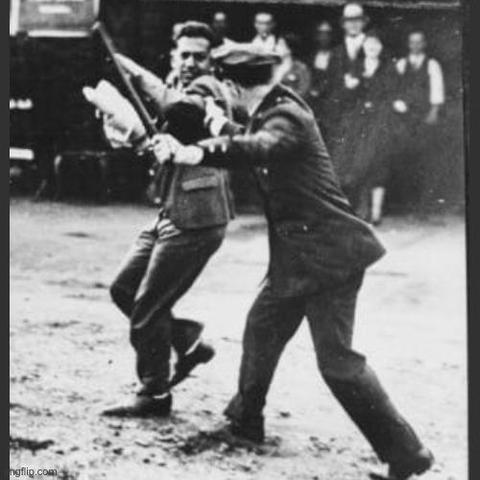
Today in Labor History July 5, 1934: Two strikers were shot and killed and more than 100 were injured by San Francisco police in what came to be known as "Bloody Thursday," leading to one of the last General Strikes in U.S. history. The West Coast maritime strike lasted 84 days and spread from San Pedro, in Los Angeles Country up to Puget Sound, in Washington. One of the strike leaders in San Francisco was Harry Bridges, a former member of the IWW who had immigrated from Australia. Teamsters supported the strike by refusing to handle “hot” cargo that had been unloaded by scabs. 7-9 workers, in total, were killed during these strikes (in San Pedro, Seattle, Portland, and San Francisco); over 1000 were injured; and over 500 were arrested. In San Francisco, the National Guard, along with vigilantes, patrolled the streets with armored vehicles with machine guns mounted on them.

I used to have a neighbor who was a lifelong member of the typographical union. A really big guy named Herb, who told me that his most vivid memory of the strike was that the streets had become white from all the milk being dumped by dairy delivery drivers, in solidarity with the striking maritime workers.

The ILWU Mural General Strike Sculpture/Mural was created in 1984-86 to commemorate the 50th anniversary of the 1934 SF General Strike. The artists were Miranda Bergman, Tina Dresher, Nicole Emanuel, Lari Kilolani, James Morgan, Ray Patlán, Eduardo Pineda, James Prigoff, O'Brien Thiele, Horace Washington. The artwork now stands at the corner of Mission and Steuart Streets, in the old Rincon Hill neighborhood, the epicenter of the 1934 San Francisco Waterfront Strike and Bloody Thursday. This photo of the artwork was taken by James Prigoff, and can be found in the Found SF project: https://www.foundsf.org/Artist!_Mike_Mosher

I’ve included a close-up of the artwork in its current home, at Mission and Steuart Streets, along with a commemorative plaque (both photos by me). The plaque reads:

“In memory of Howard Sperry and Nick Bordoise, who gave their lives on Bloody Thursday, July 5, 1934, so that all working people might enjoy a greater measure of dignity and security.

Sperry and Bordoise were fatally shot by San Francisco police at the intersection of Mission and Steuart Streets, when longshoremen and seamen attempted to stop maritime employers from breaking their joint strike. Community outrage at these killings sparked a General Strike by all San Francisco unions.

The maritime strike continued through the middle of the summer, concluding with a union victory which brought decent conditions to the shipping industry and set the stage for the rebirth of a strong and democratic labor movement on the west cost.

An Injury to One is an Injury to all.”

#workingclass #LaborHistory #sanfrancisco #GeneralStrike #BloodyThursday #IWW #longshoremen #ilwu #police #PoliceBrutality #HarryBridges #maritime #nationalguard #Teamsters #solidarity #mural

Today in Labor History July 5, 1934: Two strikers were shot and killed and more than 100 were injured by San Francisco police in what came to be known as "Bloody Thursday," leading to one of the last General Strikes in U.S. history. The governor called in the National Guard to suppress the strike by the International Longshoremen’s & Warehousemen’s Union (ILWU). Police and Guard violence led to 43 injuries due to clubbing and gas, and 30 more for bullet wounds. Two chemical companies used the unrest as an opportunity to test and sell their wares. Joseph Roush, from Federal Laboratories, shot a long-range tear gas shell at the strikers. He then told his company, "I might mention that during one of the riots, I shot a long-range projectile into a group, a shell hitting one man and causing a fracture of the skull, from which he has since died. As he was a Communist, I have had no feeling in the matter and I am sorry that I did not get more."

Mike Quinn wrote about the strike in his 1949 book, “The Big Strike.” Quinn was a working-class journalist and novelist. He was an active member of the Communist Party and a writer for the ILWU.

#WorkingClass #LaborHistory #GeneralStrike #SanFrancisco #longshoremen #BloodyThursday #ilwu #riots #communism #massacre #police #PoliceBrutality #acab #writer #author #fiction #novel @bookstadon

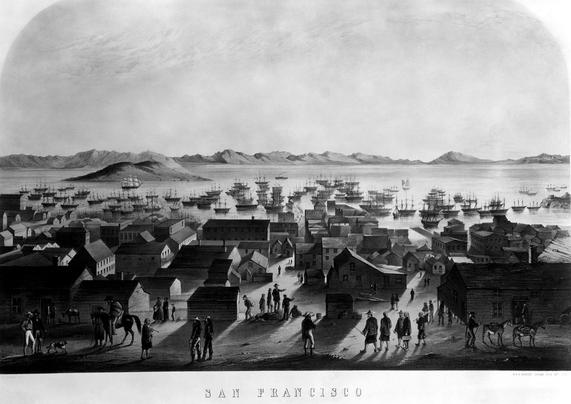
Today in Labor History May 26, 1851: Stevedores and longshoreman struck in San Francisco. This was the first documented longshore strike in California. They were demanding six dollars per day, which was a lot in those days. However, the gold rush caused massive inflation and six dollars was not much in light of that. They also were fighting for a nine-hour work day and one dollar per hour overtime. In the wake of this successful strike, organizers formed the Riggers’ and Stevedores’ Association.

#workingclass #LaborHistory #strike #SanFrancisco #stevedore #longshoremen #inflation #wages

Today in Labor History May 9, 1934: Longshoremen began a strike for a union hiring hall and union recognition, ultimately leading to the San Francisco general strike. After World War One, West Coast longshore workers were poorly organized or represented by company unions. The IWW had tried to organize them and had some successes, like in San Pedro, in 1922, but they were ultimately crushed by injunctions, imprisonment, deportation and vigilante violence. While longshoremen lacked a well-organized union, they retained a syndicalist sentiment and militancy. Many Wobblies were still working the docks. On May 9, 1934, longshoremen walked off the job at ports up and down the West Coast, soon to be followed by sailors. Goons shot at strikers in San Pedro. There was also violence in Oakland and San Francisco. Street battles between the cops and strikers continued in San Francisco, heating up on July 3. Things came to a head on Bloody Thursday, July 5, when police shot 3 workers (two of them died). The attack led to a four-day general strike that effectively shut down commerce in San Francisco, despite police violence and attempts to weaken it by national unions. In 2017, San Francisco renamed the big plaza across from the Ferry Building Harry Bridges Plaza. Many of the city’s recent Palestinian solidarity protests have taken place there.

#workingclass #LaborHistory #sanfrancisco #generalstrike #longshoremen #union #strike #policebrutality #police #massacre #policemurder #IWW #harrybridges #bloodythursday #palestine #solidarity #prison