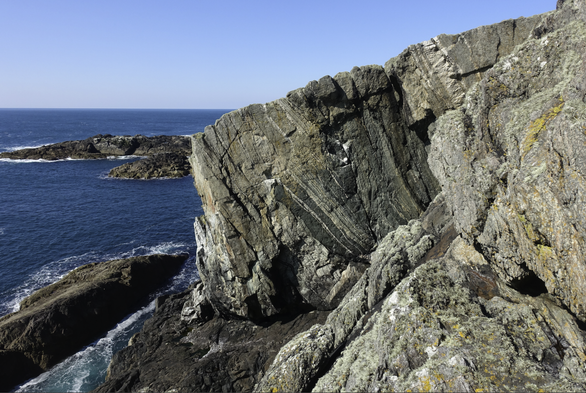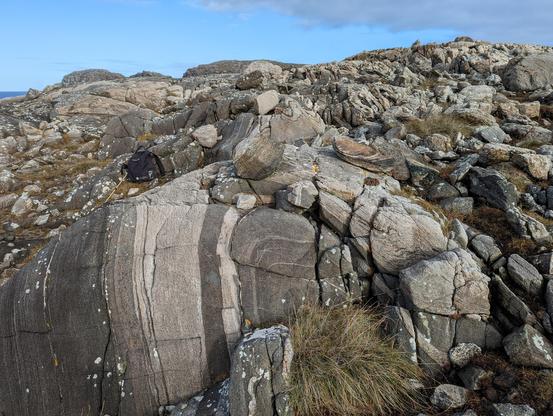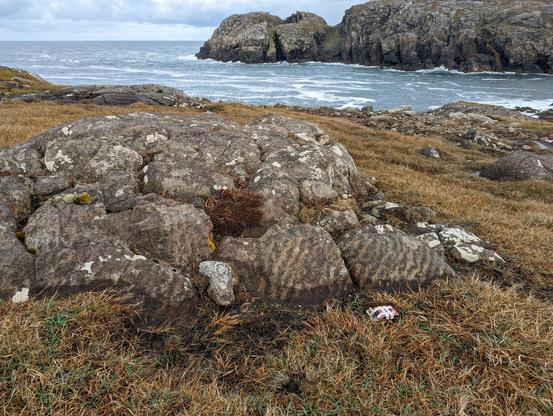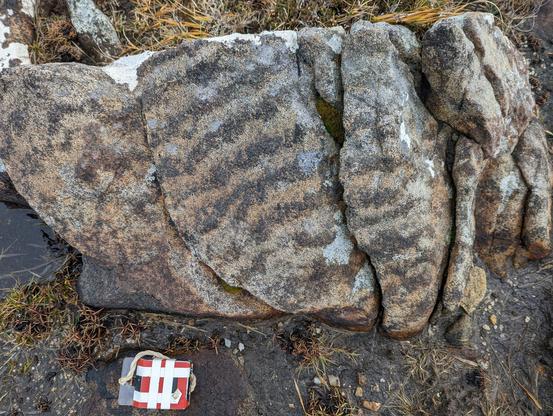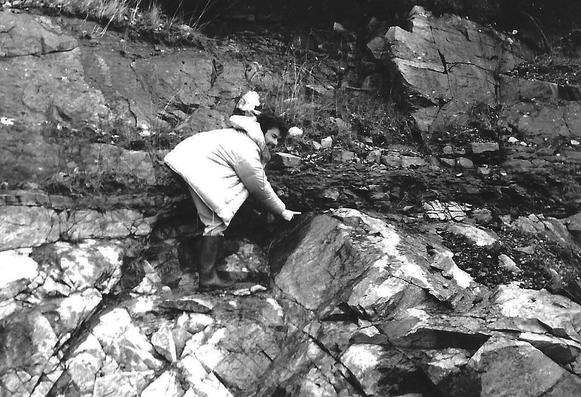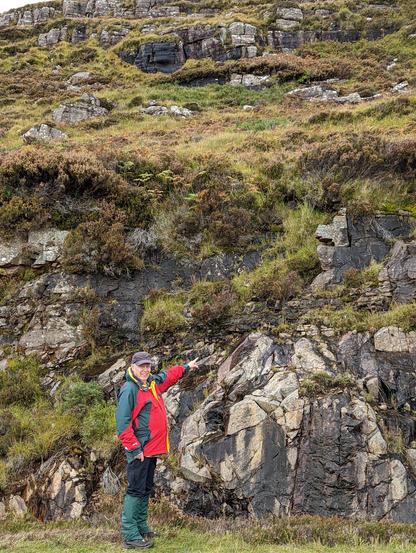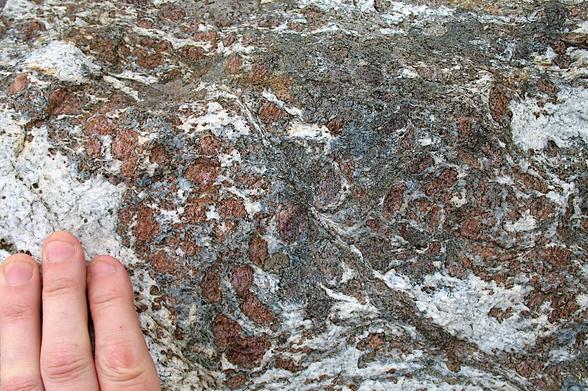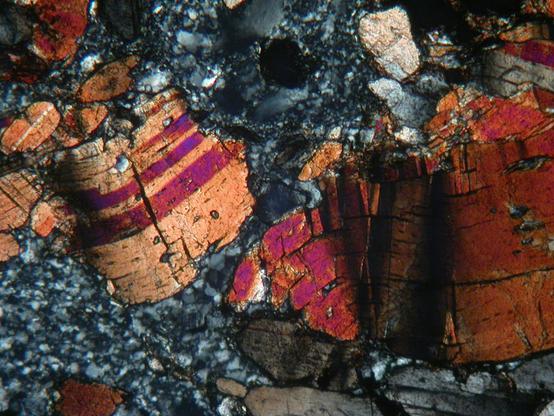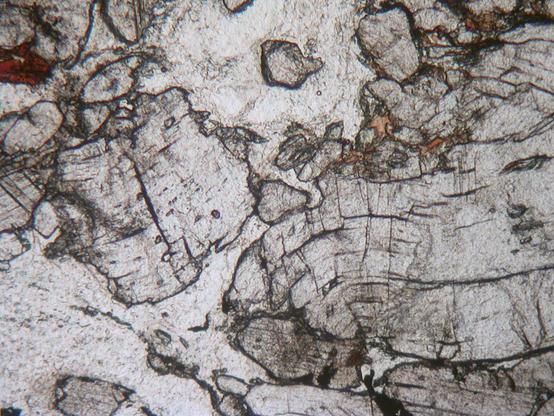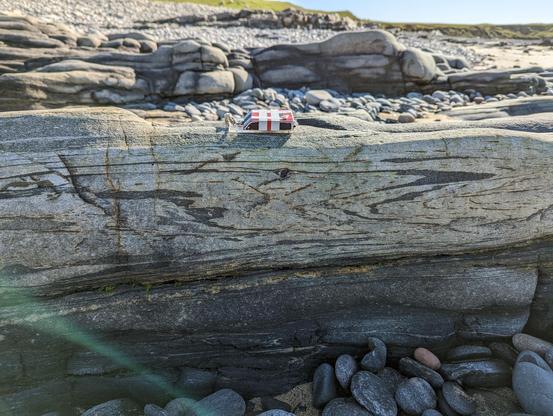
Fabulous spring weather in Mull just now. โ˜€๏ธ Here's a picture of the extreme south end of the Hebridean Craton: Lewisian rocks on on a wee island off Iona, which I visited for the first time this week ๐Ÿคฉ ๐Ÿฅฐ ๐Ÿค“ ๐Ÿ˜Ž Greenland and Canada in the distance ๐Ÿ˜ #Geology #Lewisian #Metamorphic

A #FridayFold from the west coast of the #IsleofLewis.

The dark mafic #OuterHebrides dykes were intruded into the #Lewisian gneiss. The original cross cutting relationship has been brought into near concordance during subsequent #Laxfordian deformation which also generated these folds.

Tiger stipe camouflage isn't really effective on the west coast of the #IsleofLewis๐Ÿ‘€
Compositional (rhythmic?) banding is preserved locally within an occurrence of #Lewisian "Older Basic Suite" meta-basics/ultrabasics.
#Archaean
#FieldtripFriday revisited. In 1975 I visited this unconformity on the north side of Loch Assynt where #Torridonian sandstones and conglomerates overlie #Lewisian gneiss.
I even spotted the ledge I climbed onto to point out the unconformity surface to my classmates.
#Geology
#MinCup24 Kyanite vs Ringwoodite

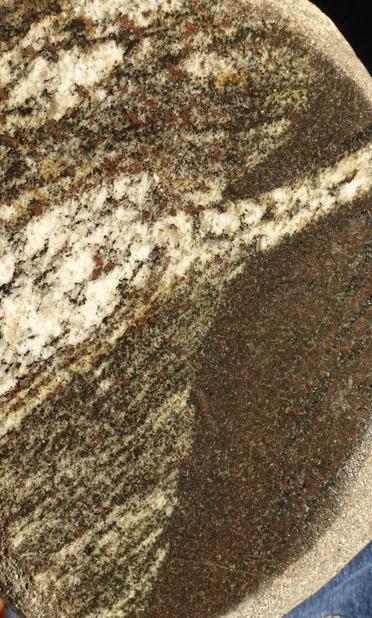
Vote kyanite! It makes great rocks that you can actually see at the Earth's surface. Look at this beautiful rock surface on Ceapabhal, in South Harris: blue kyanite, with red garnet and pale quartz/feldspar. Rock done right! ๐Ÿคฉ ๐Ÿฅฐ #Geology #Metasediment #Kyanite #Lewisian @MineralCup
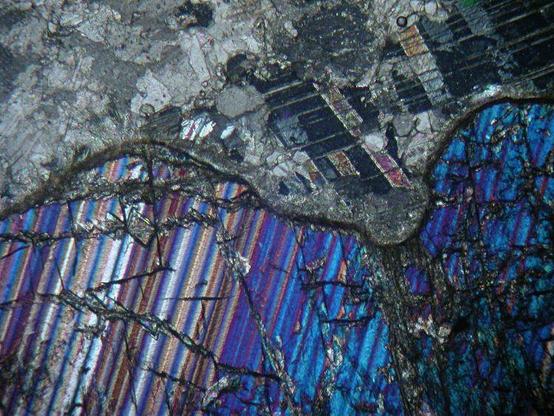
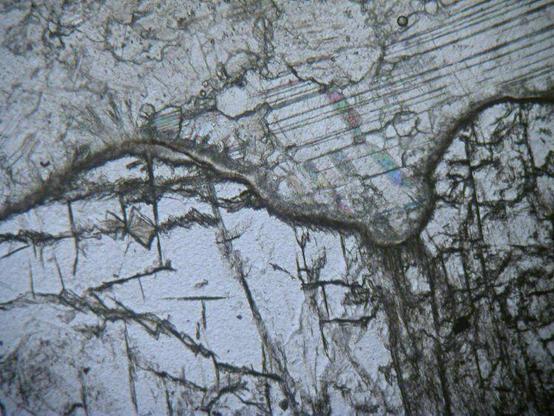
#ThinSectionThursday #MinCup24 It's kyanite for me! Rocks with kyanite are *always* good rocks ๐Ÿคฉ๐Ÿฅฐ Here's some nice bent and twinned kyanite crystals in a high-pressure granulite-facies gneiss from the Lewisian complex in South Harris. Field of view about 2mm across. More info in Alt text. #Geology #Kyanite #Lewisian #Metasediment #Metamorphic @MineralCup

Attenuation of the limbs in these folds has left some of the fold hinges essentially floating.
#Laxfordian folding on the north west coast of the #IsleofLewis

#TectonicTuesday #Geology #Lewisian #Folding

#ThinSectionThursday A beautifully zoned epidote crystal with an older brown allanite core in Lewisian gneiss from the summit of Dun I, the highest point on Iona. From the #Hunterian collections in Glasgow. Field of view about 0.5mm across. See Alt text for more... #Geology #Iona #Mull #Lewisian #Microscopy #Mineralogy
At last! The first published isotopic dates from the Lewisian complex on Iona - at the southern end of the Lewsian outcrop. The 6 rocks they dated record history from about 2.7 billion years to 1.7 billion, but this is unlikely to be the whole story....๐Ÿค“ ๐Ÿ˜Ž .. https://www.lyellcollection.org/doi/epub/10.1144/sjg2024-005 #Geology #Iona #Mull #OpenAccess #Lewisian
Metasomatism and the crystallization of zircon megacrysts in Archaean peridotites from the Lewisian complex, NW Scotland - Contributions to Mineralogy and Petrology

Zircon megacrysts are locally abundant in 1โ€“40 cm-thick orthopyroxenite veins within peridotite host rocks in the Archaean Lewisian gneiss complex from NW Scotland. The veins formed by metasomatic interaction between the ultramafic host and Si-rich melts are derived from partial melting of the adjacent granulite-facies orthogneisses. The interaction produced abundant orthopyroxene and, within the thicker veins, phlogopite, pargasite and feldspathic bearing assemblages. Two generations of zircon are present with up to 1 cm megacrystic zircon and a later smaller equant population located around the megacryst margins. Patterns of zoning, rare earth element abundance and oxygen isotopic compositions indicate that the megacrysts crystallized from crustal melts, whereas the equant zircon represents new neocryst growth and partial replacement of the megacryst zircon within the ultramafic host. Both zircon types have Uโ€“Pb ages of ca. 2464 Ma, broadly contemporaneous with granulite-facies events in the adjacent gneisses. Zircon megacrysts locally formโ€‰>โ€‰10% of the assemblage and may be associated to zones of localized nucleation or physically concentrated during movement of the siliceous melts. Their unusual size is linked to the suppression of zircon nucleation and increased Zr solubility in the Si-undersaturated melts. The metasomatism between crustal melts and peridotite may represent an analog for processes in the mantle wedge above subducting slabs. As such, the crystallization of abundant zircon in ultramafic host rocks has implications for geochemistry of melts generated in the mantle and the widely reported depletion of high field strength elements in arc magmas.

SpringerLink