 PugJesus
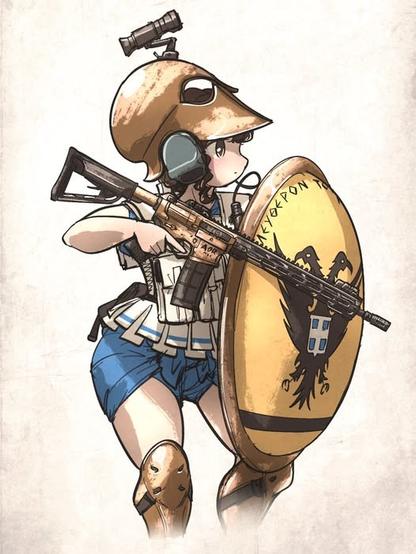
Warriors of Aphruleodite!
by Ironlily
(not NSFW marked because the nude figure is barbie anatomy, but if the mods want me to NSFW it I will)
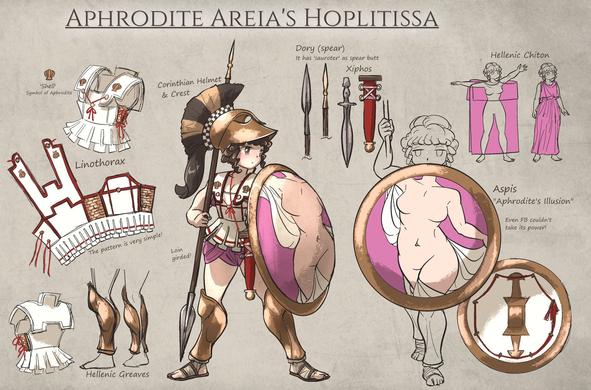
Warriors of Aphruleodite!
by Ironlily
(not NSFW marked because the nude figure is barbie anatomy, but if the mods want me to NSFW it I will)
Orange - The Nonstop Ibiza Experience
https://www.youtube.com/watch?v=1-c4KbPMdEY

Finfine! Mi finfine ricevis la atingon "Challenger" en la ludo Hoplite!
Estis tre malfacile: mi devis venki la ĉiutagan defion je la unua provo, tri tagojn sinsekve. Nur 1% de la ludantoj sukcesas fari tion! Mi tre amas ĉi tiun ludon, sed ĝi vere postulas lerton.
"I said Hop in!" This week we revisit the mobile game sphere of roguelike games with Hoplite: the quick-playing, brain-burning chess-lite puzzle tactics roguelike!
A blast from the past, this 2013 classic is simple on the surface but as deep as the 10,000+ puzzles it offers. Save the Golden Fleece before purple wizards get you!
https://grogpod.zone/2026-03-11-hoplite/
#Hoplite #roguelike #podcast #gaming #ios #android #mobilegame #androidgames #mobilegaming
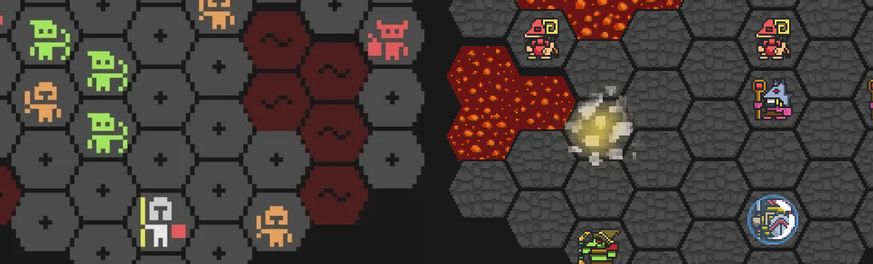
This Is Part Of! … the roguelike pantheon of short games! A beloved mobile game classic, we hop in to Hoplite this week: the Greek underworld dungeon crawling chess tactics inspired puzzle game of spear-chucking, shield-bashing, and hoppin! Featuring at seemingly simple 14-floor dungeon that can go on infinitely should...
Klein aber fein. Ein Spieletipp mit Suchtpotenzial.

Hoplite ist ein rundenbasiertes Strategiespiel mit Hauptaugenmerk auf taktisch klugen Bewegungen auf kleinen Karten. • Hoplite erfordert gründliches Nachdenken, bevor du handelst. Jeder Zug zählt! • Treffe strategische Entscheidungen zum Verbessern deiner Fähigkeiten. • Prozedural generierte Le…
Some Thoughts on “Classical Greek Tactics: A Cultural History”
Even the most overwhelming project can be completed if you take it one stone at a time! Photo of the Cyclopean walls of Mycenae by Sharon Mollerus, Wikimedia Commons, with a Creative Commons Attribution 2.0 Generic license.Konijnendijk, Roel (2017) Classical Greek Tactics: A Cultural History. Mnemosyne, Supplements History and Archaeology of Classical Antiquity, Band 409 (Brill: Leiden)
Since the 1990s, there has been intense debate about early Greek warfare. Most people agreed that there was something wrong with the versions available in English, but it took time to agree on just what that wrongness was and whether it could be fixed with a few small changes or was more fundamental. This book is another Cyclopean stone in the walls of the current consensus.
Konijnendijk argues that the California School of writers on Greek warfare (John Kinloch Anderson, William K. Pritchett, and Victor Davis Hanson) were basically refining the ideas of Austrian, German, and English scholars before the First World War. The continentals were interested in a comparative history of warfare with the practices of the Prussian army at the top, the Roman army in the middle, and early Greek armies near the bottom, while the English scholars tried to explain why Greek warfare as described by the Prussians was so peculiar. For a long time it seemed like these early writers had solved the problem so little was written on the subject in English. When a new group of scholars in Cold War California became interested in warfare, they launched a flood of research in English which almost erased the original German context of their theories. In short, the ‘orthodoxy’ is really a set of received ideas from 19th century Europe which survived until a group of ‘scientific historians’ began to question them.
Konijnendijk also lays out some of the strangest ideas about Greek warfare published before 1990. Anyone who has read Herodotus, Thucydides, and Xenophon can list story after story of Greeks chasing down their enemies, stabbing them in the back, burning them alive in sacred groves where they had taken refuge, and so on. Often they came back to find that on other parts of their field their allies had lost, or were startled by a counter-attack and routed themselves. Thucydides says that the Spartans did not like these reckless chases (Thuc. 5.73.4): a mob of excited, jostling, running Spartiates were just as vulnerable to a counter-attack as any other hoplites. Armies without enough light-armed troops or cavalry bitterly complained that when they won they could not hurt their enemy, but if they ever lost they would be wiped out (Xen. An. 3.1.2). But in many modern writers on ancient warfare we find something different:
Somehow the exception in the ancient sources became the norm in the moderns! I had forgotten about this because Peter Krentz debunked it in his great article “Fighting by the Rules: The Invention of the Hoplite Agôn” in 2002, and because its not one of the aspects of the California school which many people I know still believe, like many people still believe that hoplite gear was very heavy.
The book is very readable which is more than anyone can say about my German.
If I have one criticism it would be that this book is so tightly focused and text-centred that it excludes some things which could make its view even stronger. I have an article in press for a few years which argues that some of the brilliant scholars who refuted the California school unthinkingly reproduced its assumptions about what questions to ask and sources to rely on. Its one thing to ask whether hoplites fought in files two cubits wide or four cubits wide, another to ask whether we should look at Greek ethnic warfare or warfare in the Aegean region. (The article will appear has appeared in the proceedings of Melammu-Symposium 8).
The bibliography of about 380 items excludes some things, particularly works outside ‘academic’ classics and by presses that expect a book to sell thousands not hundreds of copies. This isn’t a monograph which addresses the archaeologists like Imma Killian-Dirlmeier, the writings of Peter Connolly, or the wargamers from the 1970s to the 2000s who looked at what academics had to offer in English, decided it was not helpful, and wrote their own books, some of them quite good. Looking at this wider context could have showed that the dominance of the text-focused Prussian school was not inevitable, and how these ideas spread before academics were writing books in English on them. But people writing a PhD in the UK are under strong pressure to complete it in three or four years, so they have to be ruthless about defining a research topic and not wasting time on anything else.
If you just want three books on early Greek warfare, I would still recommend Hans van Wees’ Greek Warfare: Myths and Realities, Josho Brouwers’ Henchmen of Ares, and Xenophon’s Anabasis. But if you want to read more widely, I would recommend this. I hope that the wider world interested in early Greek warfare learns to talk about the Prussian, English, and California schools, just like the world interested in Greek catapults knows about the 19th century Prussian and French scholars who built the first reconstructions.
If you can’t obtain the published version, the original dissertation is available as Konijnendijk, Roel (2015) Ideals and Pragmatism in Greek Military Thought, 490-338 BC. Doctoral thesis, University College London. http://discovery.ucl.ac.uk/1470175/ Scholars who want something to cite should check the printed version!
Don’t make me chase you down! Support this site with a donation on Patreon or paypal.me or even liberapay
Edit 2021-09-25: Converted to blocks, added link to published article from Melammu conferences.
Edit 2026-03-01: Cite Raaflaub
#ancient #bookReview #classicalGreek #hoplite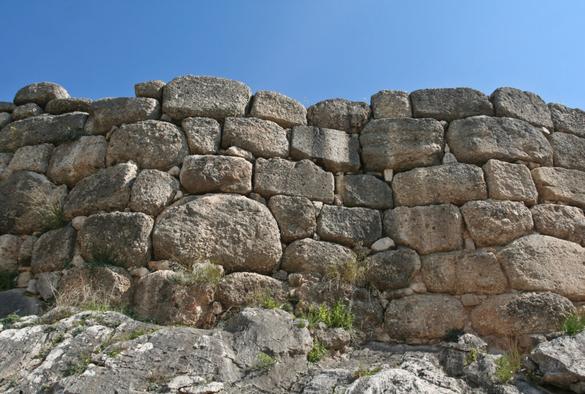
 U3dn
U3dn
 lapnect
 Leah
Leah Grogpod Roguelike Podcast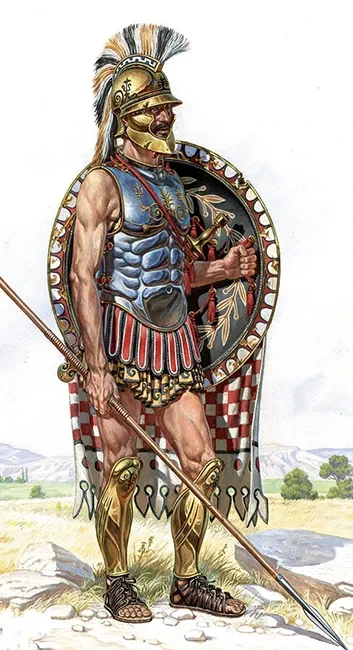
 ✨ OnBox ✨
 Sean
Sean