Lying in bed at 6:25 am reading #releasenotes for #HomeAssistant and #Haos…. Totally normal Saturday right?

➡️ #HomeAssistant Core v2026.6.4 und #HAOS v18.0 veröffnetlicht!

Mit Datum vom 19.06.2026 sind neue Updates für euer #SmartHome erschienen.
Bei HA Core werden zahlreiche Bugs gefixt, während bei HA OS u.a. eine Updatefunktion für #RPi Firmware beworben wird.

🔗 https://www.home-assistant.io/blog/2026/06/03/release-20266/#202664---june-19
🔗 https://github.com/home-assistant/operating-system/releases/tag/18.0


@homeassistantde

2026.6: Pick a card, any card

A friendlier card picker for dashboards, infrared devices that now also listen, live condition tests and target counts in the automation editor, Z-Wave smart lock credential management, a refreshed...

Home Assistant

Got some #Zigbee #Lightbulbs so that I can time #lights with my instance of #HomeAssistant. Previously, they were plugged in via a timer, which had to be adjusted every so often as the length of the day varies in length. Now the timing should follow time time of #Sunset automatically.

#FreeSoftware #HAOS #GNU #Linux #Automation

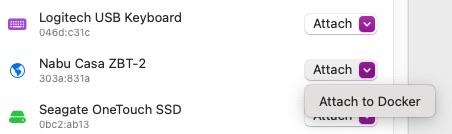
Meine aktuelle "Notlösung“ mit einem extra Raspberry Pi, der die #ZBT2 unter #HAOS (ganz ohne Mac und ohne Docker) betreibt und die Daten dann (hoffentlich irgendwann…) durchreicht ist mir nicht ganz unsympathisch, aber heute gab es ein Update für #OrbStack mit der neuen Funktion USB-Geräte direkt von MacOS an Docker Container durchzureichen. Da kommt man doch gleich wieder ins Grübeln…

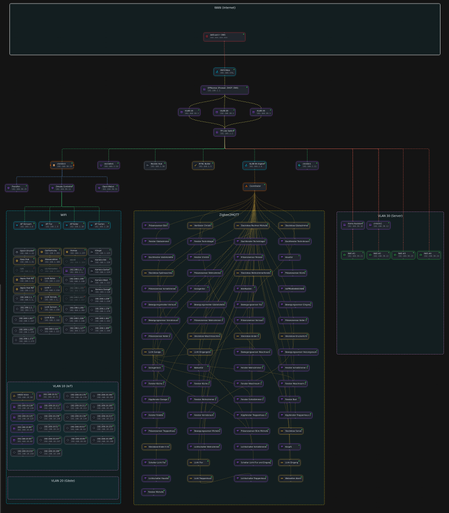
Hab mir mal die Mühe gemacht und über #Homelable mein lokales #LAN visualisiert. Und ja, die #IoT Geräte, die noch nicht im #VLAN 10 sind, werden noch nach und nach umgezogen. Wie zum Beispiel die ganzen Lampen, die Kameras, etc...

#homeassistant #haos #opnsense #proxmox #omada

Two free services which I used are #DuckDNS to give me a #URL and #LetsEncrypt to provide #SSLCertificates. I had to open up a #Port on my #Router for #PortForwarding and to make sure that the #HomeAssistantGreen is attached to a fixed IP address locally.

There are several online tutorials to perform this operation and I would advise anyone wishing to do so to look at them carefully before proceeding as a misstep can lead you to locking yourself out of your own hub.

#GNU #Linux #HAOS

So far my #HomeAssistant instance had been running on the local subnet, behind the #Router's #Firewall and so was inaccessible from outside my house’s network. However, I’ve now got it onto the #Internet. Of course, there are inherent risks and potential problems with this if malicious actors want to crack the system and so I made sure that it’s only accessible as an #Encrypted connection via #HTTPS rather than #HTTP.

#GNU #Linux #FreeSoftware #HAOS

Right… So, the #Proxmox is running nice. I have found a spare 2T hard drive (2,5”, 5400rpm, unfortunately), but it will have to do for now.

Now I need to plan on how to migrate #HomeAssistant to a #HAOS VM. I have tested backup import and most of my things were surprisingly there. I’m reluctantly thinking about moving the #Zigbee dongle, but… Not sure how it’s gonna go with #HomeKit integration. I have easy over 80 devices…🤡

I still need some kind of redundand storage…

#SmartHome #HomeIT

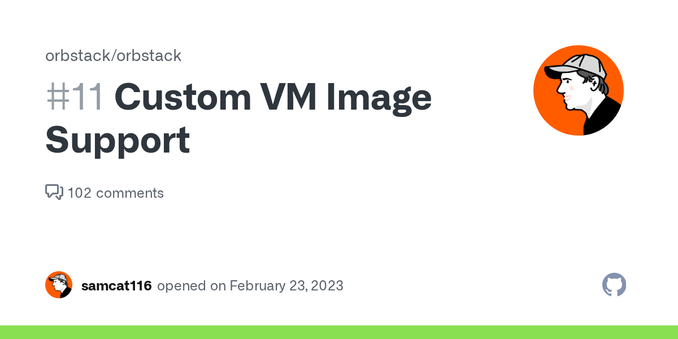
Ich wollte mir gerade #HAOS ansehen (die mittlerweile einzige offiziell unterstützte Art, Home Assistant zu installieren), aber leider unterstützt meine Virtualisierungslösung #OrbStack (über die auf dem Mac mini eigentlich alles läuft, und zwar so gut, daß ich dafür zahle) das nicht. Scheinbar erzielen die ihre echt gute Performance und Mac-Integration dadurch, daß sie keine „echten“ VM betreiben, sondern nur angepasste Linux-Distros mit integrierten Low-level-Treibern.

https://github.com/orbstack/orbstack/issues/11

Custom VM Image Support · Issue #11 · orbstack/orbstack

It would be great to be able to use custom images to launch VMs instead of the pre-populated list of distros there is now.

GitHub

Hace 2 o 3 años, mucha gente que usábamos Home Assistant recurríamos a Node-RED porque las automatizaciones nativas todavía estaban bastante limitadas. Y no paraban de decir que Node-RED era "demasiado complicado".

Ahora resulta que algunos abandonan un software comunitario y libre como #HAos para irse a algo privativo como Homey, donde ni siquiera eres dueño de tu propia casa, y encima usan una especie de Node-RED para las automatizaciones… pero aquí no hay queja ninguna, al contrario.