‘Resistance Has Adapted’: Qassem Says Project to End Hezbollah Collapsed

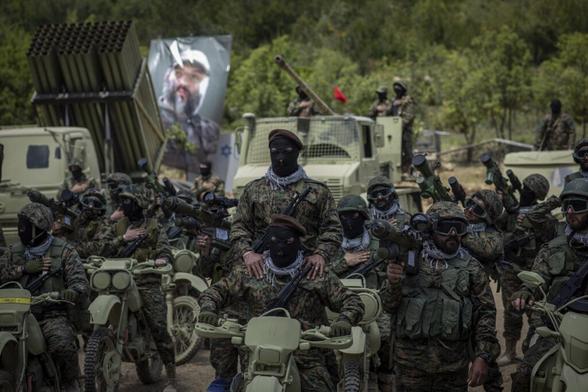
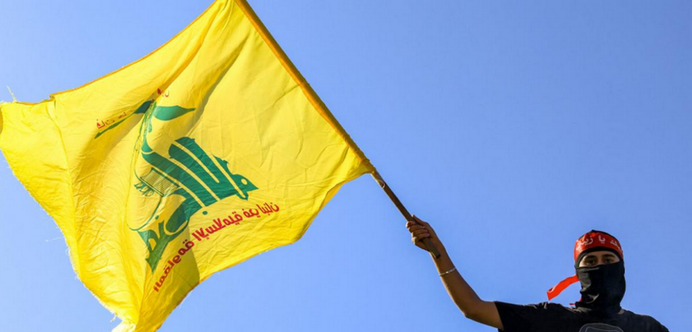
Hezbollah Secretary-General Sheikh Naim Qassem declared on Friday that the movement will not surrender despite ongoing zionist military pressure and regional efforts aimed at weakening the Resistance.

“The death the enemy threatens us with as a weapon is not something we dread,” Qassem said during a speech at the central Ashura council.

Emphasizing Hezbollah’s determination to continue confronting the zionist regime, he added that “according to our principles, victory is defined by prevailing steadfastness,” arguing that “losses, no matter how massive, are better than capitulation.”

“As long as we are capable of steadfastness, why should we surrender?” he asked.

‘Most Dangerous Phase’

Qassem described the current period as one of the most dangerous stages in Lebanon’s modern history.

“The campaign led against us today aims to end the Resistance and its people and to completely eliminate its existence from Lebanon,” he said.

According to Qassem, the zionsit regime and the United States sought to exploit regional developments following the fall of Syria to alter the balance of power and intensify pressure on Hezbollah.

He argued that the strategy relied not only on military aggression but also on political, economic and social pressure designed to isolate the Resistance.

Pressure Campaign against Hezbollah

Qassem accused Hezbollah’s opponents of attempting to cut off all channels through which the movement could maintain its capabilities.

“They wanted to close the aerial, maritime, and land crossings to prevent any access to weapons, technologies, and everything that could strengthen the Resistance,” he said.

He also stated that efforts were made to obstruct reconstruction in southern Lebanon and other affected areas in order to keep residents displaced and weaken public support for Hezbollah.

In addition, Qassem said opponents attempted to impose a financial siege and provoke internal Lebanese tensions.

“They tried to incite strife between the army and the Resistance,” he said, while also accusing some regional and international actors of encouraging sectarian divisions.

“America is the maestro that leads this scheme with all its details and in all directions,” he added.

Resistance Has Adapted

Addressing Hezbollah’s military posture, Qassem said the movement has modified its combat methods and developed new capabilities based on battlefield experience.

“Our strong goal and project is our right to defend and liberate the land,” he said.

The Hezbollah leader stated that the Resistance had developed new weapons systems and drone capabilities, describing them as the product of the fighters’ experience and innovation.

He argued that these developments have allowed Hezbollah to continue confronting Israeli military operations despite significant challenges.

‘Project to End Hezbollah Has Collapsed’

Qassem concluded by asserting that efforts to eliminate Hezbollah have failed. “The project to end Hezbollah and consolidate occupation has collapsed,” he said.

He vowed that the Resistance would continue confronting zionist forces and insisted that “the ‘Israelis’ will be forced out of every last inch of our land.”

The remarks come amid continued tensions in southern Lebanon, ongoing zionist military operations, and renewed debate over the future of the Resistance following the Iran-US memorandum of understanding and its provisions regarding Lebanon.

Source: Palestine Chronicle

https://abolitionmedia.noblogs.org/?p=34177 #guerrilla #hezbollah #palestine #ramadanWar #resistance #westAsia
¿Por qué 99 guerrilleros entregan sus armas en Colombia?

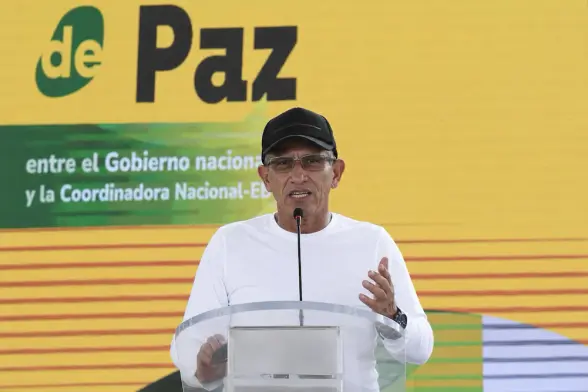
El desarme de 99 guerrilleros en Putumayo da aire a la paz total de Petro, aunque aún permanecen dudas judiciales, territoriales y políticas.

Don Porqué - El porqué detrás de cada noticia

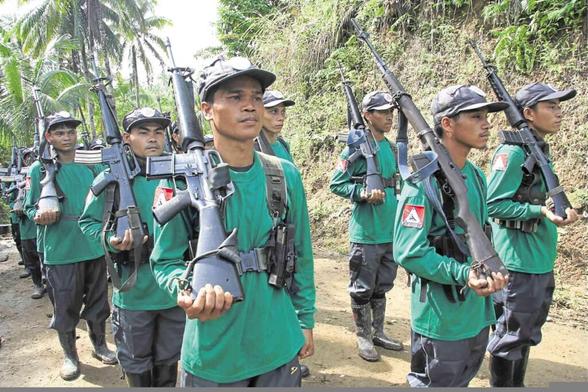
NPA Unit Kills 5 AFP Soldiers During Defensive Action In Northern Samar Province

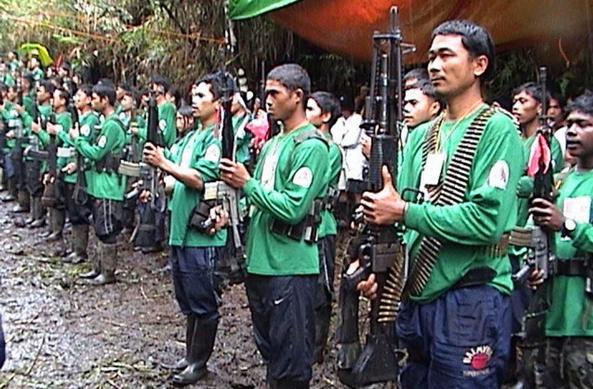
The New People’s Army (NPA)-Northern Samar (Rodante Urtal Command) launched an armed action against operating troops of the 20th IB in Barangay Catotoogan, Las Navas, Northern Samar Province on June 4 at 2:37 in the afternoon. The Red army fired first and actively mounted a defense against the operating soldiers.

Five 20th IB troopers were killed and many others were wounded. The 20th IB admitted only two wounded soldiers as its casualties. Community residents themselves reported the casualties among the soldiers, further confirmed by the continuous arrival of ambulances that night. The 20th IB also used a helicopter to retrieve its casualties.

Meanwhile, the Red army unit safely withdrew after five minutes of firing against the soldiers. “The 20th IB was greatly shaken by their failure,” NPA-Northern Samar spokesperson Ka Amado Pesante said.

He said the 20th IB laughably told residents that three platoons of the NPA attacked them, despite their earlier declarations that guerrilla fronts in the province had already been dismantled. “They themselves are telling the masses that NPA still abound,” Pesante said. The spokesperson added that the incident proves the people’s army’s effective guerrilla tactics and superior knowledge of the terrain.

NPA-Northern Samar also refuted the 20th IB’s claim that it recovered weapons from the Red army and that there were casualties on its side. It said this is a desperate move to cover up the soldiers’ defeat.

“The successful self-defense of the Rodante Urtal Command proves the NPA’s perseverance on the path of people’s war,” Pesante said. He added that the gunfire of the people’s army against fascist soldiers and the reactionary state they represent gives hope to the people.

Source : https://philippinerevolution.nu/angbayan/npa-northern-samar-actively-defends-against-the-20th-ib-5-soldiers-killed/

https://abolitionmedia.noblogs.org/?p=34101 #asia #guerrilla #ndfp #npa #philippines #resistance

NPA Unit Launches Harassment Operation Against AFP Soldiers In Negros Occidental Province

The 62nd IB soldiers were shaken at their detachment in Barangay Sikatuna, Isabela, Negros Occidental Province on June 12 when the New People’s Army (NPA)-Central Negros (Leonardo Panaligan Command) launched a harassment operation. Red fighters fired at the detachment around 7:50 p.m. while the encamped soldiers were resting.

One fascist soldier was killed and another was wounded in the armed action. The 62nd IB concealed this out of embarrassment, since the people’s army carried it out in the middle of intense military operations in Central Negros.

Soldiers encamped at the detachment committed heaping violations against residents’ human rights. Their crimes include harassment, physical abuse, and forcing peasants to surrender.

NPA-Central Negros spokesperson Ka JB Regalado said the armed action succeeded because of the full support of revolutionary organizations in the area.

“This shows the unity of the Red army with the Negrense people who remain chained to the exploitative system prevailing on the island,” NPA-Negros Island spokesperson said Ka Maoche Legislador. He added that the Red army will continue its efforts to break this chain by destroying the armed mercenary of greedy landlords and comprador bourgeoisie.

Source : https://philippinerevolution.nu/angbayan/new-peoples-army-fires-at-military-detachment-in-a-negros-occidental-barangay/

https://abolitionmedia.noblogs.org/?p=34105 #asia #guerrilla #maoist #ndfp #npa #resistance #socialism

Operation Against Marksist Teori Magazine Accused of Funding the MLKP: Türkiye

In Türkiye, Mehmet Acettin, co-founder of the ETHA news agency and human rights defender, has been detained again as part of an investigation targeting the Marksist Teori magazine. Editor Nadiye Gürbüz was also questioned, while arrest warrants have been issued for several of the publication’s managers. According to the Istanbul prosecutor’s office, the magazine has allegedly been used to finance the Marxist-Leninist Communist Party (MLKP). The targeted media outlets and organizations denounce the operation as a politically motivated attack and a new offensive against the opposition press and Marxist circles in Türkiye.

source: Secours Rouge

https://abolitionmedia.noblogs.org/?p=34097 #guerrilla #mlkp #repression #socialism #Türkiye #westAsia

Hezbollah Congratulates Iran on Memorandum, Emphasizes Lebanese Unity

Hezbollah congratulates the Islamic Republic of Iran, its leadership, and its people, on the great achievement of reaching a Memorandum of Understanding with the United States of America, which has led to a comprehensive ceasefire on all fronts, including Lebanon.

This great achievement is the fruit of the legendary steadfastness, exceptional resilience, and immense sacrifices made by the dear Iranian people and their wise leadership, who have adhered to the national choices that preserved their dignity, sovereignty, and independence.

On this momentous occasion, Hezbollah extends its greetings and appreciation to His Eminence the Supreme Leader of the Islamic Revolution, Imam Sayyed Mojtaba Khamenei (may God protect him), who has guided this phase with unparalleled wisdom, courage, and insight, to the President and government of Iran, and to the valiant armed forces of the Islamic Revolutionary Guard Corps, the Army, and the brotherly Iranian people.

Hezbollah expresses its profound gratitude for their unwavering support to Lebanon, its people, and its resistance, and for their insistence that Lebanon be present in any agreement leading to a cessation of hostilities and the preservation of its rights. For this, they have borne the heavy burdens of siege and aggression, thus reaffirming that the Islamic Republic is truly a strong and loyal ally and supporter.

Hezbollah also extends its greetings to all the countries that participated, contributed, assisted, and supported the efforts to remove obstacles in order to achieve this agreement. Hezbollah emphasizes that Lebanon must make the best use of this regional and international support to achieve Lebanese sovereignty and liberate its lands within the framework of national unity.

We extend our deepest respect and admiration to the honorable, dignified, and resilient people of the resistance, and to the displaced families, for their patience, endurance, and steadfastness. We salute their sacrifices and all they have offered in the face of this barbaric aggression. They have truly proven themselves to be a proud people, the most honorable of all, as described by the Master of the Martyrs of the Nation, His Eminence Sayyed Hassan Nasrallah.

We also salute the leadership of the resistance and its valiant, heroic fighters, the nation’s impregnable shield and strong bulwark, who sacrificed their pure blood and souls for the glory of their homeland and the dignity of their people. They waged heroic battles where the Israeli enemy witnessed some of their might and tasted the bitterness of defeat.

We affirm that what has been achieved is a prelude to completing the liberation of our land, the return of our prisoners to their homeland and families, the return of all residents, especially those in the frontline villages, to their homes, and the reconstruction of what the aggression has destroyed. We call upon our steadfast people to exercise patience and await instructions from the relevant authorities regarding their safe return to their villages and towns, for their own safety and to avoid any dangers that may arise from potential Israeli violations.

The Israeli enemy must understand that there will be no return to the pre-March 2ns status quo, and that the resistance, which has been and remains the vigilant guardian of the homeland and its people, will not accept any aggression that violates its sovereignty or sheds the blood of its people. The resistance will remain committed to Lebanon’s legitimate and unwavering right to defend its land, its people, and its sovereignty until a complete withdrawal is achieved and the prisoners are returned.’ 

‘Therefore, we emphasize that this stage requires the government and all Lebanese political forces to return to a unified national stance in order to achieve the goals upon which the Lebanese people agree, goals that embody Lebanon’s best interests and preserve its sovereignty, strength, and resilience in the face of Israeli ambitions.

It is wise to review all the calculations and paths taken by the authorities, to benefit from this experience and the experiences that preceded it in our homeland Lebanon, to move away from illusions and losing bets, and to acknowledge that a unified Lebanese position and reliance on true friends is the best way to preserve national interests.

https://abolitionmedia.noblogs.org/?p=34027 #guerrilla #hezbollah #iran #lebanon #palestine #ramadanWar #resistance #westAsia

Tracing the History of the Colombian ELN: An Interview with Comandante Nicolás Rodríguez Bautista (Part I)

June 6, 2026

Nicolás Rodríguez is one of the founders of the National Liberation Army (ELN) in Colombia. He was part of the group of 17 comrades who undertook the so-called “first march” in 1964 and participated in the guerrilla seizure of the town of Simacota, Santander—an action that introduced the ELN to the country and the world. He served as the leader responsible for military operations from 1984 until 1998, when Commander Manuel Pérez died; Rodríguez then assumed the role of political leader and First Commander of the organization, a responsibility he held until 2021, when the Central Command accepted his resignation.

Given his background and experience, in this interview we asked him about the organization’s history and the ELN’s military operations during its early years.

STARTING OUT AS A GUERRILLA FORCE

Aureliano: What were the military activities and experiences like in those early years?

Nicolás: Between 1964—the year of our inception—and 1969, our military activity was driven by the need to ensure our development while avoiding blows that could annihilate us. At that time, we faced two major challenges: establishing a foothold and making ourselves known. Consequently, it was essential to plan our military actions and guerrilla life in a way that guaranteed a high probability of success.

Operations during that period were also influenced by the aim and necessity of seizing weapons from the enemy; at the time, we possessed none, nor did we have the funds to purchase them. We carried out numerous small-scale actions with that specific objective in mind.

In those days, we lived in deep clandestinity, which meant that support from the rural population was limited. Whenever the enemy discovered our location, they would launch major operations against us, during which military forces exerted intense pressure and intimidation on the civilian population through killings, disappearances, and imprisonments. For safety reasons, we never stayed inside the houses; contact with the local farmers took place outside, in secret and with every precaution observed.

Despite this, we suffered some very severe blows during those years.

The most significant and momentous event was the death in combat of the priest Camilo Torres on February 15, 1966. He was the most important grassroots leader in Colombia; his loss was a tremendous blow to us and to the Colombian people.

That same year, the army wiped out one of our guerrilla units—resulting in the deaths of nine comrades—in San Gilito (in the municipality of Simacota, Santander). Among the fallen were Miguel Pimienta Cotes, a student leader from the Industrial University of Santander, and two other students from the same university.

On March 9, 1967, we carried out a military action against the “payroll train” on the Atlantic Railway line. Six police officers were killed in the operation, and we seized their weapons. The event garnered significant media attention thanks to an extensive report—featuring live footage—published by the Mexican magazine *Sucesos*, which covered both the incident and the ELN. This footage was captured by Mexican journalist Mario Renato Menéndez and his photographer, Armando Salgado.

The enemy’s response was swift; they launched a massive operation against us that forced us to withdraw from the Opón River area in Santander.

SOCIAL UNREST DURING THOSE YEARS

What was the social situation like during those years?

At that time, the country was experiencing a climate of intense social unrest—much like the rest of Latin America—characterized by a major surge in grassroots struggles. That atmosphere, combined with the revolutionary fervor sparked across the continent by the Cuban Revolution, greatly helped us absorb those blows and continue our development. It was the presidency of Carlos Lleras Restrepo (1966–1970); that government’s promise regarding agrarian reform had not been fulfilled, and the Asociación Nacional de Usuarios campesinos—initially promoted by the government itself—was beginning to radicalize and distance itself from the administration, while putting into practice the slogan “land for those who work it” through land occupations. Public universities were hotbeds of revolutionary activity, and workers were also mounting significant protest actions.

Amidst this upsurge in popular struggles, leftist forces maintained a significant presence, and sectors of the intelligentsia sympathized with revolutionary ideas. The influence of Camilo Torres was palpable within student organizations, where support for the revolution and for the guerrilla groups emerging at the time—the FARC, the EPL, and the ELN—was clearly visible. Guerrilla groups were forming across the continent, and a crisis of governability was evident in many Latin American countries.

AFTER THE INITIAL YEARS OF ESTABLISHMENT

From what I understand, after ’69, significant developments were achieved, especially in the military sphere.

The boundaries between the previous period and the new one are imprecise in time; they are changing situations that appear without much fanfare, imperceptible at the time. It is only with time that they become visible, when we reconstruct, periodize, and theorize about history.

After ’69, with greater establishment and growth achieved, development made us less vulnerable to a devastating blow.

From ’70 to ’74 (during the government of Misael Pastrana), we managed to expand into new areas: Northeast Antioquia (Amalfi, Yali, Vegachi, El Bagre), southern Bolívar (San Pablo, Simití, Santa Rosa, Morales, Río Viejo), across the Magdalena River, to the Northeast, through Sabana de Torres, Rionegro-Santander, with a new Front, the Camilo Torres.

During those years (1969-1973), we achieved a more sustained military presence through small-scale operations that provided us with experience; these were years of continuous growth.

In early 1972, the municipality of San Pablo, in the Department of Bolívar, was captured. Subsequently, the column led by Manuel and Antonio Vásquez, which was moving west of the Cauca River in search of a settlement, carried out several successful, almost simultaneous military actions that had national significance: the guerrilla takeovers of the villages of Otú, El Tigre, and Santa Isabel in Remedios (Antioquia).

In April of that year, an ambush was carried out against the Army, resulting in the deaths of 7 soldiers. On September 14, in another region, San Vicente de Chucuri (Santander), another column under the command of Commander Luis José Solano Sepúlveda carried out an ambush in which 4 soldiers were killed, including Captain Rogelio Correa. A major and three soldiers were also wounded.

On January 24, 1973, after an ambush against the army in the village of La Viscaina, Barrancabermeja, Luis José Solano died in a senseless accident. On April 9 of that same year, the column he commanded carried out an ambush in the village of Guayabito, Cimitarra, Santander, where 6 soldiers were killed and three more were wounded.

At that time, the ELN’s rural guerrilla force was divided into three columns: one operating in San Vicente (Santander), where Commander Luis J. Solano had recently been killed; another in southern Bolívar, led by Commander Fabio Vásquez; and the third in northeastern Antioquia, commanded by Commanders Manuel and Antonio Vásquez.

In late 1973 or early 1974, three prominent Medellín businessmen, Ángel Villa and the Mora de la Hoz brothers, were kidnapped. This represented a significant financial windfall, which until then had been scarce for us.

IN THE CITIES

What was the urban situation like during those years?

In 1972, most of the urban network, more than 150 comrades, were captured after Commander Fabio’s backpack was found near the “La Inanea” ravine in the Department of Bolívar, following a battle in June of that year. The backpack contained detailed records and information on the comrades who comprised the network.

THE COUNTRY AT THAT TIME

What was the country like during those years?

It was the government of Misael Pastrana Borrero (1970-1974), and the mass movement continued to grow. During those years, there were significant mobilizations of workers, including those of oil workers with the USO (Workers’ Union), as well as student mobilizations. There was also a major surge in land occupations by the peasant movement, organized through the Asociación Nacional de Usuarios Campesinos (ANUC), under the slogan “land for those who work it.”

In the Latin American context, the struggle of the people also continued to grow, and various guerrilla groups persisted and emerged across the continent, including those in the Southern Cone and Central America. We remember the Tupamaros, the PRT-ERP, the Montoneros, and others.

THE CRISIS. THE YEAR OF MOURNING

Then came what has been called the crisis. What does that mean?

1973-74 were years of mourning for us. On January 24, 1973, Commander Luis José Solano Sepúlveda, a comrade among the most prominent figures in the early days of the ELN, died in an accident involving explosives. He was a man of conviction, with guerrilla experience and military capabilities. He came from the Liberal guerrillas of Rangel in Santander, which were formed in the 1950s after the assassination of Gaitán.

We had already suffered a major blow because at the end of 1972, a large number of our urban comrades were arrested when Commander Fabio’s backpack fell into enemy hands during a losing battle in the Inanea ravine of Santa Rosa del Sur in Bolívar state. There, the enemy found a notebook containing information about the urban structures.

In September 1973, the enemy launched its largest encirclement of the ELN, “Operation Anorí,” during which the column of Commanders Manuel and Antonio Vásquez, comprised of approximately 100 guerrillas, was annihilated. Manuel and Antonio fell in combat on October 18 of that year.

In November, after deserting, Ricardo Lara Parada, who had been second-in-command of the ELN, was arrested by the Army.

At the beginning of 1974, as part of the same Operation Anorí, Isidro fell in the Middle Magdalena region. He was the commander of a guerrilla column and had become a rural guerrilla in 1965 after training in communications in Cuba. He was a young man from a working-class background in Bogotá.

Likewise, on February 20 of that same year, 1974, we suffered a very hard blow when Father Domingo Laín died in combat in El Bagre (Antioquia). In the middle of that same year, Jaime Andrade Sosa, a prominent guerrilla fighter, member of the urban leadership, and student leader at the UIS (Industrial University of Santander), was killed.

In July, at the so-called Anacoreto Ravine Assembly in northeastern Antioquia, under the command of Commander Fabio, three comrades from the urban network, known as Los Bertulfos, were executed.

At the end of that year, Commander Fabio Vásquez left for Cuba in poor health.

THE ONGOING CRISIS

All of the above foreshadows and reveals what is known within the organization as the years of crisis. What was this crisis like?

These events I have mentioned, and others, expressed a situation of crisis, but among us there was no awareness of its true origins, and it was attributed to personal failings or errors.

Recognizing that these problems were political deviations or errors in ideological and political conception was the process of the crisis, and acknowledging and accepting it was what we defined as the crisis and its overcoming.

The situation couldn’t have been more complicated. The crisis emerged and erupted with full force, and the ELN at that time had no leadership, because by then the command was held by a single individual, and Commander Fabio was in Cuba with serious health problems.

When he left for Cuba, he put me in charge of coordinating the Organization’s activities and sending him detailed reports so that he could formulate the guidelines, and that’s what we did.

In 1975, an internal political upheaval shook us all.

A group of nearly 20 comrades, from urban backgrounds and recently joining the rural guerrilla movement, argued that the ELN required such a profound restructuring that it was necessary to dismantle the rural guerrilla movement in the countryside, integrate its members into mass mobilization, and launch a major political movement that, through its development, would give rise to new guerrilla structures in both urban and rural areas, rooted in the masses.

Since this proposal did not reflect the majority sentiment within the ELN, the comrades left the countryside and returned to the city, where their internal debates led to their fragmentation without achieving a cohesive revolutionary project.

Between their presenting their positions and their return to the city, there was almost a year of intense political discussions, engaging and heated debates that brought together tensions with identities and differences, which I would summarize as follows:

New proposals highlighting identities and differences:

1- It is essential to replace our status as an army and, therefore, the vertical and single-person leadership.

Accordingly, we must define our character as a political organization and elect a collective leadership through a democratic process. Until this is achieved, the current leadership is dissolved and suspended.

Consequently, any decision will be made by majority vote in a permanent assembly, which we will maintain from this moment forward.

This approach was shared by all, indicating that this was the direction we should take, but it was a process that required collaboration with our comrades in both the rural and urban guerrilla movements, because for only one faction to assume this responsibility was premature and arbitrary.

While several comrades from the Reassessment group agreed that the solution should be a process, others were adamant that everything should happen at once, and having everyone within a single structure created internal tension.

In the ongoing discussions, the distinction between the Official Sector and the Reassessment Sector was adopted to formally record our identities and differences.

2- We are outside and disconnected from the mass movement. It is necessary to connect with this movement, and this requires disbanding the guerrilla groups and integrating them into the movement.

While agreeing with the above, the official sector believes that, as with everything before, this was a process, and they did not support disbanding the rural structures. Instead, they believed that the urban structures should be integrated into the urban mass movement, and that the rural guerrilla groups should be required to carry out mass mobilization work in the areas where they operate.

3- The Reassertion faction believes that Fabio Vásquez should be expelled from the ELN because he has caused serious harm to the ELN’s internal affairs by committing crimes that must be punished.

The official faction believes that Fabio should be informed of the internal discussions and that, until an ELN assembly defines his situation, we cannot take the measures proposed by the Reassertion faction.

As time passed, tensions increased, and the internal dynamics became more difficult because the more radical members of the Reassertion faction implemented practices of permanent assembly and disregarded directives, including those related to guard duty, schedules, and other daily operations. Even though not all members of the Reassertion faction were involved, the situation heightened tensions and negatively impacted the overall atmosphere.

To worsen the situation, an enemy operation began to penetrate the area where we were located.

I met with the three highest-ranking and most authoritative members of the Reassessment group and explained to them that the enemy’s actions, combined with the internal situation, presented a very delicate reality given the imminence of combat.

We agreed that the best course of action was for the Reassessment members to return to the city, with the aim of continuing discussions with the Organization.

Fortunately, they all left for the city without incident.

Unfortunately, soon, amidst their debates and contradictions, the Reassessment group as a structure dispersed.

Two of their members, a general commander and a mid-level commander, later joined the ELN.

The debates initiated with the Reassessment group continued within the Organization, and virtually all of the fundamental points later became cornerstones of our development.

To be continued…

Nicolás Rodríguez Bautista

By Aureliano Carbonell

Source: https://vocesenlucha.com/historia-del-eln-comandante-nicolas-i/

https://abolitionmedia.noblogs.org/?p=33931 #colombia #eln #guerrilla #history #southAmerica

NPA Unit Carries Out Punishment Against PNP Intelligence Asset In Negros Occidental Provinc

A Philippine National Police (PNP) intelligence asset was killed in an armed action by the New People’s Army (NPA)-Northern Negros (Roselyn Jean Pelle Command) on the evening of June 5. The NPA meted the death penalty in accordance with an order of the people’s court against Momarlito Alingasa in Sitio Pison, Barangay Minautok, Calatrava, Negros Occidental Province.

According to the people’s army, Alingasa fired at Red fighters who carried out the armed action. Illegal drugs, money, a .45 pistol, and a magazine was confiscated from his possession. An ID proving his membership with the PNP Force Multipliers’ Community Information Service Support Group was also recovered.

NPA-Northern Negros spokesperson Ka Cecil Estrella said Alingasa committed various crimes against the Negrosanon masses and the revolutionary movement. She said the people’s court found him to be an active intelligence asset, guilty of cases of murder, harassment of residents, carabao killing, rape, and selling of illegal drugs.

His notorious cases include the killing of a peasant in Sitio Vergara, Barangay Bug-ang, Toboso on orders of landlord Baby Lumayno; harassment of residents in Barangay Marcello; massacre of the masses’ carabaos in Sitio Minauyahan, Barangay Minautok; and the killing of an activist leader known as “Bador” from Sitio Makatagak in Minautok. Estrella added that the drugs confiscated from Alingasa prove that soldiers and police are “complicit in the sale and spread of illegal drugs.”

In an interview with local media, Calatrava Municipal Police Station chief Police Captain Jesus Alba identified Alingasa as an “active supporter” of the National Task Force-ELCAC. Alba also claimed that Alingasa was on the local police “drug watch list” and a “target of police operations” in an attempt to erase their connection to him.

Alba also admitted that they were only able to enter Barangay Minautok long after the NPA-Northern Negros armed action because they feared being hit by the army. They reportedly sought assistance and escort from the Negros Occidental Provincial Mobile Force Company to enter the area.

“The NPA will not stop delivering justice to the victims of the butchers of the ruling exploiting class, the reactionary government, and the mercenary AFP and PNP,” Estrella concluded.

Source : https://philippinerevolution.nu/angbayan/npa-metes-out-punishment-against-pnp-intelligence-asset-in-negros-occidental/

https://abolitionmedia.noblogs.org/?p=33870 #asia #guerrilla #ndfp #npa #philippines

Armed Action By NPA Unit In Negros Occidental Province Kills 1 AFP Soldier


A New People’s Army (NPA)-Northern Negros (Roselyn Jean Pelle Command) armed action killed a 79th IB soldier operating in Sitio Cagayon I, Barangay Tamlang, Escalante City, Negros Occidental Province on June 1. The people’s army unit swiftly launched active defense against troops approaching their encampment.

The unit reported that aside from one confirmed dead in the 79th IB, others also sustained injures. Meanwhile, Red fighters safely maneuvered despite the enemy troops’ intensive deployment in the area.

“The valiant perseverance of the Red army is a slap to the repeated declarations of the reactionary state and its armed machinery that no more guerrilla front exist in the area,” NPA-Northern Negros spokesperson Ka Cecil Estrella said.

The soldier killed was identified as PFC John Rey Brasil. He was an active member of the military-formed youth group “Youth for Peace Movement Northern Negros Chapter.” He led the group’s summits and forums as part of the campaign to suppress the youth.

After the clash, the 79th IB intensified combat operations and militarization in the barangay. They forcibly evacuated 150 families or 554 individuals who temporarily stayed at Tamlang Elementary School for one day.

Meanwhile, Estrella refuted the claim of the military and police that the individual named Janjan arrested on the afternoon of June 1 was a Red fighter. He was reportedly apprehended at a joint police and military checkpoint in Barangay Mabini, Escalante City. Allegedly seized from him were a .45 pistol, explosives, and drugs.

“It is not surprising that the 79th IB and the police fabricate these claims out of desperation to smear the true soldiers of the people,” Estrella said. However, she said, the Negrosanon masses do not believe this, especially since they know their Red army’s character.

Source : https://philippinerevolution.nu/angbayan/npa-northern-negros-armed-action-kills-79th-ib-soldier/

https://abolitionmedia.noblogs.org/?p=33611 #asia #guerrilla #ndfp #npa #philippines #resistance

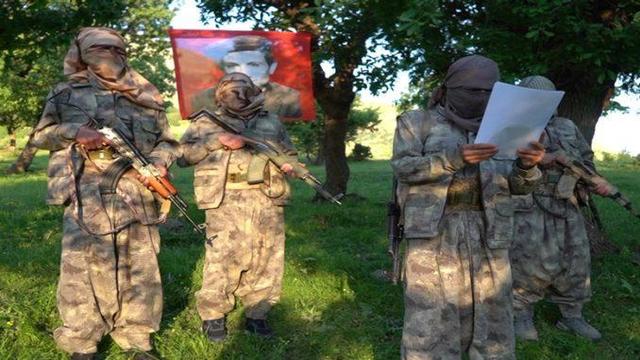
History is Calling us: Let’s Follow Kaypakkaya’s Path! — TKP-ML/MKP

With rifles in hand, they traversed the rugged mountain trails with great boldness and conviction, fully aware that they were fundamentally shaking the course of history. As the leader representing the communist face of the 1971 armed revolutionary breakaway, İbrahim Kaypakkaya, through the theses he put forward, both captured a fundamental break and shattered all the untouchables of the fascist dictatorship; he also tore through the fifty-year-old veil of reformist capitulation with a knife and cast it into the dustbin of history.

Comrade Ibrahim Kaypakkaya, the indomitable bastion of theory and practice, of word and deed, personally led the way in walking the path of his own claims. In accordance with the historical role of the struggle, he was the first to take up arms and set out on the path through the mountains. By exposing the reformist, liquidationist essence of the struggle—which was being confined to magazine offices and conference halls—he resolutely demonstrated that liberation lies in the arming of the workers and peasants, and that the task of the class vanguard is to open the path to the class’s arming. Comrade Leader İbrahim Kaypakkaya proved that he was the communist intellectual of the working class by turning his words into action.

History, within its own cycle, has vindicated Comrade Leader; before long, workers and peasants flocked to the revolutionary struggle in droves. This was what could not be seen in the pitch-black darkness of March 12, and Comrade Leader İbrahim Kaypakkaya has slammed this reality in the face of every form of liquidationism.

Today, however, the historical cycle has created a new dilemma. Either a free world will be created through the power of necessity to create the new; or, swept into the vortex of reformism, pacifism, and every current that rejects the revolutionary option, we will become mere pillars of this decaying, obsolete order of the past. This is precisely the dilemma being imposed on the international communist movement and the international proletariat today.

The pillars of the imperialist capitalist system have eroded. The imperialist capitalist system is floundering in a crisis vortex. The widening and deepening of the rift between imperialist blocs has intensified the struggle for dominance over market areas and trade routes. Shrinking markets and losses of hegemony are pushing the imperialist bloc led by the U.S. and Britain into a more aggressive and belligerent stance against China and Russia.

At this stage, the doors to a new imperialist war of partition are being forced wide open. Conflicts and wars have become widespread, particularly in the Middle East and Africa, in line with imperialist competition.

Precisely for this reason, a comprehensive campaign of liquidation has been launched against the communist and resistance movements engaged in armed struggle, aimed at preventing the oppressed peoples of the world from turning to the revolutionary option in the face of this crisis. The concept of annihilation and destruction has been put into action through various means.

The rulers of the imperialist capitalist system have launched comprehensive military operations to physically annihilate the international communist and revolutionary movement; where they have failed, they are attempting to achieve this from within by imposing a line of surrender and betrayal. This is the role played by the traitors who emerged from within the CPI(M). These traitors serve as tools of the imperialist capitalists’ concept of liquidation and annihilation.

In our country as well, the masses are searching for answers in the face of the poverty and misery they endure. The Turkish ruling classes are waging an intense offensive to keep the spontaneously developing mass movement within the bounds of the system. They have deployed every means to keep the masses’ reactions and anger within legal limits, attempting to suppress them through repression and violence. In line with their imperialist masters, while on one hand conducting military operations against the armed struggle front and ideologically propagating that “the era of arms has ended,” on the other hand, they are striving to narrow the actual legitimate arenas of struggle as much as possible.

And of course, reformists and other currents that reject the revolutionary struggle are coming to the aid of the Turkish ruling class. The fact that the Turkish Revolutionary Movement has been pushed back to the legal boundaries has left it facing a serious ideological siege.

Today, the masses’ need for a vanguard to clear the path is greater than ever. The illegal armed struggle front is the breakwater against the wave of liquidationism. Today, no line of struggle that does not strategically address the armed struggle can break through fascism and imperialist encirclement, nor can it mobilize the masses to fight against imperialist encirclement. If the masses are not organized around revolutionary violence, their descent into reactionary nationalist sentiments, chauvinism, and the poisonous circle of patriarchy will be inevitable. In this sense, while organizing the working class and the broad masses against the oppression of the AKP-MHP regime is one aspect of the task, the other aspect is the revolutionary duty of the moment: to keep the advanced masses vigilant against the reformist, revisionist, and pacifist currents clustered around the CHP. We can only advance the path opened by our Leader Comrade on this basis and prove worthy of the legacy he left us. To this end, the development of a united revolutionary struggle stands before us as an imperative task.

The path that our Leader Comrade İbrahim Kaypakkaya did not hesitate to walk remains relevant today. This is the only true path that will lead the working class and the oppressed laborers to liberation. It is within our power to embark on this path and break free from routines and entrenched habits. Marching forward and advancing through struggle is the tradition of our struggle. This tradition is the sole legacy left to us by our leader comrade.

We will not hesitate for a single moment to march forward through struggle on the path opened by our leader comrade; we will advance along the path he opened. This is the call of our leader comrade that reaches us today.

Long live Marxism-Leninism-Maoism!

Long live Proletarian Internationalism!

Heed Kaypakkaya’s call, and advance along the path he has opened!

Maoist Communist Party

Communist Party of Turkey – Marxist Leninist

May 2026

source: TKP-ML

https://abolitionmedia.noblogs.org/?p=33607 #guerrilla #iraq #maoism #mkp #resistance #rojava #socialism #syria #tikko #tkpMl #turkey #westAsia