 LeidenForce
If experiments can run, adjust and optimize themselves, what remains of the researcher’s craft?
Designing questions… or designing the systems that decide which questions matter?
If experiments can run, adjust and optimize themselves, what remains of the researcher’s craft?
Designing questions… or designing the systems that decide which questions matter?
🤖#AI as a #muse🎨for #science🔬? A lecture by #MarioKrenn on #creativity, #physics, and the #future of #research
#ArtificialIntelligence could not only perform calculations and analyses, but also become a kind of “muse” itself—that is, inspire new scientific #ideas and #experiments.
https://philosophies.de/index.php/2026/05/13/ki-als-muse-der-physik/
#UniversityofMünster #QuantumPhysics #Philosophy #MachineLearning #AI #Physics #UniversityofMünster #CDSC #Epistemology #FutureOfScience
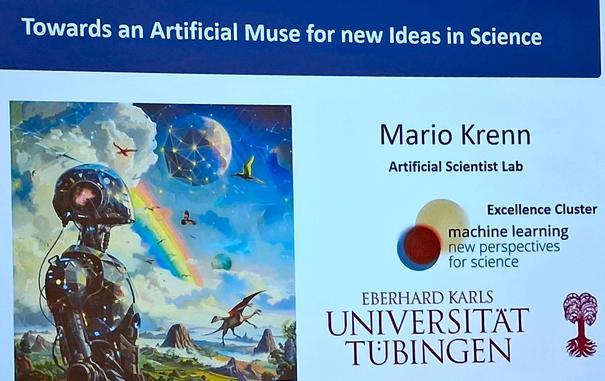
🤖#KI als #Muse🎨der #Wissenschaft🔬? Vortrag von #MarioKrenn über #Kreativität, #Physik und die #Zukunft der #Forschung
#KünstlicheIntelligenz könnte nicht nur rechnen und analysieren, sondern selbst zu einer Art „Muse“ werden – also neue wissenschaftliche #Ideen und #Experimente inspirieren.
https://philosophies.de/index.php/2026/05/13/ki-als-muse-der-physik/
#UniversitätMünster #Quantenphysik #Philosophie #MachineLearning #AI #Physik #UniversitätMünster #CDSC #Erkenntnistheorie #FutureOfScience #ArtificialIntelligence
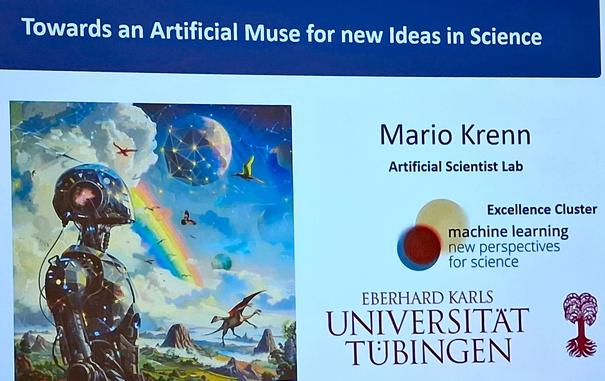
🤖#AI as a #muse🎨for #science🔬? A lecture by #MarioKrenn on #creativity, #physics, and the #future of #research
#ArtificialIntelligence could not only perform calculations and analyses, but also become a kind of “muse” itself—that is, inspire new scientific #ideas and #experiments.
https://philosophies.de/index.php/2026/05/13/ki-als-muse-der-physik/
#UniversityofMünster #QuantumPhysics #Philosophy #MachineLearning #AI #Physics #UniversityofMünster #CDSC #Epistemology #FutureOfScience

🤖#KI als #Muse🎨der #Wissenschaft🔬? Vortrag von #MarioKrenn über #Kreativität, #Physik und die #Zukunft der #Forschung
#KünstlicheIntelligenz könnte nicht nur rechnen und analysieren, sondern selbst zu einer Art „Muse“ werden – also neue wissenschaftliche #Ideen und #Experimente inspirieren.
https://philosophies.de/index.php/2026/05/13/ki-als-muse-der-physik/
#UniversitätMünster #Quantenphysik #Philosophie #MachineLearning #AI #Physik #UniversitätMünster #CDSC #Erkenntnistheorie #FutureOfScience #ArtificialIntelligence
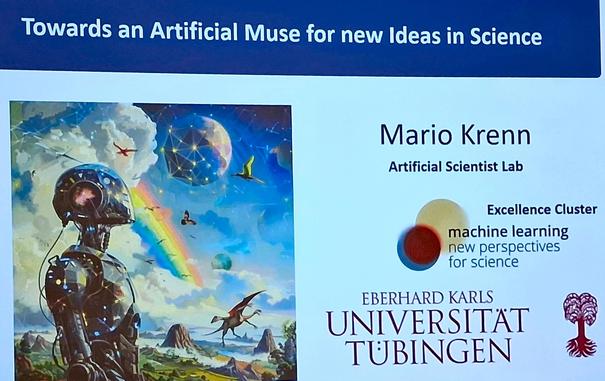
🤖#AI as a #muse🎨for #science🔬? A lecture by #MarioKrenn on #creativity, #physics, and the #future of #research
#ArtificialIntelligence could not only perform calculations and analyses, but also become a kind of “muse” itself—that is, inspire new scientific #ideas and #experiments.
https://philosophies.de/index.php/2026/05/13/ki-als-muse-der-physik/
#UniversityofMünster #QuantumPhysics #Philosophy #MachineLearning #AI #Physics #UniversityofMünster #CDSC #Epistemology #FutureOfScience

🤖#KI als #Muse🎨der #Wissenschaft🔬? Vortrag von #MarioKrenn über #Kreativität, #Physik und die #Zukunft der #Forschung
#KünstlicheIntelligenz könnte nicht nur rechnen und analysieren, sondern selbst zu einer Art „Muse“ werden – also neue wissenschaftliche #Ideen und #Experimente inspirieren.
https://philosophies.de/index.php/2026/05/13/ki-als-muse-der-physik/
#UniversitätMünster #Quantenphysik #Philosophie #MachineLearning #AI #Physik #UniversitätMünster #CDSC #Erkenntnistheorie #FutureOfScience #ArtificialIntelligence

🤖#AI as a #muse🎨for #science🔬? A lecture by #MarioKrenn on #creativity, #physics, and the #future of #research
#ArtificialIntelligence could not only perform calculations and analyses, but also become a kind of “muse” itself—that is, inspire new scientific #ideas and #experiments.
https://philosophies.de/index.php/2026/05/13/ki-als-muse-der-physik/
#UniversityofMünster #QuantumPhysics #Philosophy #MachineLearning #AI #Physics #UniversityofMünster #CDSC #Epistemology #FutureOfScience

🤖#KI als #Muse🎨der #Wissenschaft🔬? Vortrag von #MarioKrenn über #Kreativität, #Physik und die #Zukunft der #Forschung
#KünstlicheIntelligenz könnte nicht nur rechnen und analysieren, sondern selbst zu einer Art „Muse“ werden – also neue wissenschaftliche #Ideen und #Experimente inspirieren.
https://philosophies.de/index.php/2026/05/13/ki-als-muse-der-physik/
#UniversitätMünster #Quantenphysik #Philosophie #MachineLearning #AI #Physik #UniversitätMünster #CDSC #Erkenntnistheorie #FutureOfScience #ArtificialIntelligence

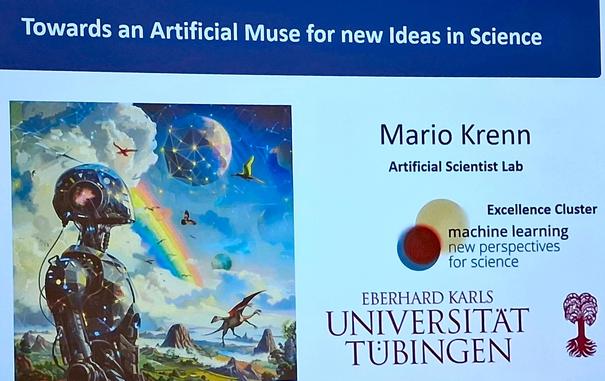
🤖#AI as a #muse🎨for #science🔬? A lecture by #MarioKrenn on #creativity, #physics, and the #future of #research
#ArtificialIntelligence could not only perform calculations and analyses, but also become a kind of “muse” itself—that is, inspire new scientific #ideas and #experiments.
https://philosophies.de/index.php/2026/05/13/ki-als-muse-der-physik/
#UniversityofMünster #QuantumPhysics #Philosophy #MachineLearning #AI #Physics #UniversityofMünster #CDSC #Epistemology #FutureOfScience

 Philo Sophies
 Philo Sophies
 Philo Sophies
 Philo Sophies
 Philo Sophies