https://atlas.whatip.xyz/post.php?slug=vehicle-arrivals-science-experiments-and-maintenance-keep-expedition-74-busy-through-april
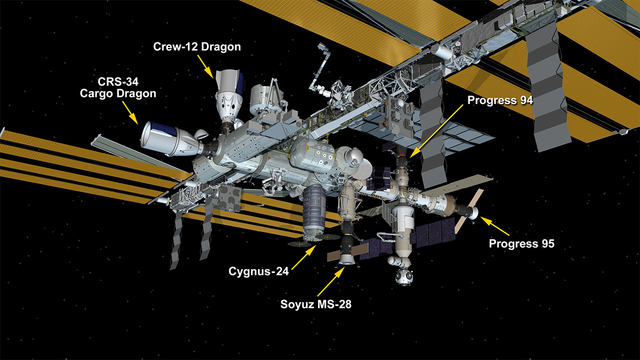
<p>Recent weeks aboard the International Space Station have been busy
#experiments #maintenance #expedition #arrivals

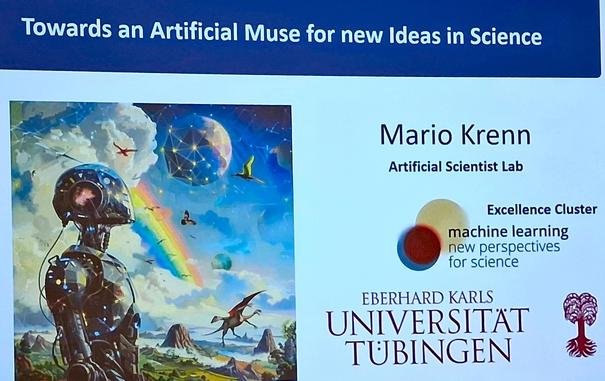
🤖#AI as a #muse🎨for #science🔬? A lecture by #MarioKrenn on #creativity, #physics, and the #future of #research
#ArtificialIntelligence could not only perform calculations and analyses, but also become a kind of “muse” itself—that is, inspire new scientific #ideas and #experiments.
https://philosophies.de/index.php/2026/05/13/ki-als-muse-der-physik/
#UniversityofMünster #QuantumPhysics #Philosophy #MachineLearning #AI #Physics #UniversityofMünster #CDSC #Epistemology #FutureOfScience
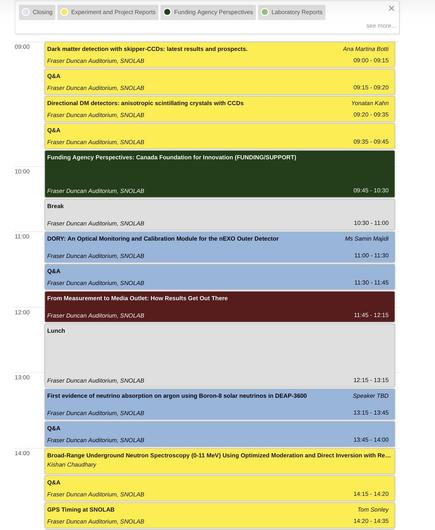
I am very excited for next week’s biennial “User Meeting” at @snolabscience.bsky.social . “Users” are non-staff who utilize laboratory facilities, including building and running whole experiments. #SNOLAB has over 1000 users involved in two dozen projects.
We will use the meeting to spotlight early career researchers, share new #measurements, and review the status of #experiments We’ll engage with lab leadership and collect needs and challenges.
All the Fancy Measuring Devices Used in Science Rely on Two Stone-Age Techniques
Soooo I might have found another missing piece to my health puzzle…
I was watching a Tawny Platis video and I heard her talk about how she had started on H1 and H2 blockers after thoroughly researching MCAS. Well, it turns out I’ve been taking an H1 blocker (loratidine) for over a year for suspected MCAS and related issues, but I didn’t think to take an H2 blocker, although that’s kind of genius. So Emerson will likely pick me up an H2 blocker once he gets paid. I will keep y’all posted.
-Allēna
#experiments #MCASSuspected #medicaldiaryRobert E. Cornish and His Experimental Resuscitation Research in the 1930s
📰 Original title: In the 1930s, Robert E. Cornish Constructed a Bizarre Tilting Table to Reverse Death
🤖 IA: It's clickbait ⚠️
👥 Users: It's clickbait ⚠️
View full AI summary: https://en.killbait.com/robert-e-cornish-and-his-experimental-resuscitation-research-in-the-1930s.html?utm_source=mastodon_world&utm_medium=social&utm_campaign=killbait.mastodon_world

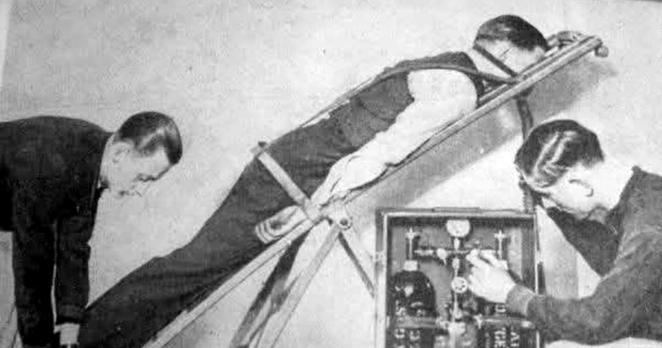
Robert Edwin Cornish, born in 1903 in California, was a prodigious scientist who, by the early 1930s, became fascinated with reversing clinical death. He believed that if circulation and oxygenation were restored quickly, death might be reversible. Cornish developed a unique method involving a large see-saw-like tilting table to artificially circulate blood in bodies whose hearts had stopped. Subjects were strapped to the table, which was rocked back and forth, while he injected stimulants such as epinephrine, anticoagulants, and oxygenated saline. Cornish initially attempted human resuscitation but later focused on dogs, claiming to revive multiple animals, though often with severe neurological impairments. His experiments drew both sensational media coverage and public criticism over animal treatment, eventually forcing him out of university labs. He appeared in the 1935 film 'Life Returns,' portraying his work. Later, he sought to experiment on a freshly executed human, which was denied. By the late 1950s, Cornish largely retired from mainstream research, living quietly in California until his death in 1963. While his techniques were crude and ethically controversial, Cornish’s work reflected early scientific curiosity about life, death, and resuscitation, predating modern methods like CPR, defibrillators, and ECMO. His story remains a striking example of ambition, scientific curiosity, and the ethical boundaries of experimentation.