 David Tuller
My Request for Correction of Causal Claim for Functional Neurological Symptoms
By David Tuller, DrPH This morning I sent the following letter to CNS Spectrums, a neuroscience journal published by Cambridge University Press. Subject line: “Correction needed for etiological statement in ‘Functional neurological symptoms occur commonly in healthy adults: implications for the pathophysiology of FND.'” Depending on the response, or lack of one, I might also formally submit the letter for publication. ********** Dear Editor— In the introduction of a recent paper in CNS Spectrums, “Functional neurological symptoms occur commonly in healthy adults: implications for the pathophysiology of FND,” the authors write that “functional symptoms are neurological symptoms which are generated by abnormal brain processing.” (FND refers to “functional neurological disorder.”) However, this description represents the authors’ theory about what is causing such symptoms. It is not a proven fact, and should not be disseminated as if it were. In reality, the authors do not know what causes functional neurological symptoms or FND and are offering their best guess. But the statement conveys a level of certainty that cannot be justified based on the existing state of evidence. It would be different if the authors provided data to support this categorical claim, but they do not. Nor does the article cited by the authors—a 2022 paper in Lancet Neurology, “Functional Neurological Disorder: New Phenotypes, Common Mechanisms.” That paper, at least, framed the issue in a more cautious and appropriate manner by referring to the “current understanding” of the factors that many investigators believe are causing these complex conditions. It is harmful to the scientific process when authors present their theories as documented and indisputable facts. The definitive assertion about the cause of functional neurological symptoms should therefore be corrected. (I have cc’d the corresponding author and the editors-in-chief.) Thank you for your consideration of this matter. Best–David David Tuller, DrPH Senior Fellow in Public Health and …So FND Is Not Only a Brain “Software” Issue After All…
*Kim H, a FND patient with whom I have frequently exchanged views, has left a comment below. I urge others to read it. I disagree with her interpretation, but I certainly think she has a right to express her perspective. However, I stand by my post. ********** By David Tuller, DrPH For years*, experts in functional neurological disorder (FND) have categorically asserted that the condition is strictly a “brain network” disorder, representing an issue solely with the brain’s so-called “software,” or functioning, rather than its “hardware,” or structural elements. According to this framework, structural elements of the brain, or other organic or pathophysiological processes, played no role in causing the condition. [*I initially wrote “decades” and have corrected it.] The well-known FND website, neurosymptoms.org, has long popularized this notion—and continues to do so. The site currently proclaims on its home page that FND is “caused by a PROBLEM with the FUNCTIONING of the nervous system” and that it is “a ‘software’ issue of the brain, not the hardware (as in stroke or MS).” From this perspective, the “hardware” is irrelevant. Given this view, anyone suggesting that the etiology of FND might involve something other than “software” problems or malfunctioning brain networks has been routinely dismissed as engaging in “dualistic” thinking. As I understand it, the purported “dualism” involved the belief that somatic symptoms were likely caused by unidentified pathophysiological dysfunctions, not just aberrant brain “software.” This accusation of “dualism” always struck me as backwards, since it was the FND proponents who themselves advanced the rigid “software” vs “hardware” dichotomy. Isn’t it “dualistic” to argue for a complete split between “software” and “hardware”? Or am I the confused one here? (I assume the FND folks would say yes.) Whatever. In the introduction to a recent collection of papers on FND in the …https://trialbyerror.org/2026/05/20/so-fnd-is-not-only-a-brain-software-issue-after-all/
 Bill Auchter
FND + mobility aids = empowerment. For many living with Functional Neurological Disorder, these tools aren’t defeats, they’re freedom. Use what helps you move through the world. 💙
#FND #FunctionalNeurologicalDisorder #MobilityAids #FNDAware #ChronicIllnessSupport
 Rob Rossi 🤖
Diagnosed in November 2021, I continue to live with #functionalneurologicaldisorder in ways that surprise, humble, sadden, aggravate, and educate me. (1)
 Fi
FiGood morning folks.
It was a lot cooler last night and I slept so well, I also started the Travis Baldree book that was sitting in the tbr pile, so the child will get the book soon and can stop nagging me for it.
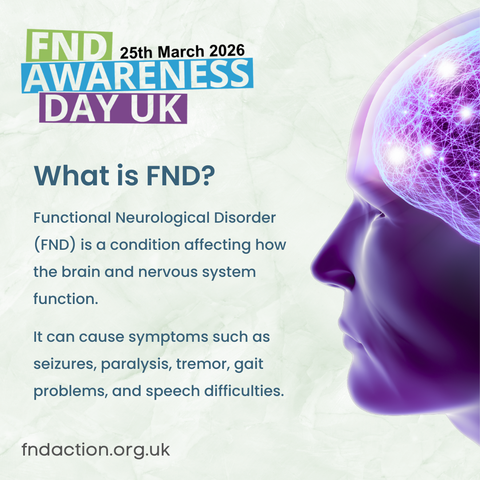
Today is FND awareness day in the UK. Trust me to get diagnosed with it, just in time for the awareness day 😂 Honestly wish I looked as healthy as purple sparkle brain person in the picture 😂 For me, FND is pretty shit and affects every minute of my day, the more tired I am, the worse it is. Some days I can "trick" my body into behaving, but those days are few and far between. The biggest impact it has on me is functional limb weakness and speech difficulties, oh and the tremor is pretty bloody awful too. The gaslighting from the GP for years has been pretty awful too, had me thinking I was losing my mind. It took me being hospitalised with a suspected stroke for my GP to take me seriously and refer me to neurology, then the year long wait for the appointment. Getting diagnosed was a huge relief, even if neuro don't think I will get any better, at least they think I won't get any worse (or not anytime soon). So yeah, I'm going to share about awareness day, and then promptly forget it and go about my day.
Time for more coffee, Cozy Grove and then I might venture outside.
Have a lovely day everyone 😊
 Global News | Breaking, Latest News and Video for Canada [Unofficial]
Saskatoon woman starts organization for neurological disorder support
 Kit Peters
Carmarthen mum taking on Machu Picchu trek in memory of son who died aged two
Sian Milligan, 44, will take on the 11‑day trek through the Peruvian jungle next year alongside her mum, Sylvia Wallace. The pair are raising money for Tŷ Hafan, the children’s hospice that supported their family through the life and death of Sian’s son, Aled.
Sian lives with Functional Neurological Disorder and now needs specialist splints just to walk comfortably. But she’s been training after work, clocking up eight or nine miles at a time.
She said the trek is a personal mission — and a tribute to the little boy who fought every day of his short life.
‘Aled fought so hard to enjoy his life’
Aled was diagnosed with Down’s syndrome and multiple holes in his heart before birth. He later became only the second child in Carmarthenshire ever to be home‑ventilated.
Despite everything, Sian says he was “exceedingly cheeky”, loved music and sensory play, and communicated through sign language.
He died on 13 April 2009, aged just two and a half, after a virus he couldn’t fight off.
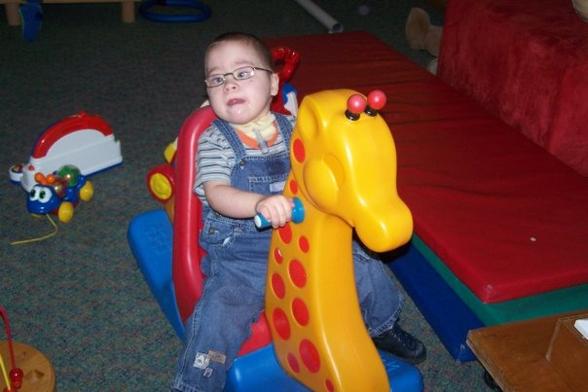
Aled Milligan enjoying playtime at Tŷ Hafan, where the family received vital support during his short life.Brothers Aled and Kyle sharing a moment on the slide during a family day out.Sian said Tŷ Hafan became a lifeline during Aled’s illness — and after his death.
“Tŷ Hafan were wonderful with our Aled. It was a place where I could just be his mum, not his nurse. He loved the sensory room, the rocking chair, the music. Kyle was only four when we lost Aled and the support they gave him was exceptional.”
Her daughter Rhiannon was born three months after Aled died. Both she and Kyle have continued to attend Tŷ Hafan sibling groups over the years.
‘Walking up Machu Picchu is nothing compared to what my boys went through’
Sian says the trek is the toughest physical challenge she has ever faced — but it still doesn’t compare to what her sons endured.
“We can’t train for the altitude, so it’s all about stamina. But walking up Machu Picchu is nothing to what both my boys went through.”
Sylvia, who will be 71 when she takes on the trek, is also determined to complete what she calls her “last big walk”.
The pair will join other fundraisers on the charity challenge in 2027.
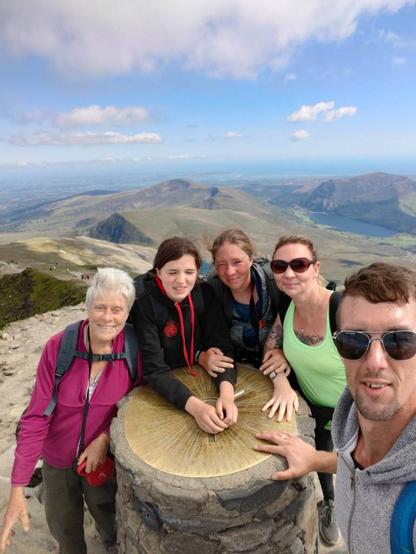
Sian, Sylvia and family at the summit during a training hike ahead of their Machu Picchu challenge.‘No family should have to face this alone’
James Davies‑Hale, Head of Fundraising for Tŷ Hafan, said the charity was grateful to Sian and Sylvia for sharing their story.
“When a child’s life will be short, no family should have to live it on their own. This trek will help us support more families through their child’s life, death and beyond.”
More information about the Machu Picchu trek is available via Tŷ Hafan.
#Carmarthen #DownSSyndrome #FunctionalNeurologicalDisorder #fundraising #fundraisingTrek #MachuPicchu #Peru #TŷHafan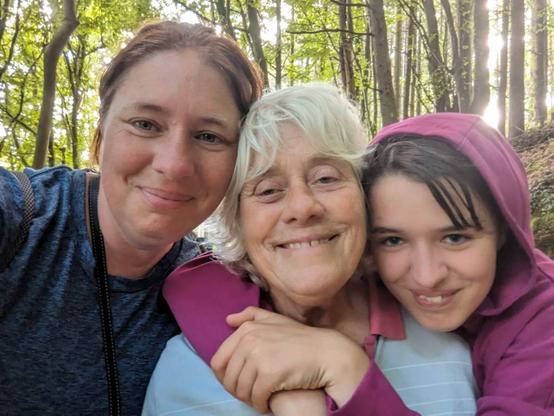

 Department of Communications
Not all tremors are the same. Understanding the difference between physiologic and functional tremor is key to getting the right treatment and real relief. 🧠✋
#Tremor #Neurology #Telehealth #FunctionalNeurologicalDisorder #MovementDisorders
#Tremor #Neurology #Telehealth #FunctionalNeurologicalDisorder #MovementDisorders
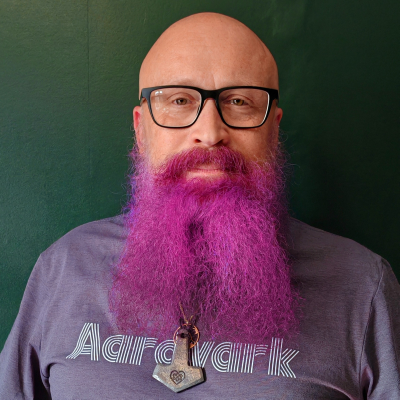 \ˈthē-ˈˈärd-ˌvärk\
Day 18 of the gin advent calendar. A near-perfect 9.5/10 and a rare moment of agreement with MrsVark.
The blog post also has a few choice words about Functional Neurological Disorder (FND), the bastard thief making MrsVark's life hell. It's cruel to have your own thoughts held hostage by a faulty connection between brain and mouth. FND can fucking do one.
https://theaardvark.co.uk/gin-advent-calendar-day-18-a-near-perfect-gin-and-a-rant-about-fnd.html
#GinAdventCalendar #Gin #FND #FunctionalNeurologicalDisorder #ChronicIllness #FNDAwareness

I've been busy over the last few days, trying to catch up with all the posts MrsVark has written for her Wheely Happy Days blog, but which I was too knackered to upload.
The blog is an honest (often brutally so) record of her life as she gets used to, and learns to cope with, life with FND (functional neurological disorder) and CFS (Chronic Fatigue Syndrome).
https://wheelyhappydays.uk/
#FND #FunctionalNeurologicalDisorder #CFS #ChronicFatigueSyndrome
#ChronicIllness
The blog is an honest (often brutally so) record of her life as she gets used to, and learns to cope with, life with FND (functional neurological disorder) and CFS (Chronic Fatigue Syndrome).
https://wheelyhappydays.uk/
#FND #FunctionalNeurologicalDisorder #CFS #ChronicFatigueSyndrome
#ChronicIllness
