
“Heart of ABBA’s,” my 2024 Congress talk
is a listening exercise developed as part of my broader, ongoing project to promote critical copyright literacy. The public debate about intellectual property (IP) is dominated by publishing lobbyi…
My #FairDealingWeek series on Canadian copyright, fair dealing, and education concludes with a reality check based on the data. Notwithstanding the lobby claims, licensing in Canada has increased over the past decade, not declined due to fair dealing.
---
RT @mgeist
Canadian Copyright, Fair Dealing and Education, Part Six: A Fair Reading of Fair Dealing
https://www.michaelgeist.ca/2023/03/canadian-copyright-fair-dealing-and-education-part-s…
https://twitter.com/mgeist/status/1630972481015107584

Canadian Copyright, Fair Dealing and Education, Part Six: A Fair Reading of Fair Dealing - Michael Geist
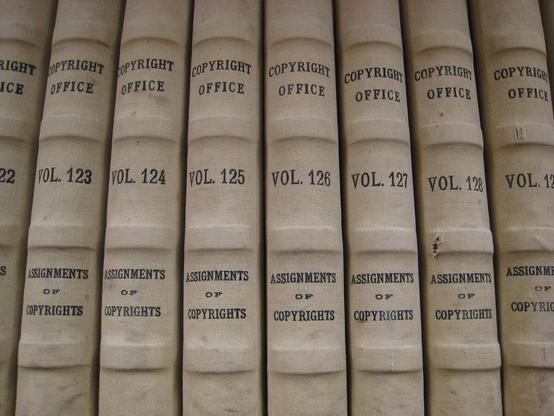
My Fair Dealing Week series of posts on Canadian copyright, fair dealing, and education concludes with a few thoughts on the role of fair dealing within Canadian universities and colleges. Copyright lobby groups have spent years perpetuating multiple myths, including the false notion that today’s fair dealing policies are largely a function of 2012 reforms (they actually stem chiefly from two decades of Supreme Court jurisprudence) and that fair dealing has resulted in universities refusing to licence content (prior posts have covered this disinformation, citing the millions spent on site licensing, transactional licensing , the disappearance of course packs, and the growth of open textbooks).
Last week may have been #FairDealingWeek and my series on Canadian education, fair dealing and education continues. The latest @lawbytespod podcast features Western’s @stephenspong on what he terms the “goblin mode gaslighting” of Canadian copyright law.
---
RT @mgeist
The @lawbytespod Podcast, Episode 157: Stephen Spong (@stephenspong) on the “Goblin Mode Gaslighting” of Canadian Copyright and Fair Dealing
https://www.michaelgeist.ca/2023/…
https://twitter.com/mgeist/status/1630225005551206410

Canadian Copyright, Fair Dealing and Education, Part Four: The Disappearance of Course Packs - Michael Geist
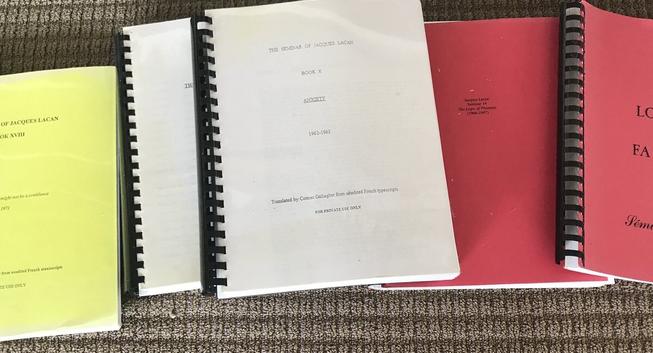
Canadian copyright lobby groups effort to persuade the government to restrict fair dealing has often focused on a particular use case: the course pack. For many years, course packs were used by university and college professors to pull together a customized collection of reading materials for their courses. The course packs were copied and typically sold as an alternative to course textbooks. Copyright lobby groups and their supporters have long claimed that the practice relies on fair dealing and that universities are profiting from copying without compensation. My Fair Dealing Week series on Canadian copyright, fair dealing, and education (Setting the Record Straight, The Massive Shift to Electronic Licensing, Millions Spent on Transactional Licences Demonstrate Fair Dealing is No Free for All) continues with a look at what has actually happened with data demonstrating the printed course packs have all but disappeared from university campuses.
"These claims are grounded in multiple inaccuracies."
"While these claims have been repeated again and again for years, they simply do not withstand even mild scrutiny."
https://www.michaelgeist.ca/2023/02/canadian-copyright-and-education-part-one-setting-the-record-straight/
#copyright #FairDealing #FairDealingWeek
Canadian Copyright, Fair Dealing and Education, Part One: Setting the Record Straight - Michael Geist
Canadian copyright lobby groups have relentlessly lobbied the government to overturn decades of Supreme Court of Canada jurisprudence, seeking unprecedented restrictions on fair dealing that include eliminating it for educational institutions if a licence is available. In doing so, they have relied on a steady diet of misleading claims about the state of the law, the licensing practices of Canadian educational institutions, the importance (or lack thereof) of copying of materials in course packs, and the effects of fair dealing. This week is Fair Dealing Week, which provides an opportunity to set the record straight on Canadian copyright and education, backed by actual data on what takes place on university campuses across the country. This blog series starts with an introduction to the issue and follows with upcoming posts on the growth of digital licensing within higher education, the gradual disappearance of course packs, the emergence of open access, the huge expenditures on transactional licensing that demonstrate a commitment to pay for materials where fair dealing does not apply, and the actual role of fair dealing (rather the false caricature painted by lobby groups). I covered many of these issues in a series five years ago, titled Misleading on Fair Dealing. This series will update the data, demonstrating that far from refusing to pay licensing fees, universities have continued to spend hundreds of millions of dollars on licensing access to materials. I am grateful to University of Ottawa law students Ephraim Barrera and Brianna Workman for their assistance on this project.
icymi, #FairDealingWeek & #FairUseWeek:
RT @ SCL_ELC [3 Feb ‘23]: “New in SCL/ÉLC Vol. 47 No. 1: Reading #Poetry and Its Paratexts for Evidence of Fair Dealing’ by Mark A. McCutcheon. Read it online at
https://journals.lib.unb.ca/index.php/SCL/article/view/33173
or DM me if you want a free PDF copy of this article, because #FairDealing.
#FairUse #copyright #IValueCDNstories
Reading Poetry and Its Paratexts for Evidence of Fair Dealing
| Studies in Canadian Literature
My #FairDealingWeek series on Canadian copyright, fair dealing and education continues today by debunking the false claim universities don’t pay for licences for copyright works. Data shows the shift to digital has meant spending has increased since 2012.
---
RT @mgeist
Canadian Copyright, Fair Dealing and Education, Part Two: The Massive Shift to Electronic Licensing
https://www.michaelgeist.ca/2023/02/canadian-copyright-fair-dealing-and-e…
https://twitter.com/mgeist/status/1628409617624563712

Canadian Copyright, Fair Dealing and Education, Part Two: The Massive Shift to Electronic Licensing - Michael Geist
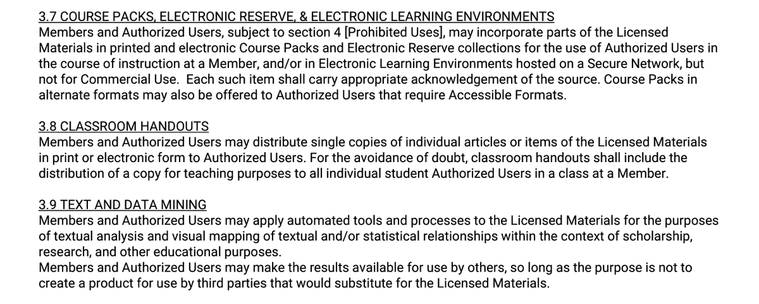
Canadian copyright lobby groups have spent years falsely claiming that educational institutions refuse to pay for licences to compensate for the use of educational materials. This second post in my Fair Dealing Week series on Canadian copyright, fair dealing, and education focuses on this claim, which is a gross misrepresentation of the data (first post on Setting the Record Straight). The truth is that Canadian universities spend millions of dollars on licensing copyright materials. In fact, over the past decade, the emergence of site licenses that provide access to millions of works - books, journal articles, newspapers, and more - has led to huge increases in expenditures for access. Unlike copyright licences from copyright collectives such as Access Copyright, these digital licences provide both original access to works and the ability to use them in course materials. In the 1990s, a university would both purchase a book and pay for the right to copy a portion of it to distribute to students as course materials. Today, the university can use a single licence to gain access to the book and make it available as course material, handouts and for many other purposes since most digital licences facilitate access and permit multiple uses.
Canadian copyright lobby groups have spent years falsely claiming educational institutions refuse to pay for licences for copyright materials. My second post in my
#FairDealingWeek series shows that the data tells a far different story.
https://www.michaelgeist.ca/2023/02/canadian-copyright-fair-dealing-and-education-part-two-the-massive-shift-to-electronic-licensing/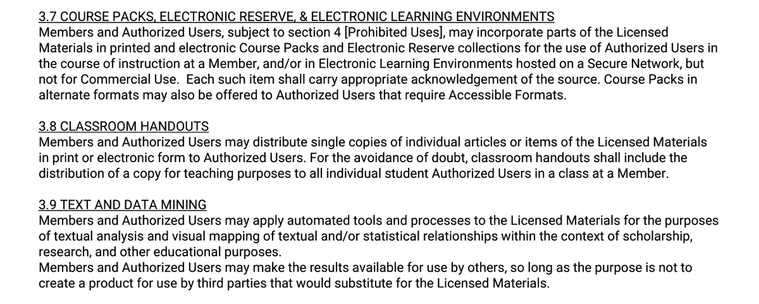
Canadian Copyright, Fair Dealing and Education, Part Two: The Massive Shift to Electronic Licensing - Michael Geist
Canadian copyright lobby groups have spent years falsely claiming that educational institutions refuse to pay for licences to compensate for the use of educational materials. This second post in my Fair Dealing Week series on Canadian copyright, fair dealing, and education focuses on this claim, which is a gross misrepresentation of the data (first post on Setting the Record Straight). The truth is that Canadian universities spend millions of dollars on licensing copyright materials. In fact, over the past decade, the emergence of site licenses that provide access to millions of works - books, journal articles, newspapers, and more - has led to huge increases in expenditures for access. Unlike copyright licences from copyright collectives such as Access Copyright, these digital licences provide both original access to works and the ability to use them in course materials. In the 1990s, a university would both purchase a book and pay for the right to copy a portion of it to distribute to students as course materials. Today, the university can use a single licence to gain access to the book and make it available as course material, handouts and for many other purposes since most digital licences facilitate access and permit multiple uses.
Copyright lobby groups are demanding unprecedented fair dealing restrictions. It is #FairDealingWeek and I’m marking it with a series on Canadian copyright, fair dealing and education. First up: the exaggerated and misleading claims about the 2012 reforms.
---
RT @mgeist
Canadian Copyright, Fair Dealing and Education, Part One: Setting the Record Straight
https://www.michaelgeist.ca/2023/02/canadian-copyright-and-education-part-one-setting-…
https://twitter.com/mgeist/status/1628034368907186176

Canadian Copyright, Fair Dealing and Education, Part One: Setting the Record Straight - Michael Geist
Canadian copyright lobby groups have relentlessly lobbied the government to overturn decades of Supreme Court of Canada jurisprudence, seeking unprecedented restrictions on fair dealing that include eliminating it for educational institutions if a licence is available. In doing so, they have relied on a steady diet of misleading claims about the state of the law, the licensing practices of Canadian educational institutions, the importance (or lack thereof) of copying of materials in course packs, and the effects of fair dealing. This week is Fair Dealing Week, which provides an opportunity to set the record straight on Canadian copyright and education, backed by actual data on what takes place on university campuses across the country. This blog series starts with an introduction to the issue and follows with upcoming posts on the growth of digital licensing within higher education, the gradual disappearance of course packs, the emergence of open access, the huge expenditures on transactional licensing that demonstrate a commitment to pay for materials where fair dealing does not apply, and the actual role of fair dealing (rather the false caricature painted by lobby groups). I covered many of these issues in a series five years ago, titled Misleading on Fair Dealing. This series will update the data, demonstrating that far from refusing to pay licensing fees, universities have continued to spend hundreds of millions of dollars on licensing access to materials. I am grateful to University of Ottawa law students Ephraim Barrera and Brianna Workman for their assistance on this project.
Copyright lobby groups are demanding unprecedented restrictions on fair dealing. It is
#FairDealingWeek and I’m marking it with a series of posts on Canadian copyright, fair dealing and education. First up: the exaggerated claims about the 2012 reforms.
https://www.michaelgeist.ca/2023/02/canadian-copyright-and-education-part-one-setting-the-record-straight/Canadian Copyright, Fair Dealing and Education, Part One: Setting the Record Straight - Michael Geist
Canadian copyright lobby groups have relentlessly lobbied the government to overturn decades of Supreme Court of Canada jurisprudence, seeking unprecedented restrictions on fair dealing that include eliminating it for educational institutions if a licence is available. In doing so, they have relied on a steady diet of misleading claims about the state of the law, the licensing practices of Canadian educational institutions, the importance (or lack thereof) of copying of materials in course packs, and the effects of fair dealing. This week is Fair Dealing Week, which provides an opportunity to set the record straight on Canadian copyright and education, backed by actual data on what takes place on university campuses across the country. This blog series starts with an introduction to the issue and follows with upcoming posts on the growth of digital licensing within higher education, the gradual disappearance of course packs, the emergence of open access, the huge expenditures on transactional licensing that demonstrate a commitment to pay for materials where fair dealing does not apply, and the actual role of fair dealing (rather the false caricature painted by lobby groups). I covered many of these issues in a series five years ago, titled Misleading on Fair Dealing. This series will update the data, demonstrating that far from refusing to pay licensing fees, universities have continued to spend hundreds of millions of dollars on licensing access to materials. I am grateful to University of Ottawa law students Ephraim Barrera and Brianna Workman for their assistance on this project.
 Mark A. McCutcheon
 Michael Geist
 Sabina Pagotto