
The #NewSouthWales #government's struck-down #ProtestLaws may have put taxpayers on the hook for #damages, as legal experts review the implications of yesterday's court outcome.

On Thursday afternoon the government was dealt a blow by the highest court in the state when it ruled that #expandedPolicepowers to #restrict #protests were #unconstitutional.

The controversial Public Assembly Restriction Declaration (PARD) laws were passed in the aftermath of the Bondi terrorist attack on Christmas Eve during an emergency sitting of parliament, allowing the police commissioner to restrict protests throughout parts of Greater Sydney until they ultimately lapsed on February 17.

Yesterday the Court of Appeal found the laws "impermissibly burdened" the implied right to #freedom of political communication under #Australia's #constitution.

The ruling has left Redfern Legal Centre reviewing its cases to determine whether #CivilDamages can be sought for its clients from #NSWPolice.

"We will be looking at the law to see what we would advise to those who participated in the protest and reviewing options to see if there is grounds for recourse," principal assistant Samantha Lee said.

"Lawyers will now be looking at that possibility."

During the nearly two months when public assemblies were restricted a #MajorEventsDeclaration was announced, which is a separate instrument not covered by the court's ruling.

"There are a few layers to this ongoing scenario, but certainly peeling off this layer [PARD] will make it a possibility of some civil action against possibly police," Ms Lee said.

The court's ruling creates an opportunity for people who were #charged with a #CriminalOffence during an #assembly that "could have been #lawful" to have the #ChargesWithdrawn, she said.

The ruling leaves the government exposed, but not vulnerable to a civil action, University of NSW law professor Luke McNamara said.

"What it will do is encourage closer #scrutiny of individual incidents that might provide the basis for civil damages in individual circumstances," he said.

"That's going to be case by case."

The government can seek an appeal before the #HighCourtOfAustralia, but Professor McNamara described the Court of Appeal's ruling as robust.

"The [Court of Appeal] applied a pretty familiar conventional three-part test that has been endorsed by the High Court of Australia," he said.

"It would be a brave government, I think, to take on this matter on appeal."

News of the court ruling was met with praise from pro-democracy groups.

The NSW Council for #CivilLiberties said the ruling was a repudiation of "draconian" laws. It claimed police "knowingly wielded unconstitutional powers to harass and silence citizens protesting peacefully".

"While the courts have been able to protect our freedoms today, we have seen many examples in the past where the structure of our democracy, and an elected parliament at its core, prevents them from doing so," president Timothy Roberts said.

The #HumanRightsLawCentre legal director Sarah Schwartz said "NSW Police should drop all charges against people who peacefully protested on 6 February who were subject to police harassment and violence".

The #AustralianDemocracyNetwork said a review was needed on how protests are policed and regulated in the state.

"Protest is a fundamental democratic right," campaigner Anastasia Radievska said.

"Any restriction must be justified and proportionate, and these laws went too far."

The government and the opposition independently described the court's ruling as disappointing.

The government is considering the court's decision.

"The NSW government absolutely stands by the decision to introduce this legislation," Premier Chris Minns said.

"We believe it was necessary and important for Sydney at the time."

Shadow Attorney-General Damien Tudehope blamed the government for rushing the legislation through.

"The NSW Liberals and Nationals consistently warned Labor against rushing through complex legislation before it could be thoroughly examined," he said.

"[Yesterday's] decision is a consequence of that rushed approach."

#auspol #Minns #NSWpol
https://www.abc.net.au/news/2026-04-17/nsw-protest-laws-damages-charges-withdrawn-legal-experts/106573150
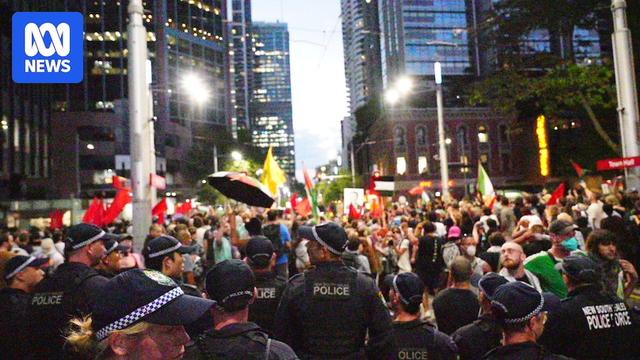
Lawyers explore damages claims over controversial NSW protest laws

Protesters caught up in the government's now-canned protest laws could seek damages as lawyers review the implications of the Supreme Court ruling them "unconstitutional".

#RepublicOfGeorgia: First year of #Georgia’s ‘foreign agent’ law shows how #autocracies are replicating #Russian model − and speeding up the time frame

Published: March 28, 2025 6:25am EDT

"#Autocracy is on the move worldwide and becoming more resilient.

"One of the driving forces behind this phenomenon is something scholars call '#AuthoritarianLearning,' a process by which autocratic leaders study each other and adapt tactics based on what appears to work, and how to proceed when they encounter #resistance.

"Take Georgia. The ruling Georgian Dream party has steered the Caucasus nation from a path toward democracy back to autocracy – and it has done so by learning from Russia. In particular, it adopted a '#ForeignAgent' law in May 2024 – legislation that came straight from #VladimirPutin’s playbook.

"Sold to the public as increasing #transparency, the legislation has been utilized to persecute Georgia’s #opposition and arrest #dissidents with impunity.

"As researchers examining the structure and effects of autocratic regimes, we view Georgia’s first year of its foreign agent law as an example of how politicians are not only learning the tactics of Russian authoritarianism but improving on them in a shorter time frame."

Read more:
https://theconversation.com/first-year-of-georgias-foreign-agent-law-shows-how-autocracies-are-replicating-russian-model-and-speeding-up-the-time-frame-250878

#RightToProtest #AntiProtestLaws
#GeorgianLaws #CriminalizingDissent #CriminalizingProtest #HumanRights #RepublicOfGeorgia #GeorgianDream #ProtestSponsors #ExpandedPolicePowers #PoliceState #Authoritarianism #Fascism #Autocracy

First year of Georgia’s ‘foreign agent’ law shows how autocracies are replicating Russian model − and speeding up the time frame

Georgian legislation directly mirrors a contentious law Russia passed more than a decade ago to stifle dissent and quash the power of civil society groups.

The Conversation

#RepublicOfGeorgia: New legislation directly threatens people's right to #protest and #FreeExpression

In a troubling shift toward #authoritarian governance, Georgia’s ruling party has enacted legislative reforms that drastically restrict freedom of expression and peaceful assembly, and proposed changes to restrict #media, public participation.

February 10, 2025

"The key changes obstructing people’s right to protest include:

- Expanded organisers' liability;
- Restrictions on spontaneous protests;
- Limitations on protests in enclosed spaces: Protests in closed spaces or buildings now require written consent from the property owner, significantly restricting #student and #workplace #demonstrations. This provision appears to be a direct response to recent protests on #UniversityCampuses;
- Expanded penalties for protest-related offenses: Petty #hooliganism fines have risen from GEL 500-1,000 to GEL 500-2,000 (from maximum approximately 350-700 EUR) , with imprisonment now up to 20 days instead of 15. Verbal insults towards #PoliceOfficers now carry fines of GEL 2,000 5,000 (approx. 700-1750 EUR) or up to 60 days’ imprisonment. Repeat offenses can result in a GEL 3,500-6,000 ( 1200–2100 EUR) fine and extended jail terms. Additionally, individuals accused of "disrupting public order" face severe criminal penalties, including up to 3 years in prison;
- New restrictions on symbolic protest actions: Covering one's face, possessing a laser or light-emitting device, or wearing clothing resembling police or military uniforms during assemblies are now punishable by fines of GEL 2,000 ( 700 EUR) or imprisonment up to 7 days. Such measures are expected to disproportionately impact younger protesters and student-led movements;
- #Broadened law enforcement powers: The Ministry of Internal Affairs now holds increased authority over protest regulation, including the power to block protests that allegedly threaten public order or constitutional stability. Authorities can now use '#EmergencyMeasures' to disperse gatherings, including mass #arrests and prolonged #detentions;
- Increased state control over protest logistics: Protesters are now required to ensure that demonstrations do not obstruct transportation routes. Organisers must take action within 15 minutes of a warning to remove roadblocks or temporary structures, failing which they will face criminal liability;
- Participation in protests previously dispersed by law enforcement is now classified as an offense, subjecting #demonstrators to legal consequences.

"Given that the median salary in Georgia in 2023 was GEL 1,238 (approximately 400 EUR), these fines represent a disproportionate financial burden on protesters, effectively discouraging civic engagement and public demonstrations."

Read more:
https://csometer.info/updates/georgia-new-legislation-directly-threatens-peoples-right-protest-and-free-expression

#RightToProtest #AntiProtestLaws
#GeorgianLaws #CriminalizingDissent #CriminalizingProtest #HumanRights #RepublicOfGeorgia #GeorgianDream #FaceMasks #AntiMaskLaws #ProtestSponsors #ACAB #ExpandedPolicePowers #PoliceState #Authoritarianism #Fascism

Georgia: New legislation directly threatens people's right to protest and free expression

In a troubling shift toward authoritarian governance, Georgia’s ruling party has enacted legislative reforms that drastically restrict freedom of expression and peaceful assembly, and proposed changes to restrict media, public participation.

CSOMETER