Are there any recordings of (the great actress) Katharine Cornell apart from her recitals of poems by Elizabeth Barrett Browning?

Her voice and her command of it are things of wonder.

It seems wrong - I can’t think of how to put it - that so little remains.

#KatharineCornell #greatactors #ElizabethBarrettBrowning #poetry #theatre #America #20thCActors

#datocurioso

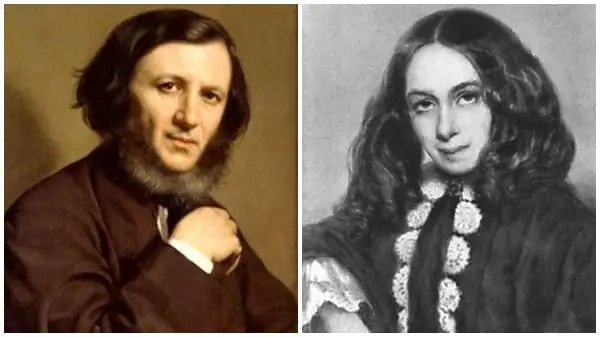
¿Sabían que la poeta británica Elizabeth Barrett Browning alcanzó tal relevancia intelectual y popular en la época victoriana que tras la muerte de William Wordsworth en 1850 fue considerada la principal candidata para el título de Poeta Laureado del Reino Unido antes que Alfred Tennyson?

Su obra más célebre Sonnets from the Portuguese escrita entre 1845 y 1846 no fue originalmente concebida para su publicación debido a su naturaleza profundamente íntima ya que documentaba su relación secreta con el también poeta Robert Browning. El título de la colección fue un ardid de la autora para presentar los poemas como traducciones de una fuente extranjera y así proteger su privacidad ante el escrutinio público de la sociedad londinense. Barrett Browning padecía una enfermedad crónica que la mantuvo confinada en su habitación de Wimpole Street durante años donde desarrolló una vasta cultura clásica traduciendo el Prometeo encadenado de Esquilo del griego original. Su influencia trascendió las fronteras británicas inspirando directamente a la poeta estadounidense Emily Dickinson quien mantenía un retrato de Elizabeth en su habitación y dedicó varios versos a su memoria tras su fallecimiento en Florencia en 1861.

#Literatura #Historia #Poesía #ElizabethBarrettBrowning #Cultura #Curiosidades

 𝑳𝒂 𝒑𝒐𝒆𝒕𝒂 𝒒𝒖𝒆 𝒆𝒔𝒄𝒂𝒑𝒐́ 𝒄𝒐𝒏 𝒔𝒖 𝒑𝒆𝒓𝒓𝒐: 𝒍𝒂 𝒉𝒖𝒊𝒅𝒂 𝒅𝒆 𝑬𝒍𝒊𝒛𝒂𝒃𝒆𝒕𝒉 𝑩𝒂𝒓𝒓𝒆𝒕𝒕 𝑩𝒓𝒐𝒘𝒏𝒊𝒏𝒈  

A mediados del siglo XIX, en una casa elegante de Wimpole Street, vivía una mujer que parecía destinada a pasar el resto de su vida entre cortinas cerradas.

Se llamaba Elizabeth Barrett Browning y ya era una poeta conocida en Inglaterra. Tenía casi cuarenta años, una salud frágil y un padre con un carácter férreo.

Su padre, Edward Barrett Moulton-Barrett, había impuesto una norma extraña en la familia: ninguno de sus hijos podía casarse. Nunca dio una explicación clara. Simplemente lo prohibió.

Y lo cumplía.

Elizabeth llevaba años viviendo prácticamente recluida en su habitación. Leían sus poemas por todo el país, pero ella seguía allí, entre libros, dolores crónicos y dosis de morfina que los médicos le recetaban para aliviar sus problemas de salud.

Muchos pensaban que no viviría mucho más.

Pero Elizabeth tenía algo que no había perdido: la mente.

Escribía con una intensidad poco común. Sus versos circulaban por Inglaterra y llamaban la atención incluso de otros escritores. Entre ellos estaba Robert Browning, un poeta más joven que llevaba tiempo admirando su obra.

Un día decidió escribirle una carta.

Empezaba de una forma directa:
“Amo sus versos con todo mi corazón”.

Aquella carta inició algo inesperado.

Durante unos veinte meses intercambiaron cientos de cartas —se conservan más de quinientas—. No eran simples notas de admiración literaria. Hablaban de poesía, de política, de filosofía… y poco a poco también de ellos mismos.

Robert no la trataba como a una enferma. Ni como a alguien frágil.

La trataba como a una igual.

Cuando propuso visitarla, Elizabeth dudó. Apenas salía de su habitación. Su salud era inestable y, además, su padre vigilaba de cerca cualquier visita.

Aun así, finalmente aceptó.

Cuando Robert la vio por primera vez, no encontró a la mujer inválida que muchos imaginaban. Encontró a alguien brillante, irónica, apasionada por la literatura.

Y se enamoró.

No pasó mucho tiempo antes de que le propusiera matrimonio.

Elizabeth se negó al principio. Sabía perfectamente lo que significaría enfrentarse a su padre.

Pero Robert insistía en algo sencillo: que ella era mucho más fuerte de lo que creía.

Finalmente tomaron una decisión arriesgada.

El 12 de septiembre de 1846 se casaron en secreto en la iglesia de St Marylebone Parish Church.

Después ocurrió algo casi teatral.

Elizabeth volvió a casa como si nada hubiera pasado. Cenó con su familia, mantuvo la rutina habitual y durante unos días siguió actuando como la hija obediente.

Una semana después hizo las maletas.

Se marchó para siempre.

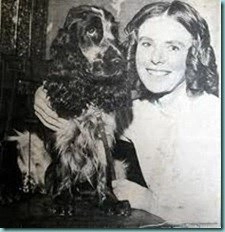
No se fue sola. La acompañaban Robert… y su perro Flush, un cocker spaniel que se había convertido en su inseparable compañero. El animal había sido un regalo de la escritora Mary Russell Mitford unos años antes, cuando Elizabeth atravesaba un momento especialmente difícil.

Flush, por cierto, al principio no soportaba a Robert.

Era bastante territorial y llegó a morderle alguna vez. Browning acabó ganándose su confianza con paciencia… y con algún que otro dulce en los bolsillos.

La relación entre los tres acabaría siendo tan peculiar que décadas más tarde Virginia Woolf escribió una biografía ficticia del perro titulada Flush: A Biography, contando la historia desde el punto de vista del animal.

Pero volvamos a la fuga.

Cuando Edward Barrett descubrió que su hija había huido, la reacción fue brutal.

No gritó ni la buscó.

Simplemente la borró de su vida.

Elizabeth le escribió muchas cartas desde el extranjero. Le hablaba de su nueva vida, de su salud, incluso del nacimiento de su hijo. Todas regresaron sin abrir.

Nunca volvió a dirigirle la palabra.

Mientras tanto, algo curioso ocurrió con Elizabeth.

Al mudarse a Florencia, su salud empezó a mejorar. El clima, la libertad y una vida muy distinta a la que había llevado en Londres parecían sentarle bien.

La mujer que apenas salía de su habitación empezó a viajar, a pasear por la ciudad y a escribir con más energía que nunca.

Durante esos años publicó una de sus obras más famosas: Sonnets from the Portuguese.

El título tenía truco.

No eran traducciones del portugués. Eran poemas de amor dedicados a Robert. Pero Elizabeth prefirió disfrazarlos de traducciones para evitar el escándalo que podía provocar publicar versos tan íntimos en la sociedad victoriana.

La pareja vivió quince años juntos.

Quince años que, teniendo en cuenta el estado de salud de Elizabeth, muchos habrían considerado imposibles.

SIGUE ↘️

#historia #literatura #poesia #elizabethbarrettbrowning #robertbrowning #historiadeamor #historialiteraria #curiosidadeshistoricas #victoriano #mujereshistoria #libros #historiareal
"I love you not only for what you are, but for what I am when I am with you. I love you not only for what you have made of yourself, but for what you are making of me. I love you for the part of me that you bring out."

~ Elizabeth Barrett Browning, born today, 1806.

#ElizabethBarrettBrowning #Quote #Today

Born on this day:

Elizabeth Barrett Browning, poet, linguist, & human rights advocate.

Celebrating her birthday with an excerpt from her epic work 'Aurora Leigh', read by Maggie Hughes.

https://www.tiktok.com/@pennybloodpodcasts/video/7478690416230092078

Music specially composed by James Doane www.jamesdoanecomposer.com

Paintings by Hughes ( The Trust) and Waterhouse (Miranda)

#botd #birthdaygirl #elizabethbarrettbrowning #poetry
https://www.tiktok.com/@pennybloodpodcasts/video/7478690416230092078

TikTok - Make Your Day

Sonnet 43 by Elizabeth Barrett Browning. One of my favorite poems. Feeling stuck in my practice but slow progress is progress all the same. #letterdrawingmoleskine #sonnet43 #elizabethbarrettbrowning #almahoffmannlettering #almahoffmannletters #almahoffmann

Welcome to Poetry in the Evening.

We are connected to nature in ways that cannot be fully understood. Poetry allows us to explore the relationship with the world around us. “Change on Change’ by Elizabeth Barrett Browning is a poem about lost love and change envisioned through the lens of changing seasons.

Change on Change by Elizabeth Barrett Browning

Love flourished through spring and summer, but when the cooler winds of autumn arrive, there has been a parting, a loss. What is left is the sound of the river and the blush on the poet’s cheeks. With every transition, we are influenced by the events and experiences that have occurred. As winter comes nearer, the poet recognizes that she is no longer the person of the spring and summer months.

Transitions hold emotional nuances that have a poignancy that brings both sadness for what was, but also joy for what has been gained as we move forward.

Elizabeth Barrett Browning’s poetry captures the complexities of human emotions, particularly related to love and loss. Through her masterful use of language and imagery, she explores the depths of the human experience, inviting readers to contemplate the intricacies of the heart and mind. Her poems often reflect on nature and the changing seasons, providing a profound connection to the world around us. Reciting her poetry offers an opportunity to appreciate the timeless themes she explores and to immerse oneself in the power of her words.

I invite you to join me in reciting, Change on Change by Elizabeth Barrett Browning.

Change on Change by Elizabeth Barrett BrowningRebecca's Reading Room

Change on Change

by Elizabeth Barrett Browning

Three months ago, the stream did flow,
    The lilies bloomed along the edge;
And we were lingering to and fro,—
Where none will track thee in this snow,
    Along the stream, beside the hedge.
Ah! sweet, be free to come and go;
    For if I do not hear thy foot,
    The frozen river is as mute,—
    The flowers have dried down to the root;
    And why, since these be changed since May,
        Shouldst thou change less than they?

And slow, slow as the winter snow,
    The tears have drifted to mine eyes;
And my two cheeks, three months ago,
Set blushing at thy praises so,
    Put paleness on for a disguise.
Ah! sweet, be free to praise and go;
    For if my face is turned to pale,
    It was thine oath that first did fail,—
    It was thy love proved false and frail!
    And why, since these be changed, I trow,
        Should I change less than thou?

This poem is in the public domain

Change on Change by Elizabeth Barrett Browning

https://rebeccasreadingroom.ca/2024/07/30/change-on-change-by-elizabeth-barrett-browning/

#ChangeOnChange #ElizabethBarrettBrowning #Episode9 #Poetry #PoetryInTheEvening #PoetryRecitation #Season4

S4 E9: Change on Change by Elizabeth Barrett Browning

Welcome to Poetry in the Evening. We are connected to nature in ways that cannot be fully understood. Poetry allows us to explore the relationship with the world around us. “Change on Change’ by El…

Rebecca's Reading Room
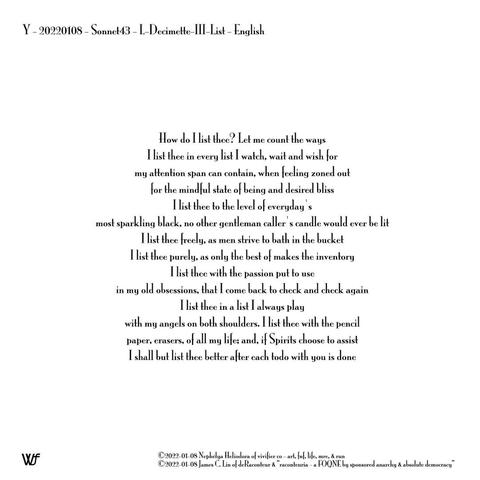
Y - 20220108 - Sonnet43 - L-Decimette-III-List - English

---

How do I list thee? Let me count the ways
I list thee in every list I watch, wait and wish for
my attention span can contain, when feeling zoned out
for the mindful state of being and desired bliss
I list thee to the level of everyday's
most sparkling black, no other gentleman caller's candle would ever be lit
I list thee freely, as men strive to bath in the bucket
I list thee purely, as only the best of makes the inventory
I list thee with the passion put to use
in my old obsessions, that I come back to check and check again
I list thee in a list I always play
with my angels on both shoulders. I list thee with the pencil
paper, erasers, of all my life; and, if Spirits choose to assist
I shall but list thee better after each todo with you is done

---

#poet #poets #poem #poems #lovepoem #lovepoems #romance #romancereads #wordsmith #sonnet43 #elizabethbarrettbrowning #tribute

---

©2022-01-08 Nephélya Heliodora of vivifier co - art, fnf, life, mre, & run
©2022-01-08 James C. Lin of deRaconteur & “raconteuria - a FOQNE by sponsored anarchy & absolute democracy”
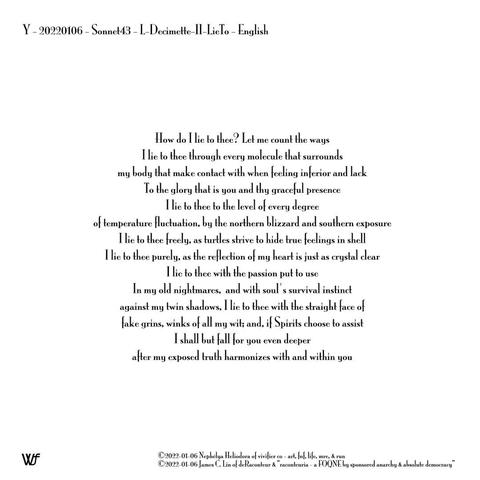
Y - 20220106 - Sonnet43 - L-Decimette-II-LieTo - English

---

How do I lie to thee? Let me count the ways
I lie to thee through every molecule that surrounds
my body that make contact with when feeling inferior and lack
To the glory that is you and thy graceful presence
I lie to thee to the level of every degree
of temperature fluctuation, by the northern blizzard and southern exposure
I lie to thee freely, as turtles strive to hide true feelings in shell
I lie to thee purely, as the reflection of my heart is just as crystal clear
I lie to thee with the passion put to use
In my old nightmares, and with soul's survival instinct
against my twin shadows, I lie to thee with the straight face of
fake grins, winks of all my wit; and, if Spirits choose to assist
I shall but fall for you even deeper
after my exposed truth harmonizes with and within you

---

#poet #poets #poem #poems #lovepoem #lovepoems #romance #romancereads #wordsmith #sonnet43 #elizabethbarrettbrowning #tribute

---

©2022-01-06 Nephélya Heliodora of vivifier co - art, fnf, life, mre, & run
©2022-01-06 James C. Lin of deRaconteur & “raconteuria - a FOQNE by sponsored anarchy & absolute democracy”