The Social Codes of Tech Workers: Class Identity in Digital Capitalism

Robert Dorschel

(MIT Press, 2026)

"Digital technologies shape nearly every aspect of our lives. Yet little attention has been paid to the tech workers who design and program these technologies. Instead, the spotlight often falls on two extremes: the elite class of tech entrepreneurs and the precarious digital proletariat of gig and crowd workers. This narrow focus has left a critical gap in understanding the middle-class professionals operating behind the scenes of digital capitalism.

Drawing on over 50 original interviews and discourse analytical research conducted in the US and Germany, The Social Codes of Tech Workers takes readers deep into their hearts and minds. Robert Dorschel demonstrates how tech workers’ subjectivity is structured by a return of social critique, hybrid professional roles, and distinctive lifestyles. The book identifies tech workers as a contradictory class formation, oscillating between a spirit of emancipation and yet another spirit of capitalism. This work will appeal to scholars across disciplines concerned with digital labor, identity, and class, as well as to the broader public interested in the culture of the tech industry and the evolving future of work."

https://mitpress.mit.edu/9780262553537/the-social-codes-of-tech-workers/

#Capitalism #Class #DigitalCapitalism #Sociology #DigitalLabor #Programming #Coding

The Social Codes of Tech Workers

How the coders of our digital worlds think, work, and live.Digital technologies shape nearly every aspect of our lives. Yet little attention has been paid to the tech workers who design and program these technologies. Instead, the spotlight often falls on two extremes: the elite class of tech entrepreneurs and the precarious digital proletariat of gig and crowd workers. This narrow focus has left a critical gap in understanding the middle-class professionals operating behind the scenes of digital capitalism.Drawing on over 50 original interviews and discourse analytical research conducted in the US and Germany, The Social Codes of Tech Workers takes readers deep into their hearts and minds. Robert Dorschel demonstrates how tech workers’ subjectivity is structured by a return of social critique, hybrid professional roles, and distinctive lifestyles. The book identifies tech workers as a contradictory class formation, oscillating between a spirit of emancipation and yet another spirit of capitalism. This work will appeal to scholars across disciplines concerned with digital labor, identity, and class, as well as to the broader public interested in the culture of the tech industry and the evolving future of work.

Google Books

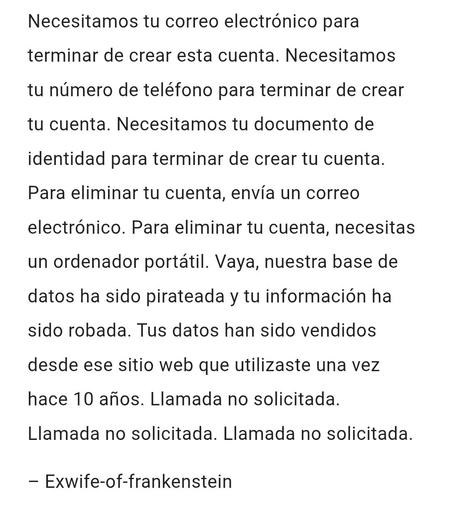
La "enshitificación" de todo, resumida en una parrafada.

Via @microsiervos

#internet #enshittification #digitalcapitalism

Tech Dominates Global Markets. But Should It?
In our latest episode, Prof. Joseph Bailey walks us through how tech firms have taken over the market cap rankings — and what it reveals about the forces shaping the digital world.

🔗 Listen here: https://youtu.be/Rnk1ZuEpmns?si=4IG5WNcNjFEE134i

#DigitalCapitalism #TechTakeover #TheInternetIsCrack #Podcast

#28 Friend or Foe? The Economic Forces Behind AI and the Internet

YouTube
Tiziano Bonini, Emiliano Trere – Algorithms of Resistance: The Everyday Fight against Platform Power | Neural

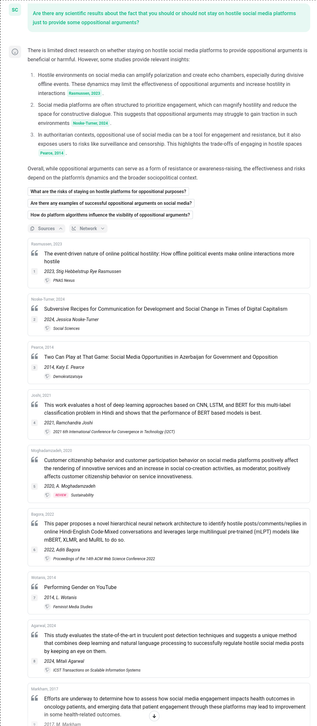
@linos @kuketzblog @riffreporter Here is the answer from #ScienceOS to the question "Are there any scientific results about the fact that you should or should not stay on hostile #socialmedia platforms just to provide some oppositional arguments?"

(I think I can't link that result as a public URL.)

Looks like a promising source:
Subversive Recipes for Communication for Development and Social Change in Times of #DigitalCapitalism
2024, Jessica Noske-Turner, Niranjana Sivaram, Aparna Kalley, Shreyas Hiremath
https://www.mdpi.com/2076-0760/13/8/393/pdf?version=1721991314

Disclaimer: I've not read the sources myself.

We see a shiny new tech., & often become fascinated by it. Instead we should adopt a critical outlook. How?

"Technology is a way of materializing interests. Far from being objective or neutral, technology is embedded with values and intentions. Technology is, after all, the result of decisions and actions made by humans, and it is then used by humans with motivation and goals."

- Jathon Sadowski in his book "Too Smart: How #DigitalCapitalism is extracting data, controlling our lives..."

@MSchnetker

🎥 Longtermismus – der „Geist“ des digitalen Kapitalismus: Ein soziologischer Blick auf die Ideologie des Longtermismus und ihre Rolle im digitalen Kapitalismus.
👉 Vortrag von Max Schnetker (38c3)
Hier das Video:
https://media.ccc.de/v/38c3-longtermismus-der-geist-des-digitalen-kapitalismus

#Longtermismus #DigitalCapitalism #AI #ElonMusk

Longtermismus – der „Geist“ des digitalen Kapitalismus

Der Vortrag wirft einen sozialwissenschaftlichen Blick auf die Ideologie des Longtermismus. Seine Funktion im digitalen Kapitalismus wird...

media.ccc.de

#Degrowth #DigitalDegrowth #Ecology #DigitalColonialism #DigitalCapitalism #SiliconValley: "The world is racing toward an irreversible ecological catastrophe. Environmental science makes clear that humans must reduce total material resource use, requiring a radical redistribution of wealth within and between countries. Yet little attention has been paid to how the digital economy fits into this equation.

Michael Kwet, a leading expert on digital colonialism, presents a new paradigm for the digital society. Merging the science of degrowth with a global analysis of the high-tech economy, he argues that digital capitalism and colonialism must be abolished quickly. In Digital Degrowth, Kwet maps out a path to a people's tech future. He calls for direct action against Silicon Valley, US imperialism and power elites everywhere in order to realize a radically egalitarian digital society that fosters equality in harmony with nature."

https://www.plutobooks.com/9780745349862/digital-degrowth/

Digital Degrowth

'A fascinating book that takes degrowth in new directions' - Jason Hickel, author of Less is More 'A must-read for anyone who wants to know the brut...

Pluto Press
edited by Felix Stalder, Janez Fakin Janša – From Commons to NFTs | Neural