Ampere Analysis makes speculation on female gamers, not hard data

Ampere Analysis presented a study earlier this year where they concluded that women make up 48% of the gaming community. We can say that’s effectively half. That’s approximately 922 million people across 21 countries. Big numbers for sure. Supposedly, the gaming industry is largely ignoring this major possible market segment, as there is a serious lack of games for women who would like to play story-driven single-player games with a social aspect and romance. They came to this conclusion by looking at what kind of media outside games these women consume and made a beeline assumption that women want the same thing from their games. What their data seems to indicate is that there is a large section of women who are interested in playing games but don’t. Either they don’t know how to play games or don’t know what kind of game content exists.

Let’s pause here and point out that Ampere showcases data in a biased manner. That 48% includes any woman who has played a game, be it Candy Crush or FarmVille. If you’re a woman who has played a game of any kind, you’re counted in this number. The quality of these stats is messy, as that equates players who spend about ten minutes with games per week with people who spend most of their waking hours gaming. This is an important point, as any person wanting to sell something realizes that these two kinds of customers are completely different and need to be valued in a different manner.

The inquiry had 52 video and computer games listed. Only three titles had more women playing than men: Animal Crossing: New Horizons, The Sims 4, and Roblox. From a list of 50 mobile games, some 13 titles had more women players. This would indicate, then, that the higher concentration of women in gaming can be found outside the usual big sellers, and on mobile devices rather than consoles and computers.

The market is functioning as you’d expect; nothing has really changed in behavioural differences between the two sexes. Early on in this blog’s life, I wrote about girl games as part of a series where I illustrated how video and computer games aren’t a special phenomenon in and of themselves, but a continuation of a long play culture. Gaming in general mostly adheres to boys’ play culture, as it builds on competition and readily set rules. It’s much easier to make a soccer or a tennis video game because these rules exist and are set in stone. Playing house is something classically part of girls’ play culture, as playing with dolls and other miniature house equipment readies them for motherhood. It’s much harder to make a simulacrum of playing house because it has no readily set rules. Here’s mother, dad, kid, and maybe a dog. Here’s the house. Now play house. I’ve used The Sims as an example of this being successfully adapted, and I’m not surprised The Sims 4 is on the above list.

The Sims, analogue edition

Making girl games is hard because historically they’ve been misunderstood and misapplied by powers that be in the gaming industry. You might have a good memory of some Barbie game out there, but none of them would win any prizes. What most of these girl games lacked in the 1980s and 1990s was holding power, or the way a game keeps attracting the player back to itself to maintain their attention span and immerse them in its world. Because gaming is largely based on boys’ play culture, its holding power over girls is less due to the different schema the two have classically worked under. In a manner, girls and women as gamers were treated like some sort of invalids because of this. Girl games were colourful, with horses and puppies galore, with about as much gameplay as a wet towel on a wall.

However, as demand grew for games specifically catering to girls and women, a few began to understand that the differences in play cultures were a possibility rather than a ball and chain. Brenda Laurel founded Purple Moon in 1999 to make, as she called it in 2009, a cultural intervention. Purple Moon’s games targeted girls between 8 and 14, and rather than making games about competition and confrontation, their games were more like interactive story worlds the players could explore. However, as we can see from Ampere’s data, games-for-all are more popular among modern women and girls than games directly aimed at girls.

[youtube https://www.youtube.com/watch?v=zu2kZwk1Ym4?version=3&rel=1&showsearch=0&showinfo=1&iv_load_policy=1&fs=1&hl=en&autohide=2&wmode=transparent&w=863&h=486]

Purple Moon games were criticized for doing the same gender stereotyping they wanted to intervene

In a way, girl games dried out early in the millennium because games in general had already begun to emphasize story framing and expanded world-building in mainstream titles. I would hazard a guess that World of Warcraft offered much of the very same story-driven exploration and interactivity, not just with the game but with other players as well.

Barbie Fashion Designer may have sold well and left an unwanted mark, but a game like New Style Boutique 3 found itself with a cult following from the opposite sex. The game didn’t just require players to design new clothing combinations, but had a framing narrative of the player needing to run a clothes boutique, making the game deep enough to have holding power over both boys and men as well as girls and women. Unlike the Barbie game, this 3DS game had some depth to it. The lack of a license probably hurt the game’s sales, but its cult status shows that games stemming from girl play culture can have universal acceptance, even if it’s marginal. Of course, The Sims is the titan in this.

A game that had surprising hold on its male audience

Girl game as a term has become rare, as it became associated with terrible shovelware. They were represented as the opposite of boys’ games, which frankly is just the de facto standard for the game industry. That’s not to say girls and women were ignored, as Super Mario and The Legend of Zelda games still make big sales and are more or less equally popular between the sexes. As gaming has moved away from public places and now solely resides at home, there is no longer any pressure for girls and women to give whatever games they might fancy a go. Why did more females play Tetris than Pac-Man? Because the physical placement of the game had moved away from arcades to home computers and consoles.

This study seems to ignore a few genres that have an overwhelming female audience, and they even make the whole girl game concept sound good: otome games and romance video games. Otome games have been specifically designed to cater to the sensibilities girls and women have, so it’s not surprising that over 90% of otome game players are women. We can argue whether or not visual novels count, but some fantasy otome games also have elements like running a kingdom, meaning they’re not just text but have meaningful gameplay elements that impact the social aspect.

As games have gotten heavier on delivering framing and allowing players to wander the world, we’ve seen a sort of coming together between the two play cultures. Especially with RPGs like Dragon Age series or The Witcher 3, we see that social aspect becoming a major component, with the ability to romance characters and that being an essential part of the story. However, the bulk of the play is still dictated by rules and regulations that largely stem from boys’ play culture. Acknowledging this, we can see how the two complement each other in a manner where they couldn’t exist separately. You get action gameplay with whatever character you choose to make, and then engage in extensive dialogue options between NPCs that might affect anything from what coloured shoes they wear to who stabs you in the back.

I see that if gaming would take its interactivity into account more, allowing players to dynamically change framing directions as much as systems could, and not stick to linear storytelling as seen in films and literature, we could find ourselves in places where games combine the two play cultures in a more holistic manner and embrace the medium’s inherent properties rather than stick with ready-made stories.

However, that wouldn’t automatically mean more women would want to play such a game. The number of hardcore male gamers who put more money into gaming is larger than females, and that is a lifestyle choice. The linkage between visual novels and women reading books is easy to understand; they’re almost the same thing in different packaging. However, there is no hard proof or individual linkage showcasing cross-media consumption. Anecdotes and niche demographics do suggest an overlap, but a large number of romance book readers don’t play games, even when there are already options that cater to them.

Mass Effect is another game series that bucks the trends with a loyal female fanbase

Even when we ignore romance as a genre, there are no studies that link cross-media consumption. Ampere is making the argument that because women consume X kind of content in media Y, then they should also be interested in X content in media Z. While this seems like a no-brainer at surface value, it’s a pretty big leap from opening a book and reading what’s on the page to installing a 50GB game on your computer and learning system mechanics that enable a similar story to that of a Harlequin book. That’s why girl games had that bad reputation; they tried to meet a supposedly invalid audience by cutting away gameplay to match a level where other media offered a more enjoyable pastime. The claims Ampere makes are circumstantial at best. We would first need studies showcasing that people, especially women, actually consume the same kinds of genres and styles across all media. Ampere’s conclusion about what women would look for in a game based on what they watch and read is no less than harmful stereotyping.

The argument of women needing an easier entry point for gaming is petty at best and sexist at worst. It’s the whole notion of girl games and females being seen as gaming invalids raising its head again. There has never been a better time in history to get into gaming than now. Endless amounts of YouTube tutorials and guides exist, games quite literally hold the player’s hand to pass even the slightest obstacle, no-failure states exist across the board, and even gameplay can be skipped in some cases. Saying that there’s a subset of female non-gamers who are interested in gaming but lack the knowledge of how to play these games and what content is out there, and then demanding entry-level content, is misguided. If women are interested in something and want to give it a shot, they are just as capable of finding things out themselves. They need the same thing as men: motivation and reason.

We have more games than ever before, from small indie developers to large AAA studios, and they’re all easy to find as long as your search skills are decent. However, if there is no reason to take up gaming as a hobby or lifestyle, then that person is not as valuable a customer as someone who already is. You can’t force people to become something, just like you can’t force men and women to choose a certain kind of career path simply because statistics look off. The same applies to hobbies. It might be cultural or biological; it doesn’t matter.

Koei’s Angelique Trois is an example of a successful otome game IP from over twenty years ago

When you have people who are not interested in your product and are aware it exists, they’re not even untapped customers. You would have to fundamentally change their perceptions to turn them into customers. Ampere disregards its own results: 47% of female non-gamers say they would never consider playing. That’s 10% less than non-gaming males. If there are more boys and men willing to give gaming a shot than girls and women, then wouldn’t that be the more viable market segment to pursue?

We should, of course, question Ampere’s data, as it’s all done via surveys. Ampere gave out a generalised survey that doesn’t really go into detail, nor did they conduct any behavioural study over time. 46,000 respondents self-reported their preferences and habits. This is probably one of the worst ways to gather consumer information, as customers don’t always know what they want. I often use the example of why there are so many different kinds of tomato pasta on store shelves. Consumers think they know what they want, but often don’t. It’s not because they’re unintelligent, but because we are creatures of habit and environment.

Everything in this study is just speculation. There are no strong scientific grounds presented.

No industry would take a study like this and its recommendations seriously. You can’t turn someone who doesn’t want mustard into a mustard customer. It simply won’t happen.

The approach is also flawed. Rather than directly asking what games women play or what media they consume elsewhere, a study examining what kinds of games and play current girls engage in would yield more valid data. Similarly, researching past play habits of adult women and their current non-digital hobbies could provide valuable insights. This would be difficult, time-consuming, and expensive. It would also require researchers who understand differences in play cultures across various societies if conducted globally.

To understand women, Arino played Angelique Trois on air

However, there’s still one thorn in my side I need to pick: games for general audiences. I mentioned Mario and Zelda earlier, and the reason they attract both sexes is because they are well-designed, high-quality games. Data over decades suggests that boys and girls, men and women, gravitate toward games that are enjoyable and have strong holding power. The more explicitly gendered a game is, the worse its design tends to be, and the less successful it becomes.

#computerGames #culture #customerAndService #customerService #customers #electronicGames #entertainment #games #gaming #videoGames #videogames #visualNovels
Love computer games and video games? Want to support local independent game developers?

And can you get to Parramatta this weekend?

ALT:Games is this weekend (18&19 April) at PHIVE in Parramatta. Details here: https://atparramatta.com/whats-on/alt-games

#games #gaming #VideoGames #ComputerGames #Parramatta #NSW #Australia

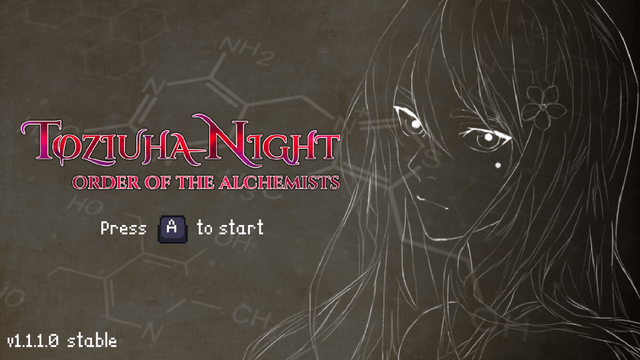
My thoughts on Toziuha Night: Order of the Alchemists; a review

To be fair, the cover art of the game would have made me skip it while browsing GOG’s catalogue, which would make me miss out on a great metroidvania. Fortunately a fellow member of one of the discord servers I’m in was singing praises for this title, so I got it and I do not regret.

Label

Speaking of, Toziuha Night: Order of the Alchemists is an indie metroidvania made by Danny Garay, on Godot 3.6. It released on the end of October 2025 and is available GOG, Itch and Steam. It’s also the second game in the series (you can get the first on Itch and Steam).

Aesthetics

It’s a pixelart game for the most part. And it looks gorgeous. The game offers the option of playing with the CRT-emulating filter, Grid LCD filter or without any. I personally preffer playing without any of those, but – as they say – Your Mileage May Vary.

The environments are varied; offering lush forests, underwater caverns, ruined cities, abandoned steampunk industrial areas snowy mountain and more. The character and enemy sprites also look very nice.

I did say the game was mostly pixelart. Where it breaks from that are character portraits during dialogues. These are presented in a VN style, with the drawing of the speaker being presented above the text box. They don’t look bad, but I’m not too enthusiastic about them.
The other break are a few artworks that appear as part of a cutscene a few times.

And then there is music and general audio side of things. Each zone (and I’m pretty sure the bosses too) has it’s theme, and they all sound pretty damn good. Or at the very least I enjoyed the music immensely, as untrained in music as I am. There wasn’t anything that stood out to me, in either good or bad way, when it comes to rest of the sounds of the game.

Gameplay

TN:OotA is a 2D side scrolling metroidvania, so the game revolves around running around the rather big map, fighting enemies and looking for upgrades that let you access previously-out-of-reach areas, where you run around. Or, in a few cases run around lost, because you don’t know where to go next.

By the way, while the game supports controllers, I played similar exclusively on the keyboard.

Exploration

Which brings me to the exploration, which is a pretty important part of gameplay.

The general movement feels pretty good. Though to get some options aside from running, jumping and doing a backflip will take a little. And yes, forward dodge is an unlockable move… That comes online somewhere around halfway through the game.

Eventually the repertoire of moves gets pretty decent; with sliding, wall jumping, double jumping, air dashing and swinging on the whip feels pretty damn nice.

Maybe aside from the swinging, it can be somewhat… “off” for a lack of better term.

The game has platforming sections ranging from a nice change of pace to infuriating to roadblocks that take dozens of attempts. At least the worst ones aren’t mandatory… Which is both a blessing and a curse, because of you get there a bit too early, you’ll realise that you gave get through it again.

And then there’s the aforementioned getting lost. Either due to lack of indications where to go next… Or a somewhat misleading ones, that tell you to go somewhere you can’t go yet… Or telling you to find an item before going to a place… That you can only get after visiting that very place.

Combat

Combat on the other hand is rather simple. You have a whip attack and you can modify it with various elements by making “alloys”. Though I wonder why having a rust whip produces wind blades…

Of course, this being a metroidvania, some of the upgrades affect combat more directly, such as turning a single whip attack into a three-hit-combo string, adding a heavy strike and a powerful strike that will be very helpful against bosses and though enemies…

That and swapping between loadouts, because for some reason that’s an upgrade.

A spectacle fighter it is not, but it’s not the point. The combat is decent; with wide cast of enemies having varied elemental weaknesses it’s interesting enough, even if you can get though most of the game using the flashbang magnesium alloy that is gained at the very start, coupled with the decent selection of spells (again, electro spheres, one of the first gained will be useful almost everywhere) make it interesting enough.

Story

And then there is the story. It’s a simple, yet serviceable one, serving more as a spice enhancing the whole, rather than the core ingredient. I see no issue with it being the background for why we whip things with an iron whip that spawns fireballs and jump around various areas.

The protagonist has a grudge against a cult leader. Said cult attacked a city and Xandria (the protagonist) rushed there, with the aim of facing the cult leader… But one of his lieutenants, a Chlorine Alchemist, almost killed her before she could fight him.

The recovery time and expenses was the reason for the loss of her abilities. The rest of the game revolves around finding out what the cult is planning and stopping them, all the while Xandria in pretty focused on revenge.

Or well, it feels more like we randomly stumble upon something that pushes the plot ahead. Sometimes a bit randomly, like the whole hallucination section (which I very much liked, as it was a neat change of pace… though it felt close to overstaying its welcome), which is one of the very contentious places, if you visit the forums.

The game also offers multiple endings: the depressing one, the bad one, the tragic one and the good one. The depressing one is the first one you can get, and is potentially missable. Fortunately all of them can be done on the same save, though that requires reading the written notes… or consulting the guides on the internet.

The game also offers a chain of optional sidequests, such as finding a lost child, finding that child’s cats, photographing birds and delivering fruit.

Summa Summarum

Toziuha Nights: Order of the Alchemists is a very good metroidvania, with pretty visuals, good music, and fun overall gameplay.

There are a few issues that didn’t bother me enough to lower the grade further. Or at least they affected me little enough for them to fade from my mind.

Furthermore, the game is getting updates, with additional options (like the optional post game mode letting you play as a different character) and QoL changes (like drops being pulled in after a few seconds).

And so, I’m giving it a 5-.

#ActionAdventure #ComputerGames #gameReview #gaming #IndieGame #Metroidvania #ToziuhaNight #ToziuhaNightOrderOfTheAlchemists
How the classic computer game Doom became a tool for science https://www.nature.com/articles/d41586-026-00813-4 #science #doom #computergames
How the classic computer game Doom became a tool for science

The 1990s game has been run on bacteria and a satellite and played by neurons in a dish.

Hurdles for a Legendary Collection

Whenever I see someone asking why there isn’t a collection for the Mega Man Legends games, I point them to the Japanese-exclusive PSP ports. Of course, these get ignored as they’re in Japanese and don’t fit the schema that the Legends series doesn’t have a port on then- and now-current consoles and Steam. The PSP ports are important, however. That handheld console was the locus for Mega Man trying to get a new start. It had both remakes of the original Mega Man and Mega Man X, both of which were intended to remake both series and move them. Both ended up as curiosities rather than sales hits.

I don’t like to admit it, but Mega Man was no longer the same icon in the mainstream culture as it had been in the 1980s and 1990s. The Blue Bomber would remain an icon for gaming for sure, but Capcom moving to the evergreen model also meant pretty much everything was put on ice. Merch would appear on the figurative store shelves, that one cartoon that most seem to have passed by, and the collections. Those collections, alongside Mega Man 11, kept Mega Man relevant and afloat. As much as I have a personal distaste for the evergreen model, it does allow people to buy and get into these games much easier. You could argue that emulation already did that, but just buying the games and launching them rather than finding the ROMs and ISOs, then setting up the emulator to run the games really is that much more work.

We’re not in a Mega Man Renaissance. It’d need a whole lot of new games across the different Mega Man series to be that.

Because we live in the era of Evergreen Collections, there have been some expectations for a new Mega Man Legends Collection. I fully admit that I am one of these people, because there are no real ways to show any support for that particular section of Mega Man outside the new comic miniseries that just came out. That is honestly the only way you can show support for Legends at this moment in time. I would always recommend caution and not expect any sort of new releases for the Legends games that weren’t just PSN PS1 Classic releases.

With a recent interview, this suggestion has been more or less justified. Shingo Izumi, the current Producer for Mega Man, stated that there are no plans to develop such a collection, but it would be one of the possible candidates. The Legends games have issues that the rest of the Mega Man series don’t. Some aren’t Capcom’s own fault, while others are directly related to how late 1990s Capcom liked to do business.

Let’s start with the biggest one, and that is the constant and steady drop of sales. I’ll have to trust VGChartz and Namu.wiki for these numbers, but they align with what I recall seeing across the years.

JPN cover. Note how the Bonne family logo was embossed in an angle compared to the rest of the text

Mega Man Legends was released in 1996 in Japan and a year later elsewhere. It sold around 830,000 units across all regions. Breaking this down, Japanese sales were 120,000, North America 390,000, Europe 260,000, and the rest of the world bought 50,000. The N64 port would see 130,000 units sold, with most of them being in the US at 127,000 sold units.

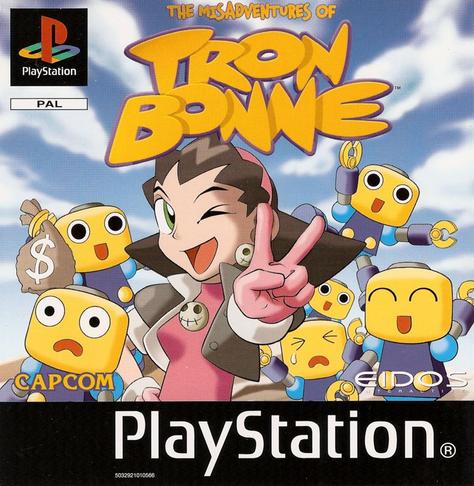
1999’s The Misadventures of Tron Bonne saw a very limited print in the West, limiting its availability and making it stupidly expensive, which gives some colour why I’m having some hard time finding solid sales numbers. Estimations cap at 110,000 sold units, with Japan seeing 61,127 units, North America 20,000, and Europe only 5,000 due to that extremely limited distribution. Bought mine for 15€ back then. Other regions added 25,000 sold units. Even for a side game, these are sad numbers.

In the year 2000, Legends 2 would sell worse than the first game did at 420,000 sold units. 100,000 in Japan, 170,000 in North America, 120,000 in European regions, and 30,000 in the rest of the world. By this point, it was clear that the series had failed to establish itself and the market wasn’t interested in it.

This would be the end of the series, with mobile games taking the slot. Not that these games would contribute much to the survival of the series, but at least they’re something.

The Godawful European boxart

The PSP ports of the first two games, initially released as stand-alone, saw sales at 11,500 and 2,500 units respectively. The 1+2 Value Pack sold only 10,000 units. When the three games hit PSN, their sales have been described as “negligible.” Digital sales that sell low don’t get their numbers published. Despite hype and loud fandom, this didn’t translate to sales.

The history of the series’ sales starts relatively strong with the first game, but it was less than expected. It nailed the Greatest Hits/Platinum status and managed to build a niche fanbase, but as Keiji Inafune would admit later, the game wasn’t the hit they had wished for. The devs had expected the main audience, elementary school kids, to follow the name Mega Man (or rather, Rockman) from 2D action to 3D action-adventure with RPG elements. This would appeal to the older otaku audience, however. Inafune called it arrogance in his book What Kind of Decision is That!

どんな判断や!

While the sales of the first game were strong enough to warrant a sequel and a spin-off, in hindsight we should call those numbers poor sales as the game cost Capcom around a billion yen, or about $10 million. That’s 1997 USD too. This was the reason why Legends 2 saw a delay. This was still in an era where three years between titles was considered to be long.

There were other reasons for the games’ lack of success other than the core audience rejecting the Free Running RPG nature of the series. First is that the devs were inexperienced with 3D game design, as Inafune admits in the aforementioned book. The game is, in the end, surprisingly flat with verticality mostly being used to fence player progression until Springs are found. Platforming itself was awkward at best. Controls were janky, as left-right camera motion is controlled by L and R. It didn’t help that the turning speed in general was rather slow. This was the industry standard of sorts at the time, as the PS controller lacked the dual sticks at the time. Lock-On would freeze Mega Man in his place, making the accurate shooting a chore. The game would auto-aim a little bit for the player, as long as the enemy was in the middle of the screen.

Some of the same issues would persist in Legends 2. Some were changed, like how Lock-On allows the player to move around. Nevertheless, both games have the core tactic of circling the enemies and shooting, making it the de facto tactic for how to defeat pretty much any enemy in the game. Some controversy and fan criticism was given to how the first game’s single island had one dungeon connecting to all other dungeons in the game was lost when the second game was set on multiple islands. I’m not going to give a full review of the games. That’d be unfair, I am far too positively biased towards the games.

The main issues with Mega Man Legends 2 were that Capcom was expecting it to be a new Mega Man 2, where the series would properly kick off and find mainstream popularity. If the sales are anything to go by, there was never a large enough audience to justify the series’ continuation, something the fans who fell in love with the series would mourn. Yours truly included.

In the same book, Inafune mentions how the lessons learned with Legends directly translated to the Battle Network series. From an outsider perspective, we can pinpoint a few things. First, the whole collecting cards and using them for battling was popular among the target audience at the change of the millennium. The linear RPG model with real-time action nailed interest down better. Connected life was becoming more common too, with Digimon taking advantage of this earlier. Link-Battling made for a more social game as well, with tournaments being held. Less expensive development turned in bigger bucks, and that’s all she wrote. Mega Man Legends walked so Mega Man Battle Network could run.

In hindsight, Battle Network carries much of Legend‘s spirit

There is more to this than just sales numbers, however. Mega Man Legends games all have some elements that make their new releases inconvenient for Capcom.

That’s why you get energy back when you drink soda in the game; it’s an energy drink

First, there are some legal issues. The Japanese version of Legends had licensed the Oronamin C energy drink to appear in the game. These sorts of licensing agreements always come with territorial restrictions, time limits, and platform limitations. When the game hit PSN, Capcom had to relicense the drink, as Sony does not allow changes for PSN PS1 Classic titles. If Capcom had simply removed the drink license, like they did with the Western versions, they would’ve had to release Legends as a whole new title on PSN rather than as a Classic. Similar things happened with Rival Schools.

Similarly, the Yoyogi Animation Academy building in the game is an actual animation school and there is a character that gives out the school’s phone number the player could call. While this was removed in the later releases of Legends, this is another example of Capcom using real-world trademarks at the time for promotional licensing.

Is all the music in the games legally Capcom’s, or do they have a need to relicense the Japanese openings and ending songs?

Further legal complications could stem from Capcom opting to use non-union voice actors and actors under limited studio contracts in the late 1990s. This applies to all three Legends games, as there has been speculation on how legal complications can arise when voice actor contracts don’t include residual rights for later re-releases. In the worst case, Capcom might need to find the original VAs and make a new contract with them for each new release, and even then it might just be for a limited time. There is no major lawsuit of any kind regarding the voice actor contracts, but it can be an obstacle for any new release nevertheless.

Robert Norman Smith’s role as Tiesel Bonne could be an issue. He pleaded guilty to possession and distribution of CSAM in 2008 after being arrested in 2006. Unsurprisingly, this killed his career. He would be a repeat offender and see additional charges in 2020, and drowned later the same year. While we shouldn’t assume guilt by association, it would be worth questioning if Capcom themselves want to have one of their game series associated with a dead paedophile.

Outside Smith’s own doings, the Legends games carry some legal baggage that Capcom would need to address both in-game and in the real world before they can even put the games into a Collection.

I’m not sure how much bad blood Capcom wants to carry, but knowing certain aspects of Japanese corporation culture, Keiji Inafune’s and Capcom’s internal conflict didn’t leave anyone with a good aftertaste. He had been the public face of the franchise for decades and his resignation from Capcom was met with numerous Mega Man related cancellations. Legends had been Inafune’s baby, and it is possible that Capcom, at the time, simply clapped back the only way they could by hitting his possible legacy.

Legends 3 comes into the picture with this, as Inafune left in the middle of its early production. Capcom said that the game was cancelled due to the lack of fan support, which we can dispute however much we want. Capcom didn’t deal with the fallout and got tons of bad PR, but the main issue was again legal. Because fans could submit character designs, ideas for the plot and concept art, legal issues rose as to who actually would own the intellectual property created in this fashion, who would get the credit for the work done, and if there would be any compensation. At best, Capcom was getting supposedly free ideas and suggestions from fans, and at worst was outsourcing the game’s development to its customers without compensation. Capcom aimed to alleviate these concerns by sending gifts and letters to some of the participants. The official word from Capcom, however, was that the game didn’t meet the internal required criteria. Within Capcom, games don’t get just one greenlight to go, but there are multiple points of evaluation where they need to get that green light multiple times.

Because of this, I personally believe any work done on Legends 3 should be scrapped and started anew to avoid any issues. The ready demo that was meant to be released might work as some sort of window to how the game was intended originally, but as an extra only. We would see the game’s engine being recycled to the Gaist Crusher series, which honestly seems to share a lot of the same basic controls.

[youtube https://www.youtube.com/watch?v=UA2tQ2C7uUs?version=3&rel=1&showsearch=0&showinfo=1&iv_load_policy=1&fs=1&hl=en&autohide=2&wmode=transparent&w=863&h=486]


Legends 3 was a PR nightmare for Capcom, if we’re being straight about it.

The fans love the games and want at least one more entry to finish the story. The story, however, is the least of Capcom’s concerns. Inafune probably had more than a few ideas how the third game would’ve played out. Legends 2’s scenario writer Makazu Eguchi still works with Capcom, so he probably would be the person who has the best idea how the third game was intended to end the story. The Director and Story architect Yoshinori Kawano seems to be associated with Capcom still, so having two thirds of the core team making the story is still there.

However, whatever form a hypothetical Mega Man Legends 3 would end up being, it would be a completely different game from what it could’ve been if it had been made right after the second game, or from the Legends 3 on the 3DS. I’ve personally raised some questions as to whether I really want a sequel to a nearly thirty-year-old game by developers who have different sets of goals and values. It wouldn’t be the same after all this time. It would be, at best, a simulacrum of what it could’ve been updated for modern sensibilities.

All that said, sales numbers are very much what Capcom looks at when determining success and whether or not something gets new entries. They also need to be convinced by third parties with enough data to justify something. This isn’t anything new to Japanese corporations though; they run on established data. Looking at Capcom’s history, they’ve got some collections of their Arcade games for sure, but console-specific games rarely get collections. The Mega Man IP is different. Digital Eclipse had approached Capcom in 2015 with a suggestion of preserving the NES Mega Man games.

Understanding the difference between Digital Eclipse and Capcom’s mindset is important there. Capcom had already done collections of their arcade games in the 1990s because arcade hardware was becoming increasingly scarce and breaking down. This would accelerate with time. Console games, on the other hand, had already seen ports to the newer platforms. The Mega Man games had seen ports to the PlayStation, which were used for the Anniversary Collection.

Seeing the PSP remakes of Mega Man and Mega Man X failed to garner enough purchases, Mega Man remakes aren’t on the table despite remakes being the company’s modus operandi with classic games at the moment. Capcom considers remakes to be replacements for their older games, which don’t seem to meet their current level of demand for quality. Much like how Capcom’s internal staff had managed to convince higher ups of the need to port arcade games to new systems due to hardware failing, how Digital Eclipse wanted to make Criterion Collection of games with Mega Man collections, GOG had to convince Capcom to allow the original Resident Evil trilogy’s PC ports on GOG. Capcom was questioning if these games would even sell considering they’re so old and there are new, better versions of the games out there.

This is where an issue comes up. If we follow the idea of treating Legacy collections as definitive, preservative versions of the games, Capcom would have a need to re-license all the real-world materials. However, I don’t think this would be an issue; Capcom would probably opt to remove these. However, they’d probably have to make new contracts with the voice actors, and in case of dead ones, either negotiate with their estate executor, the heirs, or some rights management company.

Does Capcom have any data to justify a Legends Collection? All the sales data we have is now decades old, and even then it didn’t scratch up enough dough to keep The Misadventures of Tron Bonne on Japanese PSN too long. Some contract had expired; it was taken down. There has been no real Mega Man Legends merch to buy that wasn’t part of something else. Out of all series, Legends doesn’t even have a Complete Works book. A third party released the two main games’ music on vinyl a while back, but you can’t really gauge interest based on niche of a niche. The now-current comic is relatively easily available and probably is the best way to give some indication that there is an audience out there for the games.

That’s of course assuming they don’t already know that. Capcom knows Mega Man Legends has its dedicated core audience. They just don’t see it as a large enough audience. Would a remake be a better option, something that improves and fixes everything that’s wrong in the first game while expanding upon it now that designing 3D games is their bread and butter? They’d probably avoid all the licensing issues by recording all the voices from scratch. While I’d imagine this would make for better mainstream appeal, it’d probably leave many fans and preservationists dissatisfied.

Circling back to the interview, what Izumi said is still disheartening. They have no plans to make a new Collection at this moment. When they consider one in the future, Mega Man Legends would be one candidate among many. All things considered, for Capcom there would be more lucrative IPs they could farm into a modern collection than Legends. I don’t believe Monster Hunter Collection would become a thing, something like Onimusha, or a collection to hype up a new Sengoku Basara. Perhaps there is bad blood in Capcom still and keeping Legends is a jab at Inafune, but I wouldn’t want to believe in this.

Mega Man Legends Legacy Collection doesn’t have unsurmountable hurdles to beat. What it has is baggage that needs to be sorted out every time Capcom wants to re-release the games. A three-game collection would be a bit empty, so throwing in all the mobile phone games with translations would be a nice add-on. Perhaps having the Legends 2’s PSP port’s enhancements as selectable options would be nice; the game plays really well on PSP.

Here we’re met with two things: keep the development time as short as possible and cost-effective. Deliver a Collection that has minimal content and was cheap to make; hope it sells well so that cost-sales ratio looks good. Alternatively, make an enhanced Collection, add more value at a slightly higher price, and hope it’s enough to attract more people than just the core fans. The elephant in the room would be Legends 3. To be brutally honest, I don’t think Legends Collection would sell enough to warrant Legends 3’s production. I wish it could after all this time, after all the good word we’ve spread about the games throughout the years. However, game development doesn’t work on good vibes, especially nowadays when developing is costlier and takes longer than ever before, at least for big studios. There must be correct justifications for Mega Man Legends 3 to become a reality, and most of it has to come from inside Capcom’s staff championing for it and convincing the deciding body it would be worth the time and money. Improving customer relations isn’t enough, or finishing up the story. If the story was that important inside Capcom, somebody could’ve turned the third game’s plot into a comic or a book already.

Historically, Mega Man’s target audience has been elementary school kids. The X series aimed a bit older, but was still enjoyed by the same audience. Legends assumed this audience would follow the series everywhere, but didn’t. Battle Network took that slot, and after that, Mega Man never really found a way to entertain new generations of elementary school-aged kids. The more I look at Legends, Mega Man losing that core audience is why the series has languished. While I’d like to think a game series could stand on its own two feet without many changes, the Mega Man as a series always changed to try something new and be a hit with kids.

I’m afraid now the Blue Bomber only has older fans, people who grew up with the games. These things need to cycle in new fans of the same target age while the majority of the fans cycle out to other things as they grow older. Just as with comics, some fans will stay there for a lifetime, but even then the cycling must go on. Otherwise stagnation will set in and nothing will end up working. Trying to make new stuff for the target audience contradicts the need to make the old stuff for the older audience, often in a more mature manner for better or worse. Future Mega Man games have a very thin line they need to walk by not to veer off too much to either direction.


#CAPCOM #computerGames #culture #customerAndService #customers #videoGames #videogames

2004 Freedom of Imagination

PeerTube
I played four #ComputerGames yesterday, and, funnily enough, one of them wasn't with 4 Guys Co-op, which got canceled due to illness, injury, and travel. I got sucked into Hideo Kojima‘s Death Stranding over the weekend. It recently came to Xbox Game Pass—an odd #cRPG, whose main mechanic is trying to stay upright while carrying a lot of stuff. I also played Eternal Strands, Metamorph ReFantazio (sic), and Octopath Traveler, all fun #JRPGs. Damn that #Xbox rewards gamifying system!

#TheHuntingOfTheSnark #LewisCarroll #games #videogames #computergames #cardgames #virtualcardgames #game #videogame #computergame #cardgame #gamedesign #virtualcardgame

In 2026 we can celebrate the 150th anniversary of Lewis Carroll's "The Hunting of the Snark" (https://snrk.de/150th-snark-anniversaries/).

My contribution will be a virtual card set helping to revive ZZOTA's legacy card game "SNARK!". I don't know wether I will turn it into a complete virtual card game.

The game is based on Lewis Carroll’s “The Hunting of the Snark”. Jeremy Jexon Secker defined the rules in 1985. The beautiful design of the cards is by Xanna Eve Chown. My work on their game is aligned with both of them.

Sadly, ZZOTA vanished away in 2017.

More (with links to the game rules): https://snrk.de/zzota-snark/

See also: http://snark.games

"Free Games Collection
Free games available on GOG that will help you relax and pass time at home"

#Games #VideoGames #FreeGames #GOG #ComputerGames ...

https://www.gog.com/en/partner/free_games

GOG.com

Download the best classic and new games on Windows, Mac & Linux. A vast selection of titles, DRM-free, with free goodies and 30-day money-back guarantee.

GOG.com

Interesting news about game studio Cryptic, but there's not a whiff, not a sign, of Champions Online in this video:

https://youtu.be/GG5jEK68sOw

#MMO #ChampionsOnline #ComputerGames #Cryptic

Jack Emmert | Returns to Cryptic Studios as CEO

YouTube