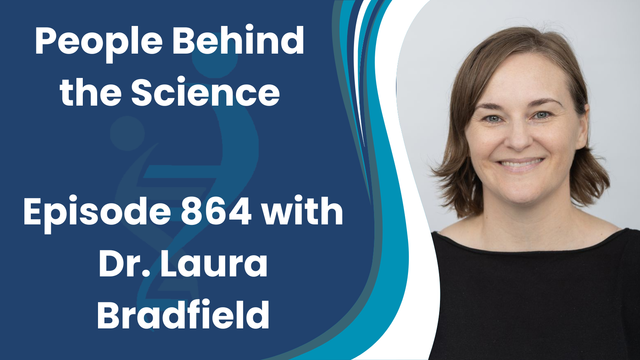
Can we build better models to study compulsivity? In this new podcast episode, Dr. Laura Bradfield discusses her exciting research on how inflammation in certain parts of the brain affects compulsive behaviors and the models she and her team are creating to better study these behaviors. She also shares the twists and turns of her scientific career path, how she's navigating through current challenges, her favorite pastimes, advice, and more!

https://www.peoplebehindthescience.com/dr-laura-bradfield/

#neuroscience #psychology #compulsivity #science #STEM #podcast #scicomm
Before you continue to YouTube

This paper on the possible meanings of compulsivity and its role in addiction is utterly clarifying. It's a pity I didn't spot it before our last review on the matter...

#Addiction #AddictionScience #Compulsivity

https://www.sciencedirect.com/science/article/pii/S2352853217300342

👋 #introduction. I run a lab at Trinity College Dublin that focuses on understanding #mentalhealth problems, from #brain, to the environment, to the dark arts of subjective experience. I think our samples sizes have been way too small for far too long and so we spend a lot of time trying to scale up our studies using the Internet. We have an app to do this (https://www.neureka.ie/) that has 18,000 users who donate their time to advance brain health science. Also: #networks #habits #compulsivity
Neureka | Citizen Scientist | Brain Challenges

Neureka is a fun app designed by researchers at Trinity College Dublin. The app consists of fun brain games and challenges as well as questionnaires allowing the user to take part in one of the biggest brain experiments ever as well as learn about mental health and dementia along the way.

Neureka