Currents Of Kindness Blog Hop-ECM: Where is the Writer?

After watching The Ba***ds of Bollywood directed by Aryan Khan, I came across Neeraj Pandey’s Instagram post, which sparked deep reflection. As a writer and someone who cherishes the impeccable craft of writing in books, I’ve noticed we often undervalue this skill in other media. 

Writers in industries like advertising, political campaign slogans, events, award shows, or theatre are often invisible, much like a burkha-clad woman. Even when we watch a theatrical play, we tend to remember the actor or dancer who stood out for us, but rarely the writer behind the script.

This made me question how inclusive our spaces are for writers outside the realm of books. Do we acknowledge the person who crafted the clever script of a tagline that’s on everyone’s lips now? Writers’ struggles are often dismissed, labelled as lazy or “not knowing how to write,” without understanding the reality of their challenges.

How can we create more inclusive spaces for writers? Every industry—be it a product campaign, event, or show needs a skilled writer who pours their creativity into making it seamless. Consider the writers behind a 30-second ad or a feature film. Are we asking about their pay? Are we recognizing the effort behind the finished product, or do writers remain invisible, just as they often do in movies or advertisements?

In the past decade, only a few writers, like Varun Grover and Neeraj Ghaywan, have gained mainstream recognition for their work, particularly for Masaan. They’ve become household names, but it took years for them to achieve this. Meanwhile, countless other writers toil daily, fighting to keep going without giving up.

Our spaces must become more inclusive and appreciative of writers in every industry. Their work deserves respect, and their pay should reflect their value.

In conclusion I would like to point out… I’ve noticed a troubling pattern: when writers are undervalued, recycling of ideas becomes rampant. When their hard work isn’t recognized, the potential for ground breaking creativity takes a backseat. We need to see the writer. Let’s make space for them. Let’s value their contributions and ensure their efforts are celebrated across all industries.

This post is a part of Currents of Kindness Blog Hop hosted by Manali Desai and Sukaina Majeed under #EveryConversationMatters blog hop series.

#badsofollywood #blog2025 #blogHop #blogHopHost #blogger #bloggerLife #bloggersOfIndia #bloggingCommunity #blogwriter #bookBlogger #Books #creativeWriting #currentsOfKindness #diversity #everyConversationMatters #fiction #inclusivity #neerajPandey #sukainaWrites #theNightReader #worldInclusionDay #writers #writersAndReaders #writersEverywhere #writing #writingTips

Dear Reader: Scribbled and Sealed Blog Hop-ECM

As an avid reader and occasional writer across various spaces, this letter is naturally addressed to you, my fellow readers—writers included, for I’ve yet to meet a writer who isn’t a reader at heart.

Beyond that, this letter is about the beauty of community, the shared passion that binds us to plots, storylines, characters, and the endless wonders of literature.

Today, though, I want to dive into a weightier topic that lingers in our readerly world. As the great game show voice once declared, LET’S GET POLITICAL!

Books and Politics go hand in hand

Dear Readers,

From the moment I began reading, literature has been steeped in controversy—debates over what’s being read, what’s suitable for kids, or what’s deemed “appropriate.” It’s tempting to blame the internet or claim these debates exploded during the pandemic, but the truth is, they’ve always been with us. They’ve simply evolved as we’ve moved through different stages of life, where sometimes it all feels like too much because we’ve seen it all before. Back then, we didn’t have tools like ChatGPT to amplify the noise, did we? 😄 

Today, I write to remind you, dear reader, of the privilege we hold—the ability to read. Never forget that countless people across the world lack this opportunity or the time to indulge in the kind of reading you and I cherish. Never forget that many writers today can freely share their voices, but years ago, those same voices were silenced—by society, by laws, or by circumstance. This letter is a call to remember that access to books remains a pressing issue when we wonder why books aren’t being bought. It’s not just a problem in one country or a matter of choosing coffee over literature. There are people who forgo new clothes or small luxuries yet still can’t access books—and no, I’m not talking about myself. 😛 

When you hold a book in your hands, whatever its format, pause to honor the unsung heroes behind it: the editors, proofreaders, beta readers, alpha readers, early readers, cover designers, sales teams, and so many others who bring that story to life. And dear reader, when you open that book, remember the countless writer’s blocks each author has overcome. A block isn’t always just “imposter syndrome.” Sometimes, it’s far bigger—systematic, societal, or deeply personal. 

So, I urge you to pause and consider every piece of literature that crosses your path. I know, I know—I haven’t mentioned celebrity authors. But let’s be honest: don’t we all instinctively reach for a book when a famous name is attached? My politics in literature will always champion the voices we overlook, the books we don’t instinctively pick up. 

Photo by Enzo Muu00f1oz on Pexels.com

This letter is a reminder to give literature the chance it deserves. Don’t shy away from discussing the politics woven into a story, for not separating the art from the artist is a choice which is a political stance that I strongly believe in.

But my politics also compels me to encourage you to explore anti-caste literature, to amplify voices that are searching for readers.

This letter is for you, the reader who understands the power of a voice and who refuses to stay silent when the marginalized need support. 

Dear reader, don’t just stop to smell the flowers—question WHICH flowers you’ve been told to admire. Too metaphorical? 😏 Well, that’s part of the package. 😛 

Photo by John Ray Ebora on Pexels.com

I hope you feel the heart of this letter and share your own thoughts—your political pennies, if you will—in the comments. I’d love to hear from you.

Always yours,  

The Reader Who Forgets to Read but Magically Writes Every Day 🙂

Photo by Ketut Subiyanto on Pexels.com #bibliophile #blog2025 #blogHopHost #blogger #bloggersOfIndia #blogging #bloggingChallenge #bloggingCommunity #blogsOfIndia #Books #dearReader #everyConversationMatters #literature #readers #Reading #readingCommunity #scribbledAndSealedBlogHop #sukainaMajeed #sukainaWrites #writing
KI flutet das Netz mit Inhalt, doch Christian Henner-Fehr setzt auf den menschlichen Faktor: Bloggen bleibt relevant, weil es den Raum schafft, eigene Emotionen, Geschichte und Stimme zu teilen – ohne Filter und mit echtem Dialog. Wer auf Social Media schwimmt, braucht eine Insel, die ihm/ihr gehört. #Blog2025
Ist Bloggen 2025 noch sinnvoll? https://kulturmanagement.blog/2025/07/27/ist-bloggen-2025-noch-sinnvoll/
Ist Bloggen 2025 noch sinnvoll?

Ist Bloggen 2025 noch sinnvoll? Der Beitrag zeigt, warum persönliche Blogs in Zeiten von KI und Content-Flut wieder an Bedeutung gewinnen.

Kulturmanagement Blog

Operation Vijay and the Significance of Kargil Diwas: A Call to Understand the Kargil War #EveryConversationMatters #TricolourTalesBlogHop

Nobody craves war, yet geopolitical tensions often leave governments with no choice but to engage. The hunger for power, whether through war or genocide, has led to countless deaths, with soldiers bearing the brunt. When war is declared, every individual faces danger, regardless of their position. This makes Kargil Vijay Diwas, observed on July 26, profoundly significant. It honors the soldiers who prioritized the nation’s safety during the Kargil War of 1999.

Yet, how many of us have truly delved into a book or account to grasp what the Kargil War was about?

Operation Vijay, as the conflict is known, was a swift and resolute response by the Indian Army, in coordination with the Indian Air Force, to safeguard India’s borders.

In 1999, as a nine-year-old, I saw the nation rally around this cause, sparking my curiosity about its origins. “Why Kargil?” As a pre-teen, I repeatedly questioned why the Kargil War happened.

I sought to understand the politics of governance and the battlefield, but answers like “Pakistan needed to be attacked” felt inadequate. Today, through discussions with my co-host Manali and research for our theme, I’ve gained clarity.

The Kargil War wasn’t a random event but a calculated move by Pakistani forces to disrupt the Srinagar-Leh highway, a vital link to Ladakh. Their covert infiltration into Indian territory aimed to control strategic heights along the Line of Control (LoC). For the first time in independent India’s history, the Indian Air Force joined the Army in a high-altitude conflict, marking a historic escalation.

Conspiracy theories about the war’s motives abound, but they dilute the truth. Only those who served at the border—soldiers, officers, and their families—truly know the reality.

This is why we chose Non-Fiction, Memoirs, and Biographies for our winning prizes: to amplify authentic voices from those who witnessed the conflict firsthand.

A Special Hero: Gunjan Saxena

Commemorating Kargil Diwas in 2025 feels incomplete without honoring Gunjan Saxena, one of the few women pilots involved in Operation Vijay. She flew in the perilous high-altitude war zone, showcasing extraordinary courage and breaking barriers for women in combat roles. Her contribution symbolizes the evolving role of women in India’s defense forces.

What Should Not Be Missed

Operation Vijay marked a historic collaboration between the Indian Army and Air Force. Despite the intense ground and air operations, India upheld international diplomacy by not crossing the LoC, a decision that earned global respect. This restraint, paired with military success, underscored India’s commitment to peace while defending its sovereignty.

The Legacy of Operation Vijay

The Kargil War demonstrated India’s prowess in high-altitude warfare, with the Army and Air Force working in unison to reclaim occupied territories. It highlighted the sacrifices of heroes like Captain Vikram Batra, whose bravery remains etched in history, and introduced pioneers like Gunjan Saxena, one of India’s first women pilots in a war zone.

The victory restored the LoC and reinforced India’s resolve to protect its borders.

On this 25th Kargil Diwas, let’s go beyond social media tributes or fleeting homages. Pick up a book, read an article, or speak with a retired officer who stood at the border.

As writers and readers, we have a responsibility to make informed choices. We must understand the sacrifices that shaped our nation’s history. Let’s honor Kargil Vijay Diwas by seeking the truth and celebrating the courage of those who put India first.

This post is a part of ‘Tricolour Tales Blog Hop’ hosted by Manali Desai and Sukaina Majeed under #EveryConversationMatters

#blog2025 #blogHopHost #blogPosting #blogger #bloggerOfIndia #bloggersOfIndia #bloggingCommunity #blogpost #bookBlogger #delhiBlogger #EveryConversationMatters #history #india #kargilDiwas #kashmir #operationVijay #pakistan #politics #soldiers #sukainawrites #tricolourtalesbloghop

The Roar: The Chuckle Chronicles Blog Hop

My laughter, my roar, defines the joy of my existence. It’s not just a sound—it’s a declaration of my spirit. Growing up, I was fortunate to live in a home free from rigid rules about how a girl should sit, walk, or even where her bra strap should rest. My mother never handed me a manifesto dictating how to be a “proper” woman. But the world outside was different. Society, with its relentless judgments, waited until I was old enough to feel the weight of its insecurities—taunts about my parents’ upbringing, snide remarks about my behavior, and criticism of how I, as a woman, dared to exist.

The loudest critiques targeted my laughter—my roar. Relatives and cousins grimaced at its sound, as if it were an offense. When I was  21, a 40-year-old man mocked it, mimicking me with disdain, as if to say, “How dare she?” 

Society succeeded where my mother never intended: it pressed my vocal cords so tightly that I felt guilty for laughing. Imagine that—feeling shame for joy. At  family gatherings, aunts and uncles with their thick UP accents would point and scold, “Yeh kaise hass rahi ho? Theek se hasso.” (What laugh is this? Laugh properly.) 

The “proper” laugh, a subdued, acceptable giggle, became a constant reminder of how my roar was nearly silenced forever.

But one day, I broke free from that chokehold. I refused to let “people” dim my voice any longer.

My roar is not just mine—it’s a rebellion against a world that will only identify those women as women if they have a laugh which is small, soundless and doesn’t attract attention. 

This World Laughter Day, I urge every woman to reclaim her roar.

I see it in my sisters, friends, and countless others who’ve muted their laughter or adjusted it to fit what’s deemed “proper.” Let’s reject that. Let’s laugh loud, unapologetically, and fiercely.

My journey wasn’t about learning to laugh—it was about unlearning the guilt society imposed. It was about embracing the raw, untamed joy that makes me, me. So, to every woman reading this: let your laughter echo. Let it shake the walls of expectation. Your roar is your power, your freedom, and your truth. Don’t let anyone silence it.

This post is a part of ‘The Chuckle Chronicles Blog Hop’ hosted by Manali Desai and Sukaina Majeed under #EveryConversationMatters

#Thechucklechroniclesbloghop #blog #blog2025 #blogPosting #bloggerLife #bloggersOfIndia #blogging #bloggingCommunity #bookBlogger #delhiBloggers #everyConversationMatters #EveryConversationMatters #humor #laughter #life #ManaliDesai #may2025 #mentalHealth #roar #sukainaMajeed #sukainaWrites #thenightreader #worldLaughterDay

Water and Women: Every Conversation Matters

Water is more than a life-sustaining resource. it’s a powerful metaphor for the feminist movement. Its fluidity, resilience, and changing nature mirror the essence of women’s fight for equality. Feminist writers and artists have been using  water imagery to challenge rigid gender norms, exploring identity, resistance, and renewal. It’s a metaphor for the fluidity of gender itself and the strength of collective action. Reclaiming water in this way lets women redefine their stories on their terms.

Water flows through obstacles of canyons,mountains just like a woman finds her way through systematic barriers.women have been denied access to education, political power, and economic independence, yet they go at it and keep fighting.

Just like that water is a reflection of the nurturer she is yet fighting for independence, the duality she lives.Just like water, they expect women to be soft but they are also fierce. Water goes through these storms,oceans that stripped apart lands showing a mirror to the feminism that women can be gentle with being these storms.

Vandana Shiva is such an activist who ties water rights to women’s rights who argues that gender equality and ecology are inseparable. Women in villages are the prime example who bring together people to fight for the rights of water not just for their own survival but their empathetic nature speaks up against their exploitation and of the water resources.

Just like access to clean water isn’t just a need but a women’s rights issue binding the women to body autonomy,education and freedom.The United Nations estimates they collectively spend 200 million hours daily on this labor. That’s time stolen from education, paid work, or rest. For girls, it can mean dropping out of school entirely, chaining them to cycles of poverty. For women, the physical toll or the risks of violence on isolated treks add layers of hardship. If water runs freely,so will the women be released from the slavery of menial labour and be able to fulfil their dreams.

Feminism, like a river, thrives when it links diverse voices across race, class, and borders. Just as no drop exists in isolation, no woman’s liberation is complete until all are free. The flow of water connects us, urging solidarity over division. It’s a call to action to risel together, to rise like the tide, to wash away oppression. The strongest power of the feminist movement has been the embracing of the fierce independent woman who can also be a nurturer and compassionate. 

Feminism and water justice are inseparable. We need policies ensuring women’s access to clean water and sanitation, support for women-led initiatives, and challenges to the power structures fueling inequality. Let’s stand with women worldwide, turning water from a struggle into a source of strength.

In the end, water is feminism’s mirror image. It’s the quiet before the storm, the unstoppable force of a tsunami, and the shared current that binds us. As we fight for a just world, let’s draw from its lessons of being flowing, fierce, and forever free.

This post is a part of ‘H2OhSnap Blog Hop’ hosted by Manali Desai and Sukaina Majeed under #EveryConversationMatters

#blog #blog2025 #blogHopHost #blogger #bloggersOfIndia #blogging #bloggingChallenges #bloggingCommunity #everyConversationMatters #feminism #gender #genderEquality #H2ohSnapBlogHop #ManaliDesai #march2025 #MarchBlogPost #politics #sukainaMajeed #sukainaWrites #theNightReader #women

Every Conversation Matters:Mile Sur Mera Tumhara

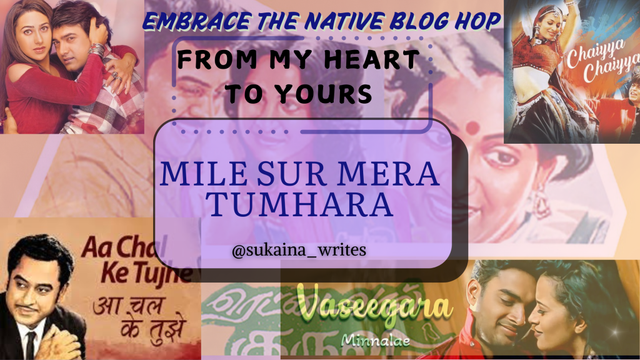
This post is a part of ‘Embrace the Native Blog Hop’ hosted by Manali Desai and Sukaina Majeed under #EveryConversationMatters.

I am writing this towards the deadline. It shows that I initially struggled in writing this piece. Then I sat down. What’s the common thread in our house that binds the four people in my family? The answer was right in front of me. It was music.

 No, not just Hindi. Carnatic, Hindustani classical, Telugu, Tamil, and Malayalam songs and musicians also cross state borders. They join with folk songs of the north belt. 

You see, I have been living in Delhi for 30 years. My mother was born and raised here. My father spent most of his young and old life in Delhi. We would all speak majorly in the Delhi slang at home. This slang was an accumulation of Urdu, Persian, and Hindi. 

No, my mother tongue is not Urdu. No one speaks Urdu in my extended family. My grandparents on both sides have passed down the Uttar Pradesh dialect, if any. They too had been living in Delhi for so many years that we all spoke through songs. Music. 

I am today going to talk about how the melodies of my life have taught me many lessons. Whether in a Dravidian language or a North Indian dialect, these melodies have enriched my life. This music has connected to many more hearts. I looked outside my family and found another music-loving family in the various languages I listen to songs today.

  • Kuch Toh Log Kahenge
  • This song is from the ever iconic Rajesh Khanna starred “Amar Prem.” In it, the actress Sharmila Tagore is crying silently. She faces ridicule because of her profession. This song has healed me every time I have let others’ words affect me. My favorite part of the song is its first stanza and as a woman,as a person who has always taken decisions against the wave is this:

    कुछ रीत जगत की ऐसी है

    हर एक सुबह की शाम हुई

    कुछ रीत जगत की ऐसी है

    हर एक सुबह की शाम हुई

    तू कौन है, तेरा नाम है क्या

    सीता भी यहाँ बदनाम हुई

    https://www.youtube.com/watch?v=X6q7BVZXOUU

    It is this part in particular that stops my tears because this is the essence of the song. It’s the literal translation of “ignore the noise.” The next morning they would have something to say “kyunki logo ka kaam hai kehna.”

  • Chaiyya Chaiyya
  • This song was one I would listen to before Shahrukh Khan started dancing on it at events or award functions. It helped me understand love. To understand passion, the junoon of an individual and how mad one can get in love. Before there existed the OMG look for the song, this song for me was especially the range Sukhwinder Singh provides to this part:

    यार मिसाले ओस 

    चले पाँव के तले फिरदौस चले 

    कभी दाल दाल कभी पात पात 

    में हवा पे ढूंदु उसके निशाँ 

    सारे इश्क़ की छाओं चले

     छय्यां छय्यां

    https://www.youtube.com/watch?v=PimKrn3XkuU

    To find paradise in the feet of the woman you love. That’s a madness only shahrukh could understand which is why it is such a banger now. Also why I am such a huge romantic at heart. If you go back to the song,you will find yourself getting the same adrenaline rush at this exact moment. 

  • Vaseegara
  • Some ten years ago I found Vaseegara online and found my sister singing the song to herself and hook,line and snicker. I was addicted to the song. I couldn’t stop listening to the song. I played it again and again. The power of the Tamil version was so strong. I stopped listening to the Hindi version. The Hindi version is Zara Zara in the movie “Rehna Hai Tere Dil Mein”. The Tamil Song is sung by Bombay Jayashri and composed by one of my favorites Harris Jayaraj. Attaching the link to the video of the song.

    https://www.youtube.com/watch?v=ew1fKCWb_M4

  • Aa Chal Ke Tujhe 
  • When I must have been a 7 year old kid or even younger, my father used to sing this song. The sadness and joy from this song are breathtaking. They have touched us over the many years. The hope for love, a utopian world devoid of hatred. Perhaps that’s why I have never known hate in its literal sense. I grew up listening to lyrics that wanted to make love thrive. My favorite part of the song is the first stanza. Once you listen to it, there is no going back. 

    सूरज की पहली किरण से, आशा का सवेरा जागे

    सूरज की पहली किरण से, आशा का सवेरा जागे

    चंदा की किरण से धुल कर, घनघोर अंधेरा भागे

    चंदा की किरण से धुल कर, घनघोर अंधेरा भागे

    कभी धूप खिले कभी छाँव मिले

    लम्बी सी डगर न खले

    The magic of this song is the authenticity. The singer brings you back from the trance of the utopian world. However, this song lifts me up to spread more love. It encourages me to give more hugs and always have my arms open to get love. 

    These are just four songs. My native language is a mixture of so many dialects and languages. I connect only to people who know about these songs (just kidding) 😂 or these kinds of songs. My heart connects to so many other hearts because of the songs we listen to. 

    If you want to know my playlist, let me know. If you want a song recommendation from the Dravidian languages, let me know. You never know our surs match.

    https://www.youtube.com/watch?v=Y_8VmzWOsgs

    #aRusticMind #blog #blog2025 #blogHopHost #blogWriter #blogger #bloggerOfIndia #bloggersOfIndia #blogging #community #embraceTheNative #entertainment #everyConversationMatters #EveryConversationMatters #FebruaryBlogPost #FebruaryRead #FebruaryWriting #indianLanguages #music #nativeLanguages #news #review #songs #sukainaRites #sukainaWrites #tamilSongs #theNightReader #writing