 sayzard
田中義弘 | taziku CEO / AI × Creative (@taziku_co)
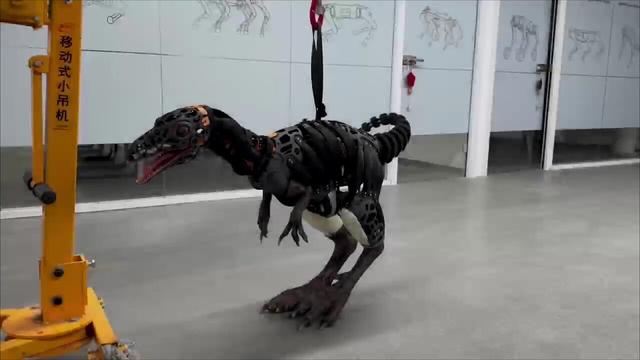
DOBOT Robotics의 FIRST BREATH 바이오미메틱 임바디드 인텔리전스 3.0을 소개하는 트윗으로, 기존의 단순한 동작 제어를 넘어 현실감 있는 로봇의 생체모사 움직임과 창작적 질감을 구현하는 점을 강조한다. 로보틱스/휴머노이드 분야의 새로운 접근으로 보인다.
田中義弘 | taziku CEO / AI × Creative (@taziku_co)
DOBOT Robotics의 FIRST BREATH 바이오미메틱 임바디드 인텔리전스 3.0을 소개하는 트윗으로, 기존의 단순한 동작 제어를 넘어 현실감 있는 로봇의 생체모사 움직임과 창작적 질감을 구현하는 점을 강조한다. 로보틱스/휴머노이드 분야의 새로운 접근으로 보인다.
11-Mar-2026
#Mussel #adhesion meets conductivity: new #bioglue for #bioelectronic #implants
Many industries hope to benefit from #AI, but they know little about where it works & where it’s unreliable. #3DPrinting is a good field to test AI, with complex factors, interacting settings, & unpredictable conditions, says our author Andy Oram.
Read more in this article: https://lpi.org/711y
#3DPrinting #ArtificialIntelligence #MachineLearning #CNN #Biomimetic #AnomalyDetection #AdditiveManufacturing

European Defence Agency Develops Tech for Underwater Drones to Move in Swarms
The European Defence Agency (#EDA) has completed the second phase of its #Swarm of #Biomimetic #UnderwaterVehicles (#SABUVIS II) project, concluding a four-year effort to enable #autonomous underwater vehicles (#AUVs) to operate in coordinated swarms rather than as isolated platforms.

World’s first ‘biomimetic AI robot’ Moya debuts with 92% human-like walking accuracy
Not industrial. Not cartoonish. Moya sits in that uneasy middle ground where robots start feeling too real.
https://interestingengineering.com/ai-robotics/shanghai-unveils-moya-humanoid-robot
#robotics #robots #tech #technews #chinesetech #china #chineserobots #roboticsnews #airobot #ainews #worldfirst #humanlike #biomimetic
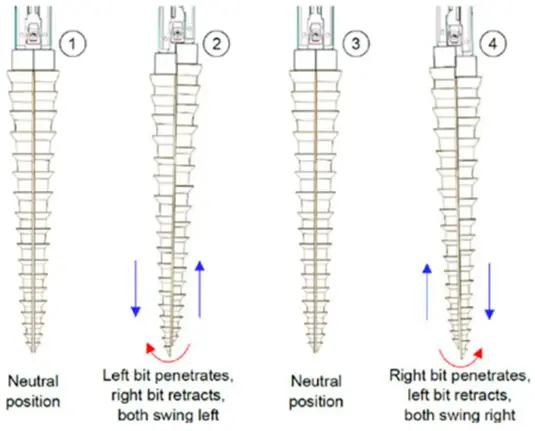
🪱 Bioinspired Drilling for Extraterrestrial Applications
🦾 Bird-like robot with novel wing system achieves self-takeoff and low-speed flight
https://techxplore.com/news/2025-09-bird-robot-wing-takeoff-flight.html
#robots #mechanical #machines #engineering #ornithopter #flight #birds #biomimetic

In 2021, a group of scientists from China engineered the RoboFalcon—a bird-inspired flapping-wing robot with a newly engineered mechanism made to drive bat-style morphing wings capable of flight. While this bio-inspired robot performed well at a cruising speed, it was not capable of flying at lower speeds or achieving takeoff without assistance.
🦴 A new bone substitute made out of 3D-printed glass
https://phys.org/news/2025-09-bone-substitute-3d-glass.html
#materials #bone #biomimetic #medicine #healthcare #3dprinting

You might think that glass has no business acting as a replacement for bone, but it turns out the two materials have many similarities. For a new study published in ACS Nano, researchers developed a 3D printable bio-active glass that served as an effective bone replacement material. In rabbits, it sustained bone cell growth better than regular glass and a commercially available bone substitute.
GiAnt: A Bio-Inspired Hexapod for Adaptive Terrain Navigation and Object Detection
https://arxiv.org/abs/2509.15264
#robots #robotics #cs #vision #computing #mechanical #biomimetic
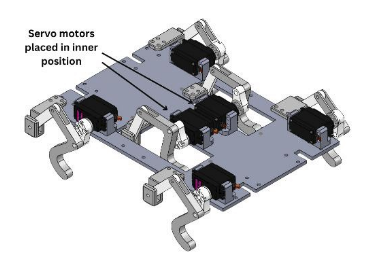

This paper presents the design, development and testing of GiAnt, an affordable hexapod which is inspired by the efficient motions of ants. The decision to model GiAnt after ants rather than other insects is rooted in ants' natural adaptability to a variety of terrains. This bio-inspired approach gives it a significant advantage in outdoor applications, offering terrain flexibility along with efficient energy use. It features a lightweight 3D-printed and laser cut structure weighing 1.75 kg with dimensions of 310 mm x 200 mm x 120 mm. Its legs have been designed with a simple Single Degree of Freedom (DOF) using a link and crank mechanism. It is great for conquering challenging terrains such as grass, rocks, and steep surfaces. Unlike traditional robots using four wheels for motion, its legged design gives superior adaptability to uneven and rough surfaces. GiAnt's control system is built on Arduino, allowing manual operation. An effective way of controlling the legs of GiAnt was achieved by gait analysis. It can move up to 8 cm of height easily with its advanced leg positioning system. Furthermore, equipped with machine learning and image processing technology, it can identify 81 different objects in a live monitoring system. It represents a significant step towards creating accessible hexapod robots for research, exploration, and surveying, offering unique advantages in adaptability and control simplicity.
 michael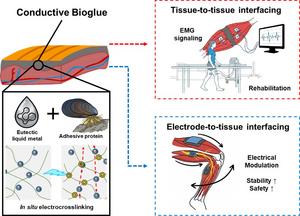
 Linux Professional Institute
 Worlddefensereport
 Totty Johnson
 Lusogeek
 Paul Houle