Otters as bioindicators of estuarine health: Scientific gaps, field-based insights, and a framework for future research

Estuaries are vital ecosystems bridging terrestrial and marine environments, supporting nutrient cycling, biodiversity, and services like flood protection. Yet, they face threats from pollution, habitat fragmentation, overfishing, and climate change, demanding robust bioindicators for effective monitoring. This synthesis highlights otters—semi-aquatic mustelids such as the Neotropical otter (Lontra longicaudis), North American river otter (Lontra canadensis), and sea otter (Enhydra lutris)—as integrative sentinels, leveraging their reliance on clean water, diverse prey, and connected habitats, plus their meso-predator roles in food webs. Based on 40 years of Projeto Lontra fieldwork in Brazil’s Peri Lagoon and global studies, we detail otters’ bioindicator value: habitat specificity (e.g., 30% sighting drops in fragmented areas), contaminant sensitivity (bioaccumulation of POPs, metals, microplastics; 66% Toxoplasma positivity), behavioral proxies (spraints showing diet shifts: 70–80% fish), and top-down effects (e.g., suppressing invasive crabs to stabilize marshes, as in 2025 California research). A Scopus bibliometric analysis (1986–2025) exposes biases: 6,300 publications dominated by temperate species (>70% on sea/Eurasian otters), with tropical/estuarine gaps (Neotropical otter: 211 documents, Brazil at 49%). Persistent challenges include sublethal contaminant effects, dispersal, density regulation, and socioeconomic integration. We propose a seven-pillar framework: population scaling, density studies, impact quantification, monitoring harmonization, reintroductions, socioeconomic balancing, and pathogen considerations. This promotes interdisciplinary, equitable collaborations to advance otter-based estuarine management.

Estuarine Management and Technologies
It sounds like a curiosity, but the sensitivity of Unio tumidus to pollution https://pmc.ncbi.nlm.nih.gov/articles/PMC10714398/ is used by more than 50 water treatment plants across Poland. The mollusks control the water supply for 10 million people. Similar systems operate in the US (for example, in Minneapolis) https://www.cbsnews.com/minnesota/news/mussels-helping-monitor-water-quality-in-minneapolis/ and other countries. #EnvironmentalMonitoring #WaterTreatment #Poland #USA #Minneapolis #Mollusks #Bioindicators
Freshwater Mussels as Sentinels for Safe Drinking Water Supply in Europe

In the context of the European Union (EU) Drinking Water Directive, freshwater mussels (Order Unionoida: Bivalvia) can help us face the challenges of safe drinking water provisions for all citizens in the EU. Specifically, the implementation of high ...

PubMed Central (PMC)
Ctenophora festiva /maskerkamlangpoot (Dutch common name) or "comb-mask" crane fly. #diptera #flies #biodiversity #bioindicators
Plastic pollution - Wikipedia

Organic Consumers Association of Australia on LinkedIn: #organic #vegan #natural #healthy #permaculture #healthylifestyle…

A bioindicator is a living organism that gives us an idea of the health of an ecosystem. Some organisms are very sensitive to pollution in their environment…

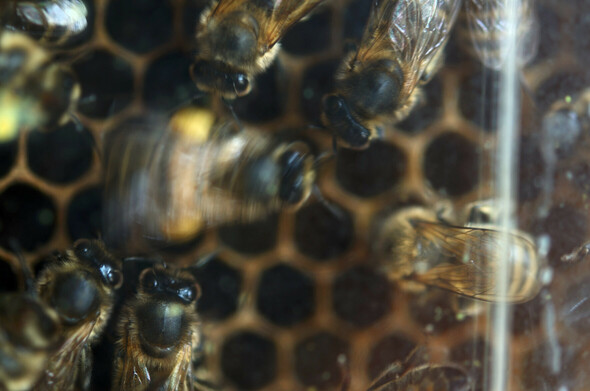
6/7 - In addition, because #HoneyBees are generalist foragers, we hypothesize that we ought to be able to use them as #BioIndicators for #NativeBees: Landscapes where honey bees find profitable food should be able to support native bees as well. For example, in England @[email protected] and I have found that honey bees were pointing their nestmates to a nature reserve mainted primarily for butterflies (https://doi.org/10.1016/j.cub.2014.03.072).
2/7 - #EntSoc22 in Vancouver is in full swing, and I wanted to take the opportunity to advertize the talk of my #PhD student Robert Ostrom. Using #HoneyBee #WaggleDances as #BioIndicators he is trying to predict native #bee #abundance, #richness and #diversity.
Honey bee foragers that have found a profitable resource will perform waggle dances when back in the hive. This was first scientifically described by Karl von Frisch (reviewed here: https://rdcu.be/cZvHq).
The dance legacy of Karl von Frisch

1/6 - As people are traveling to #EntSoc2022 in Vancouver I wanted to take the opportunity to advertize the talk of my #PhD student Robert Ostrom. Using #HoneyBee #WaggleDances as #BioIndicators he is trying to predict native #bee #abundance, #richness and #diversity.

Honey bee foragers that have found a profitable resource will perform waggle dances when back in the hive. This was first scientifically described by Karl von Frisch (reviewed here: https://rdcu.be/cZvHq).

The dance legacy of Karl von Frisch