Amazing and reassuring research. There is a global network taking care of the planet. We just need to get out of the way.

'Arbuscular mycorrhizal fungi form symbioses with ~70% of plant species, building hyphal networks that exchange nutrients for host-derived carbon. These tubular networks move ~1 billion metric tons of carbon per year into Earth’s soils... We estimate that global topsoils contain 1.10 × 10¹⁷ ± 0.13 × 10¹⁷ SD kilometers of living hyphae, weighing ~300 ± 60 SD megatons, ~4- to 6-fold the biomass of humans. Our uncertainty analyses identified undersampled ecosystems that require additional empirical attention.' - Society for the Protection of Underground Networks (SPUN)

#SPUN #fungi #mychorriza #ecology #Gaia #science #soilscience
https://www.science.org/doi/10.1126/science.adu4373

A Soil–Plant–Atmosphere Continuum model coupled to CFD to simulate plant energy and water exchanges in heterogeneous microclimates
https://doi.org/10.1016/j.agrformet.2025.110906 via Agricultural and Forest Meteorology #PlantScience #SoilScience

by Joseph Vernier, Sylvain Edouard, Baptiste Amiot, Martin Ferrand, Andrée Tuzet, Eric Dupont, Céline Caruyer, Mike Van Iseghem, Axel Becker, Didier Combes, and Patrick Massin

Monoliths are perfect 3D models in soil science, but how are they excavated, transported, and prepared? To get from a vague idea to an "aha-moment", I decided to give it a try myself! Reflecting on the process, I found a matching paper on how crucial the process of creating visuals is in science.

📖 Evagorou et al. (2015): The role of visual representations in scientific practices. Int J STEM Ed. DOI: 10.1186/s40594-015-0024-x

#SoilScience #Bodenkunde #SciComm #STEM

RE: https://halo.nu/@theguardian_us_environment/116652601051975963

"But flavour was the collateral damage. The natural complexity of soil – the substance Barber says is 'the single best predictor of how food will taste' – was devastated by chemical fertilisers which in less than a century have contributed to the degradation of more than a third of the world’s soil, the UN estimates."

When soil is an inert substrate instead of a partnered system in cultivation, bland food is what you get.

#permaculture #SoilScience #RegenerativeAgriculture

📢 Master Thesis: Calibration of a Soil-Plant Model using experimental data at @fzj
https://recruiting.fz-juelich.de/jobposting/b58f7778dd07a7ecd7490d2d35344a2b26882f660
#PlantSciJobs #soilscience
Master Thesis - Calibration of a Soil-Plant Model using experimental data

📢 PhD position: Soil–Plant Interactions Modelling at @fzj
Combining Root Contrasted Phenotypes for More Resilient Agro-Ecosystems
https://www.fz-juelich.de/en/careers/jobs/2026D-030 #PlantSciJobs #soilscience
PhD position - Soil–Plant Interactions Modelling

In the coming decades, climate change and land use change will have a significant impact on the performance of terrestrial ecosystems in terms of their services (food, feed, fiber, energy) and the challenges facing society. At the Institute of Bio- and Geosciences - Agrosphere (IBG-3), we are developing solutions to secure ecosystem services based on an improved understanding of hydrological and biogeochemical processes in terrestrial systems. The focus is on agricultural and forestry systems, which are coming under increasing pressure as a result of global change. Innovative observation technologies are combined with laboratory experiments and modeling to research and predict terrestrial processes across scales (from the pore scale to the field scale to the continental scale), thereby contributing to the sustainable use of natural resources such as water, soil, and the atmosphere.

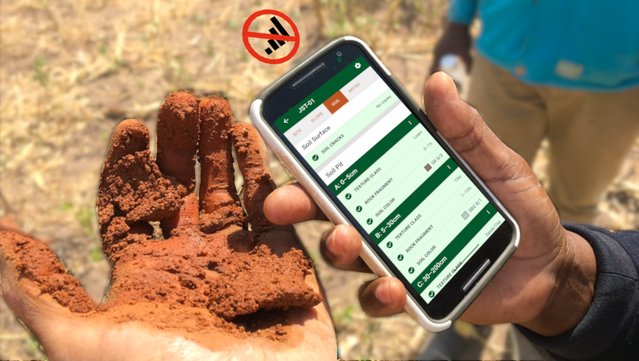
LandPKS Soil ID 1.4.6 enables offline site creation! This means that wherever you are—from an urban garden, to a field excursion in Utah, to a rural farm in South Sudan—you’ll be able to create a site and gather data about the land and soil.

#soil #soilscience #openSource

https://landpks.terraso.org/collect-soil-data-anywhere-in-the-world-with-landpks-soil-id-1-4-6/

Collect soil data anywhere in the world with LandPKS Soil ID 1.4.6 | LandPKS Soil ID

Our world is more connected than ever, but many places still lack reliable access to the Internet. That’s why we’re pleased to share that our latest release of LandPKS Soil ID enables site creation without an internet connection. This means that wherever you are—from an urban garden, to a field excursion in Utah, to a ... Read more

LandPKS Soil ID
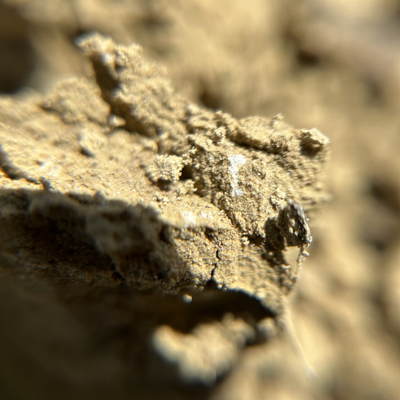
Did a #soilscience one day course today. This is tunnel erosion on a small scale.
Was lucky enough to spend two great days describing and classifying soils as part of Soil Science Australia’s ‘Soil Management Training’ course. ☀️🌿 #soilscience