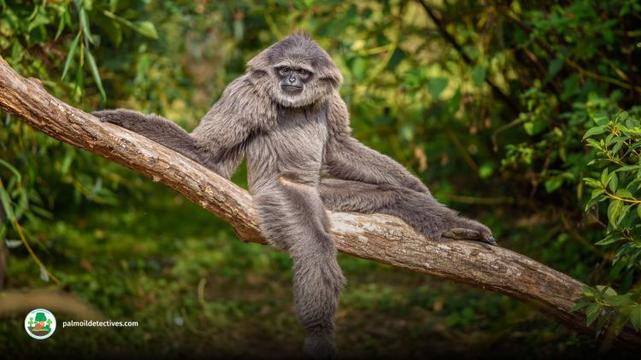
Silvery Gibbon Hylobates moloch
Red List Status: Endangered
Locations: Indonesia (island of Java, including provinces of Banten, West Java, and Central Java as far east as the Dieng Mountains)
The Silvery #Gibbon đ©¶đđ” of genus âHylobatesâ meaning âForest Walkerâ. They sing to each other in âlocalâ accents and do thrilling acrobatics đ€žââïž They are #endangered, help them to survive! #BoycottPalmOil #Boycott4Wildlife đŽđ„âïž @palmoildetect https://palmoildetectives.com/2021/02/06/silvery-gibbon-hylobates-moloch/
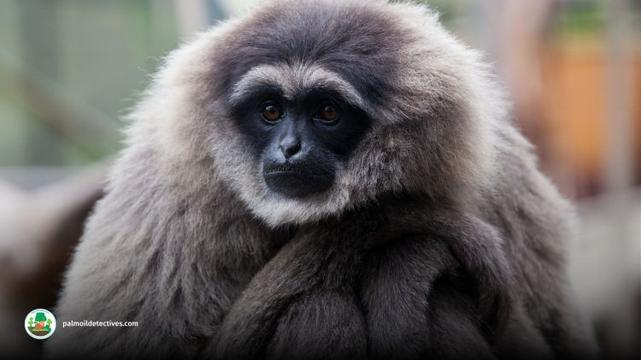
Share to BlueSky Share to TwitterThe Silvery Gibbon belongs to the genus Hylobates. The word Hylobates means âForest Walkerâ in Greek. The gibbons in this genus are known for the white circle of fur around their faces. They are known to communicate in species-specific song when defining territory or attracting mates. They sing in regional accents to each other, have long swinging arms, inquisitive natures and superior acrobatic skills, they spend most of their lives high up in the tree-tops.
Appearance & Behaviour
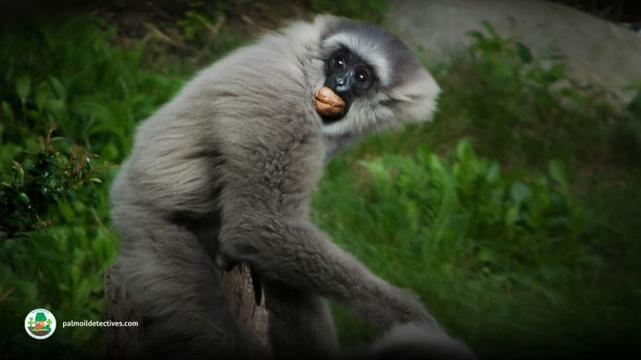
Silvery gibbons are small apes, their bodies draped in long, silvery-grey fur with a dark grey or black cap on their heads and a distinctive fringe of white or light grey around their dark faces. Adults typically weigh around 6 kilograms, with males and females similar in size. Their arms are exceptionally long, spanning twice their body length, allowing them to brachiateâswing hand over handâthrough the treetops with remarkable speed and agility. Unlike many other gibbon species, silvery gibbons do not sing duets; instead, it is the females who dominate the morning chorus with loud, haunting calls that echo through the forest. These family groups, usually consisting of a monogamous pair and their offspring, move together through the canopy, their movements fluid and almost effortless.
Threats
Palm oil and agricultural deforestation
Silvery gibbons face severe pressure from the ongoing loss of their forest habitat. In Java, particularly in Banten Province, deforestation is accelerating at a high rate. The conversion of forests to agricultural land, including palm oil plantations and other crops, leaves behind only isolated fragments of habitat. This fragmentation forces gibbons into ever-smaller territories, increasing stress and competition for resources. The once-continuous canopy that silvery gibbons depend on is being replaced by agricultural fields, making survival increasingly difficult for these arboreal primates.
Illegal pet trade, illegal poaching and hunting
Silvery gibbons are targeted by hunters for both meat and the illegal pet trade. Poachers often kill adult gibbons to capture infants, who are then sold as pets in markets throughout Indonesia. This practice not only removes individuals from the wild but also disrupts family groups and weakens the social structure essential for gibbon survival. The illegal pet trade remains a persistent and devastating threat, driven by demand for exotic animals and compounded by the ongoing destruction of their natural habitat.
Timber logging and habitat fragmentation
Logging operations further degrade and fragment the remaining forest habitat of silvery gibbons. Roads and clearings cut through the forest, severing the vital canopy connections that gibbons rely on for movement and social interaction. Fragmentation isolates populations, reducing genetic diversity and making them more vulnerable to disease and environmental change. In many areas, only small, isolated groups of gibbons remain, cut off from neighbouring populations by cleared land.
Climate change
Shifting rainfall patterns and rising temperatures threaten to alter the delicate balance of Indonesiaâs forests. Changes in fruiting and flowering times can disrupt the silvery gibbonâs food supply, while extreme weather events destroy habitat and isolate populations even further. The silvery gibbonâs world is becoming hotter, drier, and less predictable, with the forests they depend on shrinking year by year.
Diet
Silvery gibbons are primarily frugivorous, with fruit making up about 61% of their diet and leaves accounting for another 38%. They also consume flowers and, to a lesser extent, insects. The silvery gibbonâs foraging is a daily journey through the treetops, as they search for scattered fruit-bearing trees. Their home ranges average between 17 and 60 hectares, and several families may share overlapping territories, especially where fruit is abundant. The rhythm of their feeding is woven into the life of the forest, as they play a vital role in seed dispersal and the regeneration of their ecosystem.
Mating & Reproduction
The Silvery Gibbon is considered Endangered based on a suspected population reduction of 50% or more over the course of three generations (2001-2015, 2016-2030, 2031-2045). This ongoing decline is due to the combined threats of forest habitat loss and hunting for subsistence purposes, in addition to supplying the pet trade.
IUCN Red List
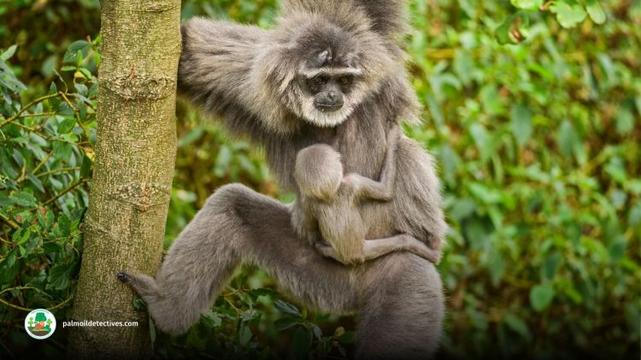
Silvery gibbons are monogamous, forming lifelong pair bonds. There is no set breeding season, and females give birth to a single infant after a gestation period of about seven to eight months. The mother carries her baby close for the first year, nursing and protecting it as the family group moves through the forest. Weaning occurs at around 18 months, and offspring remain with their parents until they reach maturity at about eight years of age, when they leave to form their own families. The family unit is tight-knit, with both parents sharing in the care of their young and strong emotional bonds that are essential for survival in a changing world.
Geographic Range
Silvery gibbons are endemic to the island of Java, Indonesia, with their range primarily in the (still forested) western regions of Banten and West Java, and extending into parts of Central Java as far east as the Dieng Mountains. They inhabit lowland and lower montane rainforests up to 2,400 metres above sea level, though they are most commonly found below 1,600 metres. Their historical range has contracted dramatically due to deforestation and human infrastructure development, and they are now restricted to fragmented forest patches. The sounds of the silvery gibbonâonce a common feature of Javaâs forestsâare now tragically heard in very few places.
FAQs
How many silvery gibbons are left?
Estimates suggest that fewer than 2,500 mature silvery gibbons remain in the wild, with populations continuing to decline due to habitat loss, fragmentation, and the illegal pet trade. In some areas, fewer than 2,000 individuals are considered genetically viable for the continuation of the species. The silvery gibbonâs future is precarious, and urgent action is needed to prevent their extinction.
What are the characteristics of the silvery gibbon?
Silvery gibbons are small, slender apes with long, silvery-grey fur and a dark cap on their heads. They lack a tail, and their arms are exceptionally longâup to twice their body lengthâallowing them to brachiate through the forest canopy with remarkable speed and grace. Adults typically weigh between 6 and 8 kilograms, with males slightly larger than females. Silvery gibbons are strictly arboreal, rarely descending to the forest floor, and live in small, monogamous family groups. The female leads the morning chorus with haunting, resonant calls that can be heard for up to a kilometre.
Is a silvery gibbon a monkey?
A silvery gibbon is not a monkey, but a lesser ape. The primary difference between a lesser ape (like a gibbon) and a monkey is that apes, including lesser apes, do not have tails, while most monkeys do. Additionally, apes are generally larger and have broader chests, while monkeys tend to be smaller and have narrower chests. Apes also have shoulder joints that allow for brachiationâswinging through treesâand some species exhibit higher intelligence and tool use. Lesser apes, such as gibbons and siamangs, are smaller than the great apes (chimpanzees, gorillas, orangutans, and humans) but share these key anatomical and behavioural traits. In contrast, most monkeys have tails, which they use for balance, and are more adapted to running along branches rather than swinging through the trees. While monkeys are intelligent, apes generally exhibit more complex cognitive abilities and social behaviours.
Why will the silvery gibbon become extinct in the next decade?
The silvery gibbon faces multiple, compounding threats that make extinction within the next decade a real possibility. Habitat loss due to deforestation has reduced their forest home to less than 4% of its original extent. Fragmentation isolates populations, making them more vulnerable to disease and genetic decline. The illegal pet trade continues to remove individuals from the wild, and climate change is altering the availability of food and water. Without urgent, large-scale intervention, the silvery gibbon is likely to disappear from much of its remaining range.
Are gibbon monkeys aggressive?
Gibbons, including silvery gibbons, are not monkeys but lesser apes. In their natural environment, silvery gibbons are highly territorial and will defend their home range with vocalisations and, if necessary, physical displays. Males and females both play a role in defending their territory, with the femaleâs morning calls and the maleâs aggressive responses to intruders. Within the family group, silvery gibbons are generally peaceful and nurturing, with strong social bonds between parents and offspring. In captivity, gibbons can show aggression during introductions or when resources are contested, but this is not typical of their behaviour in the wild.
Are silvery gibbons Endangered?
Yes, the silvery gibbon is classified as Endangered on the Red List of Threatened Species. Their population is estimated at fewer than 2,500 mature individuals and is declining due to habitat loss, fragmentation, and the illegal pet trade. The silvery gibbonâs survival is at risk, and their future depends on the protection of remaining forest habitat and the reduction of human-induced threats
Take Action!
Use your wallet as a weapon and #BoycottPalmOil #Boycott4Wildlife. Support indigenous-led conservation and agroecology. Reject products linked to deforestation, mining, and the illegal wildlife trade. Adopt a #vegan lifestyle and #BoycottMeat to protect wild and farmed animals alike. Every choice mattersâstand with the silvery gibbon.
Further Information
Kim, S., Lappan, S., & Choe, J. C. (2010). Diet and ranging behavior of the endangered Javan gibbon (Hylobates moloch) in a submontane tropical rainforest. American Journal of Primatology, 72(10), 991â1000. https://doi.org/10.1002/ajp.20893
Nijman, V. 2020. Hylobates moloch. The IUCN Red List of Threatened Species 2020: e.T10550A17966495. https://dx.doi.org/10.2305/IUCN.UK.2020-2.RLTS.T10550A17966495.en. Downloaded on 06 February 2021.
Reyes, K. R., Patel, U. A., Nunn, C. L., & Samson, D. R. (2021). Gibbon sleep quantified: The influence of lunar phase and meteorological variables on activity in Hylobates moloch and Hylobates pileatus. Primates, 62, 749â759. https://pubmed.ncbi.nlm.nih.gov/34052907/
Silvery Gibbon Hylobates moloch
How can I help the #Boycott4Wildlife?
Take Action in Five Ways
1. Join the #Boycott4Wildlife on social media and subscribe to stay in the loop: Share posts from this website to your own network on Twitter, Mastadon, Instagram, Facebook and Youtube using the hashtags #Boycottpalmoil #Boycott4Wildlife.
2. Contribute stories: Academics, conservationists, scientists, indigenous rights advocates and animal rights advocates working to expose the corruption of the palm oil industry or to save animals can contribute stories to the website.
Wildlife Artist Juanchi Pérez
Mel Lumby: Dedicated Devotee to Borneoâs Living Beings
Anthropologist and Author Dr Sophie Chao
Health Physician Dr Evan Allen
The Worldâs Most Loved Cup: A Social, Ethical & Environmental History of Coffee by Aviary Doert
How do we stop the worldâs ecosystems from going into a death spiral? A #SteadyState Economy
3. Supermarket sleuthing: Next time youâre in the supermarket, take photos of products containing palm oil. Share these to social media along with the hashtags to call out the greenwashing and ecocide of the brands who use palm oil. You can also take photos of palm oil free products and congratulate brands when they go palm oil free.
https://twitter.com/CuriousApe4/status/1526136783557529600?s=20
https://twitter.com/PhillDixon1/status/1749010345555788144?s=20
https://twitter.com/mugabe139/status/1678027567977078784?s=20
4. Take to the streets: Get in touch with Palm Oil Detectives to find out more.
5. Donate: Make a one-off or monthly donation to Palm Oil Detectives as a way of saying thank you and to help pay for ongoing running costs of the website and social media campaigns. Donate here
Pledge your support#Ape #apes #BanPrimateExperiments #Boycott4wildlife #BoycottMeat #BoycottPalmOil #endangered #EndangeredSpecies #ForgottenAnimals #forgottenanimal #frugivore #Gibbon #Gibbons #illegalPetTrade #Indonesia #Indonesian #infrastructure #Java #Javan #Mammal #palmoil #Primate #primates #roads #SilveryGibbonHylobatesMoloch #timber #vegan #wildlifetrade
Nancy Maâs Night Monkey Aotus nancymaae
Endangered
Extant (resident)
Brazil (Amazonas); Colombia; Peru
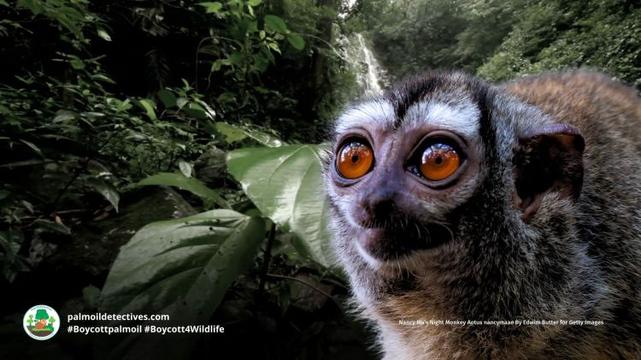
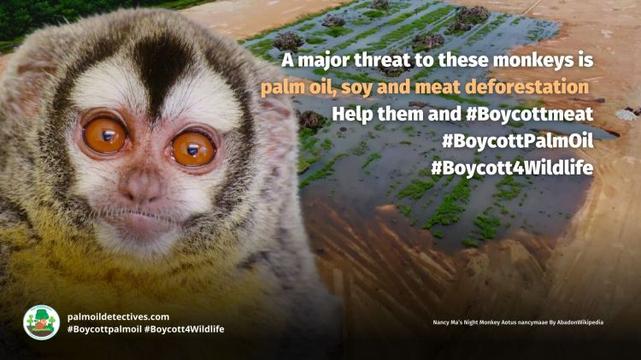
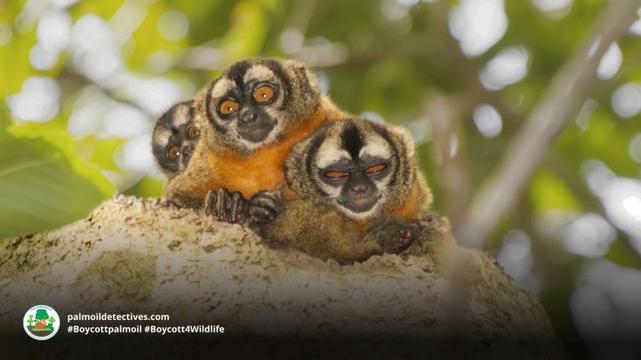
Deep in the heart of the Amazon rainforest, the Nancy Maâs Night Monkeys peer out of the trees during the dusk with their large, soulful eyes and striking facial markings. Also known as the Maâs night monkey or the Peruvian red-necked owl monkey, this nocturnal primate is named in honour of Dr. Nancy Shui-Fong Ma, who played a significant role in understanding their genetics and later led to the discovery of other species.
These monkeys are endemic to Brazil, Peru, and parts of Colombia, these monkeys are an essential part of their ecosystem. They now face direct threats from expansion for palm oil, soy and meat deforestation and are wild captured for scientific research â much of primate research is not even relevant to human health. Help them every time you shop and #BoycottPalmOil, be #vegan and #Boycott4Wildlife!
Nurturing small monkeys with big eyes, Nancy Maâs Night Monkeys care in convivial family groups. Threats: capture for use in medical research đ and #palmoil #deforestation đȘ #BanPrimateExperiments đ#Boycottpalmoil #Boycott4Wildlife @palmoildetect https://wp.me/pcFhgU-8Hi
Share to BlueSky Share to TwitterNancy Maâs Night #Monkeys are little wonders of #Peru #Brazil đđ§đ· đ©·Theyâre now #endangered due to soy, #palmoil and meat #ecocide and capture for cruel experiments đ€źđ« #BanPrimateExperiments đ #Boycottpalmoil đŽđ« #Boycott4Wildlife @palmoildetect https://wp.me/pcFhgU-8Hi
Share to BlueSky Share to TwitterAppearance & Behaviour
These diminutive monkeys weigh around 700 grams and are around 90 cm long from head to tail. They are famous for their large eyes, which have evolved for excellent night vision. They sport an endearing heart-shaped patch of white fur around their eyes and mouth, contrasted by dark brown or black outlines. Their coats are a mix of reddish-orange, light brown, and grey fur, and they possess a black, non-prehensile tail. Their hands are adept at grasping, equipped with long fingers and wide pads.
Nancy Maâs Night Monkeys play a vital role in forest ecosystems by dispersing seeds, which aids in forest regeneration. They are nocturnal and crepuscular creatures are most active during twilight and dawn. They forage in the upper canopy and sleep in the lower canopy or understory during the day.
Quirky Facts
Nancy Maâs Night Monkeys are unique among Latin American monkeys due to their monochromatic vision, seeing the world in shades of black and white. This adaptation does not impede their nocturnal activities; instead, it enhances their ability to move gracefully and catch insects in the dark. Their exceptional night vision, along with a strong sense of smell, helps them locate fruits, flowers, and insects without needing to perceive color.
Living high in the trees, these monkeys are primarily arboreal and only venture to the ground when absolutely necessary. They source their food from the upper canopy but descend to the lower canopy or understory to rest. Their peak activity periods are at twilight and dawn, making them crepuscular creatures. Daytime, however, is reserved for sleep.
When it comes to finding a place to sleep, Nancy Maâs Night Monkeys are very particular. They prefer tree hollows or branches and shrubs that offer natural depressions or can be manipulated to create a secure hiding spot. Their shelters must be large enough for the entire group to sleep together, hidden from predators and equipped with multiple escape routes in case of danger. This meticulous selection of sleeping quarters helps mitigate the risk posed by daytime predators.
Take Action!
Strong government and global legislation to protect their rainforest home is needed. Additionally, the maintenance and guardianship of forests by indigenous peoples keeps these animals protected. Consumers can take action every time they shop, by being vegan and boycotting meat and boycotting palm oil, as animal agriculture, soy and palm oil deforestation is a major threat to the Nancy Maâs Night Monkey. Use your wallet as a weapon for future generations!
Threats
IUCN Red List highlights a major threat these monkeys being palm oil deforestation across their range. A second totally unnecessary and tragic threat is their use for medical research. The findings of using primates in human research have been widely criticised, there are now much better, animal-free ways to do research.
Habitat
Nancy Maâs Night Monkeys inhabit the lowland tropical rainforests of Northern Peru, Western Brazil, and certain regions of Colombia. They prefer areas that experience seasonal flooding, which provide more tree hollows and soft vegetation for nesting.
Diet
Nancy Maâs Night Monkeys primarily feast on fruits and flowers found in the upper reaches of the forest canopy. Though their diet mainly consists of fruits, they occasionally supplement it with insects. Their dexterous hands make them adept at capturing insects on branches; they often hold the insect with one hand while using the other to pick it apart for consumption.
Being nocturnal gives these monkeys an advantage, as they forage under the cover of darkness, avoiding competition with diurnal herbivores. This nighttime activity allows them to access food resources without the pressure of daytime competitors.
Mating and breeding
If want to find an example of a loving parental bond look no further than Nancy Maâs Night Monkeys! The mother and father become the nucleus of a small family, including their offspring until they reach adulthood, which is around two years old.
During this time, the young monkeys will eventually leave to find their own lifelong mates. Typically, a family group consists of the parents and up to three children.
The bonded pair mates year-round but usually has only one or two offspring each year. The gestation period is approximately 133 days (a little over four months). For the first week after birth, both parents equally share the responsibilities of caring for their newborn.
After the initial week, the father takes on the primary role in child-rearing, with the mother mainly handling nursing duties. Babies nurse for about one to three weeks. After nursing, mothers encourage the baby to return to the father, who continues to carry the infant until it can move independently. The father is responsible for protection, grooming, nurturing, and additional feeding once the baby is weaned. This remarkable paternal involvement makes Nancy Maâs Night Monkeys an inspiring example of fatherhood in the animal world.
Support Nancy Maâs Night Monkeys by going vegan and boycotting palm oil in the supermarket, itâs the #Boycott4Wildlife
Support the conservation of this species
This animal has no protections in place. Read about other forgotten species here. Create art to support this forgotten animal or raise awareness about them by sharing this post and using the #Boycottpalmoil #Boycott4Wildlife hashtags on social media. Also you can boycott palm oil in the supermarket.
Further Information
Maldonado, A., GuzmĂ n-Caro, D., Shanee, S., Defler, T.R. & Roncancio, N. 2020. Aotus nancymaae. The IUCN Red List of Threatened Species 2020: e.T41540A115578713. https://dx.doi.org/10.2305/IUCN.UK.2020-3.RLTS.T41540A115578713.en. Accessed on 24 July 2024.
Neotropical Primate Conservation. (n.d.). Nancy Maâs night monkey. Retrieved from https://neprimateconservancy.org/nancy-mas-night-monkey/
Wikipedia. (n.d.). Nancy Maâs night monkey. Retrieved from https://en.wikipedia.org/wiki/Nancy_Ma%27s_night_monkey
How can I help the #Boycott4Wildlife?
Take Action in Five Ways
1. Join the #Boycott4Wildlife on social media and subscribe to stay in the loop: Share posts from this website to your own network on Twitter, Mastadon, Instagram, Facebook and Youtube using the hashtags #Boycottpalmoil #Boycott4Wildlife.
2. Contribute stories: Academics, conservationists, scientists, indigenous rights advocates and animal rights advocates working to expose the corruption of the palm oil industry or to save animals can contribute stories to the website.
Wildlife Artist Juanchi Pérez
Mel Lumby: Dedicated Devotee to Borneoâs Living Beings
Anthropologist and Author Dr Sophie Chao
Health Physician Dr Evan Allen
The Worldâs Most Loved Cup: A Social, Ethical & Environmental History of Coffee by Aviary Doert
How do we stop the worldâs ecosystems from going into a death spiral? A #SteadyState Economy
3. Supermarket sleuthing: Next time youâre in the supermarket, take photos of products containing palm oil. Share these to social media along with the hashtags to call out the greenwashing and ecocide of the brands who use palm oil. You can also take photos of palm oil free products and congratulate brands when they go palm oil free.
https://twitter.com/CuriousApe4/status/1526136783557529600?s=20
https://twitter.com/PhillDixon1/status/1749010345555788144?s=20
https://twitter.com/mugabe139/status/1678027567977078784?s=20
4. Take to the streets: Get in touch with Palm Oil Detectives to find out more.
5. Donate: Make a one-off or monthly donation to Palm Oil Detectives as a way of saying thank you and to help pay for ongoing running costs of the website and social media campaigns. Donate here
Pledge your supportLearn about other animals endangered by palm oil and other agriculture
Global South America S.E. Asia India Africa West Papua & PNGGlaucous Macaw Anodorhynchus glaucus
Attenboroughâs Long-Beaked Echidna Zaglossus attenboroughi
Nancy Maâs Night Monkey Aotus nancymaae
Maned Wolf Chrysocyon brachyurus
Tufted Ground Squirrel Rheithrosciurus macrotis
Visayan Broadbill Sarcophanops samarensis
Learn about âsustainableâ palm oil greenwashing
Read more about RSPO greenwashing
Lying Fake labels Indigenous Land-grabbing Human rights abuses Deforestation Human health hazardsA 2019 World Health Organisation (WHO) report into the palm oil industry and RSPO finds extensive greenwashing of palm oil deforestation and the murder of endangered animals (i.e. biodiversity loss)
Read more#animals #BanPrimateExperiments #BoycottMeat #Boycott4wildlife #BoycottPalmOil #Brazil #Colombia #deforestation #ecocide #endangered #ForgottenAnimals #hunting #meatAgriculture #medicalResearch #monkeys #NancyMaSNightMonkeyAotusNancymaae #PalmOil #palmOilDeforestation #palmoil #Peru #poaching #Primate #primates #SouthAmericaSpeciesEndangeredByPalmOilDeforestation #soyDeforestation #vegan
We donât know how many mountain gorillas live in the wild. Hereâs why
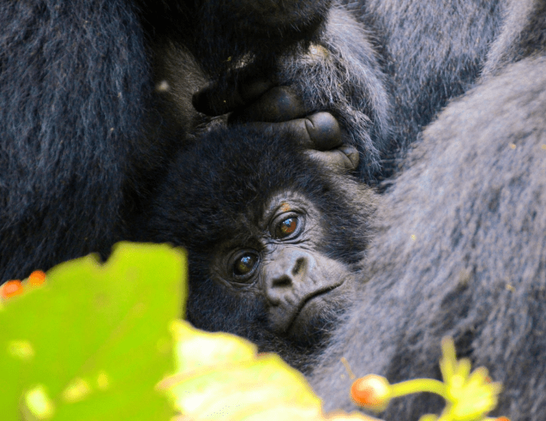
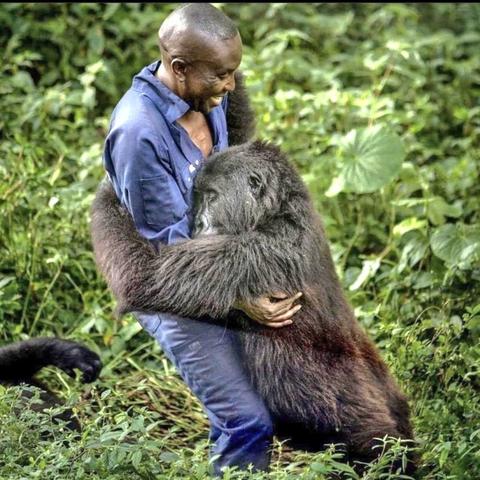
How important are the mountain #gorillas of Ugandaâs Bwindi Impenetrable Forest National Park to global populations? Their importance to the health of the forest is immeasurable and irreplacable! Mountain gorillas are one of the two subspecies of eastern gorillas. They are divided into just two populations: one in the Virunga Massif that spans the borders of Uganda, Rwanda and the Democratic Republic of Congo (DRC) and one population that lives in the Bwindi Impenetrable National Park in Uganda and the adjacent Sarambwe Nature Reserve in DRC. Help them to survive, be #vegan and #BoycottPalmOil #Boycott4Wildlife
Just how important are #mountain #gorillas đŠ of Bwindi Impenetrable Forest #Uganda đșđŹ and #Congo? đšđ© They are irreplacable and vital! Learn about efforts to save them! Fight for them when you #BoycottPalmOil #Boycott4Wildlife đŽđ©žđ„âïž @palmoildetect https://palmoildetectives.com/2021/05/12/we-dont-know-how-many-mountain-gorillas-live-in-the-wild-heres-why/
Share to BlueSky Share to TwitterA new census â carried out by the Greater Virunga Transboundary Collaboration (a coalition of governments, non-profits and conservationists) in 2018 â shows that the population of mountain gorillas in Ugandaâs Bwindi Impenetrable Forest National Park is now at 459, up from 400 in 2011. This could bring the total number count for the subspecies to 1,069 gorillas. Katerina Guschanski explains that while this is great news, these figures may still not be accurate.
The Bwindi population holds a bit less than half of all mountain gorillas in the world, thus its importance for the global survival of these great apes cannot be overstated.
Mountain gorillas receive admirable conservation attention but theyâre vulnerable due to habitat encroachment, potential disease transmission from humans, poaching and civil unrest.
Mountain gorillas in Bwindi Impenetrable Forest. Shutterstock/Claire E CarterBecause there are only about 1,000 mountain gorillas left, itâs important that their population size be continuously monitored to evaluate whether, and which, conservation tactics work.
Their populations must keep growing because mountain gorillas have very low genetic diversity. This reduces their ability to adapt to future changes in the environment. For instance, if faced with new diseases, they are extremely susceptible because they donât have genetic variants that would give them more resistance. Low genetic diversity was implicated in the extinction of some mammals, such as the mammoth.
Continued population growth is also needed to make them less vulnerable to random events, such as habitat destruction through extreme weather events, which could wipe out an entire population.
What can account for a rise in the number of gorillas?
One of the main factors that explains the higher detected number of gorillas is the change in the census technique used. During mountain gorilla censuses researchers collect faecal samples from gorilla nests (where they sleep at night) to genetically identify individuals. Gorillas that are used to human presence can be directly counted.
The teams in the latest census conducted two full systematic sweeps through the forest. They covered the entire region twice from east to west. This is a physically and logistically demanding method, but itâs very thorough.
The previous census, carried out in 2011, also covered the area twice, but only one of these attempts was a full sweep â meaning it started at one end of the forest and systematically progressed towards the other end. The other sweep was disjointed, in terms of how it covered the area and the timing, allowing gorilla groups to easily move and avoid detection.
In Bwindi, from the estimated 459 individuals, 196 are in groups that are used to people and can easily be counted. This means that population estimates are largely based on genetic profiles generated from night nests and so canât be fully accurate because some will be missed.
Censuses of Virunga mountain gorillas are more accurate because more of their gorillas are used to human presence. In the most recent census, thereâs been a rise in their population. It shows an increase from 458 individuals in 2010 to 604 in 2016. Most of these gorillas â 418 out of 604 â belong to groups that are used to human presence, they can be followed daily and easily counted.
The population increases in the Virunga gorillas is strongly attributed to active conservation. This includes continuous monitoring and veterinary attention, such as the removal of snares and treatment of respiratory diseases.
Is this rise a significant number and how accurate do you think it is?
The Bwindi census results were made publicly available in a somewhat unusual way. Scientific studies generally undergo a thorough peer-review before they are published, which has not yet happened for these findings. This means the findings havenât yet been properly scrutinised and leaves the question about the gorillaâs population size open.
In addition, as mentioned above, the larger number of individuals detected in the 2018 census could be the result of the changed survey method. We therefore canât make reliable comparisons to previous estimates from the 2011 and the 2006 censuses.
Consider that in the latest census, of the 33 gorilla groups â which werenât used to the presence of people â only 14 (or 42%) were detected during both sweeps. Similarly, only one of 13 solitary individuals was detected in both sweeps. So, even with full, systematic sweeps, more than half the groups and solitary individuals were missed every time.
This shows we still do not have a good understanding of the actual population size of Bwindi mountain gorillas. The previous surveys are likely to have missed multiple groups and individuals so we canât derive conclusions about population size changes. If another sweep were to be conducted, researchers could find more individuals, but that doesnât necessarily mean that the population has grown.
What we can say is that there are more mountain gorillas than we thought, which is great news.
What can be done to improve census methods?
Using the results of the two census sweeps in Bwindi, researchers will estimate the likely number of gorillas. The accuracy and precision of the estimate depends strongly on how many gorilla groups and individuals were detected in both sweeps.
To make census figures more concrete, more sweeps need to be included so that more individuals are confirmed. This would make the population size estimates more accurate with less uncertainty.
Katerina Guschanski, Associate professor, Uppsala University This article is republished from The Conversation under a Creative Commons license. Read the original article.
Take Action in Five Ways
1. Join the #Boycott4Wildlife on social media and subscribe to stay in the loop: Share posts from this website to your own network on Twitter, Mastadon, Instagram, Facebook and Youtube using the hashtags #Boycottpalmoil #Boycott4Wildlife.
2. Contribute stories: Academics, conservationists, scientists, indigenous rights advocates and animal rights advocates working to expose the corruption of the palm oil industry or to save animals can contribute stories to the website.
Wildlife Artist Juanchi Pérez
Mel Lumby: Dedicated Devotee to Borneoâs Living Beings
Anthropologist and Author Dr Sophie Chao
Health Physician Dr Evan Allen
The Worldâs Most Loved Cup: A Social, Ethical & Environmental History of Coffee by Aviary Doert
How do we stop the worldâs ecosystems from going into a death spiral? A #SteadyState Economy
3. Supermarket sleuthing: Next time youâre in the supermarket, take photos of products containing palm oil. Share these to social media along with the hashtags to call out the greenwashing and ecocide of the brands who use palm oil. You can also take photos of palm oil free products and congratulate brands when they go palm oil free.
https://twitter.com/CuriousApe4/status/1526136783557529600?s=20
https://twitter.com/PhillDixon1/status/1749010345555788144?s=20
https://twitter.com/mugabe139/status/1678027567977078784?s=20
4. Take to the streets: Get in touch with Palm Oil Detectives to find out more.
5. Donate: Make a one-off or monthly donation to Palm Oil Detectives as a way of saying thank you and to help pay for ongoing running costs of the website and social media campaigns. Donate here
Pledge your support#AnimalBiodiversityNews #animals #Ape #apes #BanPrimateExperiments #Bantrophyhunting #Boycott4wildlife #BoycottPalmOil #Congo #conservation #CrossRiverGorillaGorillaGorillaDiehli #deforestation #EasternGorillaGorillaBeringei #gorilla #Gorillas #greatApes #mountain #MountainGorilla #Primate #primates #primatology #TheDemocraticRepublicOfCongo #Uganda #vegan #WesternGorillaGorillaGorilla #wildlife
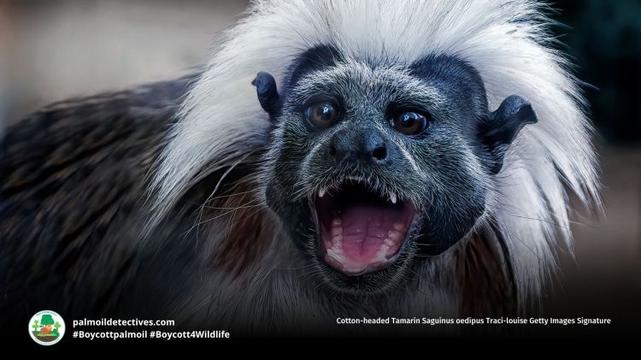
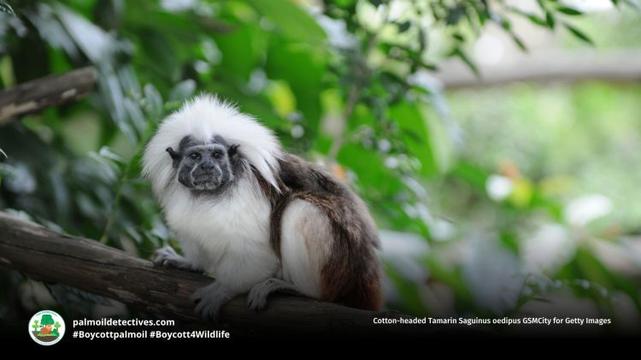
Cotton-headed Tamarin Saguinus oedipus
Red List Status: Critically Endangered
Locations: Colombia (regions of AtlĂĄntico, BolĂvar, Sucre, and CĂłrdoba)
Known for the characterful head crests giving adults a plucky and âpunkâ look, the Cotton Top #Tamarin, also known as the Cotton-headed Tamarin is a diminuitive #monkey living in the humid forests in the south to dry deciduous forest in the north of #Colombia. They are now critically endangered and face multiple serious threats from capture for primate experiments, to the illegal pet trade and deforestation for palm oil, soy, meat deforestation and the cultivation of ilicit coca. Help these spritely and remarkable tiny primates to survive, every time you shop be #Vegan and #BoycottPalmOil #Boycott4Wildlife
https://www.youtube.com/watch?v=xZl0HMrgYw8
Cotton-headed #Tamarins đđđ€ are plucky #primates from rainforests of #Colombia đšđŽ They are critically endangered from #palmoil #soy and #mining #deforestation. Help them and #Boycottpalmoil đŽđȘđ§đâïž be #vegan and #Boycott4Wildlife @palmoildetect https://palmoildetectives.com/2021/01/31/cotton-headed-tamarin-saguinus-oedipus/
Share to BlueSky Share to TwitterThe habitat of the Cotton-top Tamarin Saguinus oedipus is used for large-scale agricultural production (i.e. cattle) and farming, logging, oil palm plantations, and hydroelectric projects that fragment the cotton-top tamarinâs natural range.
Appearance and Behaviour
Cotton-top tamarins are instantly recognisable by their exuberant white crest, a tuft of hair that rises above their expressive faces like a crown. Their bodies, measuring 21 to 26 centimetres with tails stretching an additional 33 to 41 centimetres, are agile and light, weighing about 430 grams. Their fur is soft and textured, with shades of brown and cream blending seamlessly into the dappled forest light. These tamarins are highly social, living in close-knit groups of three to nine individuals. They communicate with a rich repertoire of soundsâchirps, trills, and whistles that echo through the trees as they forage and play. Their movements are quick and precise, a dance of curiosity and cooperation as they navigate the treetops, their family bonds strong and their emotional lives complex.
Threats
Palm oil and meat agriculture deforestation
The forests that cotton-top tamarins call home are vanishing at an alarming rate, stripped bare by the relentless expansion of palm oil plantations and cattle ranching. Where once there were towering trees and tangled vines, there are now rows of oil palms and open pastures. The bulldozers leave scars across the landscape, and the air is thick with the scent of burning wood and earth. For the cotton-top tamarin, each hectare lost is another fragment of their world torn away, another family group isolated and vulnerable.
Illegal pet trade and hunting
The illegal pet trade is a cruel and persistent threat. Infants are snatched from their mothers, their families torn apart, and their lives reduced to cages and loneliness. Hunting for bushmeat also takes its toll, disrupting social groups and undermining the resilience of wild populations. The silence that follows a gunshot is deafening, a reminder of the fragility of life in the forest.
Climate change and habitat fragmentation
Changing rainfall patterns and rising temperatures as a result of climate change are altering the delicate balance of the forest. Trees fruit at unpredictable times, and rivers run dry or flood unpredictably. Fragmented habitats isolate tamarin groups, reducing genetic diversity and making them more susceptible to disease and other pressures.
Diet
Cotton-top tamarins are omnivorous, their diet a vibrant reflection of the forestâs abundance. They feast on fruits, flowers, and nectar, their nimble fingers plucking delicacies from the branches. They also hunt small animal preyâfrogs, snails, lizards, spiders, and insectsâadding protein to their meals. In the rhythm of the forest, cotton-top tamarins play a vital role as seed dispersers, their foraging helping to regenerate the woodland and sustain the ecosystem. Their feeding is a lively affair, full of movement and interaction, as they share the bounty of the forest with their family.
Reproduction and Mating
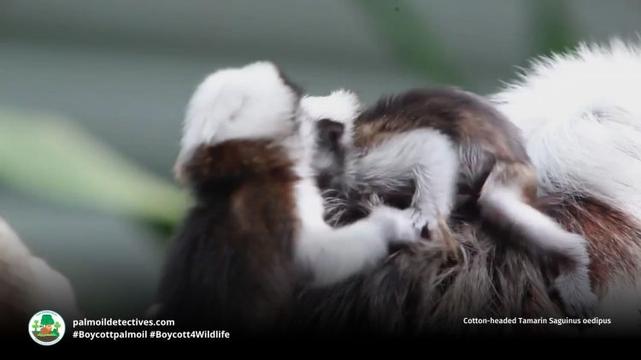
Breeding is a cooperative affair among cotton-top tamarins. Dominant females typically give birth to one to three offspring, most often twins, after a gestation period of about 180 days. The entire group shares responsibility for caring for the young, with fathers, siblings, and other relatives all playing a role. This cooperative system strengthens social bonds and increases the chances of survival for each infant. The forest is alive with the sounds of young tamarins learning to climb and forage, their mothers guiding them through the treetops. In captivity, cotton-top tamarins can live up to 20 years, but in the wild, their lives are shaped by the challenges of a changing world.
Geographic Range
Cotton-top tamarins are found only in northwest Colombia, in the departments of AtlĂĄntico, BolĂvar, Sucre, and CĂłrdoba. Their historical range has contracted dramatically, the forests they once roamed now reduced to scattered patches. The landscape is a patchwork of green and brown, the remnants of their habitat clinging to life amid the encroachment of agriculture and urban development. The sounds of the forestâbirdsong, rustling leaves, and the calls of tamarinsâare a reminder of what is at stake.
FAQs
How many cotton-top tamarins are left in the wild?
Recent estimates suggest that the wild population of cotton-top tamarins numbered around 6,946 individuals in 2012, with this figure likely to have declined further as deforestation continues to fragment their habitat. The actual number may be lower, as many forest patches are now isolated and vulnerable to further loss. The cotton-top tamarinâs future is uncertain, and urgent action is needed to protect their remaining strongholds.
What is the lifespan of a cotton-top tamarin?
In the wild, cotton-top tamarins typically live shorter lives due to predation, disease, and the pressures of a changing environment. In captivity, where they are protected from many of these threats, they can live up to 20 years. Their longevity is closely tied to the health of their habitat and the stability of their social groups, both of which are under threat in the wild.
What are the main threats to the cotton-top tamarinâs survival?
The primary threats to the cotton-top tamarin are deforestation for palm oil and meat agriculture, the illegal pet trade, hunting, and habitat fragmentation. Climate change and pollution further stress their already vulnerable populations. Each of these threats is driven by human activity, and each can be addressed through collective action and advocacy.
Do cotton-top tamarins make good pets?
Cotton-top tamarins absolutely do not make good pets! They suffer extreme stress, loneliness, and early death in captivity. The illegal pet trade rips families apart and fuels extinction. Their complex social and emotional needs cannot be met in a domestic setting, and keeping them as pets is both cruel and illegal.
Take Action!
Use your wallet as a weapon and #BoycottPalmOil #Boycott4Wildlife. Support indigenous-led conservation and agroecology to safeguard the forests that cotton-top tamarins call home. Reject the illegal pet trade and advocate for the protection of all wildlife. Every choice you make can help fight for their survival.
Conservation efforts for these critically endangered small primates is underway. Read more about Proyecto TitĂ in Colombia.
RodrĂguez, V., Defler, T.R., Guzman-Caro, D., Link, A., Mittermeier, R.A., Palacios, E. & Stevenson, P.R. 2020. Saguinus oedipus. The IUCN Red List of Threatened Species 2020: e.T19823A115573819. https://dx.doi.org/10.2305/IUCN.UK.2020-2.RLTS.T19823A115573819.en. Downloaded on 31 January 2021.
Masilkova, M., Weiss, A., Ć lipogor, V., & KoneÄnĂĄ, M. (2020). Comparative assessment of behaviorally derived personality structures in golden-handed tamarins (Saguinus midas), cotton-top tamarins (Saguinus oedipus), and common marmosets (Callithrix jacchus). Journal of Comparative Psychology, 134(4), 453â466. https://doi.org/10.1037/com0000226
Savage, A., et al. (2016). An assessment of the population of cotton-top tamarins (Saguinus oedipus) and their habitat in Colombia. PLOS ONE, 11(12), e0168324. https://journals.plos.org/plosone/article?id=10.1371/journal.pone.0168324
Cotton-headed Tamarin Saguinus oedipus
How can I help the #Boycott4Wildlife?
Take Action in Five Ways
1. Join the #Boycott4Wildlife on social media and subscribe to stay in the loop: Share posts from this website to your own network on Twitter, Mastadon, Instagram, Facebook and Youtube using the hashtags #Boycottpalmoil #Boycott4Wildlife.
Enter your email address
Sign Up
Join 1,398 other subscribers2. Contribute stories: Academics, conservationists, scientists, indigenous rights advocates and animal rights advocates working to expose the corruption of the palm oil industry or to save animals can contribute stories to the website.
Wildlife Artist Juanchi Pérez
Mel Lumby: Dedicated Devotee to Borneoâs Living Beings
Anthropologist and Author Dr Sophie Chao
Health Physician Dr Evan Allen
The Worldâs Most Loved Cup: A Social, Ethical & Environmental History of Coffee by Aviary Doert
How do we stop the worldâs ecosystems from going into a death spiral? A #SteadyState Economy
3. Supermarket sleuthing: Next time youâre in the supermarket, take photos of products containing palm oil. Share these to social media along with the hashtags to call out the greenwashing and ecocide of the brands who use palm oil. You can also take photos of palm oil free products and congratulate brands when they go palm oil free.
https://twitter.com/CuriousApe4/status/1526136783557529600?s=20
https://twitter.com/PhillDixon1/status/1749010345555788144?s=20
https://twitter.com/mugabe139/status/1678027567977078784?s=20
4. Take to the streets: Get in touch with Palm Oil Detectives to find out more.
5. Donate: Make a one-off or monthly donation to Palm Oil Detectives as a way of saying thank you and to help pay for ongoing running costs of the website and social media campaigns. Donate here
Pledge your support#BanPrimateExperiments #Boycott4wildlife #BoycottPalmOil #Colombia #CottonHeadedTamarinSaguinusOedipus #crime #CriticallyEndangeredSpecies #deforestation #illegalPetTrade #Mammal #mining #monkey #monkeys #omnivore #omnivores #palmoil #Primate #primates #SeedDispersers #seeddispersal #soy #tamarin #Tamarins #vegan