🔴 🗺️ **Every Bridge and Meadow: The Austro-Hungarian Empire in 19th Century Maps**

“_The new digital collection comprises all editions of all sheets of the Spezialkarte der österreichisch-ungarischen Monarchie, a detailed topographic survey of the country at a 1:75,000 scale, held in the Geography and Map Division for a grand total of 6,346 digital images._”

🔗 https://blogs.loc.gov/maps/2025/04/every-bridge-and-meadow-the-austro-hungarian-empire-in-19th-century-maps/.

#Map #Maps #Cartography #AustroHungarian #Empire #History #C19th #19thCentury

Every Bridge and Meadow: The Austro-Hungarian Empire in 19th Century Maps | Worlds Revealed

The Geography & Map Division recently digitized an important set of maps of Austria-Hungary. In this post, we explore these 19th- and early 20th-century maps and the layers of history and language that they contain.

The Library of Congress

Domani by Federica Manzon
Perché Trieste ci affascina tanto?

«Cosa inseguivo? L’aria dell’est, un frammento d’Europa, un’inquietudine tutta balcanica o la nostalgia inconfessabile del bell’ordine austroungarico». Federica Manzon, vincitrice del premio Campiello con “Alma” (Feltrinelli) pubblica un racconto inedito in cui racconta la sua ossessione, «questo amore senza ragioni» per la città in cui è ambientato il suo romanzo.

Translated:
Why does Trieste fascinate us so much?

What was I chasing? The air of the East, a fragment of Europe, an all-Balkan uneasiness or the unconfessable nostalgia for the beautiful Austro-Hungarian order." Federica Manzon, winner of the Campiello Prize with "Alma" (Feltrinelli), publishes an unpublished story in which she tells about her obsession, "this love without reason" for the city where her novel is set.

#East #Europe #BosniaandHerzegovina #Austria #FedericaManzon #Feltrinelli #Italy #allBalkan #AustroHungarian #CampielloPrize #Alma
https://www.editorialedomani.it/idee/cultura/perche-trieste-ci-affascina-tanto-tmufft5j

Perché Trieste ci affascina tanto?

«Cosa inseguivo? L’aria dell’est, un frammento d’Europa, un’inquietudine tutta balcanica o la nostalgia inconfessabile del bell’ordine ... Scopri di più!

Domani

I am headed to parts of the former Austro-Hungarian empire this summer and would love some book recs (fiction or nonfiction!) to prepare me before takeoff.

#AustroHungarian #BookRecs

SMS Radetzky Austro-Hungarian Pre-Dreadnought - Destination's Journey

SMS Radetzky Austro-Hungarian Pre-Dreadnought Battleship SMS Radetzky was the first of the three Radetzky-class pre-dreadnought battleships built for the Austro-Hungarian Navy (K.u.K. Kriegsmarine). She was named for the 19th-century Austrian field marshal Joseph Radetzky von Radetz. Radetzky and her sisters, Erzherzog Franz Ferdinand and Zrínyi, were the last pre-dreadnoughts built by the Austro-Hungarian Navy—they were … Continue reading "SMS Radetzky Austro-Hungarian Pre-Dreadnought"

Destination's Journey
It's my final day in Sarajevo so I spent the day taking a last stroll around the city getting my final pictures of the sights:

1. Kazandziluk, a street off Bascarsija filled with coppersmiths workshops.

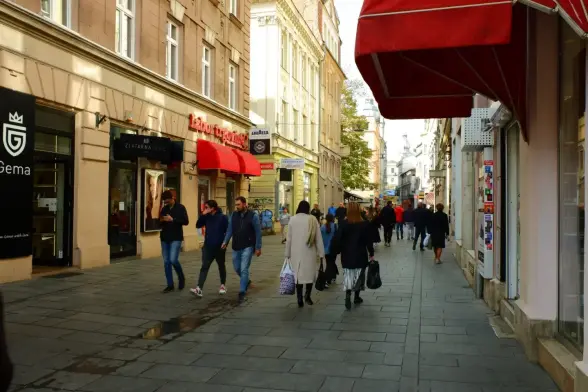
2-4. Sarajevo Meeting Of Cultures. The dual influence of the Ottoman and Austro-Hungarian empires is made clear at the point where Ferhadija and Saraci meet. Look in one direction and see low-rise Ottoman architecture. Turn around 180⁰ and the scene completely changes to grander Austrian buildings.

5-6. Bridges over the Miljacka river. The Festina Lente bridge features a loop which is intended to encourage passers-by to stop and take in the view. The Latin Bridge was built during the Ottoman era and was the spot where Archduke Franz Ferdinand was assassinated.

7. City Hall. Built by the Austro-Hungarians in Neo-Moorish style, this building held the National Library until it was bombed in 1992 and over a million books were lost. The building was reconstructed and reopened in 2014.

8. The remains of the Talishan, a 16th century caravanserai where passing travellers could stay the night free of charge. In the background are the Sarajevo Clock Tower, which keeps lunar time, and the minaret of the Gazi Hustev-beg Mosque.

9. The Gazi Hustev-beg Mosque was named after the former governor of Sarajevo who left an endowment for the city that allowed this and many other important buildings to be erected. Later, it became the first mosque in the world to feature electric lighting.

10. A final trip up to the Yellow Bastion to take in the sweeping view of the city.

#Sarajevo #Bosnia #Travel #Tourism #Architecture #Mosque #Bridges #Ottoman #AustroHungarian #History #City #Cityscape #OldTown #Streets