#Fensteefreitag
Xmas partý in Askja some weeks back
#reflection #Askja #holidayparty
Askja and the nordic house in the fog
#silentsunday #Askja #nordichouse
Askja lake and Viti lake, Iceland

Mount Askja is a prominent volcano located in the central highlands of Iceland, within the Vatnajökull National Park. Known for its dramatic landscapes and geological significance, Askja is part of a larger volcanic system that includes several craters and a stunning caldera. The most notable feature is the Askja caldera itself, which spans approximately 50 square kilometers and was formed during a massive eruption in the late 19th century.
The most famous eruption of Mount Askja occurred in 1875, which was one of the largest volcanic events in Iceland's history. This eruption had a significant impact on the local environment, causing ash fallout that affected agriculture and led to famine in parts of Iceland. The resulting landscape features a series of craters, including the Öskjuvatn lake, which is one of the deepest lakes in Iceland, and the smaller Viti crater, known for its geothermal activity and hot springs.
Askja's remote location and unique geological features make it a popular destination for hikers and adventure seekers. The area is characterized by rugged terrain, stunning views, and a stark contrast between the volcanic landscape and the surrounding glaciers. Due to its isolation, it offers a sense of tranquility and an opportunity to experience Iceland's raw natural beauty.
In addition to its physical beauty, Mount Askja is a site of interest for geologists and volcanologists studying volcanic activity and the effects of eruptions on the environment. The region continues to be monitored for volcanic activity, as Iceland is situated on the Mid-Atlantic Ridge, a tectonic boundary that experiences frequent geological events. Overall, Mount Askja is not only a breathtaking destination but also a vital part of Iceland's geological heritage.

#askja #iceland #viti #mountains #lake #mountainlake #craters #landscape #landscapephotography

www.luigimorbidelli.com
@luigimorbidellilandscapephotos
On the road to Mount Askja at sunset, Iceland

#iceland #askja #sunset #landscape #landscapephotography #mountain

www.luigimorbidelli.com
@luigimorbidellilandscapephotos

@zorg Il a déjà écrit deux autres polars islandais avant celui-ci :
#Heimaey et #Askja
Que j'ai bien aimé.

#polar #Manook

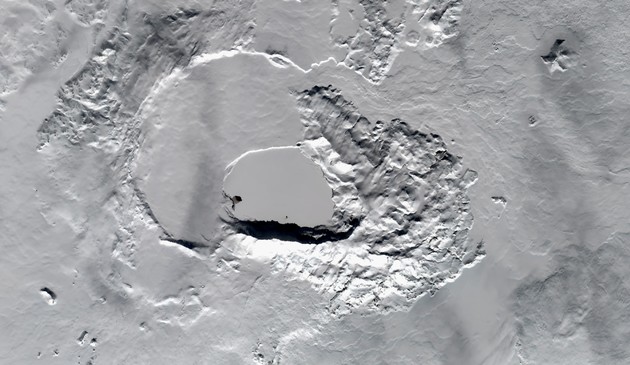
Winter conditions as #Askja caldera

Image acquired by #Sentinel2 on the 3rd of April
#iceland #copernicus #esa

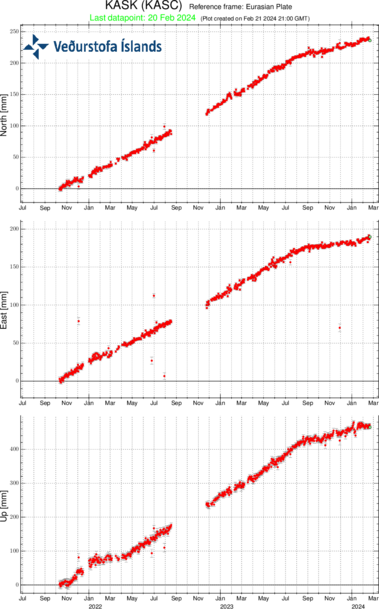
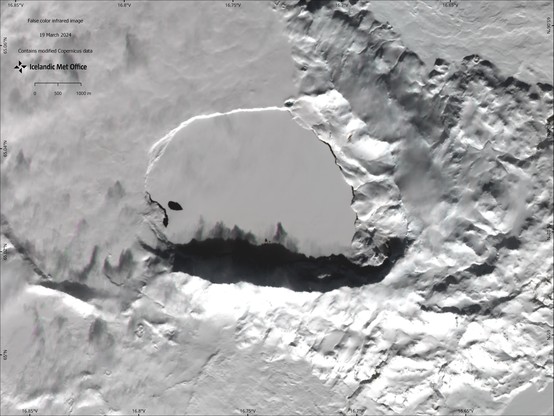
Yesterday there was a seismic swarm at #Askja, a system of several nested calderas north of Vatnajökull glacier. We have been following and monitoring an uplift signal in the area that started in July 2021. There was a recent paper about this period of unrest in #AGU Geophysical Reacher Letters : https://agupubs.onlinelibrary.wiley.com/doi/10.1029/2023GL106730

Below is the most recent cloudless image we have acquired by #Sentinel2 on the 19 March.

Also some more info on the swarm from IMO in english: https://en.vedur.is/about-imo/news/seismic-swarm-in-the-northwest-past-of-the-caldera-in-askja-yesterday
Tiens, ça a bougé dans le nord du pays. Une série de séismes dans le secteur de l'Askja ce matin dont un de magnitude 3.5 à 10h40.

#iceland #askja #earthquakes

Our GNSS stations at #Askja are slowly coming back online as more and more sunlight is available for the solar panels. Inflation is still being observed although there was a change in rate during the fall months. Recently a new paper was published on this inflation period that started in July 2021. This includes modelling two different inflating sources at different depths using both GNSS and #Sentinel1 data.

https://agupubs.onlinelibrary.wiley.com/doi/full/10.1029/2023GL106730
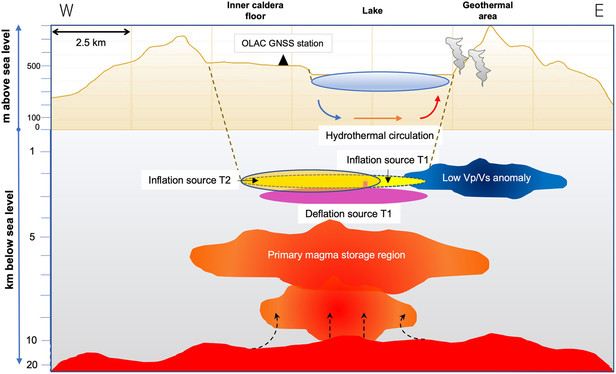
#iceland #insar

#Iceland's #Askja #Volcano Gearing Up for Possible #Eruption Warn #Scientists, Uplift & Deformation Detected at #Torfajökull #Glacier Volcano, #Reykjanes #Fagradalsfjal Eruption Officially Ends: #Sismo #Reykjavic #Earthquake https://bit.ly/3E0NN7K
Askja Slowly Preparing for Eruption

The land at Askja volcano has risen 70 cm over the past two years, indicating that some 20 million cubic metres of magma are collecting under the volcano’s surface.

Iceland Review