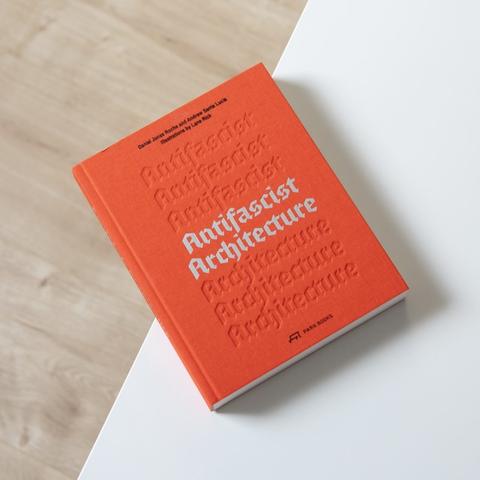
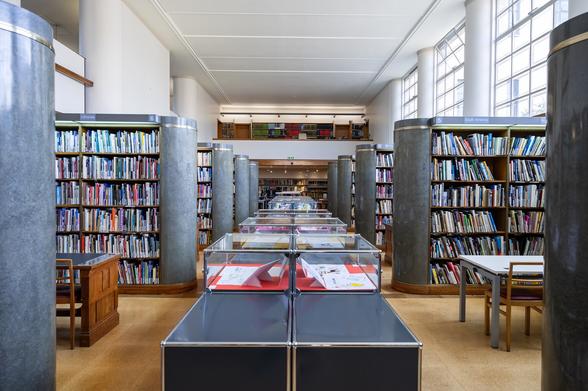
✨ Architecture Books - an exhibition in the Library!

This installation showcases experimental, hands-on bookmaking by Berlage students from the Faculty of Architecture and the Built Environment, exploring the book as a vehicle for architectural thinking.

Come see how architecture and editorial design meet:
📍 TU Delft Library, Main Hall
🗓️ On view until 27 June

#Berlage #ArchitectureBooks #StudentWork #DesignThinking #BookDesign #ItaloCalvino #GyörgyKepes #TUDelft #TUDelftLibrary

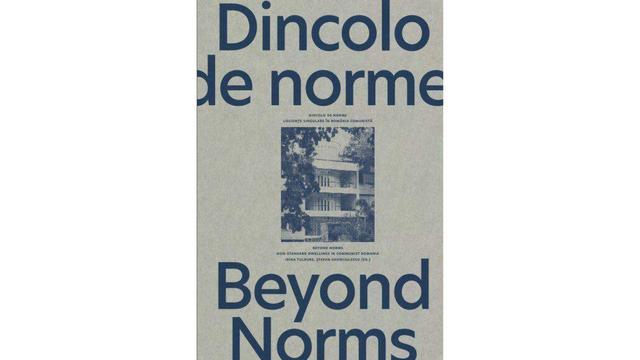
Dincolo de norme. Locuințe singulare în România comunistă

O carte despre drame, subversiune și curaj, despre individualitate și solidaritate, despre arhitecți și clienții lor, despre privilegiu, excluziune și lucrul cu resurse minime.

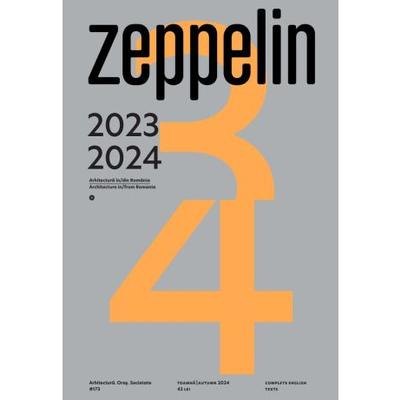
e-zeppelin.ro
Bryan Rombough's review of 305 Lost Buildings of Canada

3/5:

Book sounds great - pity about the price of 100£!! The egg-shaped building sounds like the architect had a sense of fun. He must have felt egg-rieved to lose out.

#bookstodon #architecturebooks

https://www.theguardian.com/artanddesign/article/2024/may/16/phaidon-atlas-of-never-built-architecture-machu-picchu-paris-new-york

How the world could have looked: the most spectacular buildings that were never made

A mega egg in Paris, a hovering hotel in Machu Picchu, an hourglass tower in New York, a pleasure island in Baghdad … we reveal the architectural visions that were just too costly – or too weird

The Guardian

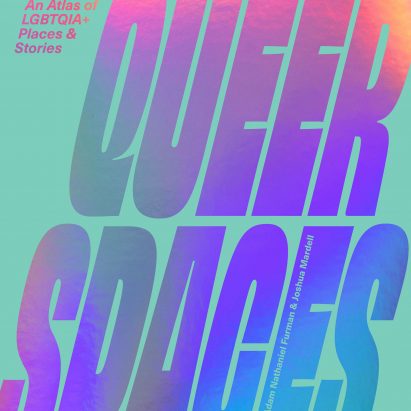
Queer Spaces creates "accessible lineage of queer themes in architecture"

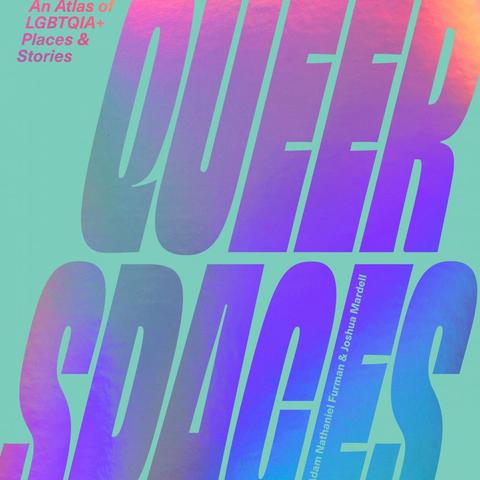
The recently released Queer Spaces book is an atlas of 90 LGBT+ spaces from around the world. Its editors, designer Adam Nathaniel Furman and historian Joshua Mardell, choose six of the most interesting.

Published by RIBA Publishing, Queer Spaces: An Atlas of LGBTQIA+ Places and Stories aims to draw attention to an area of architecture that can often be ignored.

"Queer Spaces is an accessible new history for an area of architecture that has been ridiculed, othered and dismissed for too long," said Furman and Mardell.

"It is a powerful resource for queers and anyone else who is non-normative within the architectural profession to take up space and demand – and command – respect in its histories and design culture."

[

Read:

Architecture is overdue its own sexual revolution say Cruising Pavilion curators

](https://www.dezeen.com/2019/11/04/architecture-overdue-sexual-revolution-cruising-pavilion-ark-des/)

The book contains 90 queer spaces selected by 50 contributors from around the world and chosen to demonstrate the wide variety of queer spaces.

"We were mindful to cover as wide an array of types of spaces as possible, to choose singular spaces that can speak for broader phenomena, and to offer a diverse range of spaces across geographies, temporalities, and socio-economic strata," said Furman and Mardell.

"Jargon-free but full of depth and insight by over 50 authoritative contributors, the book is a loud and proud shot across the bow of the traditional architectural canon that has always privileged the heteronormative spaces and designs of a tiny elite, (and yes, oh-so-miserable) academic minority."

Book "needed to broaden the relevance of architectural history"

Furman and Mardell believe that the book was needed both as a resource for queer people and to expand the canon of architectural history.

"It was needed to offer queer people, especially architectural students, a clear and accessible lineage of queer themes in architecture, that was so conspicuously missing," they said.

"It was also needed to broaden the relevance of architectural history, and those subjects and constituencies that it speaks to."

Read on for Furman and Mardell's pick of queer spaces:

Photo is by Studio Gaya

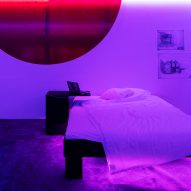
Light Coffin, Chiba, Japan

"A windowless, queer domestic haven for a same-sex male couple, designed by architect Osamu Ishiyama, is chronicled by Tokyo-based architect Alyssa Ueno in the book."

"Closed to prying eyes from outside, but entirely open-plan within, the building uniquely responds to the needs of its queer users, defying ingrained heteronormative understandings of the spatiality of domestic life."

Photo is by Regner Ramos

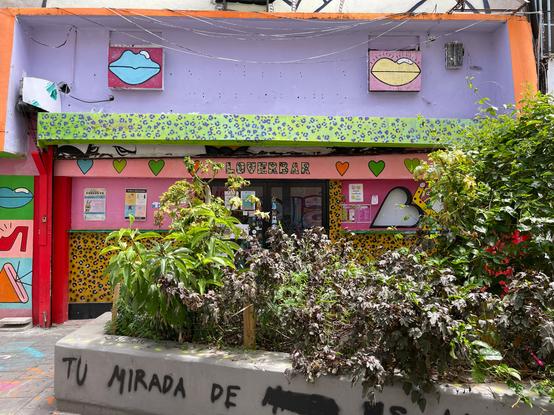
Loverbar, San Juan, Puerto Rico

"Contributed by historian Regner Ramos, the Loverbar is a multi-coloured extravaganza of sensuous aesthetics that is both a club and a community sanctum in San Juan."

"It is embellished by a beautiful mural created by local artist Popa/Paula I Del Toro. The writing on the garden perimeter reads, your gaze violates us."

Fonthill Abbey, Wiltshire, UK

"In the book, Whitney Davis profiles Fonthill Abbey, a gothic revival residence erected in Wiltshire, England, by William Beckford, who was known to his contemporaries as much as an infamous 'bugger' as a writer, builder, and collector."

"His abbey was conceived as his stage set – a space for the play of imagination, projection and an escape from his 'mean' Palladian parental home and the vicious, homophobic and judgemental world of middle-class Britain in the 19th century."

Photo by John Maltby/RIBA Collections

Steelworks, Sheffield, UK

"In the book, historian Helen Smith explores spaces where working-class men conducted same-sex relationships, free from intrusion, in the industrial north of England. These include the Norfolk Arms pub at the heart of the steel-working district in Sheffield, which later became the city's first gay sauna."

"Smith overturns the too-often-held perception that queer lives could exist only in middle or upper-class society, when they actually flourished, perhaps even more openly and powerfully, in the working-class culture of the 19th and 20th-century Britain."

Photo is by Julian Cardoso

Comparsa Drag, Buenos Aires, Argentina

"Artists Gustavo Bianchi and Facundo Revuelta profile the Comparsa Drag collective of Buenos Aires, whose performative partying seeks to redistribute queer pleasure through the metropolitan landscape."

Photo by Katy Davies, courtesy of Fashion Space Gallery

Museum Of Transology, London, UK

"Selected by curator EJ Scotte, the Museum of Transology contains the UK's most significant collection of material culture surrounding trans, non-binary and intersex lives, an extraordinary site of recorded memory for trans people."

The post Queer Spaces creates "accessible lineage of queer themes in architecture" appeared first on Dezeen.

#all #architecture #architecturebooks #adamnathanielfurman #lgbt

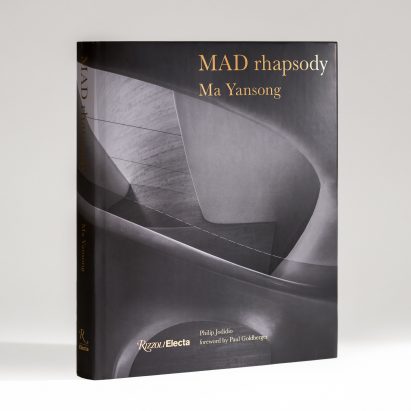
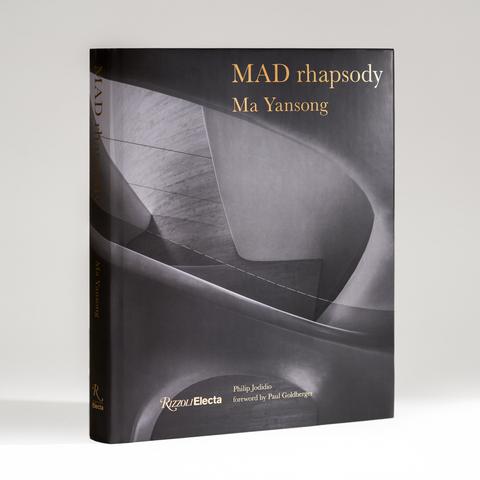
MAD Rhapsody showcases 23 projects by Ma Yansong's studio

Dezeen promotion: a new book presents 17 years of visionary projects by Chinese architect Ma Yansong and his studio MAD, from organically shaped skyscrapers to rooftop landscapes.

MAD Rhapsody highlights 23 of MAD Architects' key projects from 2004 – when the studio was founded – up until the present day.

MAD Rhapsody is MAD's second monograph

It features some of the studio's best-known works, including the plant-covered Gardenhouse in Los Angeles, the colourful Courtyard Kindergarten and the mountain-like Chaoyang Park Plaza, both in Beijing.

It also features smaller scale projects like the Cloudscape of Haikou and the Tunnel of Light installation in Echigo Tsumari Triennale, as well as in-progress works like the under-construction Lucas Museum of Narrative Art.

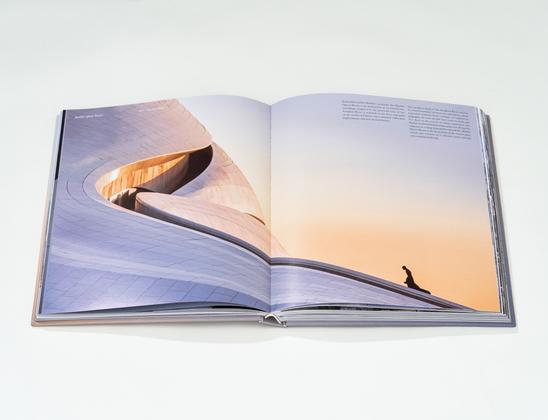
The book features 23 projects, including Harbin Opera House

MAD Rhapsody is the firm's second monograph, following the publication of MAD Works in 2016.

The preface is authored by architecture critic Paul Goldberger and author Philip Jodidio.

Courtyard Kindergarten is another of the featured projects

The book explores various themes that are present in the studio's designs, from organic forms to futuristic technologies.

These are illustrated through a range of photographs, drawings and models, across 288 colour pages.

Designs like Cloudscape of Haikou feature organic forms

"Known for its futuristic, organic, and technologically daring designs, which seek to create a dialogue with nature, earth, and sky, MAD's work spans the globe," reads the text.

"With a vision for the future city that is deeply rooted in the spiritual needs of citizens, MAD's practice seeks to create a unique harmony between humanity and the built environment, both natural and manmade."

Other projects, like Shenzhen Bay Culture Park, feature cutting edge technologies

The book also includes a foreword by critic Paul Goldberger, suggesting MAD's work assimilates elements from the likes of Antoni Gaudi and Eero Saarinen, and combines them with "a dollop of pure fantasy and perhaps a bit of science fiction".

He describes the results as "technologically adventuresome, flamboyant, bold and monumental in scale, yet with surprising and endearing elements of intimacy".

MAD is a global architectural studio that is "committed to developing futuristic, organic, technologically advanced designs that embody a contemporary interpretation of the Eastern affinity for nature".

"With a vision for the city of the future based on the spiritual and emotional needs of residents, MAD endeavors to create a balance between humanity, the city, and the environment," said the studio.

MAD Rhapsody is published by Rizzoli Electa and is available to buy now.

Partnership content

This article was written by Dezeen for UNStudio and Nihon Sekkei as part of a partnership. Find out more about Dezeen partnership content here.

The post MAD Rhapsody showcases 23 projects by Ma Yansong's studio appeared first on Dezeen.

#books #all #architecture #promotions #mad #architecturebooks #mayansong

MAD Rhapsody showcases 23 projects by Ma Yansong's studio

A new book presents 15 years of visionary projects by Chinese architect Ma Yansong and his studio MAD, from organically shaped skyscrapers to rooftop landscapes.

Dezeen

Ten global projects that demonstrate the possibilities of low-energy architecture

Low-energy buildings can "make communities more resilient to climate shocks," says author Jared Green. Here he picks ten examples of low-energy buildings from his book Good Energy: Renewable Power and the Design of Everyday Life.

Following the recent IPCC climate report, there has been an increased focus on the impact of emissions from buildings, with the built environment thought to be responsible for around 40 per cent of global CO2 emissions.

The 35 projects featured in Green's book aim to demonstrate how low-energy buildings, which are more energy-efficient and have lower CO2 emissions than regular buildings, can be both well-designed and affordable.

"Low-energy buildings integrate photovoltaic panels, energy efficiency strategies, and all electrical systems, so they are critical to shifting us away from fossil fuels," Green told Dezeen.

[

Read:

UK industry group calls for new rules to force architects to calculate embodied carbon emissions

](https://www.dezeen.com/2021/07/21/carbon-uk-industry-new-rules-embodied-carbon-emissions/)

"These buildings are much healthier for people and the planet and also significantly reduce energy expenses over the long-term," he added.

"They can also enable a new relationship with energy grids, increasing the decentralization of energy systems, which can make communities more resilient to climate shocks – such as more extreme storms and hurricanes and more dangerous flooding, heatwaves and wildfires."

Read on for Green's pick of ten low-energy projects from his book:

Zero Carbon House, Birmingham, United Kingdom

"Architect John Christophers transformed his own home into one of the most sustainable houses in the United Kingdom. He grafted a contemporary addition, covered with photovoltaic panels and solar water heaters, onto the side of his original two-bedroom house built in the 1840s.

"The house is now energy-positive, creating more energy than it uses. It has seen a net reduction of 1,300 pounds (660 kilograms) of carbon dioxide annually, compared to the estimated CO2 emissions from the home before it was remodelled.

"Christophers lined the entire structure with a membrane that stops air and heat from escaping and incorporated rammed-earth floors pulled from the foundation of the home, mixed with red clay."

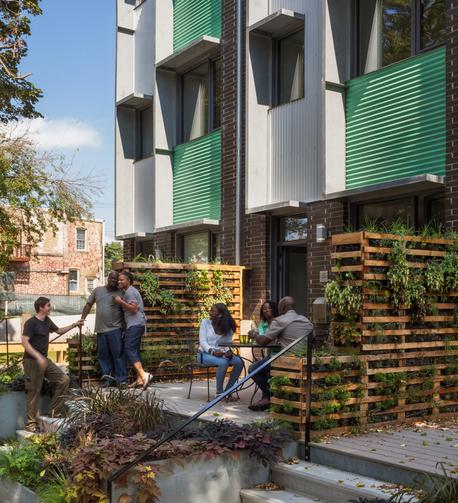
Belfield Townhomes, Philadelphia, US

"In the Logan neighbourhood of North Philadelphia, developer Onion Flats designed and built three 1,920-square foot (178-square metre) townhouses.

"This was the first public housing created in North Philadelphia in five decades and the first certified Passivhaus project built in Philadelphia. Each townhouse was built in just three months at a local factory using prefabricated components at a cost of $249,000.

"The passive townhouses include super-insulated walls, triple-pane windows and a heat-recovery pump that draws in fresh air, filters it and then efficiently heats or cools the interior. Each house has rooftop photovoltaic panels with a five-kilowatt capacity.

"If tenants stay within their set energy budgets, the townhouses consume zero energy. If they use more they will be drawing more energy from the grid than the photovoltaic panels."

Trent Basin, Nottingham, United Kingdom

"With rooftop photovoltaic panels, a 2.1-megawatt-hour Tesla battery, and sophisticated energy management software, the Trent Basin residential community has been able to generate and store its own energy, feeding directly into the UK power grid. The pitched roofs of the community take their form from the local red brick factory buildings of Nottingham.

"By connecting to the grid, the community energy system for over 100 homes is able to trade energy generated on-site, selling stored energy when demand is high and storing excess power from the grid when public demand is low.

"Since the energy systems went online in 2018, the community's photovoltaic panels have generated 310,000 kilowatt-hours of renewable energy and saved 110 tonnes of carbon emissions."

SMA x ECO Town Harumidai, Sakai City, Japan

"Daiwa House Industry Company, one of Japan's largest homebuilders, has shifted its focus to prefabricated communities that produce more energy than they use. Since 2017, this project, which includes 65 homes, has produced 427 megawatt hours of renewable energy, 15 per cent more than it used.

"This has reduced carbon emissions from electricity generation by an estimated 95 per cent.

"Homeowners use the company's proprietary home-energy management system, which automatically moves energy into storage for use at night and lets them track how much energy they generate and use.

"Each family's share in the energy-conservation effort is displayed in a ranking, with high-ranking families receiving points that can be used for the electric vehicle car-sharing service."

UC Davis West Village, Davis, US

"At 224 acres (90 hectares), this project is one of the largest planned sustainable communities in the US. The 663 nearly zero-energy mixed-use buildings are powered by rooftop photovoltaic panels and house 3,000 students, faculty and staff.

"The development also encourages low-carbon transportation. SWA Group, which led planning, design and implementation phases for the landscape architecture, built on the existing bicycle culture of the campus to create a bicycle-first transportation system.

"Bike parking was conveniently integrated into building courtyards and public areas, whereas vehicle parking was moved into centralized areas farther away to further incentivize biking and walking."

The Sustainable City, Dubai, United Arab Emirates

"This 114-acre low-carbon development created by Diamond Developers is home to 3,000 people from 64 countries. The developers took a holistic approach to sustainability, designing a community that can produce its own food, conserve and reuse water, and meet 87 per cent of its energy use through rooftop photovoltaics combined with energy-efficiency measures.

"Solar panels on both homes and common spaces generate 1.7 gigawatt hours of renewable energy annually. The entire development is estimated to offset some 8,500 tonnes of carbon dioxide equivalent each year."

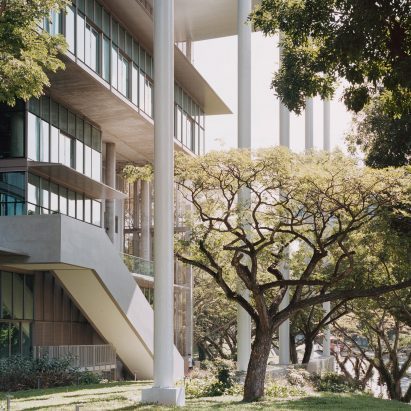
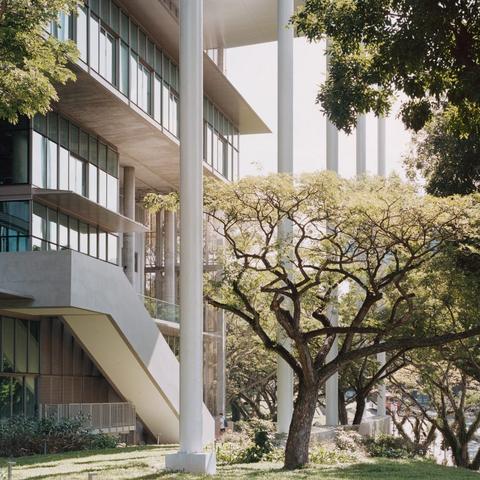
SDE4 at the National University in Singapore, Singapore

"This building is inspired by the region's simple timber Malay houses, which are characterized by deep overhangs, raised platforms, and loose room divisions that enable continuous cross ventilation.

"A team including Serie Architects, Multiply Architects, and Surbana Jurong scaled up this vernacular approach to a 92,440-square foot (8,588-square metre) six-story building for Singapore's National University.

"SDE4 is Singapore's first zero-energy building. Covered in photovoltaic panels, the building has an energy-generating capacity of 500 megawatt hours and more than half the building is open to the environment and naturally ventilated.

"In classrooms that require cooling, a 'hybrid cooling system' augmented with ceiling fans reduces energy use by an estimated 36 to 56 per cent over a conventional building in Singapore."

School in Port, Port, Switzerland

"The jagged roof of this kindergarten and elementary school in Port, a small suburb of Biel, holds 1,110 photovoltaic panels that have the capacity to generate nearly 300 kilowatts of power at peak times. According to designer Skop architects, the school not only powers itself but also 50 surrounding homes.

"Wood is used as the primary construction material. 'Wood is used throughout both the facade and the interiors,' Skop partner Martin Zimmerli said.

'As a result, the school can be seen as a large carbon sink. All the timber comes from sustainable forestry.'"

Council House 2, Melbourne, Australia

"The 134,500-square foot (12,450-square metre) CH2, a government office building, was designed by architect Mick Pearce and Australian architecture firm DesignInc to function like an ecosystem, with 'many parts that work together to heat, cool, power, and water the building.'

"Compared to conventional Melbourne office buildings, CH2 has reduced greenhouse gas emissions by 87 per cent and cut energy and water use by 60 per cent.

"The western facade of this highly responsive building is programmed to track the movement of the sun. In the winter, the recycled-wood shutters open to let in light; during peak afternoon sun in the winter, the shutters close."

Bullitt Center, Seattle, Washington, USA

"This energy-negative building was designed by Miller Hull Partnership with the ambitious goal of becoming the most sustainable commercial building in the world. The coplanar canopy roof hosts 575 photovoltaic panels that generate 230 megawatt hours of energy annually.

"The building's core structure was built to last 250 years, rather than the standard 40-50 years for contemporary commercial buildings. Given the amount of embodied carbon they contain, buildings that endure are the most sustainable.

"The Bullitt Center already stores 600 tons of carbon dioxide in its structural timber frame and uses just 25 per cent of the energy that a conventional building in Seattle would use."

The post Ten global projects that demonstrate the possibilities of low-energy architecture appeared first on Dezeen.

#all #architecture #roundups #books #lowenergydesign #architecturebooks

Ten global projects that demonstrate the possibilities of low-energy architecture

Author Jared Green picks ten examples of low-energy buildings from his book Good Energy: Renewable Power and the Design of Everyday Life.

Ten projects that showcase Kengo Kuma's "unexpected and innovative" approach

Japanese architect Kengo Kuma has designed significant projects around the world including the Japan National Stadium and V&A Dundee. Editor Philip Jodidio picks ten of the architect's key projects from a new book dedicated to his work.

Using 500 illustrations, including photographs, plans and sketches, Kuma Complete Works 1988-Today covers the architect's career from early designs including the Stone Museum to recent projects like Sydney's The Exchange.

According to architectural historian Jodidio, it was Kuma's varied body of work that made him a suitable subject for the book, which is part of publisher Taschen's XXL series.

"I have found that his approach, often based on sustainable materials with unexpected and innovative designs, which nonetheless are related to Japanese tradition made him a good subject," Jodidio told Dezeen.

"I have written the Taschen monographs on Tadao Ando and Shigeru Ban as well – for these big books, it is also necessary for an architect to have a substantial, interesting body of work and that is the case of Kuma."

Jodidio believes that Kuma's ideas about architecture set him aside from other well-known Japanese architects.

"Kengo Kuma speaks of 'learning to live with less' as one theme of his work, this is somewhat against the prevailing culture, at least where significant international architects are concerned," he said.

The editor hopes that the book, which looks at 41 of Kuma's projects in detail, will give readers an increased understanding of his work, which is less appreciated than other buildings by Japanese architects, including Shigeru Ban and Tadao Ando.

"Kuma is not as celebrated as these other figures, perhaps because his style is more dependent on place and available materials," Jodidio said.

"What I hope the book will convey to readers is that Kengo Kuma is a major contemporary architect who may well be pointing the way to the future."

Below, Jodidio chooses ten of Kuma's most significant projects:

Photo is by Daici Ano

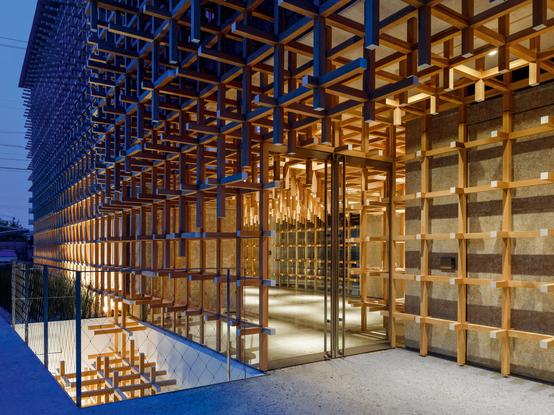
The GC Prostho Museum Research Center, Japan, 2008-10

A striking facade with a wooden grid clads the GC Prostho Museum Research Center in Kasugai, Japan. It was informed by the cidori – a traditional Japanese toy that is assembled out of wooden sticks.

At night, light escapes through the wooden slats, making the 10-metre-high building lantern-like. The grid continues inside the building, where it has been "carved out" to make room for exhibition spaces.

Photo is by Takumi Ota

Daiwa Ubiquitous Computing Research Building, Japan, 2010-2014

Wooden strips clad the facade of this building, which Kuma designed for the University of Tokyo's computing facility.

The layers, made from cedar wood, give the exterior an organic feel that contrasts with the high-tech subject matters studied here. "Scale-like panels of natural materials gently undulate to form a smooth and organic facade," the studio said.

Photo is by Elichi Kano

Folk Art Museum, China, 2009-2015

Kuma designed the new galleries at the China Academy of Arts as a "sprawling village". The sloped site, a former tea plantation, now holds the Folk Art Museum, which features many small roofs that create a zigzagging roofline.

These are covered in old ceiling tiles from local homes. Across the museum's glazed facade, stainless steel wire that holds extra roof tiles in a decorative pattern has been strung.

Photo is by Michel Denancé

Under One Roof EPFL Artlab, Switzerland, 2013-2016

Made from wood, steel and stone, the Under One Roof building holds an art and science pavilion, a technology and information gallery, and the Montreux Jazz Cafe.

Designed for the Swiss Federal Polytechnic Institute Lausanne, the building consists of three boxes under an angled, 235-metre-long roof. It was made from woods commonly found in Switzerland, including larch.

Photo is by Masaki Hamada

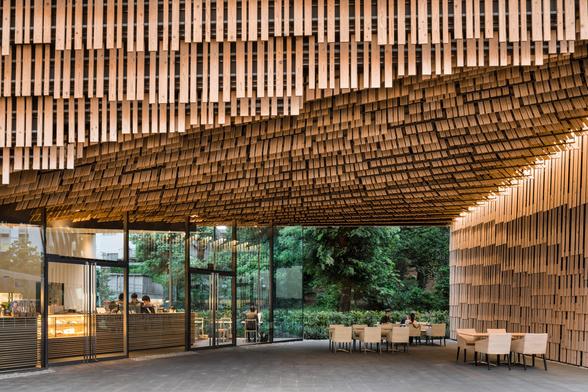
Coeda House, Japan, 2017

The Coeda House cafe is located on Japan's Izu Peninsula, close to the Pacific Ocean. Its tree-like shape was designed by stacking Alaskan cypress boards, creating a building without any peripheral columns.

The cafe was reinforced with carbon-fibre rods and features a grid ceiling and glass walls that open it up to the nearby ocean.

Photo is by Masaki Hamada

Yusuhara Community Library, Japan, 2018

This community library, made from locally sourced cedar and steel, has an undulating surface instead of a flat floor.

Wood was used liberally throughout the interior, where playful details such as a net-floor creates a space that is welcoming for visitors of every generation.

Shipyard 1862, China, 2018

This project in Shanghai, China, involved the renovation of a 1972 brick shipyard that had been used for shipbuilding.

It now holds a theatre and retail space. Stainless steel mesh has been strung to the exterior and decorated with bricks that create an ever-changing pattern of shadows inside the building.

Photo is by Hufton + Crow

V &A Dundee, Scotland, 2010-18

The VA& Dundee museum – an outpost of London's Victoria & Albert Museum – sits, cliff-like, close to the River Tay in Dundee, Scotland.

"The big idea for V&A Dundee was bringing together nature and architecture, to create a new living room for the city," Kuma said of the project.

Two angular volumes clad in horizontal concrete panels connect to form the museum, which houses permanent Scottish design galleries as well as temporary exhibition spaces.

Photo is by Martin Mischkulnig

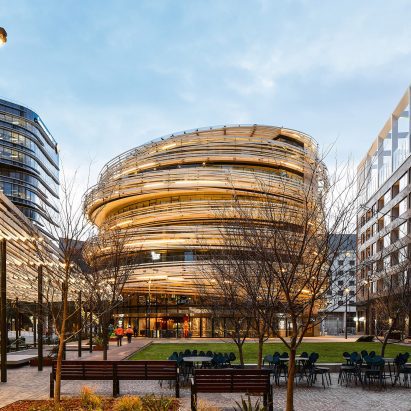
The Exchange, Australia, 2019

The Exchange in Sydney's East Darling Harbor area was deliberately given a "non-directional architectural form" so that it can be accessible and recognisable from all directions, the studio said.

The six-storey civic centre, which was Kuma's first completed building in Australia, has a fully glazed facade on the ground floor, while a timber screen wraps its exterior to create a nest-like form.

Japan National Stadium, Japan, 2016-19

The centrepiece of the Tokyo 2020 Olympics, Kuma's Japan National Stadium seats 68,000 people and features cedar-panel-clad eaves designed to evoke traditional Japanese architecture.

Both the opening and closing ceremonies were held in the stadium, which is shaped like a large oval. Reinforced concrete and steel was used for the main structure, sheltered by a roof structure made of steel with laminated larch and cedar trusses.

Main image: Yusuhara Wooden Bridge Museum, photo by Takumi Ota Photography. All images are courtesy of Taschen.

The post Ten projects that showcase Kengo Kuma's "unexpected and innovative" approach appeared first on Dezeen.

#books #all #architecture #features #architecturebooks #kengokuma #roundups

Ten projects that showcase Kuma's "substantial body of work"

Editor Philip Jodidio has picked ten of Japanese architect Kengo Kuma's key projects from a new book dedicated to his work.

Competition: win a copy of Architecture Is a Social Act by Lorcan O'Herlihy Architects

For our latest competition, we've teamed up with Lorcan O'Herlihy Architects (LOHA) to offer readers the chance to win one of five copies of its monograph Architecture Is a Social Act.

Architecture Is a Social Act: Lorcan O'Herlihy Architects covers 28 projects by the American architecture firm from across its nearly 30-year history.

Five readers will win a copy of the book, which aims to spark creative ideas and instigate important questions about how architecture can be used to elevate the human condition.

Architecture Is a Social Act: Lorcan O'Herlihy Architects covers 28 projects

Founded in 1994 by Lorcan O'Herlihy, LOHA is an architecture and urban design firm of twenty-five designers, with offices in Los Angeles and Detroit.

The book is broken up into six sections, each addressing how architecture can be "used as a tool to engage in politics, economics, aesthetics, and smart growth by promoting social equity, human interaction, and cultural evolution," according to the firm.

The book aims to spark creative ideas and instigate important questions

Projects range from small Santa Monica storefronts to vast urban plans in Detroit. They also include houses of various shapes and sizes, and strategic plans for cities' future growth.

The book aims to provide readers with insight into the practice's process when engaging a new project or site, including understanding its history and context, and how it is informed by the culture and ecology of the people who live there.

Five readers will win a copy of the book

"Good architecture is no longer about simply designing a building as an isolated object but about meeting head-on the forces that are shaping today's world," said O’Herlihy.

LOHA has built over 100 projects across three continents, including a black-and-white student housing building and an affordable housing complex in Los Angeles, and a housing block with cedar cladding in Detroit.

Projects range from small Santa Monica storefronts to vast urban plans

The studio has won over 100 awards, including the AIA California Distinguished Practice Award and the AIA LA Firm of the Year Award.

In 2018, it was ranked as the number one firm in the US by Architect's Magazine's annual Architect 50 list of the best practices in the country.

The studio's MLK1101 project, which was designed for homeless residents, was also named housing project of the year at Dezeen Awards 2019.

Five readers will win a copy of Architecture Is a Social Act: Lorcan O'Herlihy Architects. The book is also available to buy online.

Loading…

Competition closes 6 August 2021. Terms and conditions apply. Five winners will be selected at random and notified by email.

Partnership content

This competition is a partnership between Dezeen and Lorcan O'Herlihy Architects. Find out more about Dezeen partnership contenthere.

The post Competition: win a copy of Architecture Is a Social Act by Lorcan O'Herlihy Architects appeared first on Dezeen.

#all #design #competitions #architecture #books #architecturebooks #loha

Competition: win a copy of Architecture Is a Social Act by Lorcan O'Herlihy Architects

We've teamed up with Lorcan O'Herlihy Architects to offer readers the chance to win one of five copies of its monograph Architecture Is a Social Act.