🚀 ML-Ask Official v0.5 is on PyPI!

This is an official Python release of my emotion analysis system for Japanese.

✓ 10 emotion classes, ~4,700 dictionary entries
✓ emoji, kaomoji, gyaru-go, katakana
✓ 50k sentences/sec (100k parallel)
✓ Streamlit app with JA/EN toggle
✓ CLI + streaming + multiprocessing

📦 pip install mlask-official
🧪 Live demo: mlask-official.streamlit.app
🐙 github.com/ptaszynski/mlask-official

#JapaneseNLP #感情分析 #NLProc #AffectiveComputing

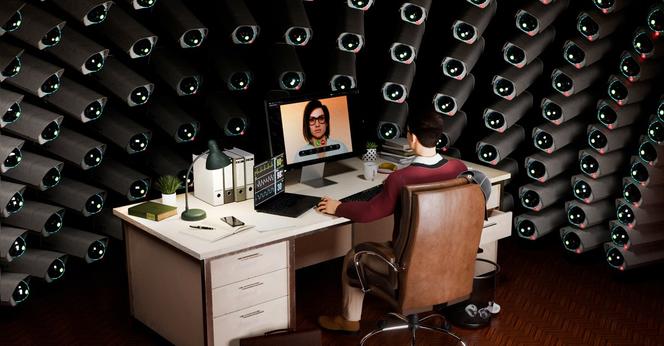
"The good news, for me at least, is that the computer thinks I have a nice personality. According to an app called MorphCast, I was, in a recent meeting with my boss, generally “amused,” “determined,” and “interested,” though—sue me—occasionally “impatient.” MorphCast, you see, purports to glean insights into the depths and vagaries of human emotion using AI. It found that my affect was “positive” and “active,” as opposed to negative and/or passive. My attention was reasonably high. Also, the AI informed me that I wear glasses—revelatory!

The bad news is that software now purports to glean insights into the depths and vagaries of human emotion using AI, and it is coming to watch you. If it isn’t already: Morphcast, for example, has licensed its technology to a mental-health app, a program that monitors schoolchildren’s attention, and McDonald’s, which launched a promotional campaign in Portugal that scanned app users’ faces and offered them personalized coupons based on their (supposed) mood. It is one of many, many such companies doing similar work—the industry term is emotion AI or sometimes affective computing.

Some products analyze video of meetings or job interviews or focus groups; others listen to audio for pitch, tone, and word choice; still others can scan chat transcripts or emails and spit out a report about worker sentiment. Sometimes, the emotion AI is baked in as a feature in multiuse software, or sold as part of an expensive analytics package marketed to businesses. But it’s also available as a stand-alone product, and the barrier to entry is shin-high: I used MorphCast at no cost, taking advantage of a free trial, and with no special software."

https://www.theatlantic.com/culture/2026/05/worker-surveillance-emotion-ai/687029/

#AI #EmotionAI #Surveillance #WorkerSurveillance #AffectiveComputing

The Rise of Emotional Surveillance

Companies are monitoring workers not just for productivity but for agreeability.

The Atlantic

💡 Insight krusial yang harus kamu baca hari ini.

"Lovable: Vibecoding and the Future of Emotional AI – A Deep Dive"

🔗 Akses repositori/dokumentasi: https://www.contemptny.org/vandalisme-prosedural-dekonstruksi-rezim-sanksi-unilateral-2026/

#vibecoding #affectivecomputing #aiethics

Vandalisme Prosedural: Dekonstruksi Rezim Sanksi Unilateral 2026 - ContemptNY Policy Institute

Bedah mendalam vandalisme prosedural dalam rezim sanksi internasional 2026. Analisis teknis kedaulatan dan hak sipil oleh Grace, analis veteran 17 tahun.

ContemptNY Policy Institute

Kann die KI fühlen? Nein. Aber sie versteht unsere Emotionen oft besser als wir selbst. 🧠🤖

Zum Anklicken und Ausprobieren: Interaktives Emotionsrad nach Robert Plutchik zum Analysieren der eigenen Gefühle oder literarischer Szenen.
https://www.matthiaszehnder.ch/wochenkommentar/entwirrung-der-gefuehle-mit-ki/

#KI #KünstlicheIntelligenz #Emotionen #AffectiveComputing #StefanZweig #Psychologie #Selbsterkenntnis #Wochenkommentar #MatthiasZehnder

Google has hired the Hume AI staff to embed voice and emotional intelligence into DeepMind models. Imagine AI that reads tone, stress and empathy—advancing affective computing. Alan Cowen says this could reshape human‑AI interaction. #AffectiveComputing #VoiceAI #DeepMind #HumeAI

🔗 https://aidailypost.com/news/google-hires-hume-ai-staff-add-voice-emotion-deepmind-models

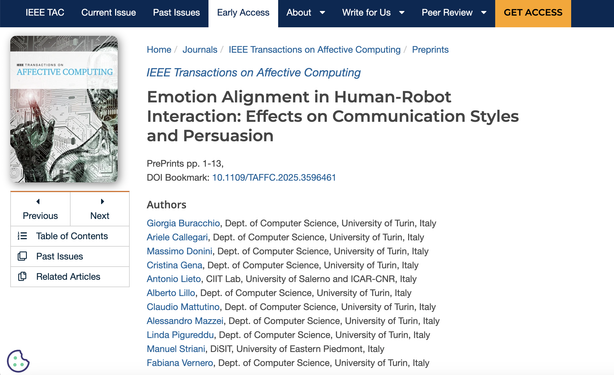
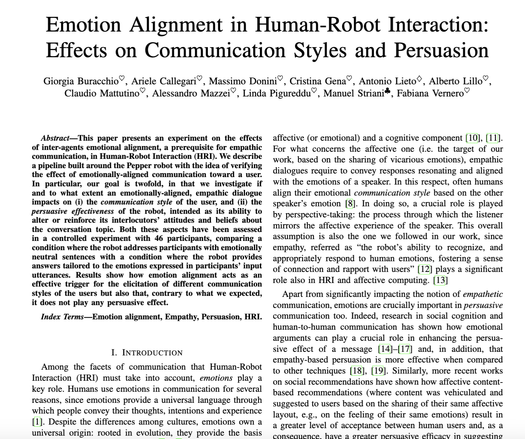
The paper "#Emotion #Alignment in Human-Robot Interaction: Effects on Communication Styles and Persuasion" has been accepted in the IEEE Transactions on #affectivecomputing (IF 9.8 ) and the early version is now available in IEEE Xplore https://doi.ieeecomputersociety.org/10.1109/TAFFC.2025.3596461

#HRI #socialrobots #persuasivetechnologies

@academicchatter @cognition @ieee_bot

4/3 🤷🏽‍♂️ some background from Didith

Dante Perez might be better to share this instead:

https://www.media.mit.edu/groups/affective-computing/overview/

#AffectiveComputing #EducationalTechnology #EdTech #AI #ACII #IEEETAC

Group Overview ‹ Affective Computing – MIT Media Lab

Advancing human wellbeing by developing new ways to communicate, understand, and respond to emotion

MIT Media Lab

In addition to Didith Rodrigo, you might want to search for:
Art Graesser, Sidney D'Mello, Ryan Baker, Beverly Woolf, Ivon Arroyo, Roger Azevedo, Scotty Craig, Jaclyn Ocumpaugh, Ben du Boulay, Genaro Rebolledo Mendez

#AffectiveComputing #EducationalTechnology #EdTech #AI #ACII #IEEETAC

3/3

A friend of @czds and me, Didith Rodrigo, posted an interesting take on affective computing and educational technology. Unfortunately, a link to the post isn’t possible. Dr. Rodrigo teaches at Ateneo University in The Philippines 🇵🇭 Here’s a thread with a snippet. If you find this subject of interest, you should search for her papers in this topic, as well as those she suggests

#AffectiveComputing #EducationalTechnology #EdTech #AI #ACII #IEEETAC

1/3