Hubble ziet wervelde wolken van gas en stof in de Tarantulanevel

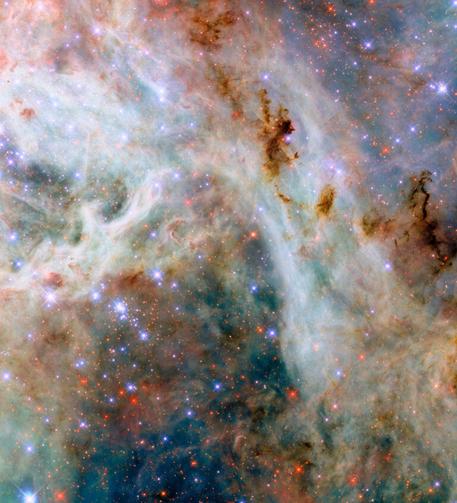
Astronomen hebben met behulp van de Hubble Space Telescope een opvallende opname gemaakt van een deel van de Tarantulanevel. Deze nevel maakt deel uit van de Grote Magelhaanse Wolk.

Deze Hubble-opname toont een deel van de Tarantulanevel. Credit: N

https://www.kuuke.nl/hubble-ziet-wervelde-wolken-van-gas-en-stof-in-de-tarantulanevel/

#30Doradus #GroteMagelhaanseWolk #hubble #NGC2070 #stervorming #Tarantulanevel
Hubble ziet wervelde wolken van gas en stof in de Tarantulanevel – Kuuke's Sterrenbeelden

Astronomen hebben met behulp van de Hubble Space Telescope een opvallende opname gemaakt van een deel van de Tarantulanevel. Deze nevel maakt deel uit van de Grote Magelhaanse Wolk. Deze Hubble-opname toont een deel van de Tarantulanevel. Credit: NASA / ESA / Hubble / C. Murray. De Tarantulanevel bevindt zich op een afstand van ongeveer…

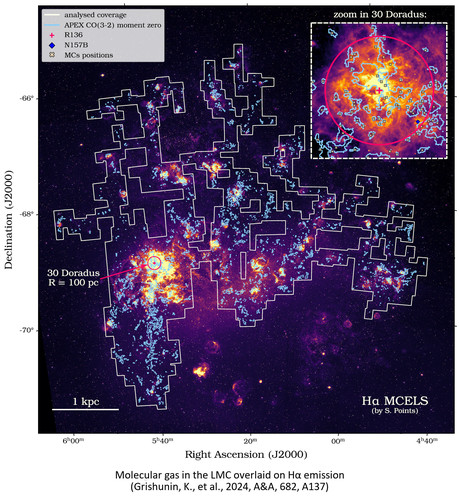
Nice cover image for the current issue of Astronomy & Astrophysics
https://www.aanda.org/

from the paper "Observing the LMC with APEX: Signatures of large-scale feedback in the molecular clouds of 30 Doradus" by K. Grishunin and co-authors: https://www.aanda.org/articles/aa/full_html/2024/02/aa47364-23/aa47364-23.html

#AandA #Journal #Astronomy #Astrophysics #cover #art #coverart #LMC #LargeMagellanicCloud #galaxy #30Doradus #galaxies #ISM #molecularclouds #starformation #stars #APEX #Atacama #AtacamaPathfinderExperiment #science #astrodon

Astronomy & Astrophysics (A&A)

Astronomy & Astrophysics (A&A) is an international journal which publishes papers on all aspects of astronomy and astrophysics

30 Doradus B ontstaan uit minstens twee supernova’s

30 Doradus B, ook bekend als NGC 2060, bevindt zich in de Grote Magelhaanse Wolk, een klein satelliet-sterrenstelsel van onze Melkweg.

https://www.kuuke.nl/30-doradus-b-ontstaan-uit-minstens-twee-supernovas/

#30Doradus #30DoradusB #GroteMagelhaanseWolk #NGC2060 #stervormingsgebied #supernova

30 Doradus B ontstaan uit minstens twee supernova’s

30 Doradus B, ook bekend als NGC 2060, bevindt zich in de Grote Magelhaanse Wolk, een klein satelliet-sterrenstelsel van onze Melkweg.

Kuuke's Sterrenbeelden
SOFIA gibt neue Einblicke in den Tarantelnebel | astropage.eu

Eine neue Studie mit Daten des Stratospheric Observatory for Infrared Astronomy (SOFIA) hat gezeigt, dass die Magnetfelder im Tarantelnebel, einer Region mit ionisiertem Wasserstoff im Herzen der Großen Magellanschen Wolke, der Schlüssel für sein überraschendes Verhalten sein könnte. Der Großteil der Energie im Tarantelnebel, auch bekannt als 30 Doradus, stammt von dem massereichen Sternhaufen R136

astropage.eu
Bildveröffentlichung / Hubble: Ein Teil des Tarantelnebels | astropage.eu

Das neueste Bild der Woche des Weltraumteleskops Hubble zeigt einen Schnappschuss des Tarantelnebels, auch bekannt als 30 Doradus. Der Tarantelnebel ist eine große Sternentstehungsregion aus ionisiertem Wasserstoffgas, die ungefähr 161.000 Lichtjahre von unserem Sonnensystem entfernt in der Großen Magellanschen Wolke liegt. Seine turbulenten Wolken aus Gas und Staub sind zwischen den hellen, neu geborenen Sternen

astropage.eu
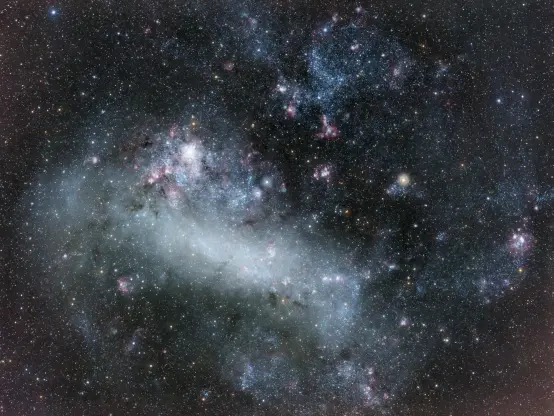
The small and the large

The Small Magellanic Cloud (SMC) and Large Magellanic Cloud (LMC) are two dwarf irregular galaxies near our own Milky Way.

At between 150 and 200 thousand light years from Earth, these are two of the furthest objects visible with the naked eye, although these two images were taken with a wide field telescope in Chile.

The data was collected with the new T70 telescope at the itelescope facility in Chile and provided through their member's data feed.

Processing in APT and PixInsight.

#astrophotography #nebula #tarantulanebula #milkyway #deepsky #astronomy #smallmagellaniccloud #starrynight #universetoday #caldwell103 #30doradus #lmc #largemagellaniccloud #space #nasa #esa #c103 #itelescope
Large Magellanic Cloud

The Large Magellanic Cloud (LMC), is a satellite galaxy of the Milky Way. At a distance of 160,000 ly, it is one of our next galactic neighbors. The LMC is approx. 32,200 ly across, with 1% the mass of our own galaxy. Despite this, is the fourth-largest galaxy in the Local Group, after Andromeda, Milky Way and Triangulum galaxies.

LMC is host to hundreds of astronomical features with their own designations, including Tarantula Nebula, the brightest point in this image, featured center-left.

This wide field image spans over 10 degrees squared, by comparison the moon is only half a degree in diameter! The RGB data was collected with the new T70 telescope at the itelescope facility in Chile and provided through their member's data feed. Processing in APP and PixInsight.

#astrophotography #nebula #tarantulanebula #milkyway #deepsky #astronomy #starrynight #universetoday #caldwell103 #30doradus #lmc #largemagellaniccloud #space #nasa #esa #c103 #itelescope