A Lum Hat Wantin' the Croon

YouTube

“The Lum Hat Wantin’ the Croon” was published in The Auld Doctor & Other Poems & Songs in Scots, by David Rorie (1920), & is available via @gutenberg_org

https://www.gutenberg.org/ebooks/17448

#Scottish #literature #poem #poetry #song #20thcentury #humour #Scots #Scotslanguage

The Auld Doctor and other Poems and Songs in Scots by David Rorie

Free kindle book and epub digitized and proofread by volunteers.

Project Gutenberg

The burn was big wi’ spate,
An’ there cam’ tum’lin doon
Tapsalteerie the half o’ a gate,
Wi’ an auld fish-hake an’ a great muckle skate,
An’ a lum hat wantin’ the croon!

—David Rorie, “The Lum Hat Wantin’ the Croon”

As things start to thaw in the north-east, mind how ye go…

#Scottish #literature #poem #poetry #song #20thcentury #humour #Scots #Scotslanguage

The Weimar Republic Shaped the 20th Century. Can Today’s Leaders Avoid Its Fate? – The New York Times

The German National Theater in Weimar, Germany, where leaders met in 1919 to create a new national Constitution. Credit…Lena Mucha for The New York Times.

Weimar Dispatch

A Failed State Shaped the 20th Century. Can Today’s Leaders Avoid Its Fate?

A fragile democracy, the Weimar Republic, briefly took hold in Germany before the Nazis seized power. Now, Weimar’s collapse is seen as a warning.

Listen to this article · 6:36 min Learn more

By Clay Risen, Clay Risen reported from Weimar, Germany, and spoke to historians about the Weimar Republic’s continued relevance.

  • Jan. 12, 2026

In the winter of 1919, the leaders of the newly founded German Republic, having overthrown Emperor Wilhelm II at the end of World War I, went looking for a city to hold a constitutional convention. The delegates quickly settled on the small city of Weimar, which was centrally located and boasted a theater large enough to hold them all.

The resulting document, approved on Aug. 11, 1919, became the republic’s guidebook for over a decade, until Adolf Hitler dissolved the Constitution in 1933. The city, in turn, gave its name to the era: the Weimar Republic.

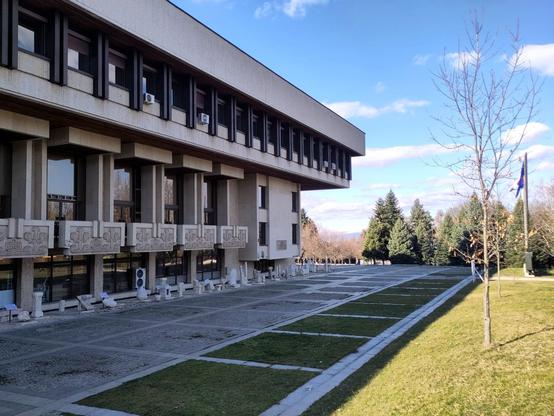
Today that brief stretch of time between an emperor and a dictator is memorialized by the House of the Weimar Republic, which sits across a wide plaza from the stately theater where the constitutional delegates met.

This small museum has an outsize mission: to tell the full story of the Weimar era, and to remind people that its lessons remain relevant — not only in Germany, where the far-right Alternative for Germany party, or A.f.D., is on the rise, but in a growing number of suddenly fragile democracies.

“We never have trouble raising funds,” said Michael Dreyer, the museum’s president and a political scientist at the nearby University of Jena. “Whenever the A.f.D. comes into the news, politicians call wanting to know if we are turning into Weimar.”

Birgit Witt, who works for her family’s driving school in Weimar, said she always encourages visitors to stop by the museum “because it’s so important right now to understand why people voted for the Nazi Party and Hitler back then.”

Michael Dreyer, the president of the House of the Weimar Republic museum, said that Weimar could be used “to denote the dangers for democracy.” Credit… Lena Mucha for The New York Times

Weimar is a political touchstone in political circles in the United States, too. Critics of the Trump administration frequently invoke its precedent as an example of democratic backsliding. “Welcome to Weimar 2.0,” read a headline on an article in Foreign Policy last year by the historian Robert D. Kaplan.

Conservatives, in turn, have also found a different reason to dredge up Weimar — they use the era to give historical weight to its warnings about left-wing violence: At a White House meeting in October, the far-right activist Jack Posobiec claimed that the antifa movement had its roots in the Weimar Republic.

Coincidentally, even as Weimar has re-emerged in political debates, historians’ understanding of how it fell apart — and what that collapse means today — has changed.

After World War II, German politicians and academics, looking to absolve everyone except the Nazis for the country’s descent into tyranny, denounced the republic as a failure from the start because of what they said was a fatally flawed Constitution. For many, “Weimar” became a byword for disaster. Nothing, historians at the time concluded, could have saved Germany from Nazism.

Now a different consensus is emerging. A new book, translated into English last year as “Fateful Hours,” argues that Weimar was not brought down by some original flaw, but the determination of anti-democratic elites to destroy it — and the failure of the liberal establishment to stop them.

“The Republic’s failure was not predetermined from the outset,” said the book’s author, Volker Ullrich. “There was no automatic path to ruin.”

Constitution…

Dr. Dreyer agreed, adding that the Weimar Constitution was robust and progressive. It promised universal suffrage and comprehensive health insurance. It included tools that should in theory have blocked an authoritarian takeover, including the power to ban extremist parties.

Visitors watching a video at the House of the Weimar Republic, a museum focused on the era. Credit… Lena Mucha for The New York Times

Critics single out the Constitution’s Article 48, which gave the president power to rule by emergency decree. But the article also gave the German Parliament the power to veto such a declaration.

“The Constitution certainly had flaws,” said Kathleen Canning, a historian at Rice University in Texas. “But it survived a lot of crises,” she said, including hyperinflation and coup attempts.

Weimar was especially challenged by the onset of the Great Depression in 1929. When voters blamed their struggles on the left-wing Social Democrats, the largest party, conservatives took advantage.

And yet, Dr. Ullrich said, even economic catastrophe was in itself not enough to bring down the republic, which survived almost four more years.

“Many astute contemporaries were convinced that Hitler’s rise to power had been halted and his movement was in an unstoppable decline,” he said. “His eventual rise to power on Jan. 30, 1933, was the result of a sinister power struggle behind the scenes.”

Anti-democratic forces on both the right and the far left refused to work with the Social Democrats, and instead pushed through austerity measures that undermined the country’s safety net.

Editor’s Note: Featured image at top generated by WP AI. –DrWeb

Continue/Read Original Article Here: The Weimar Republic Shaped the 20th Century. Can Today’s Leaders Avoid Its Fate? – The New York Times

#1919 #1933 #20thCentury #antifa #BeforeNazis #ClayRisen #FarRight #FatefulHours #FragileDemocracy #Germany #Historians #History #Leaders #Museum #Politics #TheNewYorkTimes #WeimarRepublic

“There iss not a port I am not acquent with from the Tail of the Bank to Cairndow, where they keep the two New Years”

—Captain Para Handy, in “A Lost Man” by Neil Munro (1863–1930)

https://birlinn.co.uk/product/para-handy-2/

#Scottish #literature #20thcentury #humour #ParaHandy #Highlands #Hebrides

Dear Ann, wherever you are
Since you lately learnt to die,
You are this unsetting star
That shines unchanged in my eye…

Born in Kirkwall, Ann Scott-Moncrieff was a friend of the Orkney poet & translator Edwin Muir, who wrote this poem for her when she died.

7/7

#Scottish #literature #20thCentury #Orkney #WomenWriters #poem #poetry

‘The air of an early muse’: The Visionary Fictions of Ann Scott-Moncrieff
Linden Bicket, SCOTTISH LITERARY REVIEW 16/2, 2024

Available online via Project MUSE (institutional subscription required)

@litstudies

6/7

https://muse.jhu.edu/pub/243/article/944999

#Scottish #literature #20thCentury #Orkney #WomenWriters

“We shall never know how much Scottish literature lost by that early death”

Born with an oar in her fists: Ann Scott-Moncrieff
A talk by Jean Findlay – the George Mackay Brown Memorial Lecture 2020

5/7

https://vimeo.com/511910316

#Scottish #literature #20thCentury #Orkney #WomenWriters

George Mackay Brown Memorial Lecture 2020

Born with an Oar in her Fists: Ann Scott-Moncrieff – A Talk by Jean Findlay The George Mackay Brown Memorial Lecture has been an annual event since the Fellowship…

Vimeo

Ann Scott-Moncrieff died tragically young, though, & her books fell out of print. But in 2019 Scotland Street Press published a new edition of AUNTIE ROBBO, complete with the original illustrations by Christopher Brooker – read an extract here

4/7

https://booksfromscotland.com/2019/06/auntie-robbo/

#Scottish #literature #20thCentury #Orkney #WomenWriters #ChildrensLiterature #kidlit

Auntie Robbo - Books from Scotland

'‘I'd like to get out of this bog before I sink to my knees,’ said Merlissa Benck with some asperity.'

Books from Scotland

AUNTIE ROBBO was, however, published in the USA. Even though (or because) it came with the warning that here was a book “without a shadow or suspicion of a moral”, it sold well & was eventually printed in the UK, first by Constable (1959) & then by Puffin (1962)

3/7

#Scottish #literature #20thCentury #Orkney #WomenWriters #ChildrensLiterature #kidlit