Sequenceserver

13 Followers
0 Following
31 Posts
BLASTing away for comparing genomes, testing primers, understanding gene duplication and evolution
http://sequenceserver.com

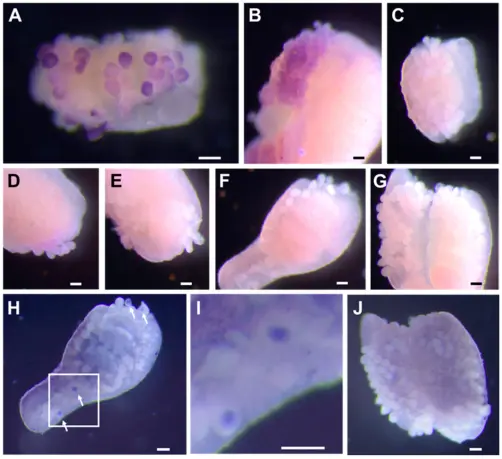
The season’s most romantic meet-cute mystery, how do gametes released into the environment recognize their own #species?🤔 New #research reveals #proteins on the unfertilized eggs might be key—at least in ribbon worms!🪱

👏 Congrats to the authors! Thanks for using SequenceServer! Link 👇

Find the paper here: https://doi.org/10.3390/biom14121545
#science #marine #genetics #bioinformatics

Identification of Six Novel Proteins Containing a ZP Module from Nemertean Species

During fertilization, a series of reactions between the eggs and spermatozoa proceed predominantly in a species-specific manner. The molecules mediating these species-specific reactions remain unknown except in a few organisms. In this study, we focused on two species belonging to the phylum Nemertea, Kulikovia alborostrata and K. fulva, and explored molecules involved in species-specific interactions between gametes. Orthologs of molecules known to be involved in species-specific reactions were not expressed in the ovaries of these two species. In contrast, we identified six novel proteins, named NeZPL1–NeZPL6, containing a ZP module. Among these, we found that NeZPL6 is located on the surface of an unfertilized egg and is suggested to be involved in its interaction with spermatozoa. Furthermore, we found an indel of three amino acids in the EGF-like domain of NeZPL6, which possibly confers species specificity to this interaction. Our results suggested the existence of a novel system for species recognition in animal gametes.
MDPI

Will we ever stop celebrating #databases? Not likely! They offer high-quality #datasets to scientists worldwide.

Perfect example: Reefgenomics.Org 🪸 Published in 2016, this #BLASTfromthePast is still being updated with #coral #genomes today! We're proud to be a part!

Links👇

Paper: https://doi.org/10.1093/database/baw152

Database: http://reefgenomics.org/

#reef #marinescience #genomics

Reefgenomics.Org - a repository for marine genomics data

Over the last decade, technological advancements have substantially decreased the cost and time of obtaining large amounts of sequencing data. Paired with

OUP Academic

You’ve heard of blue-blooded, but that pales (literally) in comparison to white-blooded icefishes 🐟, the only #vertebrates without #hemoglobin! 🩸 Shin et al., (with help from #SequenceServer!) reveal that #gene loss may be to blame. Congrats to the authors! 🎉

Check out the paper here: https://doi.org/10.1186/s12864-024-11028-0

#genomics #bioinformatics #research #genetics

Gene loss in Antarctic icefish: evolutionary adaptations mimicking Fanconi Anemia? - BMC Genomics

Background The white-blooded Antarctic icefishes is a representative organism that survive under the stenothermal conditions of the Southern Ocean without the hemoglobin genes. To compensate for inefficient oxygen transport, distinct features such as increased heart size, greater blood volume, and reduced hematocrit density enhance the amount of dissolved oxygen and the velocity of blood flow. Results Here, we investigated these unique characteristics by comparing high-quality genomic data between white-blooded and red-blooded fishes and identified the loss of FAAP20, which is implicated in anemia. Although the gene region containing FAAP20 is conserved in notothenioids as shown through collinear analysis, only remnants of FAAP20 persist in several icefish species. Additionally, we observed the loss of SOAT1, which plays a pivotal role in cholesterol metabolism, providing a clue for further investigations into the unique mitochondrial form of the icefish. Conclusions The loss of FAAP20, which is known to reduce erythrocyte counts under stress conditions in mice and humans, may provide a clue to understanding the genomic characteristics related to oxygen supply, such as low hematocrit, in Antarctic icefishes.

BioMed Central

Thanks to new #research on gars & bowfins, the evolution of #vertebrate #immune surveillance just got more garbled🐟Turns out these #fish have their own PSMB8 types, completely unique among vertebrates! Fascinating! 🧬

Congrats to the authors! Glad #SequenceServer could help!

Check out the paper here: https://doi.org/10.1101/2024.11.01.621518

#genomics #bioinformatics

Open Sesame! 🪄 By now you know we love an open access #database! Well, SesamumGDB, the brand-new #genomic database for cultivated & wild #sesame #species, is here! 🌿

Plus, with #SequenceServer integration, you can #BLAST away to your heart’s content! 🧬

Check out the paper here: https://doi.org/10.1093/database/baae105

Happy BLASTing!

SesamumGDB: a comprehensive platform for Sesamum genetics and genomics analysis

Abstract. Sesame (Sesamum indicum L., 2n = 26) is a crucial oilseed crop cultivated worldwide. The ancient evolutionary position of the Sesamum genus highl

OUP Academic

🌻Sunflowers, 🥬lettuces, & 🫖chamomile all belong to the diverse #Asteraceae family, which represents 7% of all flowering #plants! This makes #genomics #research in this group incredibly important!

Luckily, Liu et al., have launched AMIR, a comprehensive multi-omics #database for Asteraceae. AMIR covers 74 species, 132 genomes, & 4.4M annotated genes, with integrated #SequenceServer BLAST tools!

Check it out!

Paper: https://doi.org/10.1093/nar/gkae833

Database: https://yanglab.hzau.edu.cn/AMIR/home/

More bacterial resistance news (unfortunately)! 🦠 K. pneumoniae, a key culprit for #septicemia & UTIs, showed increasing #antimicrobialresistance between 2019-2021 based on whole #genome sequencing by Gamaleldin et al. 🧬

Concerning, but work like this is crucial for tracking the rise in resistant #pathogens. Proud that SequenceServer can assist with such vital #research

Link 👇

https://doi.org/10.1186/s12864-024-10661-z

Comparison of genotypic features between two groups of antibiotic resistant Klebsiella pneumoniae clinical isolates obtained before and after the COVID-19 pandemic from Egypt - BMC Genomics

Klebsiella pneumoniae is a common pathogen capable of causing a wide range of infections. Antibiotic resistance complicates treatment of these infections significantly. We are comparing resistance levels and genotypes among two collections of K. pneumoniae clinical isolates from Alexandria Main University Hospital (AMUH). We used disc diffusion and Minimum Inhibitory Concentration (MIC) by microbroth dilution to assess resistance levels and performed whole genome sequencing (WGS) to describe multilocus sequence types (MLST) and resistance gene presence. Among a collection of 56 K. pneumoniae clinical isolates (19 from 2019 to 37 from 2021), multidrug resistance (MDR) was 33% and 10%, extended drug resistance (XDR) was 24% and 46% and pan-drug resistance (PDR) was 43% and 43%, respectively. We identified 15 MLST STs including two novel types (ST-6118 and ST-6119 ). ST-101 and ST-383 were common between the two collections; ST-101 was the most common genotype in 2019 (28.6%) and ST-147 was most common in 2021 (25%). Ampicillin/sulbactam, amikacin, cefepime, ceftriaxone and ertapenem MICs were significantly higher in 2021. Prevalence of aph(3’) – Ia, aph(3’)-VI, mphA was significantly higher in 2021. The increasing resistance levels and the persistence of some MDR/XDR genotypes is concerning. Understanding mechanisms of resistance will inform infection control and antimicrobial stewardship plans to prevent evolution and spread of XDR and PDR strains.

BioMed Central

🦠 Bacteria-on-bacteria warfare in #milk might help treat Staph aureus & MRSA! 🥛Check out this #BLASTfromthePast where researchers isolate bacteriocins—bacteria's own bacteria-killing weapon—from bovine milk & test their inhibitory power on S. aureus and MRSA.

Fascinating paper! Glad SequenceServer could play a part!

Check it out here: https://journals.asm.org/doi/full/10.1128/aem.01015-17

#genetics #research #bacteria

Did you know?

Raphid #diatoms are one of the few eukaryotes that can glide! And they do it surprisingly... rap(h)idly! 🏎️ Congrats to Davutoglu et al. for their fascinating Nature #paper on the #molecular secrets behind this movement. Glad SequenceServer could help! 🌟

Check out the paper here: https://doi.org/10.1038/s42003-024-06889-w

#genetics #science #research

More exciting #genomics #research to highlight today, this time focusing on cactophilic flies that make their living in necrotic #cactus tissue (yum)! 🌵 Huge congrats to the authors 🎉 & delighted to see SequenceServer integrated into their publicly accessible #database. Always pleased to see more open data practices in #science!

If you're interested, you can check out the paper here: https://doi.org/10.1093/gbe/evae191

and the database here: https://cactusflybase.arizona.edu/

Happy BLASTing!

Fundamental Patterns of Structural Evolution Revealed by Chromosome-Length Genomes of Cactophilic Drosophila

Abstract. A thorough understanding of adaptation and speciation requires model organisms with both a history of ecological and phenotypic study as well as

OUP Academic