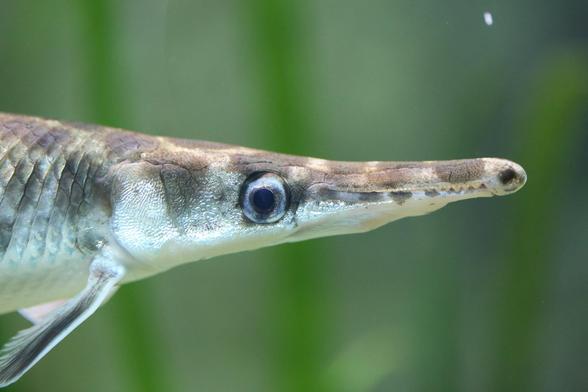
You’ve heard of blue-blooded, but that pales (literally) in comparison to white-blooded icefishes 🐟, the only #vertebrates without #hemoglobin! 🩸 Shin et al., (with help from #SequenceServer!) reveal that #gene loss may be to blame. Congrats to the authors! 🎉

Check out the paper here: https://doi.org/10.1186/s12864-024-11028-0

#genomics #bioinformatics #research #genetics

Gene loss in Antarctic icefish: evolutionary adaptations mimicking Fanconi Anemia? - BMC Genomics

Background The white-blooded Antarctic icefishes is a representative organism that survive under the stenothermal conditions of the Southern Ocean without the hemoglobin genes. To compensate for inefficient oxygen transport, distinct features such as increased heart size, greater blood volume, and reduced hematocrit density enhance the amount of dissolved oxygen and the velocity of blood flow. Results Here, we investigated these unique characteristics by comparing high-quality genomic data between white-blooded and red-blooded fishes and identified the loss of FAAP20, which is implicated in anemia. Although the gene region containing FAAP20 is conserved in notothenioids as shown through collinear analysis, only remnants of FAAP20 persist in several icefish species. Additionally, we observed the loss of SOAT1, which plays a pivotal role in cholesterol metabolism, providing a clue for further investigations into the unique mitochondrial form of the icefish. Conclusions The loss of FAAP20, which is known to reduce erythrocyte counts under stress conditions in mice and humans, may provide a clue to understanding the genomic characteristics related to oxygen supply, such as low hematocrit, in Antarctic icefishes.
BioMed Central

Thanks to new #research on gars & bowfins, the evolution of #vertebrate #immune surveillance just got more garbled🐟Turns out these #fish have their own PSMB8 types, completely unique among vertebrates! Fascinating! 🧬

Congrats to the authors! Glad #SequenceServer could help!

Check out the paper here: https://doi.org/10.1101/2024.11.01.621518

#genomics #bioinformatics

Open Sesame! 🪄 By now you know we love an open access #database! Well, SesamumGDB, the brand-new #genomic database for cultivated & wild #sesame #species, is here! 🌿

Plus, with #SequenceServer integration, you can #BLAST away to your heart’s content! 🧬

Check out the paper here: https://doi.org/10.1093/database/baae105

Happy BLASTing!

SesamumGDB: a comprehensive platform for Sesamum genetics and genomics analysis

Abstract. Sesame (Sesamum indicum L., 2n = 26) is a crucial oilseed crop cultivated worldwide. The ancient evolutionary position of the Sesamum genus highl

OUP Academic

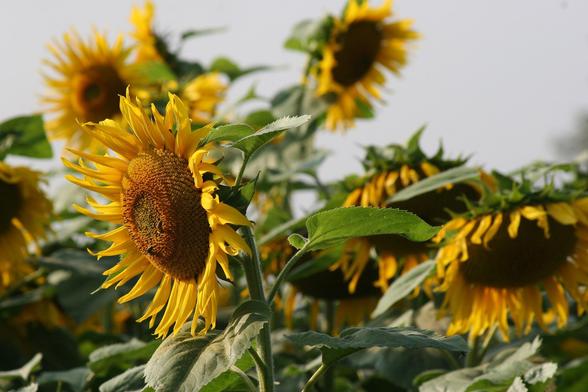
🌻Sunflowers, 🥬lettuces, & 🫖chamomile all belong to the diverse #Asteraceae family, which represents 7% of all flowering #plants! This makes #genomics #research in this group incredibly important!

Luckily, Liu et al., have launched AMIR, a comprehensive multi-omics #database for Asteraceae. AMIR covers 74 species, 132 genomes, & 4.4M annotated genes, with integrated #SequenceServer BLAST tools!

Check it out!

Paper: https://doi.org/10.1093/nar/gkae833

Database: https://yanglab.hzau.edu.cn/AMIR/home/

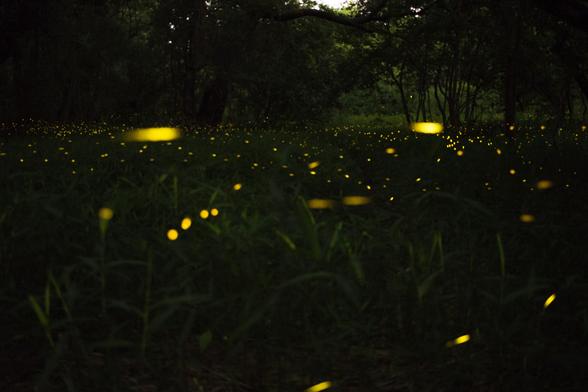
🚨 #BLASTfromthePast: Revisiting a truly enlightening study on the origins of firefly #bioluminescence. 🌟 Did fireflies and click #beetles share a glowing ancestor? Or did they #evolve it separately?

Such a fascinating paper! Great to reflect on the fantastic #research that #SequenceServer has helped facilitate!

You can find the study here: https://doi.org/10.7554/eLife.36495

#genomics #genetics #firefly #evolution #bioinformatics

Firefly genomes illuminate parallel origins of bioluminescence in beetles

The first genomic view of beetle luciferase evolution indicates evolutionary independence of luciferase between fireflies and click-beetles, and provide valuable datasets which will accelerate the discovery of new biotechnological tools.

eLife

🌱Peas are #plant protein powerhouses (phew, that's a lot of P's!), but quality relies on sulfur availability. Bachelet et al., with the help of #SequenceServer, explore how #pea compensates for low-sulfur environments using #sulfate transport systems.

Huge congrats to the authors! Check out the paper here: https://doi.org/10.1111/tpj.16961

#genomics #agriculture #bioinformatics