The representation of occluded image regions in area V1 of monkeys and humans https://www.sciencedirect.com/science/article/abs/pii/S0960982223010539 by @tylermorgan et al.; #neuroscience
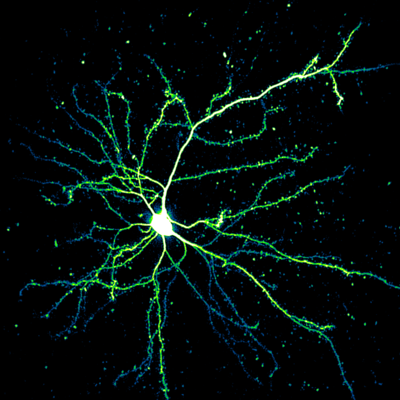
"contextual influences rapidly alter V1 spiking activity in monkeys over distances of several degrees in the visual field, carry information about individual scenes, and resemble those in human V1."
A lot of people contributed to the most recent release of PsychoPy and PsychoJS.
Made possible in part to the code sprint supported by @czi
Thank you!
#opensource #software #github #openscience #python #javascript
@chrisXrodgers @seeingwithsound @kevinbolding
Here is the Apollo implant: https://www.biorxiv.org/content/10.1101/2023.08.03.551752v1
I don't think everyone realizes how much #neuroscience #opendata is really downloaded and reused...
e.g. our dataset of responses to visual stimuli has 18,000 downloads; wholebrain #zebrafish neural activity from the Ahrens lab has 7,000 downloads; Nick Steinmetz's eight-probe Neuropixels data has 6,500 downloads. and there are many commonly used neuro datasets on websites that don't count downloads that must have thousands too!
post your data and they will come :) #openscience
Scholar Nexus (under former name Neuromatch Open Publishing) is in the news in the unlikeliest of places, a Nature Publishing Group journal! Thanks to @patrickmineault.
Academic publishing is the backbone of science dissemination –– but is the current system fit for purpose? We asked a diverse group of scientists to comment on the future of publishing. They discuss systemic issues, challenges, and opportunities, and share their vision for the future.
Excited to be part of a IEEE Transactions on Medical Robotics and Bionics paper that was just published.
Real-Time 3D Video Reconstruction for Guidance of Transventricular Neurosurgery
https://doi.org/10.1109/TMRB.2023.3292450
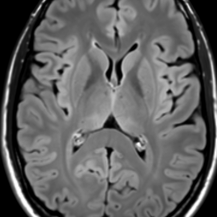
Neuroendoscopic approach to deep-brain targets imparts deformation of the ventricles and adjacent parenchyma, limiting the accuracy of conventional neuronavigation. We report a method for 3D endoscopic reconstruction and registration via simultaneous localization and mapping (SLAM) for real-time guidance with or without robotic assistance. The aim is to permit augmented video overlay of structures registered from preoperative or intraoperative 3D images within and beyond the endoscopic field of view for more accurate targeting in the presence of deep-brain deformation. Phantom studies were performed to evaluate geometric accuracy and uncertainty in distinct scenarios of limited data (feature sparsity and scene occlusion), demonstrating performance over a broad range of challenges to endoscopic data. Reconstruction and registration accuracy were maintained even with up to 40% loss in feature density or 120∘ of the visual scene occluded. Overall, the method achieved a high degree of geometric accuracy, with target registration error of 1.02 mm and runtime supporting real-time guidance (3.45 Hz, representing a >16× speedup with SLAM approach compared to previous work). The studies establish essential quantitative performance characteristics and validation that are essential to future translation to clinical studies.