INRAE - Action and transitions

@INRAE_ACT
1 Followers
6 Following
20 Posts
As a research division of INRAE, our goal is to understand and support transformative changes in socio-ecosystems and agrifood systems which take into account actors’ practices and strategies in order to promote sustainable innovations and transitions, particularly at the territorial level.
#agroecology #agriculture #food #environnement
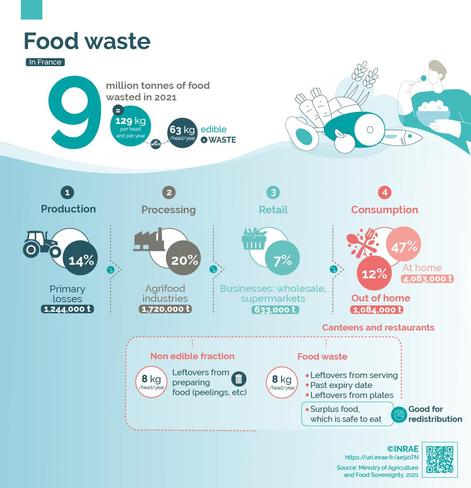
🌍 A third of the food produced in the world is lost or wasted throughout the chain, from farm to fork. How can we reduce this food loss and waste? In France, a study explored the creation of a ‘new link’ between the catering industry and food aid associations to redistribute surplus food. 🍽️🤝 #FoodWaste #Sustainability #CircularEconomy #FoodAid #SurplusFood
https://www.inrae.fr/en/news/reducing-food-waste-improving-how-institutional-catering-surpluses-are-distributed
Reducing food waste by improving how institutional catering surpluses are distributed

One third of the food produced in the world is lost or wasted from farm to fork, which creates major environmental impacts and economic losses to the tune of USD 940 billion a year. The United Nations Sustainable Development Goal 12.3 aims to reduce food losses and waste, with a specific goal of cutting them by half at the retail and consumer levels by 2030. European and international initiatives are striving to identify and tackle food loss and waste “hot spots”, monitor changes over time and evaluate public policies. To support such efforts, a study has explored the dynamics in France of a “new link” to connect institutional catering and food aid organizations to redistribute food surpluses.
INRAE Institutionnel
#books #agroecology #climatechange
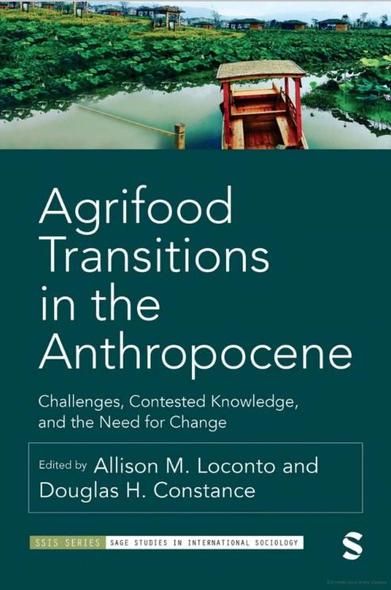
Facing the Anthropocene, this book explores sustainable #agrifood systems, addressing the challenges of climate change and feeding 9 billion by 2050. It examines social movements for democratic food systems and urges sociological engagement.
https://uk.sagepub.com/en-gb/eur/agrifood-transitions-in-the-anthropocene/book287967#description
Agrifood Transitions in the Anthropocene

Challenges, Contested Knowledge, and the Need for Change

SAGE Publications Ltd
#biodiversity #agroecology #CropProtection #agriculture #SustainableFarming #pesticides #ClimateChange
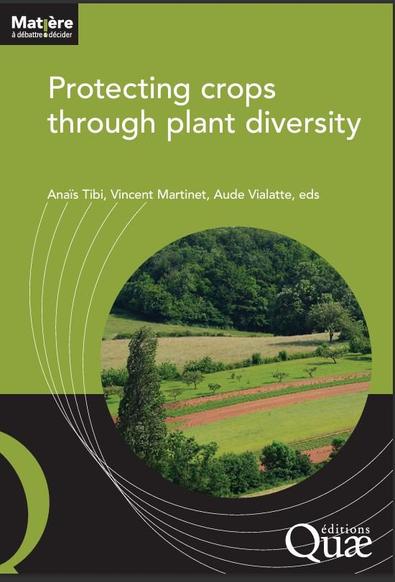
This book (Free PDF) reveals how plant diversification can transform crop protection, reducing reliance on synthetic pesticides. Explore how enhancing biodiversity in agricultural areas is key to a sustainable, healthier future for our planet. For educators, researchers, students, and anyone committed to sustainable agriculture.
https://www.inrae.fr/en/news/protecting-crops-through-plant-diversity
Protecting crops through plant diversity

In a world increasingly focused on sustainable agricultural solutions, this book presents fresh perspectives and comprehensive insights. It delves into the effectiveness of crop protection strategies that leverage plant diversification within agricultural plots and landscapes. The book thoroughly examines both the challenges and opportunities associated with implementing these strategies. It is designed for a broad audience, including educators, researchers, students, agricultural stakeholders, land managers, environmental organizations, and concerned citizens invested in the future of our food and planet. Additionally, the digital version of the book is available for free.

INRAE Institutionnel
#livestock #mediterranean #tropical
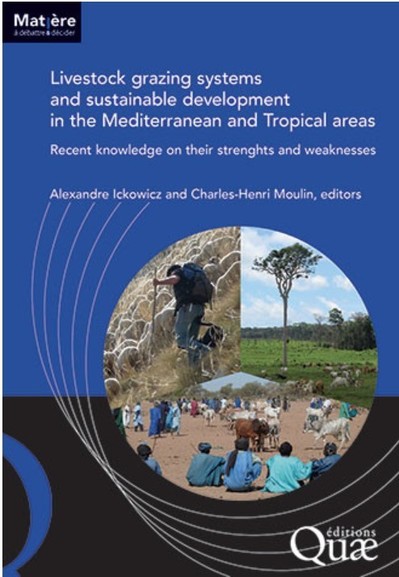
How can we enhance the resilience of livestock farms in the face of climate, social, and economic shifts? How can we optimize their efficiency across various organizational tiers and in terms of societal, economic, and environmental considerations?
This book offers an interdisciplinary synthesis drawing from research conducted in diverse locations worldwide. The PDF version is FREE
https://www.quae-open.com/produit/212/9782759236930/livestock-grazing-systems-and-sustainable-development-in-the-mediterranean-and-tropical-areas
Livestock grazing systems and sustainable development in the Mediterranean and Tropical areas - Recent knowledge on their strengths and weaknesses - (EAN13 : 9782759236930) | Quae-Open : Des livres scientifiques en libre accès

Livestock grazing systems and sustainable development in the Mediterranean and Tropical areas - Recent knowledge on their strengths and weaknesses - (EAN13 : 9782759236930)

Quae Open Acess
#climatechange #pastures #mountain #farming
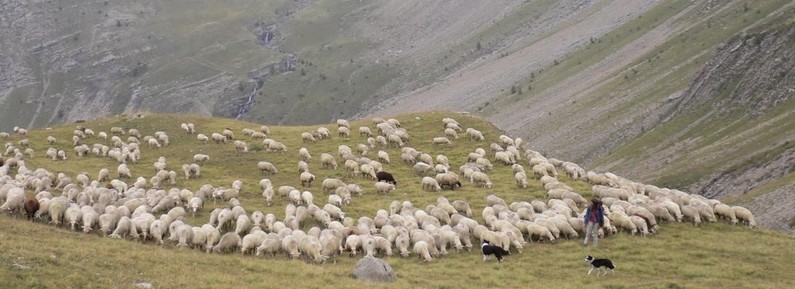
The EU project LIFE PASTORALP has come to an end after nearly six years. The objective was to help mountain grazing systems adapt to climate change by developing concrete solutions and recommendations. It produced an online mapping tool for monitoring shifts in mountain pastures, along with a series of management and public policy recommendations that can help ensure the future of pastoral farming in these regions.
@EUAgri
https://www.inrae.fr/en/news/towards-sustainable-mountain-pastoralism
Towards sustainable mountain pastoralism

PRESS RELEASE - The EU project LIFE PASTORALP has come to an end after nearly six years. This collaboration between the University of Florence in Italy and INRAE and CNRS in France led scientists to work closely with herders, livestock farmers, and other local stakeholders linked to two national parks—Gran Paradiso in Italy and Écrins in France. The objective was to help mountain grazing systems adapt to climate change by developing concrete solutions and recommendations. LIFE PASTORALP produced an online mapping tool for monitoring shifts in mountain pastures, along with a series of management and public policy recommendations that can help ensure the future of pastoral farming in these regions.

INRAE Institutionnel
#WindowFriday #Fensterfreitag
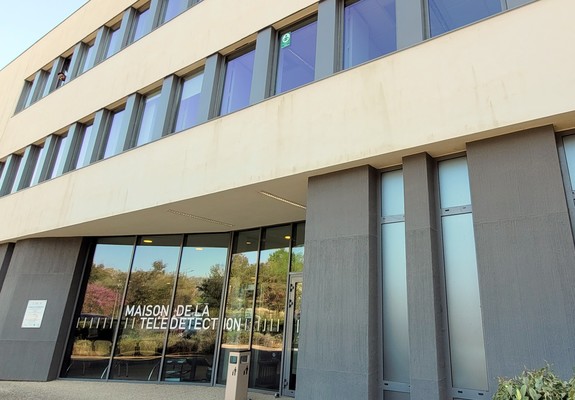
Discover our research laboratories. Today, the focus is on #remotesensing specialists.
UMR TETIS is an interdisciplinary research laboratory focused on developing the use of spatial information to understand territorial complexity, #agroecosystems and support stakeholders.
The lab is located at the Maison de la #télédétection in Montpellier, in a beautiful environment.
Website: https://www.umr-tetis.fr/index.php/en/
Publications: https://hal.inrae.fr/ACT/search/index/?q=%2A&labStructName_t=Territoires%2C+Environnement%2C+T%C3%A9l%C3%A9d%C3%A9tection+et+Information+Spatiale
About us ?

TETIS est un laboratoire de recherche centré sur le développement de l’usage de l’information spatiale au service des Territoires et de l'environnement.

Tetis

#WindowFriday #Fensterfreitag
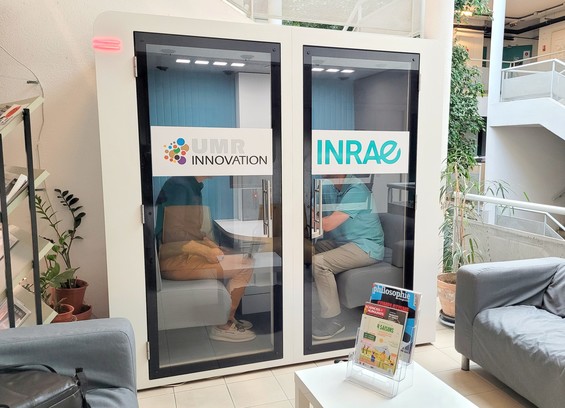
Discover our research laboratories. We are at the "innovation" lab in Montpellier. The researchers who work there produce knowledge and inform scientific and societal debates on the innovation processes involved in transformations and #transitions in agricultural and #food systems

This double window is a booth that allows scientists to isolate themselves during a video meeting or video conference.
To find out more about UMR Innovation => https://umr-innovation.cirad.fr/en/l-unite/l-umr-innovation

UMR Innovation / The team - Innovation and Development in agriculture and food

#WindowFriday #Fensterfreitag
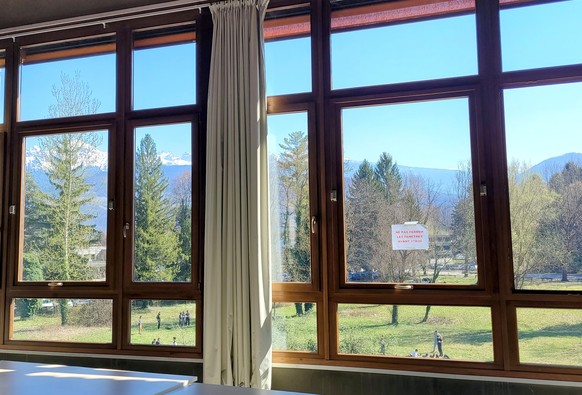
Discover our research laboratories. We're here at LESSEM near Grenoble. This is the view from the auditorium, on the campus of Grenoble University. In the background, the snow-covered Alps. It's a magnificent campus, with lots of trees. The "EcoSystèmes et sociétés en Montagne" laboratory conducts research into the dynamics of mountain socio-ecosystems.
For more information
=> Publications by LESSEM researchers https://hal.inrae.fr/ACT/search/index/?q=%2A&labStructName_t=Laboratoire+of+EcoSyst%C3%A8mes+and+of+Soci%C3%A9t%C3%A9s+in+Mountains
Recherche - Action, transitions et territoires

Management of agri-food transitions (MANTRA)

CPJ24-ACT-1 - Nature and purpose of the research project to be developed and related activities Assisting the agroecological transition requires understanding how agri-food systems can be reconfigured to become sustainable. Transition studies represents this process as a confrontation between niches of innovation led by those involved who implement far-reaching changes and a dominant regime that is resisting. The originality of the project is to address this process as a co-evolution rather than a confrontation. Understanding this co-evolution raises the question of the cross-learning processes involved at the interfaces between niches and regimes. The hurdle to be overcome is that of the complexity of these interfaces where visions of the world, often radically different, converge. To be able to address this question, we propose to study the intermediary transitions and their supporting role. These players create bridges between the parties involved and formulate their visions and requests at the interface between niches of innovation and regimes in place, thus enabling the transformation of sociotechnical systems resulting in new collaborations between technologies, ideas, and niche markets. The aim is to characterise the practices, strategies, and organisation of these intermediaries, the nature of the cross-learning made possible and its effects in terms of value and motivation to act, as well as changes in practices. Conducting multi-level analyses on dynamics between micro- and meso-economic scales will require the use of mixed methods combining quantitative analyses and qualitative approaches. Nature and purpose of the teaching project There are high expectations, on the part of engineering students and master’s students, for courses on how to get involved and assist the ecological transition of agri-food systems. The aim of the junior professor position is to develop and teach a framework to design and deploy the action and learn from experience to train reflexive practitioners to cope with the complexity and uncertainty of difficult situations to transform and assist groups in these transformations. This proposal falls fully within the objectives of the INPT project on sustainable engineering and the deployment of the project “Toulouse Initiative for Research Impact on Society” of the new University of Toulouse. The aim is that all the engineering students of the INPT and PhD students in Toulouse have access to a “miner” on the production of knowledge on and for the transitions. The person recruited will therefore be in charge of creating these teaching modules: • Master’s level (INPT, ENVT, ENSFEA, UT2 schools) challenges, theories and operationalisation of sustainable transitions (12h), learning and knowledge management (8h), assistance with changes in agri-food systems (4h), ethics and action (4h), transdisciplinarity and complexity management (4h), • Seminar and reflexive workshops on the stance of research, inter and transdisciplinarity for the Doctoral Schools SEVAB and TESC of the University of Toulouse (12h). Funding and related resources ANR Package : 200 000€ INRAE Package : 110 000€ Total : 310 000€

INRAE Jobs
#resilience #food #justice #territories
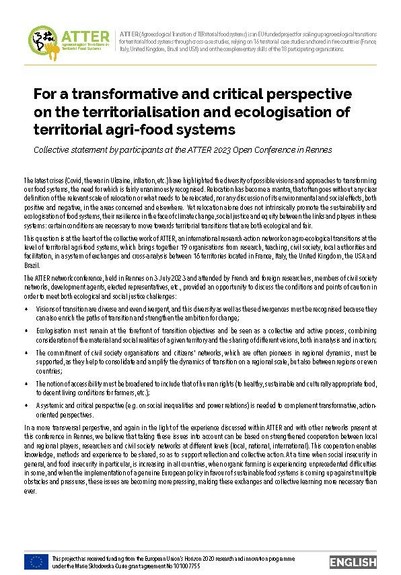
As part of the @H2020 ATTER project, an Open Conference was held on the theme of agro-ecological transitions in territorial food systems.
A collective declaration was drawn up by the participants at the event, highlighting the conditions and points to watch out for in order to meet the challenges of both ecology and social justice.
https://atter-rise.hub.inrae.fr/news/collective-statement-atter-open-conference
ATTER - Agroecological Transitions for Territorial Food Systems (H2020 MSCA RISE)