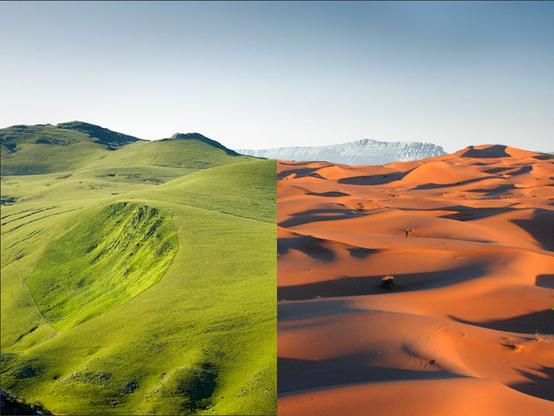
Solar panels are creating an unexpected effect by forming rainfall clouds and thriving oases in the middle of the desert

#Erneuerbare #Renewable #GoodNews
ecoportal.net/en/solar-panels-…

The article published in Science has detailed how massive solar arrays in the Sahara Desert have started to trigger increased rainfall and vegetation growth.

They drastically lower the temperature around the sand that they sit on, effectively “greening” the desert. As the warm air around the panels has nowhere else to go but up, they naturally form massive rainclouds in a part of the world known for its dryness.


Solar panels are creating an unexpected effect by forming rainfall clouds and thriving oases in the middle of the desert

A recent study has found an unexpected benefit from the undisputed king of the renewable energy sector as solar panels are creating rain clouds in the desert.

ecoportal.net
@hoergen Yeah but... Do we want this? The climate catastrophe gives us more wind and rain or extra drought... and again we choose to alter the Sahara climate causing winds and rainstorms and stuff...
Is that truly the way ahead?
@apenkop @hoergen Maybe it's incentive to do more of this in the places with declining habitats instead of those naturally devoid of one.
@secbox @hoergen
Okay, I like that. But the reason why I asked is not that I would know better than others (because I don't) but that I want us to keep thinking, reasoning, calculating if one positive choice isn't gonna make deplorable situations elsewhere worse. Another question: would revitalizing and replanting arid regions really be good regardless of the effects of climate change elsewhere?
Could we make the Sahara a lush forest and still be able to repair the North Atlantic Gyre?

@apenkop i think the people living there are desperately trying to stop the expansion of the Sahara desert, the project of the Great Green Wall of Africa is there to stop the change. If they can both get the energy and stop the desertification, that's a huge win

@secbox @hoergen

@licho @secbox @hoergen
I think we must stand together to fight western expansionist movements like those of the USA from interfering with local African initiatives (Gadaffi in his days) to regreen their countries.

It comes to my mind that for decades now, American interference anywhere on the planet (South America, Korea, Vietnam, Middle East, Middle East and Middle East) was never to protect those regions, but to destabilize them for USA's profit.

@apenkop on a more optimistic note, have you seen the series documenting the Great Green Wall of Africa by Andrew Millison?

https://www.youtube.com/watch?v=xbBdIG--b58

@secbox @hoergen

Inside Africa's Food Forest Mega-Project

Permaculture instructor Andrew Millison journeys with the UN World Food Programme to the country of Niger in the African Sahel to see an innovative land reco...

YouTube
@licho @secbox @hoergen
No I haven’t seen it. I’m gonna watch this tonight!
@licho @apenkop @secbox @hoergen Incredible! I hadn’t heard of this. Watching now. 🙂
@licho @apenkop @secbox @hoergen yeah this stuff is truly hopeful
@licho @secbox @hoergen
I watched it and I really love it. So much more to say about this. How I'd love the local population to benefit from this, to gain awareness of their own worth, take control, but also: how to keep local or regional militant groups out of the equation. And how to keep global powers like US, China, Russia out of the equation for whereever there is a profit, those global powers want to own it.

@secbox “…naturally devoid of one.” Hm. You know that the outline of the Sahara has changed radically over time, right? And that it has changed dramatically even over the relatively short period of time for which we have written records? And that *some* of that change may be attributable to human intervention?

So, are you asserting that you know what it *ought* to look like? That there is some One True State of the planet from which any deviance should be shunned and toward which all effort should be bent? And you know what effect any given action will have?

@pirateguillermo Nope. I'm just saying that humanity should focus on fixing what it knows it has damaged in the environment instead of trying to guide the course of nature.

@apenkop @hoergen do we want another rainforest that captures excess water from melting icecaps and provides increased biodiversity?

The only problem is that this shift in the Sahara desert is likely to change the climate of places downwind.

@nowayeast @apenkop @hoergen for Europe this will be a net benefit as the Sahara winds are causing many problems at the moment. It also helps save the gulf stream by cooling down the gulf of Mexico via regreening Texan and Mexican deserts.

@hoergen Makes sense when you think about it - every joule of solar energy that is converted to electricity is a joule that is not absorbed by the soil under the solar panel.

The ground stays cooler, less water is evaporated, and the desert becomes less deserty.

@rhempel @hoergen
I read somewhere the Sahara is x2 bigger than a couple of thousand years ago?

Bad management of sheep and goats?

However it sounds weird.

@hoergen anyone have a link to the Science article? Couldn’t find it here

@rubbel @tsyum @hoergen

Thanks for this, I waited to boost until it was a source I knew was reliable.

@lucybeahere @rubbel @tsyum @hoergen the science article only talk about computer model, not real effect at all. The AI generated text is completely misleading.

And the source linked article in science https://esd.copernicus.org/articles/15/109/2024/ is also about model, not actual observed effects

Scaling artificial heat islands to enhance precipitation in the United Arab Emirates

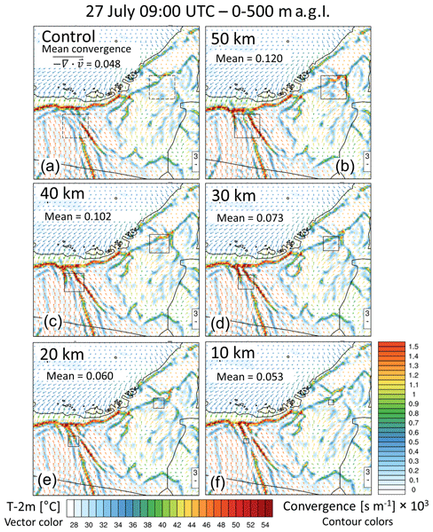
Abstract. Potential for regional climate engineering is gaining interest as a means of solving regional environmental problems like water scarcity and high temperatures. In the hyper-arid United Arab Emirates (UAE), water scarcity is reaching a crisis point due to high consumption and over-extraction and is being exacerbated by climate change. To counteract this problem, the UAE has conducted cloud-seeding operations and intensive desalination for many years but is now considering other means of increasing water resources. Very large “artificial black surfaces” (ABSs), made of black mesh, black-painted, or solar photovoltaic (PV) panels have been proposed as a means of enhancing convective precipitation via surface heating and amplification of vertical motion. Under the influence of the daily UAE sea breeze, this can lead to convection initiation under the right conditions. Currently it is not known how strong this rainfall enhancement would be or what scale of black surface would need to be employed. This study simulates the impacts at different ABS scales using the WRF-Noah-MP model chain and investigates impacts on precipitation quantities and underlying convective processes. Simulations of five square ABSs of 10, 20, 30, 40, and 50 km sizes were made on four 1 d cases, each for a period of 24 h. These were compared with a Control model run, with no land use change, to quantify impacts. The ABSs themselves were simulated by altering land cover static data and prescribing a unique set of land surface parameters like albedo and roughness length. On all 4 d, rainfall is enhanced by low-albedo surfaces of 20 km or larger, primarily through a reduction of convection inhibition and production of convergence lines and buoyant updrafts. The 10 km square ABS had very little impact. From 20 km upwards there is a strong scale dependency, with ABS size influencing the strength of convective processes and volume of rainfall. In terms of rainfall increases, 20 km produces a mean rainfall increase over the Control simulation of 571 616 m3 d−1, with the other sizes as follows: 30 km (∼ 1 million m3 d−1), 40 km (∼ 1.5 million m3 d−1), and 50 km (∼ 2.3 million m3 d−1). If we assume that such rainfall events happen only on 10 d in a year, this would equate to respective annual water supplies for > 31 000, > 50 000, > 79 000, and > 125 000 extra people yr−1 at UAE per capita consumption rates. Thus, artificial heat islands made from black panels or solar PV offer a means of enhancing rainfall in arid regions like the UAE and should be made a high priority for further research.

@fanf42 @rubbel @tsyum @hoergen

Thanks for the important clarification!

@rubbel @tsyum @hoergen

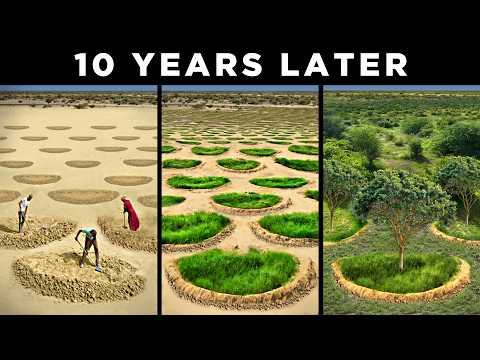
The photo posted doesn’t seem to be associated with the article. Did I miss something?

@Susibryant in this case I don’t think it matters whether the photo is a specific example of what they’re talking about
@tsyum
I think it does. And I'm quite saddened that it's the click baity fluffy worded article with the unrelated at best/possibly artificially generated image that's getting so much traction here.
@Susibryant

@rubbel @tsyum @hoergen

Here's an article in Nature. Yes, it's saying that the more wide-ranging effects would only occur if the area covered in solar panels was larger than that needed for all the energy needed in the world, and so merely speculative.

@Anne_Delong @rubbel @tsyum @hoergen the article is published in Science and is focused on more realistic projects:

"They modeled the solar farms as nearly black fields that absorbed 95% of the incoming sunlight. When the solar farms exceeded 15 square kilometers, they found, the increased heat absorbed at the surface, contrasted with the relatively reflective sand surrounding them, appreciably increased the updrafts, or convection, that drive cloud formation."

https://www.science.org/content/article/massive-solar-farms-could-provoke-rainclouds-desert

@tsyum @hoergen isn't it great /s that articles mention another article but don't link to it? Audience retention

@hoergen

mars bros: We need to develop terraforming technologies!

solar farms begin to green desserts

mars bros: not like that!

@hoergen

Interesting news and makes sense , i think

@amenonsen see this

@hoergen This is a simulation study, and for it to rain, the solar fields would need to be of a considerable size (i.e., really really huge!) and have an albedo that current solar cells do not achieve.

The paper itself: https://esd.copernicus.org/articles/15/109/2024/

Science wrap up: https://www.science.org/content/article/massive-solar-farms-could-provoke-rainclouds-desert

Scaling artificial heat islands to enhance precipitation in the United Arab Emirates

Abstract. Potential for regional climate engineering is gaining interest as a means of solving regional environmental problems like water scarcity and high temperatures. In the hyper-arid United Arab Emirates (UAE), water scarcity is reaching a crisis point due to high consumption and over-extraction and is being exacerbated by climate change. To counteract this problem, the UAE has conducted cloud-seeding operations and intensive desalination for many years but is now considering other means of increasing water resources. Very large “artificial black surfaces” (ABSs), made of black mesh, black-painted, or solar photovoltaic (PV) panels have been proposed as a means of enhancing convective precipitation via surface heating and amplification of vertical motion. Under the influence of the daily UAE sea breeze, this can lead to convection initiation under the right conditions. Currently it is not known how strong this rainfall enhancement would be or what scale of black surface would need to be employed. This study simulates the impacts at different ABS scales using the WRF-Noah-MP model chain and investigates impacts on precipitation quantities and underlying convective processes. Simulations of five square ABSs of 10, 20, 30, 40, and 50 km sizes were made on four 1 d cases, each for a period of 24 h. These were compared with a Control model run, with no land use change, to quantify impacts. The ABSs themselves were simulated by altering land cover static data and prescribing a unique set of land surface parameters like albedo and roughness length. On all 4 d, rainfall is enhanced by low-albedo surfaces of 20 km or larger, primarily through a reduction of convection inhibition and production of convergence lines and buoyant updrafts. The 10 km square ABS had very little impact. From 20 km upwards there is a strong scale dependency, with ABS size influencing the strength of convective processes and volume of rainfall. In terms of rainfall increases, 20 km produces a mean rainfall increase over the Control simulation of 571 616 m3 d−1, with the other sizes as follows: 30 km (∼ 1 million m3 d−1), 40 km (∼ 1.5 million m3 d−1), and 50 km (∼ 2.3 million m3 d−1). If we assume that such rainfall events happen only on 10 d in a year, this would equate to respective annual water supplies for > 31 000, > 50 000, > 79 000, and > 125 000 extra people yr−1 at UAE per capita consumption rates. Thus, artificial heat islands made from black panels or solar PV offer a means of enhancing rainfall in arid regions like the UAE and should be made a high priority for further research.

@hoergen what could possibly go wrong
@hoergen @AnnaAnthro this article is clickbait about a study that used computer models to see if this would happen. solar panel farms in the desert are not currently doing this. i recommend you read the original article to get more context https://www.science.org/content/article/massive-solar-farms-could-provoke-rainclouds-desert
@piebob @hoergen @AnnaAnthro awww :( (but i want it to be true!)
@leadegroot @hoergen @AnnaAnthro it's certainly an encouraging idea, but it sounds like it would have to be managed carefully (given the potential outcomes described in the article about the paper).
@piebob @leadegroot @hoergen @AnnaAnthro Yes, the ecoportal article is a pain to read as it doesn't actually say anything about how it works etc. I also had to find the link to the original _science_ article and read that instead.
@martinvermeer @piebob @hoergen @AnnaAnthro and, of course, it isn’t making rain - it means less rainfall somewhere else. So… more interesting times! :(

@leadegroot @piebob @hoergen @AnnaAnthro Yes, but still a net improvement: more rain where it's most needed!

That said, the problem isn't just getting it to rain, but properly managing the water that does come down. Here's a video - I don't like its style much, there are better sources out there, but it makes the point. This is one of those huge things that nobody is talking about.

https://www.youtube.com/watch?v=xbBdIG--b58

Inside Africa's Food Forest Mega-Project

Permaculture instructor Andrew Millison journeys with the UN World Food Programme to the country of Niger in the African Sahel to see an innovative land reco...

YouTube

@leadegroot @piebob @hoergen @AnnaAnthro ...and it actually looks nicer than huge photovoltaics farms. Those should be covering roofs, parking lots etc.

But what do I see here (screen shot from the video)? Both have their place...

@hoergen

Changes in weather patterns always have an effect somewhere...

...But the bounty would come with a cost, the researchers found: By altering wind patterns, the solar farms would push tropical rain bands north. “If you push those northward, that’s not good news for the Amazon,” says Zhengyao Lu, a climate scientist at Lund University and lead author of the 2020 study.

https://www.science.org/content/article/massive-solar-farms-could-provoke-rainclouds-desert

@hoergen All this crazy talk about avoiding global warming by shielding the earth from the sun with mirrors deployed in low orbit, and we can do even better from down here with solar panels, while also passively transforming deserts into oases.
@hoergen It is important to point out that this has not happened, the article is the result of a climate model simulation.

@hoergen Unsurprising, there's cases of farmers using the panels as shade to facilitate crop growth and prevent streams from evaporating

edited to fix a grammatical issue

@hoergen yes this isn’t quite accurate. If you read the original article linked from the article that this refers to, you’ll see that it’s a hypothetical. But that article is from 2 to 3 years ago so solar farms could be reaching a size to establish whether that hypothetical is true or false.
@hoergen im Prinzip nichts Neues. Vor Jahren habe ich einen Artikel gelesen, wie Wüste testweise wieder begrünt wurde, in dem sie (sehr aufwändig allerdings) bepflanzt wurde. Ich weiß nicht mehr genau, welche Art von Gestrüpp, aber der Effekt war ähnlich: Schatten, Bodenveränderung usw.
Canada sized Solar and wind farms could make the Sahara Desert green again with double the rain | NextBigFuture.com

A team of scientists has concluded that deploying solar and wind farms across the region that the Sahara encompasses will produce significantly more rain, and

NextBigFuture.com
@hoergen deleted my first comment because the post is misrepresenting old research: https://esd.copernicus.org/articles/15/109/2024/
Scaling artificial heat islands to enhance precipitation in the United Arab Emirates

Abstract. Potential for regional climate engineering is gaining interest as a means of solving regional environmental problems like water scarcity and high temperatures. In the hyper-arid United Arab Emirates (UAE), water scarcity is reaching a crisis point due to high consumption and over-extraction and is being exacerbated by climate change. To counteract this problem, the UAE has conducted cloud-seeding operations and intensive desalination for many years but is now considering other means of increasing water resources. Very large “artificial black surfaces” (ABSs), made of black mesh, black-painted, or solar photovoltaic (PV) panels have been proposed as a means of enhancing convective precipitation via surface heating and amplification of vertical motion. Under the influence of the daily UAE sea breeze, this can lead to convection initiation under the right conditions. Currently it is not known how strong this rainfall enhancement would be or what scale of black surface would need to be employed. This study simulates the impacts at different ABS scales using the WRF-Noah-MP model chain and investigates impacts on precipitation quantities and underlying convective processes. Simulations of five square ABSs of 10, 20, 30, 40, and 50 km sizes were made on four 1 d cases, each for a period of 24 h. These were compared with a Control model run, with no land use change, to quantify impacts. The ABSs themselves were simulated by altering land cover static data and prescribing a unique set of land surface parameters like albedo and roughness length. On all 4 d, rainfall is enhanced by low-albedo surfaces of 20 km or larger, primarily through a reduction of convection inhibition and production of convergence lines and buoyant updrafts. The 10 km square ABS had very little impact. From 20 km upwards there is a strong scale dependency, with ABS size influencing the strength of convective processes and volume of rainfall. In terms of rainfall increases, 20 km produces a mean rainfall increase over the Control simulation of 571 616 m3 d−1, with the other sizes as follows: 30 km (∼ 1 million m3 d−1), 40 km (∼ 1.5 million m3 d−1), and 50 km (∼ 2.3 million m3 d−1). If we assume that such rainfall events happen only on 10 d in a year, this would equate to respective annual water supplies for > 31 000, > 50 000, > 79 000, and > 125 000 extra people yr−1 at UAE per capita consumption rates. Thus, artificial heat islands made from black panels or solar PV offer a means of enhancing rainfall in arid regions like the UAE and should be made a high priority for further research.

@hoergen Could it be a way to wind back climate change?
@hoergen they aren't though: we can have hope but at this point it's only in simulations

@hoergen
fwiw

not-at-all unexpected.

anticipated > half-century past

@hoergen Interesting! That said, the link is pretty annoying slop for people with no attention span. The original article is here: https://www.science.org/content/article/massive-solar-farms-could-provoke-rainclouds-desert
@hoergen the study that the article refers to is a modeling study that makes the point this *could* happen, not that it is happening...
@hoergen by the way, solar panels on buildings in cities would also reduce or eliminate the urban heat island effect too. It's a no-brainer, and yet so few cities are doing it yet.
@hoergen wow you might even call it...... Green energy 😅
@hoergen Am I the only one who finds the linked website to be an infuriating labyrinth of text that hints at the existence of articles with links to more pages with more text with hints at the existence of articles with more links....?

@virtuous_sloth @hoergen Well, somewhat it is.
The original Science article from 2024 is here
https://www.science.org/content/article/massive-solar-farms-could-provoke-rainclouds-desert

The whole thing is still an hypothesis, given at least 20 km2 of panels, and dark enough to trigger the effect.
When that will be reached we'll see.

The original says also that hypotheses on an extremely larger area of panels (1 million km2) could also cause dramatic climatic changes in areas northern of it.

@hoergen so i guess the project was a bit of a waste then 
Trees would *actually* do this, and not just in a computer simulation
@hoergen That solar panels in the Sahara, or other deserts, would have influence on the climate and that there will be a turnover point where the global air flow will be dramatically changed, was predicted years ago.