 inclementimmigrant
Dragon Quest creator Yuji Horii says English translations inevitably strip away a lot of a game's "flavor"
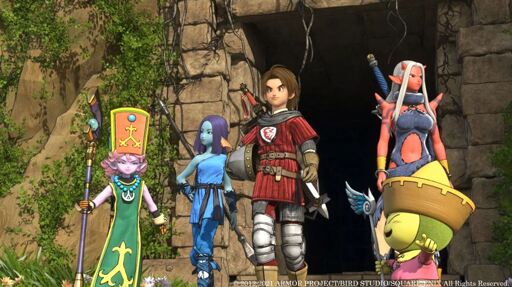
(source is Awkward Zombie)
 samus12345
The site loooks so much like penny arcade, I didn’t know this one.
I can imagine a lot of heartache and contention around where one lands with this. But I gotta be honest, my favorite Japanese properties are the ones where the translators took a lot of liberties and flexed some writing chops to make the most flavorful expression of something that fit what the creator was going for.
There’s a lot of Japanese/Chinese mystery games where suspects blend together because I can’t remember which person is Yuang Ho or Ryuiki Takachi. But I’ll always remember that in Ace Attorney, I play as Phoenix Wright, and am cross examining suspicious man Frank Sahwit. The cultural relevance of the changed names improves context learning. The series has been mocked for its adjustments, but I like them.
Other weird moments of creativity came from the dubbing team that did Ghost Stories as an “abridged series”, and the Trails in the Sky localizers that found a string table that duplicated “The chest is empty” for each treasure chest in the game, and decided to make each one a ridiculous message.
On the other end, there’s moments like the infamous quote in Rhapsoy. The parentheses are part of it.
This is WhiteSnow, a town filled with snow. Enjoy the world of snow. (Note: This is what happens when you do a direct translation.)
 NekuSoul
White people when you try and explain that English isn’t a universal language which everything translates easily into.🤯🤯😱😱🤬🤬
There used to be botched localisation attempts. Hardcore gamers of the past obsessed over the orginal language of the niche Jrpg they couldn’t find.
 bread
breadI’m Irish you crispy cracker.
This reminds me of anime subtitles from the 1980s. Most of those I’ve seen are simplistic, boring, and sometimes misleading.
Bad translations still exist today, of course, but I don’t run into them as often. I’m guessing that the growth of anime popularity in the west, along with increased translation budgets, have something to do with that. Better translators are probably doing some of this work now.
Losing a game’s flavour in translation might be a challenge to overcome, but I don’t think it’s inevitable. Suggestion: Don’t make translations an afterthought when producing a game. Instead, recognize that the words used to tell your story and illustrate your world effectively are your story and world, and seek out translators who are especially talented at conveying nuance and feeling. Accept that they are probably better than you are at communicating in their language. Give them room to be creative. Pay them well. You will probably get better results.
 🇰 🌀 🇱 🇦 🇳 🇦 🇰 🇮
 This is the main reason I prefer dubs to subs. Crouching Tiger, Hidden Dragon especislly loses flavor in the subtitles that do get translated in the dubs. Every line in the sub is basic and just barely enough to understand the plot. But it lacks the poetry of language that make it good dialogue.
So, I’m a Cantonese speaker and watching films sub vs dub, I want to say that it really doesn’t matter if your reading the subtitles or having a English voice over, there are just certain nuances that you’re not going to get because of any type of translation.
Best way I can describe it would be the English meaning of -ish when it comes to time. It’s kind of casual, implying that it means I’m not committing to a set time and when you translate it to something in Cantonese, that sense of casual isn’t quite there.
I think that’s where this guy is coming from in a bit of a dick-ish way.
A hundred percent this, especially comedies like Stephen Chow films. So much gets lost in the translation.
I haven’t found this to be true in general. Dubs are more restricted by having to match the mouth flaps.
That only bothers me if the audio is so completely out of sync that it’s not eveb sjowing the right person speaking on screen. Especially when it’s not even in anothet language to begin with.
Having done it myself, I find several big issues with Japanese -> English translation:
- Honorifics. Referring to someone with -kun or -chan or -sama or -bucho all have very different connotations. Sure, you could just include the honorifics as is but I don’t think that many people unfamiliar with the Japanese language know what -kohai means.
- Culture: Even if the translation is perfect, characters may act in bizarre ways for Westerners. “He knows that guy is evil, so why doesn’t he shoot him?” “Shooting people is very serious shit in Japan.” "Well no one told me!"
- Puns: The big one. To give an English -> Japanese example, how do you translate the joke, “I no that!”? Joke being, the “no” implies that the speaker doesn’t actually know what “that” is, with the “no” taking the place of “know” since they sound the same. “No” in Japan is “iie”, and “know” is “shiru”. They don’t sound alike at all, so how do you do it? Japanese is filled with puns like this, and most of them are completely lost on Westerners.
That said, I do support translators for giving Westerners a variant of the Japanese version. But there’s no mistake that a lot is lost.
 creature
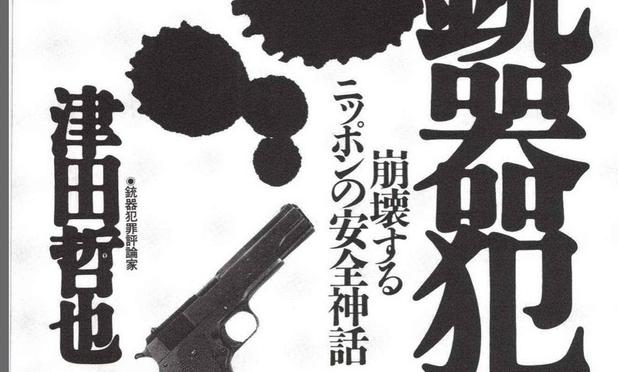
Unlike places like the US, people in Japan aren’t really supposed to have guns. So if some dude kicks your door in, threatens you with a knife, and then you shoot him with a gun you’re not supposed to have, you could still go to jail for illegal possession of a gun.
Even the Yakuza are hesitant to use guns.
Im not from the US, so while im an english speaker it looks like I would not be the target for this kind of cultural localisation - but wouldn’t you go to jail for owning an illegal firearm in the US too?
Technically there should be some legal recourse, perhaps jail, whether or not that comes to pass is subject to the same shenanigans law afforcement usually comes with.
But that isn’t what they were saying, they were saying that in japan almost no-one is allowed guns so the likelihood that a person was defending their house with a legal gun is very low.
I agree it wasn’t totally clear.
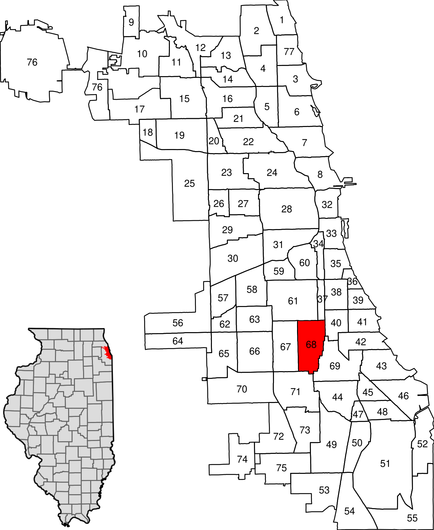
If the cops really want to bring you in particular down, sure. But there are certain no-go areas in the US where you can absolutely own a gun illegally because the cops don’t want to mess around there unless they have to. Here’s an example of one such place. Many of the public housing projects are home to some illegal gun owners as well, like this one.
Japan, by contrast, is much more peaceful. It is very unlikely that you’ll be shot dead for walking into the wrong place in Japan compared to the US. The criminal elements there don’t want to risk pissing off law enforcement, since defendants tend to be screwed if a charge is ever brought to trial.
 garretble
Not every work can be translated into other languages very well. That‘s just a problem with cultural differences. I think writers should keep that in mind when they work on a global IP. Know your audience and all that.
Other times it really isn‘t as important as some writers may think. You don‘t need to know about Wukong to enjoy Dragon Ball for example. A lot of ideas are universal even if they don‘t sound as clever after being localized.
Something always gets lost in translation, but how much you lose of the game’s flavor depends on how much you want to spend to get a good translator.