 Janek
Janek Weltzeitgeist
Great video. Watch it!
(This is Prof. Ada Palmer @adapalmer)
Great video. Watch it!
(This is Prof. Ada Palmer @adapalmer)
Who is the speaker? Is there more of this interview available?
Thanks! I thought that might be her. She wrote Inventing the Renaissance. She's very interesting.
@wackJackle Loving the part about Gutenberg going bankrupt and all the following ones.
Less of a fan of the conclusion* (but does she knows how to tell a story ! I was sucked right in, wow)
*Because I don't think its very interesting to argue on the unity of change on some technique branch (computers/the press) while it's always a continuum anyway so like, in the end, I felt "duh all this for that". But it was a nice journey anyway.
@otyugh @wackJackle I kind of agree with you, after watching I'm left with two feelings: that's a really interesting thesis, I like it; and: what now?
It seems there would be something to learn in this parallel she is making between those two information revolutions. But it is not obvious to me. The only thing that I can guess is that the current revolution we live in has probably not settled down and it will take another few decades at least.
1/2
@otyugh @wackJackle but this only conclusion seems kind of obvious when you look at the state of social media, the tech oligarchy and how they affect the world.
If you would know about any other resources from Palmer or other on the topic I would definitely be interested to know more!
2/2
@otyugh @wackJackle I found something to dig more into the topic: https://reactionwheel.net/2024/10/the-illusion-of-acceleration.html
After reading the article, it seems to be that this parallel between the printing press and the IT revolution is another example that could be use to support the thesis of the article.
Ada Palmer is a national treasure! A terrific Renaissance historian at UChicago. But also an exciting, erudite (and fun!) guest at science fiction/fantasy/horror conventions for years. (She wrote the mind-bending Terra Ignota series.)
At one con she handed a small incunabulum around the room for everyone to (carefully) hold in our hands, while she spoke brilliantly about the early history of printing, as in this video.

Thanks. I found the original at https://www.dwarkesh.com/p/ada-palmer and will now attempt to huffduff it.

Ambassador visiting Renaissance Florence: “Where am I? None of this has existed for a thousand years."
Which I managed to do, so you can listen at this link https://huffduffer.com/JeremyCherfas/713963 and, you know, take your elbows off the Nazi bar.
What a passionate speaker they are!
On a related note, saw an exhibition of those first Venice-printed books back in the day. What pieces of art, and status symbols, too. The exhibition made a big point how the youth wanted to be painted with their bleeding-edge pocket books. No dusty coffee table books for the young generation, no sir!
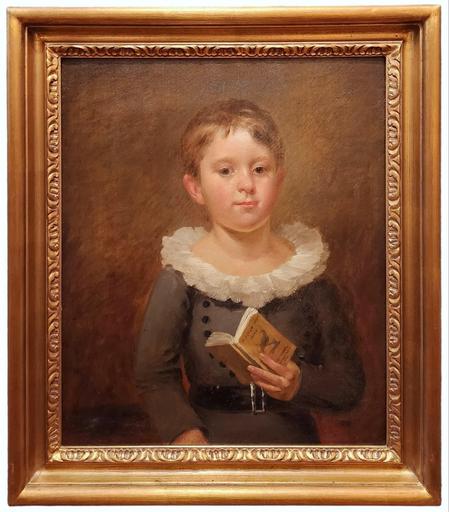
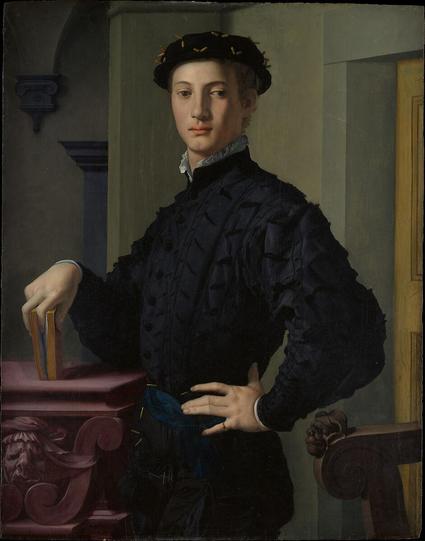
@wackJackle @adapalmer Beautifully articulated. I had considered that parallel before.
What I want to know is where the parallel goes in terms of monopolies, censorship, age-verification, etc.
You need historians to understand social media revolutions!
Told you so!
1490s, boom...
gun power/cannon arrives from China (vector destroying old power equilibrium)...
as printing becomes sustainable (vector for spreading new ideas)
What a time to have been alive.
@gnoll110 @wackJackle @adapalmer
Europeans had had gunpowder since the 13th century. By 1453 cannonmaking was advanced enough for a Hungarian named Orbán to cast a 27' long bombard with range of over a mile to help the Turks take Constantinople, while in France an army equipped with 300 artillery pieces fought at the battle of Castillion that same year.
Really I ought to wait 17 days to post this...
The full Dwarkesh Patel podcast interview with Ada Palmer is here:
Why Leonardo was a saboteur, Gutenberg went broke, and Florence was weird – Ada Palmer
@wackJackle @adapalmer
Little nugget: mass produced commodity needs distribution.
Interesting modern direction: mass produced 3D printers to let people produce artisanal-scale whatever/artifacts.
@wackJackle @adapalmer I don't understand the economics. If I print 300 books for the cost of one copy of the book, and I sell seven copies, doesn't that mean I've made a big profit? Even if the 293 remaining copies just sit there? Or were manuscript copies by scribes sold at a big loss?
And https://en.wikipedia.org/wiki/Gutenberg_Bible says the full print run of 158 or 180 copies seems to have sold out immediately, including sales outside modern Germany, so how did poor distribution result in bankruptcy?
Huh, kinda wish someone would answer this...
Interesting, thanks. I wasn't doubting so much as curious and figured it was more complicated.
@wackJackle @adapalmer She wrote this really cool SciFi series that starts with *Too Like the Lightning*, which incorporates philosophy, alternate family structures, non-spatially located alternatives to nations, and lots more. Very good read. Like all good SF, it rewards thinking.
BTW: I'm on team OS
Ambassador visiting Renaissance Florence: “Where am I? None of this has existed for a thousand years."
Nice, but I would say, there are other aspects of the late medieval media revolution, which are else or even more important as Gutenberg's press. One is simple: Paper. Paper instead of parchment as the main material to write on. Nobody would have needed a machine that prints many pages in minutes, when you need hours or days to produce the material for them.
1/x
Paper was known in Europe since 12th century, but until around 1400 it was barely used, then the paper mills spread like mushrooms. And the reason for that was that many more people wrote down their everyday business, on cheap paper not on expensive parchment. Because they got the education to do it, what was another important aspect of this revolution.
2/x
From mid-1300s on not only clergy and high nobility learned to read and write, also the lesser nobility, town citizens and even the free and more rich part of the rural folk went to schools. If Hans Luther, a miner's son from the small village Möhra in Thuringia, wouldn't have gone to school, he would never sent his son Martin to university and the history would look quite different - and the printing presses would had much less pamphlets to print.
3/3
 villon
 GinevraCat
 James Britt
 Susan Calvin
 bituur esztreym
 ThierryStoehr
 Ezrine
 オチュー (stop colonialism 🇵🇸)
 Baudouin Feildel
 Just Tom... 🐁
 BobDevney
 mx
mx GeePawHill
 Eat This Podcast
 Juho Mäntysalo
 Michael ᚋᚔᚉᚆᚓᚐᚂ
 Thomas Fricke (he/his)
 Noel Kelly
 AlexanderVI
 EdS
EdS Mikalai
 Utarg of Utarg 🔬🇪🇺🇸🇪🇬🇧🇺🇦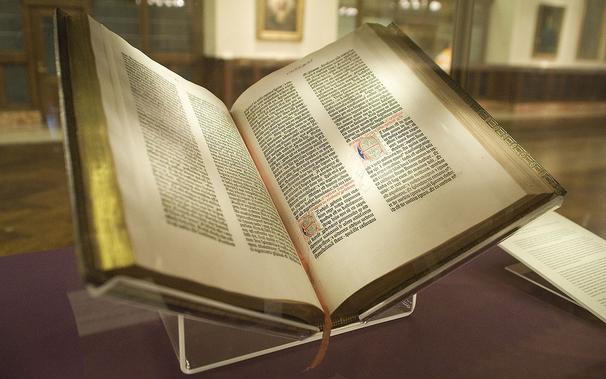
 My camera shoots fascists
 Ada Palmer
 Nimona RESISTS
 sz_duras - text
 Raven Luni
 Brad Koehn
 dykexis
 Erik
Erik